
Marcos Eyes 5 Dams, 100-km Dike After Central Luzon Floods
President Marcos announces five sabo dams in Nueva Ecija and a 100-km road-dike study after Central Luzon floods; P1B invested in Project NOAH AI forecasting. Over 1 million affected in Pampanga, with 314 barangays underwater.
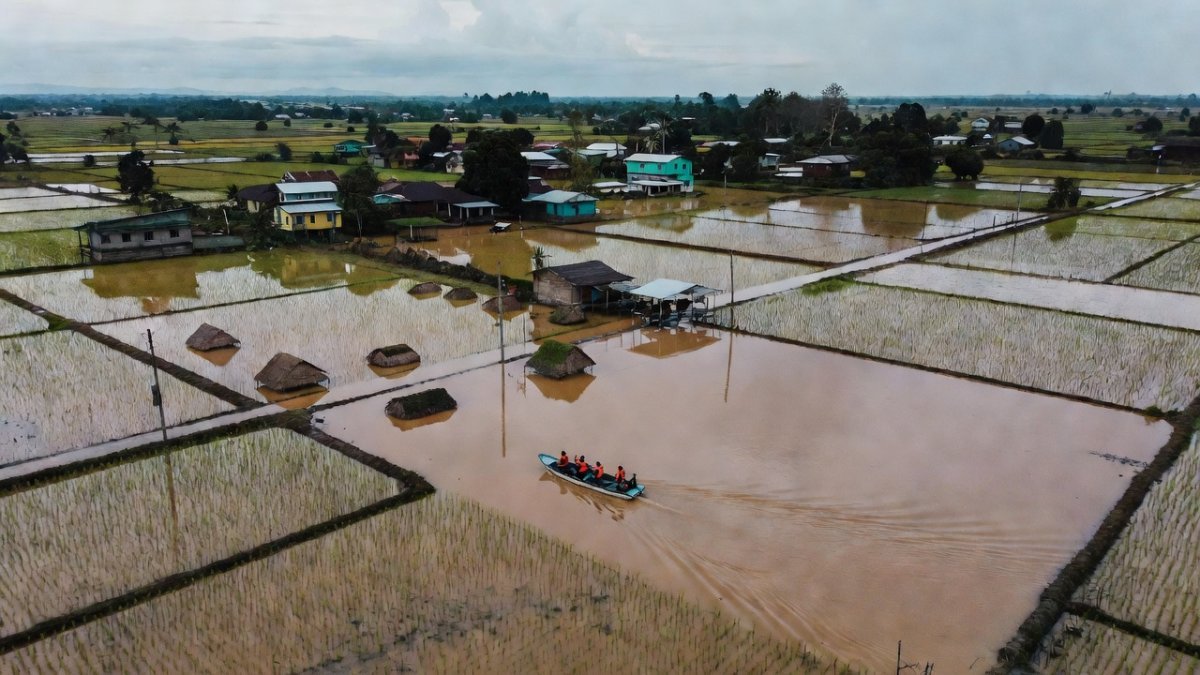
PAMPANGA — President Ferdinand Marcos Jr. on Monday, August 24, 2026, met provincial officials and local leaders at the Provincial Capitol in Barangay Sto. Nino, Pampanga, and delivered a blunt assessment of the catastrophic flooding that has submerged much of Central Luzon: the crisis is not merely an act of nature, but a failure of preparation compounded by a changing climate. "This is the result of climate change," the President said, citing both intensifying weather patterns and long-standing deficiencies in the region's flood control infrastructure. His visit, which included an aerial inspection with Public Works Secretary Vince Dizon, came as the province remained under a State of Calamity, with more than 1 million residents affected and 314 barangays still underwater.
In a region where families have waded through waist-deep floodwaters for weeks, where sari-sari store owners have watched their goods float away, and where farmers have seen entire harvests rot in the fields, the President's words carried both urgency and a promise of long-term solutions. Marcos announced that the government is planning to build five sabo dams in Nueva Ecija and is studying a roughly 100-kilometer road-dike toward Bataan as part of a broader strategy to mitigate the recurring floods that have become a seasonal nightmare for millions of Filipinos.
A President's Assessment: From the Air to the Ground
The President's visit to Pampanga on August 24 was not a ceremonial stop. Accompanied by Public Works Secretary Vince Dizon, Marcos conducted an aerial inspection of the flooded provinces, surveying the vast expanse of water that has swallowed towns, farmlands, and highways. From the air, the scale of the disaster was unmistakable — entire barangays reduced to islands, with only rooftops and treetops breaking the murky surface. After the flyover, Marcos attended a situation briefing at the Provincial Capitol in Barangay Sto. Nino, where local officials and affected families presented the ground-level reality of the crisis.
Governor Lilia Pineda welcomed the President's visit, saying it brought renewed attention to the province's long-standing flooding problem. Marcos, for his part, expressed satisfaction with the government's response so far, but made clear that the current relief efforts, while necessary, are not enough — the region also needs durable solutions that address the root causes of the flooding.
The President's remarks echoed a familiar refrain from an administration that has faced scrutiny over flood control spending. In 2025, Marcos himself highlighted alleged anomalies in government-funded flood control projects, sparking a national scandal and intense scrutiny of infrastructure budgets. Now, with Central Luzon underwater, the pressure is on to deliver results, not just promises.
The Human Toll: Families, Evacuation Centers, and the Spirit of Bayanihan
The numbers behind the disaster are staggering. In Pampanga alone, more than 1 million residents are affected, with 314 barangays still submerged. According to the latest evacuation data, 3,142 families — or 11,366 individuals — are sheltering in 197 evacuation centers across 17 local government units. Another 2,599 families, representing 11,575 individuals, have evacuated outside designated centers in 11 LGUs, many staying with relatives or in makeshift shelters on higher ground.
In Calumpit, Bulacan, the situation remained dire as of August 21, 2026, with the town still swamped after weeks of relentless rain. The flood-prone town, crisscrossed by rivers and waterways, has become a symbol of the region's vulnerability. In Nueva Ecija, flooding affected 805 families — 3,725 people — in the town of Jaen, with five barangays bearing the brunt of the rising waters. Farmers in these areas face a double tragedy: their homes are flooded, and their livelihoods — the rice paddies and vegetable fields that help feed much of Luzon — are destroyed.
Yet amid the devastation, the Filipino spirit of bayanihan has shone through. Senator Lito Lapid, who represents the region, distributed 4,000 family food packs to affected residents in Minalin, Macabebe, Masantol, and Candaba in Pampanga. "Our fellow residents in Bulacan, Pampanga and Nueva Ecija are suffering because they frequently experience flooding," Lapid said, as reported by the Manila Times. He has also been a vocal advocate for dredging the region's rivers, arguing that siltation has reduced their capacity to carry water to the sea — a sentiment shared by local officials who have watched decades of neglect compound the natural challenges.
In evacuation centers, volunteers and local government units have worked around the clock to provide food, clean water, and medical assistance. Teachers have turned classrooms into temporary shelters, while barangay captains have coordinated relief efforts with limited resources. The scenes are familiar to any Filipino who has lived through typhoon season — but the duration and intensity of this flooding have tested even the most resilient communities.
The Infrastructure Blueprint: Sabo Dams and a 100-Kilometer Road-Dike
At the heart of the President's announcement are two major infrastructure initiatives designed to address the root causes of the flooding. The first is the construction of five sabo dams in Nueva Ecija, a province that sits at the foothills of the Sierra Madre mountain range. Sabo dams, an engineering concept adapted from Japan, are designed to slow the flow of water from mountainous areas and reduce siltation in downstream rivers. By capturing sediment and moderating the velocity of runoff, these structures can significantly reduce the volume of water that reaches low-lying communities during heavy rains.
The Inquirer reports that the target for the five sabo dams in Nueva Ecija is 2027, a timeline that reflects the complexity of the projects. Each dam requires extensive geological surveys, environmental impact assessments, and coordination with local governments and communities. The dams are not a quick fix, but they represent a strategic investment in the region's long-term resilience.
The second major project is a roughly 100-kilometer road-dike stretching toward Bataan, near Manila Bay. This elevated roadway would serve a dual purpose: providing a transportation corridor while acting as a barrier to prevent water from entering vulnerable low-lying areas. The road-dike concept has been studied for years, but the recent flooding has accelerated its consideration. Public Works Secretary Vince Dizon, who accompanied the President on the aerial inspection, said the project is being studied with an eye toward both flood mitigation and economic development.
However, officials are careful not to overstate the timeline. The road-dike is still in the planning stages, with feasibility studies, engineering designs, and funding allocations yet to be finalized. The Department of Public Works and Highways (DPWH) will need to coordinate with the Department of Budget and Management (DBM), local government units, and the National Disaster Risk Reduction and Management Council (NDRRMC) to bring the project to fruition. For now, the government is using cautious language — the projects "are being studied" and "are being planned" — to manage expectations while signaling its commitment to action.
Project NOAH: Investing in Prevention Through AI
Beyond the physical infrastructure, the government is also investing in the science of flood prediction. The Department of Budget and Management has released P1 billion to the University of the Philippines System to enhance Project NOAH, the country's flagship disaster prevention program. Of this amount, P935 million is earmarked for research services, while P65 million is allocated for Project NOAH implementation under UP's 2026 appropriation. The funding will support the development of AI-powered flood forecasting and real-time hazard information systems, enabling government agencies to act earlier and communities to prepare better.
President Marcos called the P1-billion investment "an investment in prevention," highlighting the importance of putting science, AI, and data to work in disaster management. "We are putting science, AI, and real-time hazard information to work so government can act earlier, communities can prepare better, and more Filipino lives and livelihoods can be protected," he said, as reported by the Philippine News Agency. The enhanced Project NOAH is expected to provide detailed, localized forecasts that can guide evacuation orders, infrastructure planning, and agricultural decisions — a critical tool for a country that experiences an average of 20 typhoons each year.
The investment comes at a time when climate change is making weather patterns increasingly unpredictable. The 2026 flooding in Central Luzon was triggered by a series of intense rain events that overwhelmed rivers, drainage systems, and reservoirs. Scientists have long warned that warmer ocean temperatures and shifting atmospheric patterns will lead to more frequent and severe flooding in the Philippines. Project NOAH's AI capabilities are designed to help the country adapt to this new reality, providing a data-driven foundation for disaster preparedness.
What This Means for Filipinos: A Long Road to Resilience
For the families wading through floodwaters in Pampanga, Bulacan, and Nueva Ecija, the President's announcements offer hope — but also a reminder that recovery will take time. The sabo dams are targeted for 2027, and the road-dike remains in the study phase. In the immediate term, the focus is on relief and rehabilitation: clearing debris, repairing damaged infrastructure, and helping families return to their homes. Local governments and disaster response agencies are coordinating efforts to ensure that evacuation centers remain stocked with food, water, and medical supplies.
But the long-term vision is clear. The combination of structural measures — sabo dams, road-dikes, and river dredging — with technological investments like Project NOAH represents a comprehensive approach to flood management. It acknowledges that the Philippines cannot simply build its way out of climate change; it must also predict, prepare, and adapt. For ordinary Filipinos, this means a future where barangay captains have access to real-time flood forecasts, where farmers can make informed decisions about planting and harvesting, and where families can trust that their government is working to protect them.
The road ahead is long, and the challenges are immense. But as the waters slowly recede in Central Luzon, there is a sense that this time, the response will be different. The President's visit, the infrastructure plans, and the investment in science all point to a government that is finally treating flooding as a national priority — not just a seasonal inconvenience. For the millions of Filipinos who have endured weeks of hardship, that commitment is a welcome sign. The bayanihan spirit that has carried them through this crisis will also carry them through the rebuilding — and with the right investments, they may never have to face such devastation again.
This article was produced with AI-assisted research and editorial support. Sources: PhilStar, Philippine News Agency, GMA News, Inquirer, Daily Tribune, Manila Times, PCO.
By Bella Reyes, Staff Writer
What's Your Reaction?
 Like
0
Like
0
 Dislike
0
Dislike
0
 Love
0
Love
0
 Funny
0
Funny
0
 Wow
0
Wow
0
 Sad
0
Sad
0
 Angry
0
Angry
0

Philippines/Southeast Asia Correspondent at Global1.News. Manila-based journalist covering Philippine politics, environment, maritime security, and social issues. Passionate about marine conservation and the communities protecting the Philippines' natural heritage.













Comments (0)