
Centre Summons Meta Over Algorithmic Bias and CSAM
In an escalation that could redraw the boundary between platform power and national sovereignty, the Ministry of Electronics and Information Technology (MeitY) has summoned Meta's global leadership, including Chief Global Affairs Officer Joel Kaplan, to New Delhi next week.

Centre Summons Meta Over Algorithmic Bias and CSAM
In an escalation that could redraw the boundary between platform power and national sovereignty, the Ministry of Electronics and Information Technology (MeitY) has summoned Meta's global leadership, including Chief Global Affairs Officer Joel Kaplan, to New Delhi next week. The government, unusually, has asked Meta to send a technical representative from Instagram, signalling its intent to interrogate the recommendation systems that decide what hundreds of millions of Indians see. At stake is enforcement of Section 67B of the Information Technology Act — and the safe-harbour protections under Section 79 that have long insulated platforms from liability for user content.
New Delhi – July 31, 2026 — The meeting, expected in the "middle of next week" per government sources, follows two linked provocations: a BBC investigation that exposed paid Instagram advertisements marketing child sexual abuse material (CSAM) to Indian users for as little as Rs 99, and the brief restriction of a Facebook post by Prime Minister Narendra Modi that MeitY found inadequately explained. The government's position has been spelt out with unusual bluntness: "If they operate in India, which is their largest market, they will have to follow Indian law."
The Summons: A Rare Confrontation
Sources said the meeting dates are being finalised, but the agenda is fixed: algorithmic bias, content moderation, public order, and the handling of Child Sexual Exploitative and Abuse Material (CSEAM), the term used by the National Cyber Crime Reporting Portal. The decision to summon Joel Kaplan, Meta's most senior policy executive, underscores the diplomatic weight behind the meeting. More telling is the ministry's demand that the company "categorically" clarify how its algorithm operates and what role it acknowledges in maintaining public order.
This is not a routine compliance exercise. Meta's representatives are also expected to appear before a parliamentary panel, where lawmakers are likely to scrutinise content moderation policies and recommendation systems. The combination of executive summons and parliamentary inquiry leaves the company little room to frame this as a political dispute. The core technical question — how a platform with hundreds of millions of Indian users manages its most dangerous content — is now squarely on the table.
BBC Investigation: The Rs 99 Pipeline
The immediate trigger was an investigation by the BBC's Divya Arya, which found Instagram running paid advertisements promoting CSAM in India. The ads, surfaced through search terms such as "rape video" and "child video," directed users to Telegram channels where abusive material could be purchased for as little as Rs 99. When the BBC flagged a sexually suggestive ad via Instagram's official reporting tool, Meta responded 24 hours later that the ad "does not violate" its community standards. Only after the BBC approached Meta directly did the company disable the ads, suspend associated accounts, and block the linked URLs.
Meta acknowledged that "no system is perfect, and our review process may not detect all policy violations," while asserting a "zero tolerance" policy toward CSAM. That admission is damning in context: Instagram's own reporting pipeline deemed an advertisement for sexual abuse content compliant with its rules. For Indian regulators, this was not a moderation lapse but a commercial one — paid advertising, algorithmically targeted, routing users to illegal material at a price point designed for mass access.
The Modi Post and an Inadequate Explanation
The second flashpoint arrived earlier this week, when a Facebook post by Prime Minister Narendra Modi — addressing India's youth and promising stringent measures against paper leaks — was briefly restricted on the platform. Meta attributed the action to a "technical glitch" and apologised. MeitY found the explanation "inadequate." Sources conveyed the ministry's view without ambiguity: "When rules and laws are violated, liabilities will arise."
What disturbed officials more was Meta's subsequent communication to the IT Ministry: posts by the PM and select prominent accounts would henceforth be subject to "additional oversight," with multiple levels of checks involving senior company officials. Far from reassuring New Delhi, this implied that India's head of government required special dispensation from a private company's internal review apparatus. In parallel, Hyderabad Cyber Crime police have registered cases against Meta India head Arun Srinivas and certain Facebook and Instagram accounts over allegedly morphed and AI-generated posts targeting PM Modi.
Legal Arsenal: Section 67B and the Safe Harbour Test
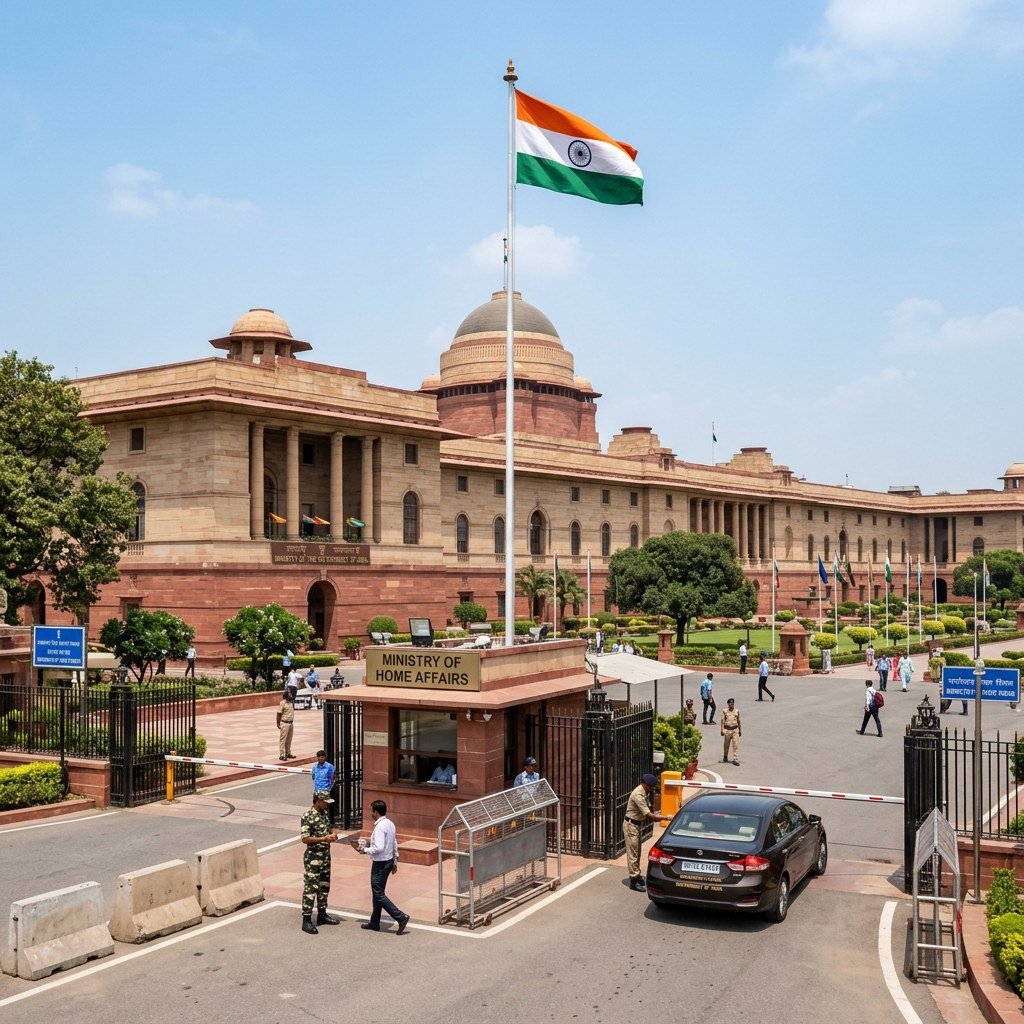
MeitY's notice, issued on July 25, ordered Instagram to disable all ads and content promoting or facilitating access to CSEAM, and demanded a detailed explanation within seven days. The legal basis is Section 67B of the IT Act, 2000, which criminalises the publication or transmission of material depicting children in sexually explicit acts in electronic form. The provision applies not just to individual users but, as the government's framing suggests, potentially to intermediaries whose systems amplify such content.
The larger threat lies in Section 79, the safe-harbour clause that shields intermediaries from liability for third-party material. Officials have indicated that the continued presence of CSAM promotion on Instagram could have implications for those protections. The message is deliberate: continued failure could strip Meta of its legal shield, exposing the company to liability for every policy-violating post, image, and advertisement its systems fail to catch. That prospect would fundamentally alter the economics of operating a user-generated content platform in India, where the company's user base is larger than in any other country.
A Broader Regulatory Push in the DPDP Era
This week's action against Meta does not stand alone. The government has separately issued notices to WhatsApp over its new username feature, and to Signal, Telegram, and Arattai, citing concerns that such features could increase online fraud. Together, these moves signal a regulatory philosophy: platform features, algorithms, and moderation decisions are not neutral technical choices but questions of Indian law and Indian public interest.
There is precedent. In October 2023, MeitY sent notices to X (formerly Twitter), YouTube, and Telegram warning them to remove CSAM. What has changed is the context. With the Digital Personal Data Protection Act now in force, the government has begun framing platform accountability as a child-safety and public-health issue. Government sources cited studies indicating that excessive social media use can adversely affect the cognitive health and mental well-being of children and adults. "Keeping all these aspects in mind, steps that are needed will be taken," one source said.
Digital Sovereignty and the Algorithm Question
For India's digital economy, the summons represents a boundary-setting moment. Since 2023, New Delhi has steadily moved from reactive takedowns to proactive regulation, asserting that platforms serving Indian users must answer for the structural consequences of their design choices. The demand for an Instagram technical representative is the clearest signal yet that the government intends to examine not just content, but the recommendation algorithms that shape public discourse and child safety online.
The implications for Indian citizens are practical as well as political. If Meta is compelled to alter its systems, the immediate benefit would be a safer online environment for children — a constituency increasingly central to India's regulatory conversation. But the broader effect would be a precedent for digital sovereignty: proof that a country can impose binding transparency and accountability requirements on a global platform without severing the commercial relationship that makes India its largest market.
The Bottom Line
The numbers define the stakes. WhatsApp has over 500 million users in India; Instagram over 350 million. India is not merely Meta's largest market — it is the foundation of the company's global growth narrative. By summoning both a global policy chief and an Instagram technical representative, New Delhi has made clear that safe harbour will no longer be presumed. It must be earned, demonstrated, and audited in the light of Indian law, including the IT Act and the evolving data protection framework. For Indian users, the outcome will determine whether the platforms they use daily can be held accountable for what their systems monetise, recommend, and fail to remove. For Meta, the precedent is equally consequential: if a nation with half a billion WhatsApp users demands algorithmic transparency and public-order accountability as a condition of operation, other governments will not be far behind.
— By Dr. Raj Patel, Staff Writer
This article was produced with AI-assisted research and editorial support. Reporting is based on sources cited in the article.
What's Your Reaction?
 Like
0
Like
0
 Dislike
0
Dislike
0
 Love
0
Love
0
 Funny
0
Funny
0
 Wow
0
Wow
0
 Sad
0
Sad
0
 Angry
0
Angry
0

India/South Asia Correspondent at Global1.News. Analytical voice with a background in science and health journalism. Based in New Delhi, covering Indian politics, education, healthcare, technology, and policy. Breaks down complex data into clear, actionable reporting.












Comments (0)