
Madias Ngake Claims Silver for England While Her Olympic Bronze Remains Out of Reach in Cameroon
On July 29 2026 at the Glasgow Commonwealth Games, Madias Ngake stepped onto the platform for England in the women's 86kg category and lifted 111kg in the snatch to set a Games record. The Cameroon-born athlete, now 34, followed with 128kg in the clean and jerk for a 239kg total and silver medal.
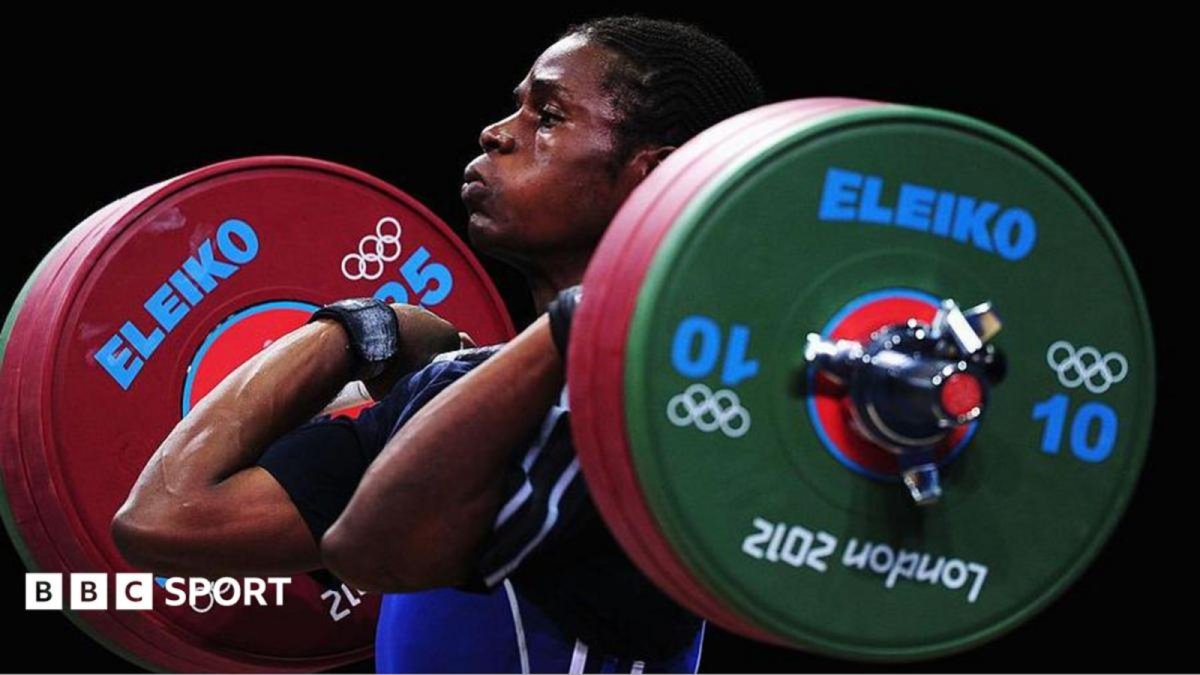
A Record Lift in Glasgow Marks a New Chapter
On July 29 2026 at the Glasgow Commonwealth Games, Madias Ngake stepped onto the platform for England in the women's 86kg category and lifted 111kg in the snatch to set a Games record. The Cameroon-born athlete, now 34, followed with 128kg in the clean and jerk for a 239kg total and silver medal. Australia's Eileen Cikamatana took gold with a 140kg clean and jerk that produced a Games-record total, while Canada's Rose Beaudoin earned bronze at 230kg. Ngake told TNT Sports the performance ranked second only to the Olympic bronze she has never held.
The Medal Sent to Yaoundé That She Has Never Seen
At London 2012, competing for Cameroon, Ngake won the B final and placed sixth overall. Seven years later, after three athletes ahead of her were disqualified for doping, she received the bronze that became Cameroon's sixth Olympic medal in history. The medal was delivered to Cameroon. It remains in a drawer in Yaoundé. Ngake has not returned to her homeland in 14 years and has never touched it. She has said the best outcome would be to collect the medal herself, yet politics in Cameroon make that impossible.
In Cameroon, a nation that has long measured its sporting pride through rare Olympic moments, the arrival of that bronze medal in Yaoundé carries a quiet ache. It sits in a drawer, untouched by the woman who earned it, because returning home would mean risking the very safety she sought elsewhere. For athletes from West Africa, medals often represent more than personal triumph; they become collective stories of resilience, yet when exile separates the winner from the homeland, the metal loses its power to heal or celebrate.
The seven-year delay between the London 2012 lift and the 2019 reallocation reveals how doping scandals stretch justice across continents and lifetimes. While investigations unfold in distant laboratories, athletes carry the uncertainty in their bodies and memories. Madias Ngake's medal, Cameroon's sixth at the Olympics, should have marked a turning point for a country where weightlifting resources remain scarce, yet its delayed arrival underscores the uneven pace at which fairness reaches those on the margins.
The drawer itself has become a symbol of interrupted homecoming. In many African households, such keepsakes are displayed with pride during family gatherings, but here the absence speaks louder than any ceremony. It reminds us that sporting glory can be both a bridge and a barrier when political and social realities prevent an athlete from standing beside her people to receive their embrace.
A Young Athlete Forced into Exile After London
During the London Games, Ngake's sexuality became known to someone on the team. Homosexuality is illegal in Cameroon and punishable by imprisonment. At 20 she left the athletes' village and slept rough for roughly a month, often at a bus stop. She applied for asylum in the United Kingdom. It took nearly five years before she could work legally. She cleaned offices in Leeds for nine years on roughly 2,000 pounds annually before moving to Nottingham. She has described the choice plainly: she stayed to build a safe life and to love freely without fear of harm.
Across much of Africa, including Cameroon, the legal and social landscape for LGBTQ people forces painful choices between belonging and survival. Families and communities often exert immense pressure to conform, leaving individuals to weigh the cost of staying against the unknown of departure. For Madias Ngake, exile after London 2012 was not merely a career decision but a necessary step to protect her dignity in a place where openness could bring isolation or worse.
The years spent cleaning offices in England at modest wages, while Olympic-level strength remained within her, speak to the quiet endurance required when talent meets displacement. Starting over in a new country means rebuilding not only a livelihood but a sense of self, far from the training halls and familiar rhythms of Douala. This path demands a steady courage that rarely makes headlines yet sustains those who refuse to abandon their gifts.
Her story echoes the broader experience of African diaspora athletes who trade immediate comfort for long-term safety. In Senegal and neighboring nations, we recognize the same tension: the pull of ancestral soil against the need to breathe freely. Such journeys rarely follow straight lines, yet they reveal a profound commitment to life on one's own terms.
Roots in Douala and Early Dreams of Strength
Born in Douala, Cameroon's largest city roughly 200 miles west of Yaoundé, Ngake grew up wanting to change how people viewed women in sport. At the 2010 Commonwealth Games in Delhi she placed fourth at age 18, matching the bronze total but losing on bodyweight. She passed out after a 121kg lift and left on a stretcher. Limited resources and reported corruption in Cameroonian sports bodies made international travel difficult even then. Her early experiences reflect the daily realities many West African athletes still face when chasing global stages with little institutional support.
In Douala's bustling streets, where young women rarely saw weightlifting as a viable path, Madias Ngake's early dreams carried the weight of shifting perceptions about female strength. Sport for girls in Cameroon and across West Africa has long battled limited facilities, skeptical families, and federations that sometimes prioritize connections over merit. Her determination to lift heavy bars challenged the notion that such power belonged only to men, planting seeds of possibility for others who watched from the sidelines.
Barriers like travel costs and inconsistent support meant that reaching international stages required extraordinary sacrifice. The toll was physical as well as financial: moments of collapse on the platform were not isolated failures but markers of an athlete pushing against systems that offered little cushion for those from resource-scarce nations. Each return to competition demanded more than strength alone.
Her journey resonates deeply in Senegal and throughout the region because it mirrors the shared struggle of West African athletes who train with heart despite structural obstacles. When one woman from Douala lifts for Cameroon, she lifts for a generation learning that strength can be both personal and collective, even when the road home remains uncertain.
A Decade Away and a Coach's Quiet Push to Return
Ngake stepped away from the barbell for about ten years. When Birmingham hosted the 2022 Commonwealth Games after Durban lost the event, former Cameroon teammates and coaches arrived in Britain. One coach stayed with her and urged her to train again. She returned to competition in 2023, won gold at the British International, and earned silver in the snatch at the 2024 World Championships for Great Britain. Naturalised and eligible for UK Sport funding, she left cleaning to train full time. Earlier in 2026 she won European bronze for Great Britain before arriving in Glasgow as the top seed, 16 years after her first Commonwealth appearance.
Red Hair, Shared Histories, and a Teammate's Return
Ngake dyed her hair red, the colour of Cameroon, at the suggestion of British weightlifter Emily Campbell. Fellow Cameroon-born athlete Cyrille Tchatchet II, who sought asylum after competing at Glasgow 2014, also represented England. Their presence together carried quiet weight for communities across West and Central Africa who follow athletes navigating exile and identity. Ngake has spoken about asylum seekers with measured clarity, noting that people must respect the country that grants them safety rather than import laws that once threatened them.
Looking Toward Los Angeles and a Medal She Can Hold
Ngake's next target is qualification for the 2028 Los Angeles Olympics. She has called the prospect very challenging yet very special, because any medal earned there would stay in her hands rather than disappear into a drawer thousands of miles away. When asked if her life resembled a film, she told The Guardian she never believed she would reach this point.
The goal of competing at the 2028 Los Angeles Games represents more than another competition; it offers the chance to claim a medal she could finally hold in her hands and perhaps one day bring closer to Cameroon. For diaspora athletes, the longing to represent their birth country while living abroad creates a layered identity, where pride and distance coexist. Leaving to safeguard one's dignity does not erase the roots that continue to nourish ambition from afar.
Her red hair, dyed at the suggestion of fellow lifter Emily Campbell, carries a subtle thread of connection to Cameroon even in exile. Such personal choices become quiet affirmations that home travels within, expressed through small acts of self-expression that keep cultural memory alive. In this way, Madias Ngake maintains a visible link to the place that shaped her earliest dreams of strength.
When she told The Guardian she never believed she would ever be here, the words captured the improbable arc from Douala's training spaces to English podiums and beyond. That disbelief reflects the resilience required to rebuild a life while honoring the past, offering hope to others across Africa who navigate similar paths between departure and belonging. For readers in Senegal and across the region, her story echoes the quiet endurance of many who leave home to protect their dignity and return, if at all, only on their own terms. Her silver in Glasgow stands as proof that strength can be rebuilt far from the place that first shaped it.
By Amara Diop, Staff WriterThis article was produced with AI-assisted research and editorial support. Reporting is based on sources cited in the article.
What's Your Reaction?
 Like
0
Like
0
 Dislike
0
Dislike
0
 Love
0
Love
0
 Funny
0
Funny
0
 Wow
0
Wow
0
 Sad
0
Sad
0
 Angry
0
Angry
0
West Africa/Sahel Correspondent at Global1.News. Dakar-based journalist covering politics, security, climate, and development across Francophone and Anglophone West Africa. Tells the stories of a region undergoing profound transformation.









Comments (0)