
Lebanon's Political Chessboard: Gebran Bassil Opens a New Battle Against the Salam Government
The Free Patriotic Movement’s leader has spent a decade positioning himself as a kingmaker in Lebanon’s sectarian power game. On Tuesday, Gebran Bassil chose a different role: the outsider. His declaration of “positive opposition” to Prime Minister Nawaf Salam’s government is a calculated gamble, one that could either cement his status as the country’s leading dissenting voice or leave him stranded on a political island.
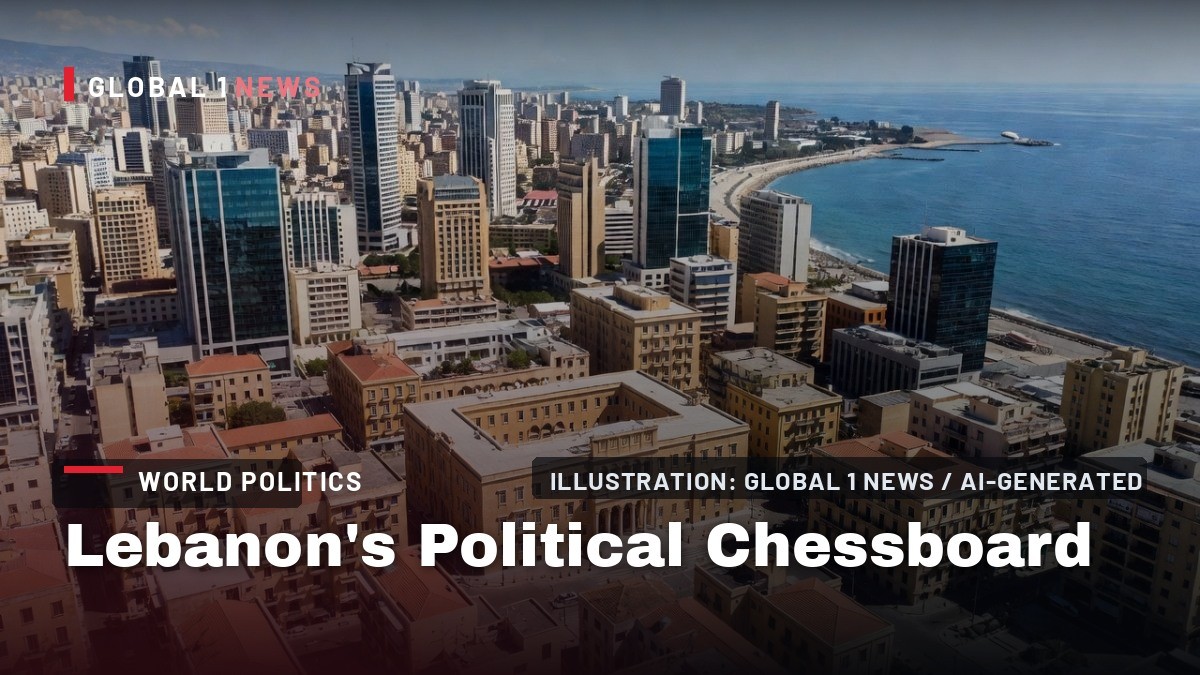
The Free Patriotic Movement’s leader has spent a decade positioning himself as a kingmaker in Lebanon’s sectarian power game. On Tuesday, Gebran Bassil chose a different role: the outsider. His declaration of “positive opposition” to Prime Minister Nawaf Salam’s government is a calculated gamble, one that could either cement his status as the country’s leading dissenting voice or leave him stranded on a political island.
Lebanon’s Political Chessboard: Gebran Bassil Opens a New Battle Against the Salam Government
Beirut, Lebanon – August 26, 2026 — The numbers from Wednesday’s parliamentary confidence vote tell a story of a government that is bruised but standing. Sixty-nine MPs voted in favor of renewing confidence in Nawaf Salam’s cabinet, against nine opposed, with four abstentions and 46 absent. The margin is comfortable, but the absences and abstentions whisper of a political class hedging its bets. And at the center of that hedging is Gebran Bassil, who has chosen this moment to launch his most public confrontation yet with the man who has led Lebanon since February 2025.
Bassil’s move is not a surprise to anyone who has watched his trajectory. The son-in-law of former president Michel Aoun, Bassil has long been the enforcer of the Free Patriotic Movement’s will, a man who thrives on friction. But his Tuesday declaration, delivered with the careful phrasing of a man who wants to leave himself room to maneuver, is something new. He called it “positive opposition,” expressing hope it would not devolve into “a fierce and comprehensive opposition.” He also argued that Salam “does not deserve confidence.” The contradiction is deliberate: Bassil wants to be seen as a constructive critic, not a wrecker. But the subtext is unmistakable. He is drawing a line in the sand.
The Man Who Would Be Opposition
To understand the weight of Bassil’s pivot, one must first understand the man. Gebran Bassil is not a fringe figure. He is the leader of the Free Patriotic Movement, one of Lebanon’s largest Christian parties, and the political heir to Michel Aoun’s legacy. For years, the FPM was a pillar of the establishment, a key player in every major coalition deal, a gatekeeper of state resources, and a vocal defender of Christian interests in a system built on sectarian balance.
Bassil himself has been a constant presence in Lebanese politics, serving in ministerial roles and wielding influence far beyond his formal titles. He is also a man under a cloud: since 2020, he has been under U.S. sanctions under the Global Magnitsky program over alleged corruption. That designation has not removed him from the political arena, but it has complicated his international standing and, at times, his ability to operate as a traditional power broker.
His decision to position himself as the sole opposition figure to the Salam government is therefore not a move made from weakness. It is a move made from calculation. Bassil sees an opening. The government is under pressure from multiple fronts: Hezbollah’s opposition to its security policies, public anger over economic measures, and the unresolved question of the ceasefire with Israel. In that chaos, there is room for a voice that says, “I told you so.” Bassil intends to be that voice.
The “Positive Opposition” Framing
The phrase “positive opposition” is a political artifact, carefully constructed to mean everything and nothing. On its face, it suggests a willingness to engage with the government, to offer constructive criticism rather than blanket obstruction. Bassil’s stated hope that it will not turn into “a fierce and comprehensive opposition” is a warning wrapped in a wish. He is telling Salam: give me a reason to support you, or I will make your life difficult.
But the framing also reveals Bassil’s vulnerability. He is not calling for the government’s collapse. He is not mobilizing street protests. He is not aligning with Hezbollah’s more radical rejection of the cabinet’s agenda. Instead, he is staking out a middle ground, a position that allows him to criticize without being blamed for paralysis. It is a classic Bassil move: keep your options open, keep your enemies guessing, and keep yourself relevant.
The problem is that “positive opposition” is a hard sell in a country where politics is often a zero-sum game. Lebanese analysts have already noted the risk: Bassil may find himself isolated. Hezbollah and Speaker Nabih Berri, the two most powerful forces outside the government, have so far declined to follow his lead. Berri met with Bassil on Tuesday at his Ain al-Tineh residence, a courtesy call that produced no public alignment. Hezbollah, for its part, has its own grievances with Salam, but it has not embraced Bassil’s banner.
The Confidence Vote: A Mandate, With Cracks
Wednesday’s vote was a test, and Salam passed it. Sixty-nine votes in favor is a clear majority, enough to give the government a renewed mandate to govern. But the numbers also reveal the fragility of that mandate. Nine votes against, four abstentions, and 46 absences mean that a significant portion of the parliament is either hostile, indifferent, or unwilling to commit. In a chamber of 128 seats, the government’s support is real but not overwhelming.
The absences are particularly telling. In Lebanese politics, absence is often a form of protest, a way to withhold legitimacy without taking a public stance. The 46 MPs who did not show up are a silent rebuke, a signal that the government cannot take its support for granted. Bassil’s FPM, with its parliamentary bloc, is part of that calculus. His decision to oppose the government publicly, even in a “positive” way, is a warning that the coalition of convenience that brought Salam to power is fraying.
For Salam, the vote is a reprieve, not a solution. He now has a renewed mandate, but he faces a political landscape that is more fractured than ever. The government’s challenges are not going away, and Bassil’s opposition, however framed, adds another layer of complexity to an already volatile situation.
The Government’s Mounting Pressures
The Salam government came to power in February 2025, after Nawaf Salam, a former president of the International Court of Justice, was elected prime minister in January of that year, succeeding Najib Mikati’s caretaker cabinet. Salam’s credentials as a jurist and international figure gave him a sheen of technocratic credibility. But governing Lebanon is not a matter of credentials; it is a matter of navigating a labyrinth of sectarian interests, foreign pressures, and economic crises.
The government’s most contentious issue is its stance on weapons. In March 2026, it pushed to restrict weapons to state control and ban Hezbollah’s military activities. That move drew immediate and fierce opposition from Hezbollah, which views its arsenal as a core pillar of its identity and its resistance to Israel. The government has not backed down, but it has also not been able to enforce its position. The result is a standoff that paralyzes decision-making on security matters.
The ceasefire with Israel remains a live issue. The fragile truce, brokered after months of conflict, is holding, but barely. Any escalation could reignite a war that Lebanon cannot afford. The government is walking a tightrope, trying to maintain the ceasefire while managing domestic pressure to assert sovereignty. Bassil’s opposition adds a political dimension to this security challenge, giving critics of the government’s handling of the ceasefire a prominent voice.
Economic Grievances and Frozen Deposits
Beyond security, the government is grappling with an economy that continues to punish ordinary Lebanese. In February 2026, it implemented a fuel tax increase and a one-point VAT hike. Both measures were met with widespread criticism, as citizens already struggling with inflation and unemployment saw their costs rise further. The government has defended the measures as necessary for fiscal stability, but the political cost is mounting.
Then there is the issue of depositors’ frozen bank funds. Since the financial collapse, millions of Lebanese have been unable to access their savings, trapped in a banking system that has not recovered. The government has promised to address the issue, but no concrete solution has emerged. For many Lebanese, this is the defining failure of the Salam government, a daily reminder of the state’s inability to protect its citizens’ livelihoods.
Protests in Beirut have demanded Salam’s resignation, and while they have not reached the scale of the 2019 uprising, they are a persistent undercurrent of discontent. Bassil’s “positive opposition” is, in part, an attempt to channel that discontent into a political project. He wants to be the voice of those who feel abandoned by the government, without being the face of chaos.
The Risk of Isolation
Bassil’s gamble is that he can build a coalition of the disaffected. But the early signs are not encouraging. Hezbollah and Berri have not joined his push, and without their support, his opposition is largely symbolic. The FPM is a significant force, but it is not a majority. In Lebanon’s confessional system, where alliances are forged on the basis of sectarian and personal interests, a lone opposition figure is often a lonely one.
There is also the question of Bassil’s own credibility. His sanctions history and his long association with the establishment make it difficult for him to claim the mantle of reformer. He is, in many ways, a creature of the system he now criticizes. His “positive opposition” may be seen by many as a tactical maneuver rather than a principled stance, a way to position himself for the next political cycle rather than a genuine break with the past.
For now, Bassil is betting that the government will stumble. He is betting that the economic crisis will deepen, that the ceasefire will fray, and that public anger will grow. If those bets pay off, his opposition will look prescient. If they do not, he will be left on the sidelines, a voice in the wilderness.
What This Means for Lebanon’s Stability
The immediate impact of Bassil’s move is to add another layer of uncertainty to an already unstable political environment. The Salam government has survived the confidence vote, but it now faces a more vocal and organized opposition from within the Christian community. That could complicate its ability to pass legislation, secure international support, and implement the reforms that donors and creditors are demanding.
It also signals a shift in the broader political landscape. The FPM’s shift into opposition is significant because it breaks the pattern of the establishment closing ranks in times of crisis. Bassil is not a marginal figure; he is a major player. His decision to oppose the government publicly, even in a qualified way, is a signal to other political actors that the Salam government is not invincible.
But the risks of isolation are real. If Bassil cannot attract allies, his opposition will be a footnote, not a movement. And if he pushes too hard, he may find himself blamed for the very instability he claims to want to avoid. Lebanon’s political chessboard is unforgiving, and every move carries consequences. Bassil has made his move. The question now is whether anyone will follow.
By Jessica Ali, Staff Writer
This article was produced with AI-assisted research and editorial support. Sources: L'Orient Today, Naharnet, LBC Group, Al-Manar, Al Jazeera.
What's Your Reaction?
 Like
0
Like
0
 Dislike
0
Dislike
0
 Love
0
Love
0
 Funny
0
Funny
0
 Wow
0
Wow
0
 Sad
0
Sad
0
 Angry
0
Angry
0

Editor-in-Chief at Global1.News. Atlanta-based journalist who cuts through the BS and tells it like it is. Lead anchor, host, and the voice you hear when the spin stops and the truth starts.












Comments (0)