
Leaders Gather in Egypt to Sign Gaza Deal After Week of High-Stakes Shuttle Diplomacy
Regional leaders and international mediators converged in Egypt today to sign a Gaza deal, marking the culmination of a week of intense shuttle diplomacy that saw the first direct US engagement with Hamas leadership in decades. The ceremony, broadcast live by Al Arabiya, comes as smoke rises over Gaza's ruins and deadly Israeli airstrikes continue, underscoring the fragility of a process that has lurched from crisis to crisis since the October 2023 war began.
Regional leaders and international mediators converged in Egypt today to sign a Gaza deal, marking the culmination of a week of intense shuttle diplomacy that saw the first direct US engagement with Hamas leadership in decades. The ceremony, broadcast live by Al Arabiya, comes as smoke rises over Gaza's ruins and deadly Israeli airstrikes continue, underscoring the fragility of a process that has lurched from crisis to crisis since the October 2023 war began.
The signing represents a pivotal moment in a conflict that has claimed more than 73,300 Palestinian lives, according to Gaza health officials, and reshaped the geopolitical landscape of the Middle East. For the Trump administration, this deal is the centerpiece of a legacy-defining effort to remake the region; for Egypt, Qatar, and Turkey — the deal's guarantors — it is a test of whether Arab and Muslim states can translate diplomatic leverage into a durable end to hostilities.
Leaders Gather in Egypt to Sign Gaza Deal After Week of High-Stakes Shuttle Diplomacy
Cairo, Egypt – August 23, 2026 — The Cairo ceremony follows a week of unprecedented diplomatic movement. On Sunday, August 16, Jared Kushner — President Trump's son-in-law and Middle East envoy — met directly with Hamas political leader Khalil al-Hayya in El Alamein, Egypt. The meeting, which included Egyptian intelligence chief Hassan Rashad, Qatari diplomat Ali Al Thawadi, a senior Turkish official, Board of Peace envoy Nickolay Mladenov, and former UK Prime Minister Tony Blair, marked a rare direct US-Hamas contact. Washington has for years refused engagement with Hamas, which it classifies as a terrorist organization, but the Trump administration has increasingly embraced direct talks as a pragmatic necessity.
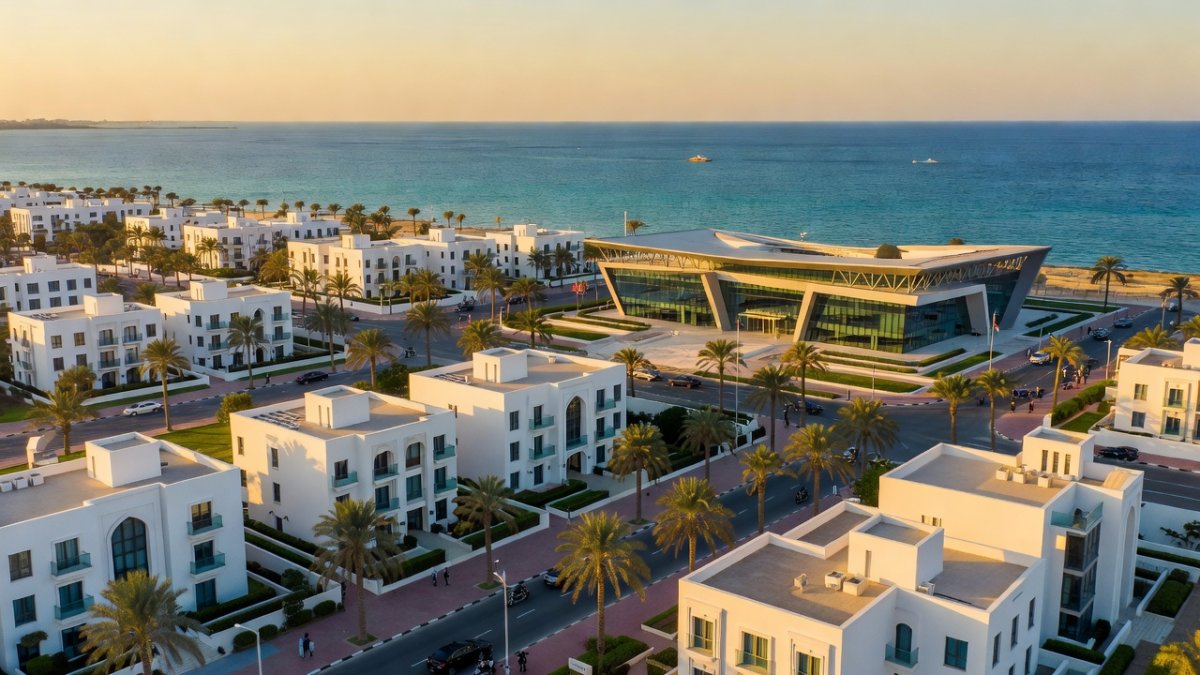
Diplomatic Breakthrough in Cairo
At that meeting, Hamas reaffirmed its commitment to disarm and demilitarize Gaza, accepted the phase-2 roadmap, and called on mediators to "compel" Israel to implement its phase-1 obligations. Kushner, for his part, stated that the US rejects any plans to displace Gaza's residents — a direct rebuke of earlier proposals that had floated population transfer as a postwar option. The objective, according to sources familiar with the talks, is to transfer governing responsibilities to a National Committee for the Administration of Gaza, with Hamas playing no role in the territory's future administration.
The following day, Kushner met with Israeli Prime Minister Benjamin Netanyahu. That meeting yielded no breakthrough. Netanyahu continues to demand complete disarmament as a prerequisite to any Israeli military withdrawal, while Hamas insists Israel halt attacks and withdraw to the "yellow line" dividing the territory. These competing demands have been the central sticking point since the ceasefire first stalled in early 2026.
Kushner's Shuttle Diplomacy
Kushner's week of shuttle diplomacy represents a high-wire act of personal mediation. Shuttling between El Alamein, Jerusalem, and now Cairo, he has sought to bridge the gap between Israeli security demands and Hamas's political survival. The El Alamein meeting was particularly significant: it marked the first time a senior US official sat across from Hamas leadership, a move that would have been unthinkable under previous administrations.
The presence of Tony Blair at the El Alamein meeting adds another layer of diplomatic weight. Blair, a Board of Peace member, brings decades of experience in Middle East peacemaking, albeit with a contested legacy. His involvement signals that the Board of Peace — the international body established by President Trump and named in UN Security Council resolutions — is operating as a genuine multilateral mechanism, not merely a US front.
Nickolay Mladenov, the Board's high representative for Gaza, has been a critical figure throughout. The Bulgarian diplomat, who served as UN Special Coordinator for the Middle East Peace Process from 2015 to 2020, leveled rare criticism at Israel in early August, warning that continued strikes could undermine the entire peace plan. His credibility with both sides has been essential in keeping the process alive.
The Phase Two Roadmap
The phase-2 roadmap, which Hamas has now endorsed, outlines a staged transition: Hamas will hand over weapons to a new governing committee, which will assume administrative control of Gaza. The committee is expected to include technocrats and representatives from Palestinian factions, though Hamas will be excluded from formal governance roles. In exchange, Israel is expected to begin a phased military withdrawal, ultimately pulling back to the "yellow line" that divides the territory.
The roadmap builds on the Sharm el-Sheikh Peace Summit of October 13, 2025, where President Trump, Egyptian President Abdel Fattah el-Sisi, Turkish President Recep Tayyip Erdogan, and Qatari Emir Tamim bin Hamad al-Thani signed a document ending the war. That agreement, which Trump hailed as the "dawn of a new Middle East," established a three-phase framework: an initial ceasefire, the release of 20 living Israeli hostages and approximately 2,000 Palestinian prisoners, and a massive aid ramp-up at Gaza's borders.
Nearly three dozen countries were represented at Sharm el-Sheikh, reflecting the broad international consensus that the war had to end. But the deal's implementation quickly faltered. By 2026, Netanyahu had rejected Trump's phase-2 roadmap as "unacceptable," Israeli military operations continued, and the humanitarian crisis in Gaza deepened. The July 2026 decision by Trump's Board of Peace to drop the full Gaza recovery plan in favor of a pilot scheme — with a few Moroccan and Kosovan officers arriving in Israel as the kernel of an International Stabilization Force (ISF) — signaled a scaling back of ambitions.
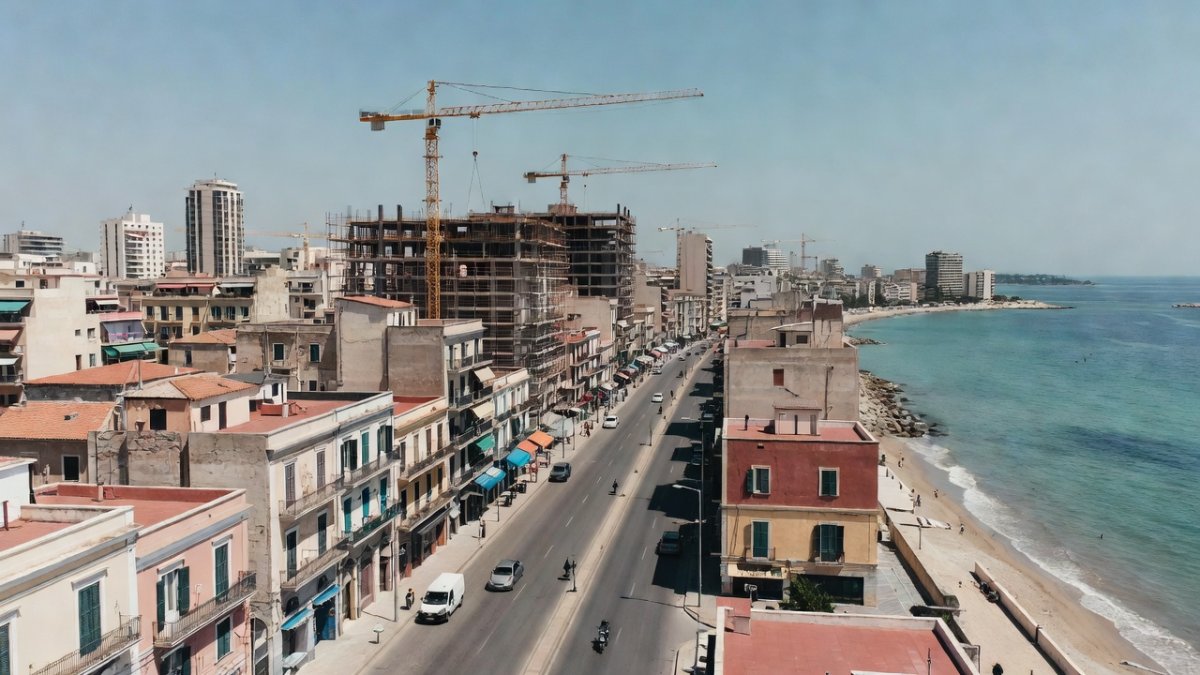
Historical Background: From October 7 to Sharm el-Sheikh
The path to today's signing began with the deadliest single day in Israel's history. On October 7, 2023, Hamas-led militants attacked southern Israel, killing approximately 1,200 people, mostly civilians, and taking hostages. The ensuing war devastated Gaza, leveling entire neighborhoods, displacing nearly the entire population, and creating a humanitarian catastrophe that international agencies struggled to address.
The war also reshaped regional alignments. Egypt, which shares a border with Gaza, emerged as a critical mediator, leveraging its historical role as a bridge between Israel and the Arab world. Qatar, which has long funded Hamas, used its financial and political capital to facilitate negotiations. Turkey, under President Erdogan, positioned itself as a champion of the Palestinian cause while maintaining working channels with both Hamas and the West.
The Sharm el-Sheikh summit was the culmination of two years of grinding conflict and diplomatic effort. President el-Sisi called Trump's plan the "last chance" for regional peace, a sentiment echoed by many Arab leaders who feared the war could spiral into a broader conflagration. Trump, for his part, declared that rebuilding Gaza would be the "easiest" part of the postwar process — a claim that experts have since questioned.
Regional Dynamics
Today's signing must be understood within the broader context of Middle East power politics. The war has accelerated shifts that were already underway: the decline of traditional Arab-Israeli peace frameworks, the rise of Gulf mediation, and the growing role of non-state actors in shaping regional outcomes.
For Egypt, the deal is a strategic imperative. Cairo fears that a collapsed Gaza could become a permanent security threat, with militants operating freely along its border. The $53 billion reconstruction plan Egypt proposed at the March 2025 Arab League summit in Cairo — an alternative to Trump's "Gaza Riviera" concept — reflects this concern. Egypt has also said it will host a reconstruction conference, positioning itself as the primary architect of Gaza's postwar future.
Qatar's role is equally significant. Doha has walked a careful line, maintaining its relationship with Hamas while also serving as a key US ally in the region. The presence of Qatari diplomat Ali Al Thawadi at the El Alamein meeting underscores Doha's centrality to the process. For Qatar, a stable Gaza is essential to its broader ambitions as a regional mediator and investor.
Turkey's involvement adds another dimension. Ankara has historically supported Hamas politically, and President Erdogan has been vocal in his criticism of Israel's military campaign. But Turkey also seeks to maintain working relations with Washington and has positioned itself as a potential guarantor of any final agreement. The senior Turkish official at the El Alamein meeting signals that Ankara is willing to translate its rhetorical support into concrete diplomatic engagement.
Strategic Calculus
The strategic calculus for each party reveals why this deal remains fragile despite today's ceremony. For Israel, the core demand is security: complete disarmament of Hamas and the removal of any military threat from Gaza. Netanyahu's insistence on this point reflects both genuine security concerns and domestic political pressures. His rejection of the phase-2 roadmap earlier this year was a clear signal that he will not accept a deal that leaves Hamas with any residual military capability.
For Hamas, the calculus is about survival and relevance. The organization has been militarily degraded but not destroyed. By endorsing the phase-2 roadmap and agreeing to disarm, Hamas is making a calculated bet that political survival is preferable to continued military confrontation. The El Alamein meeting gave Hamas something it has long sought: direct recognition by the United States. This is a significant concession, one that Hamas will likely use to claim legitimacy in any postwar order.
For the United States, the stakes are personal for President Trump. The Gaza deal is a centerpiece of his Middle East legacy, and the Board of Peace — with its UN Security Council imprimatur — is his mechanism for institutionalizing that legacy. The pilot ISF scheme, with Moroccan and Kosovan officers, is a test case for a broader international presence. If it succeeds, it could become the template for postwar stabilization; if it fails, it could unravel the entire process.
Regional Implications
The implications of today's signing extend far beyond Gaza. A successful deal would demonstrate that the United States can still broker peace in the Middle East, even in the most intractable conflicts. It would also validate the Trump administration's unconventional approach — direct engagement with Hamas, personal shuttle diplomacy, and a willingness to bypass traditional diplomatic channels.
But experts caution against overstating the significance of today's ceremony. Nader Hashemi, a Georgetown professor, has described Trump's plan as a "negative peace" — an end to violence without addressing the underlying issues of occupation, Palestinian statehood, and the refugee question. The deal document signed at Sharm el-Sheikh was never made public, raising questions about what exactly was agreed to and what remains unresolved.
The immediate challenges are stark. Israeli airstrikes continue, with deadly strikes reported even as leaders gathered in Cairo. Gaza's hospitals are facing an oxygen crisis, with Al-Aqsa Hospital in Deir al-Balah struggling to treat the wounded. The humanitarian situation remains dire, and the pilot reconstruction scheme is a fraction of what would be needed for meaningful recovery.
For the region, the deal's success or failure will shape the next decade of Middle East politics. If it holds, it could open the door to broader Arab-Israeli normalization, potentially including Saudi Arabia, and create a framework for addressing other regional conflicts. If it collapses, the consequences could be catastrophic — a return to full-scale war, a deepening humanitarian crisis, and a further erosion of trust in international diplomacy.
Today's signing in Cairo is a moment of cautious hope. But as the smoke continues to rise over Gaza, the hard work of implementation lies ahead. The leaders gathered in Egypt have signed a document; whether they can deliver on its promises remains the defining question.
By Malik Hassan, Staff Writer
This article was produced with AI-assisted research and editorial support. Reporting is based on sources cited in the article.
What's Your Reaction?
 Like
0
Like
0
 Dislike
0
Dislike
0
 Love
0
Love
0
 Funny
0
Funny
0
 Wow
0
Wow
0
 Sad
0
Sad
0
 Angry
0
Angry
0
Middle East Correspondent at Global1.News. Based in Beirut, covering politics, conflict, energy, and society across the Middle East. Brings context and depth to a region often reduced to headlines.










Comments (0)