
Syria's Foreign Minister Extends Hand to Israel, But Trust Remains Elusive
Syria does not trust Israel but expects US-brokered security talks to resume, FM Asaad al-Shaibani tells Reuters, days after the Abu al-Duhur airbase strike.
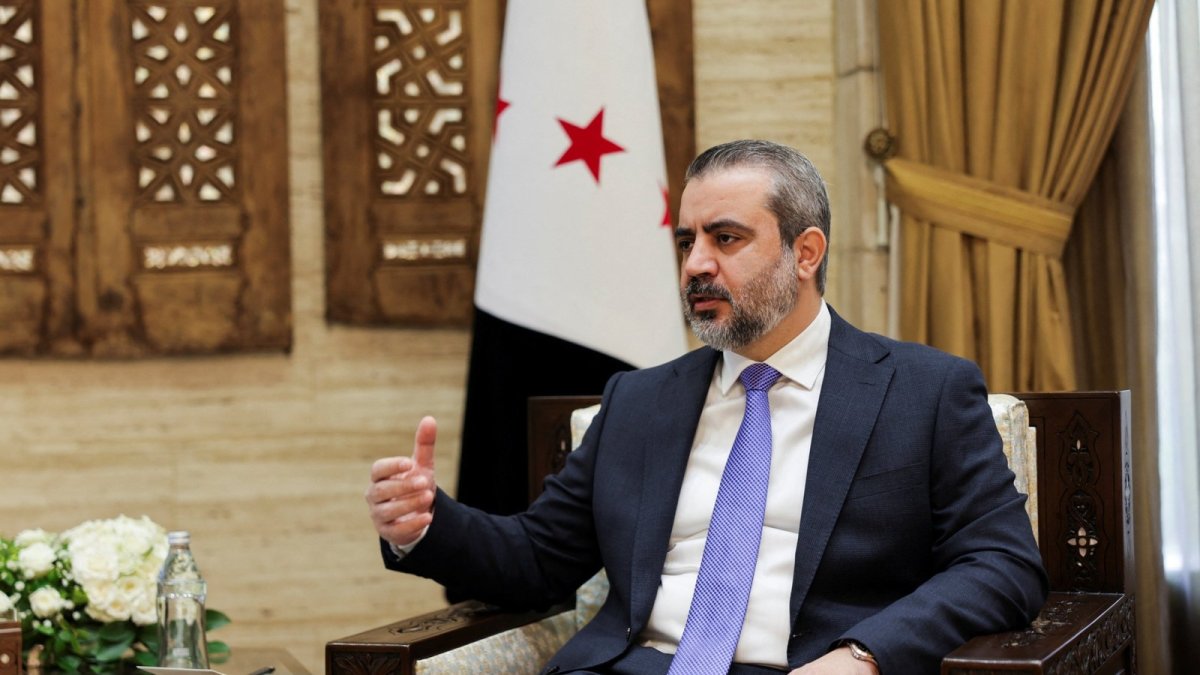
In a region still recalibrating after the fall of the Assad regime, Syria’s new leadership is walking a precarious diplomatic tightrope. Asaad al-Shaibani, the Syrian Foreign Minister, signaled in an interview with Reuters that while Damascus harbors deep distrust for Israel, it remains open to a US-brokered security arrangement—even as Israeli airstrikes and a growing Turkish military footprint threaten to derail the fragile post-war order.
Syria's Foreign Minister Extends Hand to Israel, But Trust Remains Elusive
Damascus, Syria – August 23, 2026 — Syrian Foreign Minister Asaad al-Shaibani has stated that Damascus does not trust Israel but expects negotiations on a security agreement to resume soon, according to an interview published on Sunday. The remarks come amid heightened tensions following an Israeli strike on a Syrian airbase and ongoing US efforts to broker a historic normalization of security relations between the two longtime enemies.
"We do not trust Israel currently," al-Shaibani told Reuters in Damascus on Saturday. "We expect negotiations on a security agreement with Israel to resume soon... Syria is extending a hand in favor of diplomacy, and Israel should take advantage of this historic opportunity. Israel tried to achieve its security through brute force, but it failed to accomplish that anywhere."
No Trust, But Open Door
The Foreign Minister’s candid admission of distrust underscores the fragility of the nascent diplomatic channel. Negotiations over the security agreement have been frozen since the start of the US-Israel war on Iran, and no date has been set for their resumption. Contact between Syria and Israel was severed entirely after the recent airbase strike, which saw Israeli jets bomb the Abu al-Duhur airbase in Idlib Governorate on the night of August 17-18.
"We believe there should be contact, especially with a party that constantly threatens the security of Syria," al-Shaibani said. "But if this contact doesn't bring results, then we don't need it." When asked how optimistic he was about the prospects for a deal, he conceded: "It's very hard to bet on Israel."
Despite this skepticism, al-Shaibani expressed "very great hope" of building stable relationships with Syria's neighbours. "Syria is extending its hand for understandings, for peace, for diplomacy," he said, framing the outreach as essential for regional stability.
A Deal Agreed on Paper
Al-Shaibani revealed that around the beginning of the year, the two sides had "agreed on paper to almost everything" regarding a security deal. The proposed agreement would require Israel to halt attacks on Syrian territory and was tied to its withdrawal from land seized after President Bashar al-Assad fell in December 2024.
The framework reportedly includes several security zones in Syrian territory near the Israeli border, including a buffer zone where only United Nations personnel would be present, and others where Syrian forces would deploy in varying degrees of force. However, al-Shaibani accused Israel of seeking to evade implementation. "We did not see they had the real will to reach an agreement," he said.
Syria’s immediate priority, he stressed, is to "stop Israeli aggression even before reaching a security agreement." Only after that, he suggested, "perhaps we can open the topics of peace and the Golan."
The Abu al-Duhur Rupture
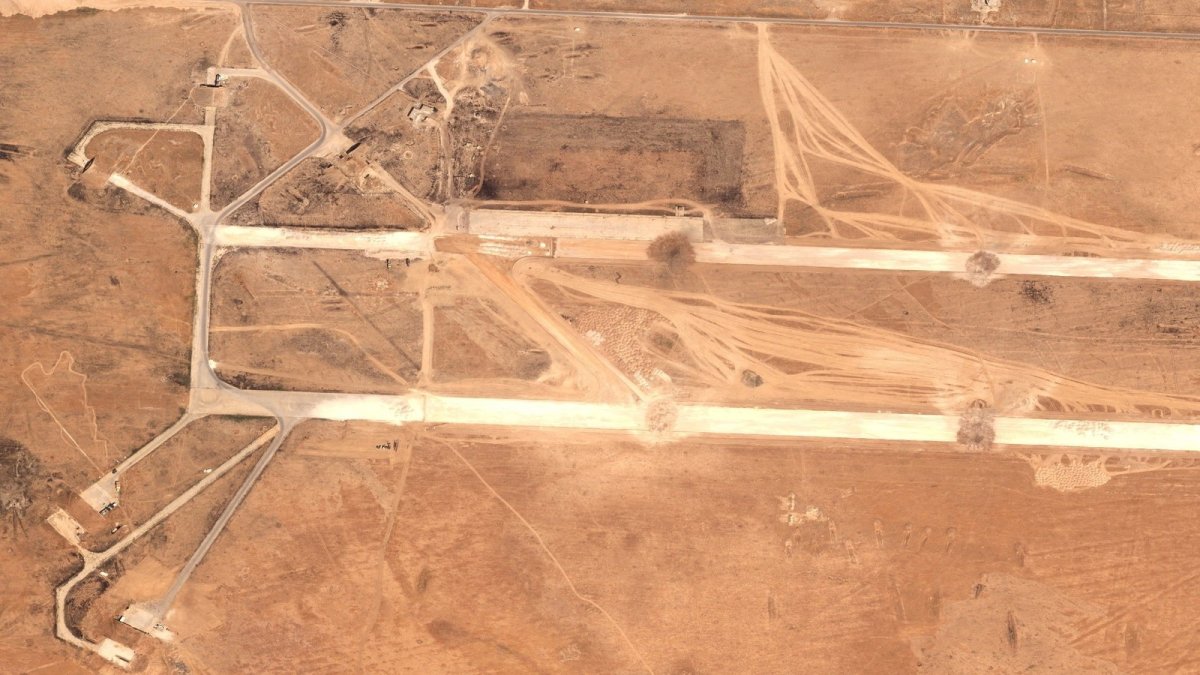
The recent strike on the Abu al-Duhur airbase, south of Aleppo, brought the tensions into sharp focus. Syrian state media reported eight Israeli airstrikes hit the base, with no casualties reported. A satellite image dated August 19 shows craters on the runways, confirming the extent of the damage.
Israel’s Prime Minister’s Office (PMO) justified the attack by claiming that "Israel and Syria agreed to a status quo in security matters, which Syria was on the verge of breaching by permitting Turkish troops to deploy at an airbase near Aleppo." Both Syria and Turkey categorically denied this assertion prior to the attack.
Al-Shaibani said Israel bombed Abu al-Duhur even after Syria conveyed a message that it would not be a Turkish base. On August 19, Israeli Prime Minister Benjamin Netanyahu doubled down, stating: "The message was conveyed, but apparently they didn't hear it, so we made sure they understood it more clearly."
IDF Chief of General Staff Lt. Gen. Eyal Zamir, visiting troops on the Golan Heights the same day, warned: "We see what is happening and are monitoring the changes on the Syrian front; we will not allow hostile forces to establish themselves on our borders."
The Turkish Factor
At the heart of the dispute lies Turkey’s expanding military cooperation with Syria. Al-Shaibani expressed profound gratitude to Ankara for its support in rebuilding Syria’s armed forces, a relationship that has raised alarms in Jerusalem.
"Syria is grateful to Türkiye for its support in rebuilding its army, and we will not give up this support," he said, highlighting expanding military cooperation and training initiatives with regional partners, including Jordan and Saudi Arabia, with particular emphasis on Türkiye.
Turkey invaded parts of northern Syria between 2016 and 2019 as part of its support for Syrian rebel groups and opposition to the PKK and Kurdish-led Syrian Democratic Forces. It currently maintains a military presence in parts of northern Syria, and its deepening ties with Damascus represent a strategic shift that Israel views as a direct threat to its northern front.
Reuters reported days before the strike that Mossad chief Roman Gofman had spoken with al-Shaibani, relaying Israel’s concerns about Turkey’s presence. Al-Shaibani also met US Envoy Tom Barrack on August 17, hours before the strike, in a frantic last-minute diplomatic effort that ultimately failed to prevent the escalation.
Washington's Mediation Calculus
The United States has been trying to broker a security deal between Israel and the government of Syrian President Ahmed al-Sharaa for more than a year. Washington views al-Sharaa, a former US- and UN-designated terrorist whose designations were rescinded in November 2025, as a new ally in the region. The effort has proven elusive as Israel has sent troops into Syrian territory and attacked government assets, citing threats to its security.
In January 2026, a trilateral US-Syria-Israel meeting established a "joint fusion mechanism"—a dedicated communication cell for intelligence sharing, military de-escalation, and diplomatic engagement under US supervision. However, al-Shaibani said there was no agreement yet on Barrack’s broader mechanism to prevent conflict among Israel, Türkiye, and Syria.
Such a mechanism, he argued, must stop attacks and pave the way for the security deal rather than "entrenching Israeli occupation." Barrack, who serves as US Ambassador to Turkey and US envoy to Iraq and Syria, wrote that Washington was deeply concerned by the strikes, noting the al-Sharaa government "has neither adopted a predatory posture nor maintained proxy forces." The US State Department did not immediately respond to a request for comment.
The Golan Question
Syria and Israel have technically been in a state of war since 1948. Israel seized the Golan Heights from Syria in the 1967 Six-Day War and has since maintained a presence in what was previously the buffer zone of the 1974 ceasefire lines. In the days after Assad fell, Israel seized additional territory in southwest Syria, citing the need to safeguard its citizens, and bombed scores of Syrian military sites. Israel also seized the summit of Mount Hermon.
Israeli officials have indicated they are not willing to return the Golan Heights to al-Sharaa’s government, a position that fundamentally limits the scope of any potential agreement. Al-Sharaa, whom Israeli officials have described as a "jihadist," has said Syria poses no threat to other countries, with Damascus focused on rebuilding from 14 years of war.
Regional Implications
The unfolding dynamics carry significant implications for the broader Middle East. A successful security agreement would represent a historic realignment, potentially isolating Iran and cementing a new US-aligned axis in the Levant. Conversely, continued Israeli strikes risk pushing Syria closer to Turkey, complicating NATO’s internal dynamics and potentially drawing Ankara into a direct confrontation with Jerusalem.
For the Gulf states, watching from the sidelines, the outcome will shape their own calculations regarding investment in Syria’s reconstruction and their broader security partnerships. The UAE and Saudi Arabia have shown interest in engaging the new Syrian government, but persistent instability and the unresolved Israeli question remain significant deterrents.
Al-Shaibani’s message is clear: Syria is willing to talk, but it will not accept a one-sided arrangement. "We believe there should be contact," he said, "especially with a party that constantly threatens the security of Syria." Whether Israel is prepared to reciprocate remains the central question—one that will determine whether this historic opportunity is seized or squandered.
This article was produced with AI-assisted research and editorial support. Sources: Reuters, Al Jazeera, Daily Sabah, Long War Journal.
By Malik Hassan, Staff Writer
What's Your Reaction?
 Like
0
Like
0
 Dislike
0
Dislike
0
 Love
0
Love
0
 Funny
0
Funny
0
 Wow
0
Wow
0
 Sad
0
Sad
0
 Angry
0
Angry
0

Middle East Correspondent at Global1.News. Based in Beirut, covering politics, conflict, energy, and society across the Middle East. Brings context and depth to a region often reduced to headlines.











Comments (0)