
Kyiv Petrol Stations Hit in Double-Tap as Russia Fires 410 Strike Drones in a Day
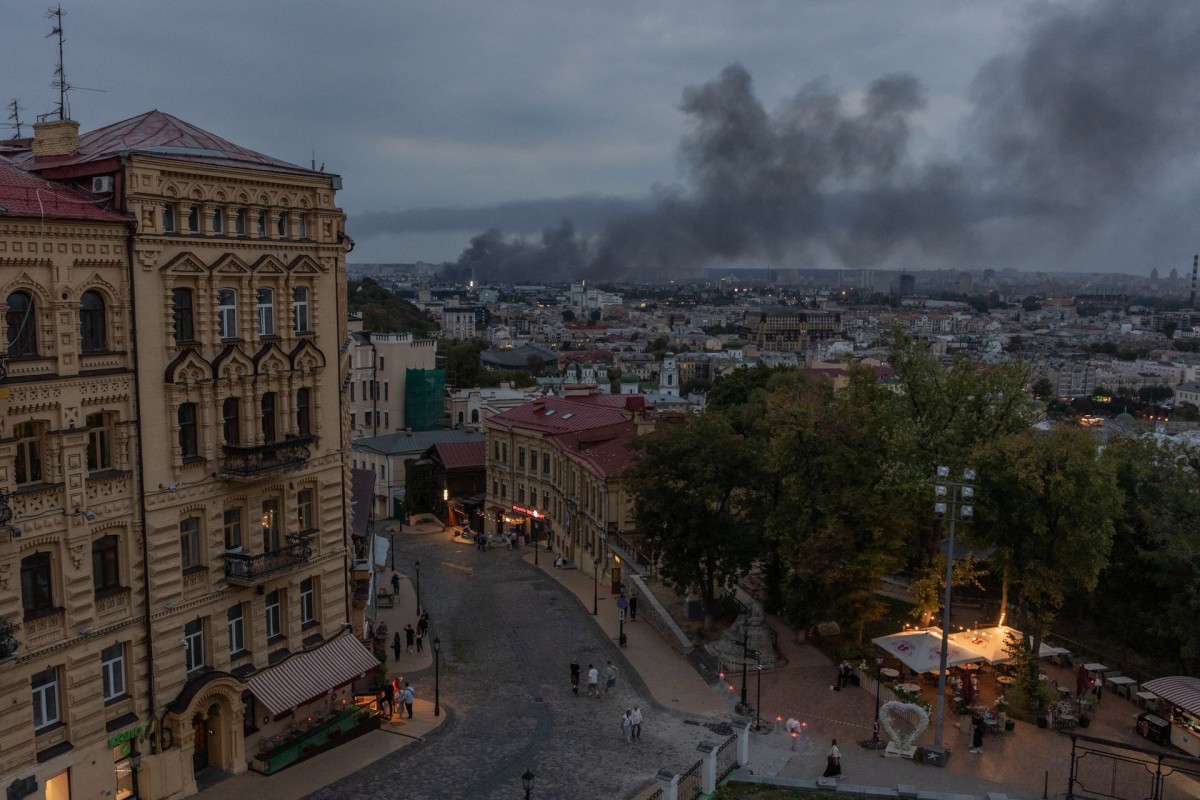
Russian drones struck two petrol stations in Kyiv within about ten minutes of each other early on Friday, 11 September 2026, killing two people and injuring twelve, according to Mayor Vitali Klitschko and the Kyiv City Military Administration. The strikes hit the Obolonskyi and Dniprovskyi districts shortly after air-raid sirens rang out across the capital at about 9:10 a.m. local time, with explosions heard citywide roughly half an hour later, the Kyiv Independent reported.

Russian drones struck two petrol stations in Kyiv within about ten minutes of each other early on Friday, 11 September 2026, killing two people and injuring twelve, according to Mayor Vitali Klitschko and the Kyiv City Military Administration. The strikes hit the Obolonskyi and Dniprovskyi districts shortly after air-raid sirens rang out across the capital at about 9:10 a.m. local time, with explosions heard citywide roughly half an hour later, the Kyiv Independent reported.
The Kyiv City Military Administration later confirmed a double-tap on the station in the Obolonskyi district, and President Volodymyr Zelensky said one of the injured was a first responder "wounded in a double-tap strike," DW reported. All three petrol stations damaged in the capital over two days are operated by state-owned Ukrnafta, Ukraine's largest oil and natural gas producer, the Kyiv Independent reported. The 11 September attacks came as Polish Foreign Minister Radoslaw Sikorski arrived at Kyiv's main train station.
KYIV PETROL STATIONS HIT IN DOUBLE-TAP AS RUSSIA FIRES 410 STRIKE DRONES IN A DAY
Kyiv, Ukraine — The strikes on 10 and 11 September were the first recorded against the capital's fuel network, and they came as Ukraine's Air Force went on to record 410 strike drones on 12 September alone, after a night of 129 drones plus ballistic and cruise missiles across ten regions.
A Morning Rush-Hour Strike in the Capital
The first explosions came about half an hour after the air-raid siren sounded in Kyiv at roughly 9:10 a.m. local time on Friday, 11 September, the Kyiv Independent reported. Mayor Vitali Klitschko announced the strikes in a statement, saying drones had hit two petrol stations in the Obolonskyi and Dniprovskyi districts within about ten minutes of each other.
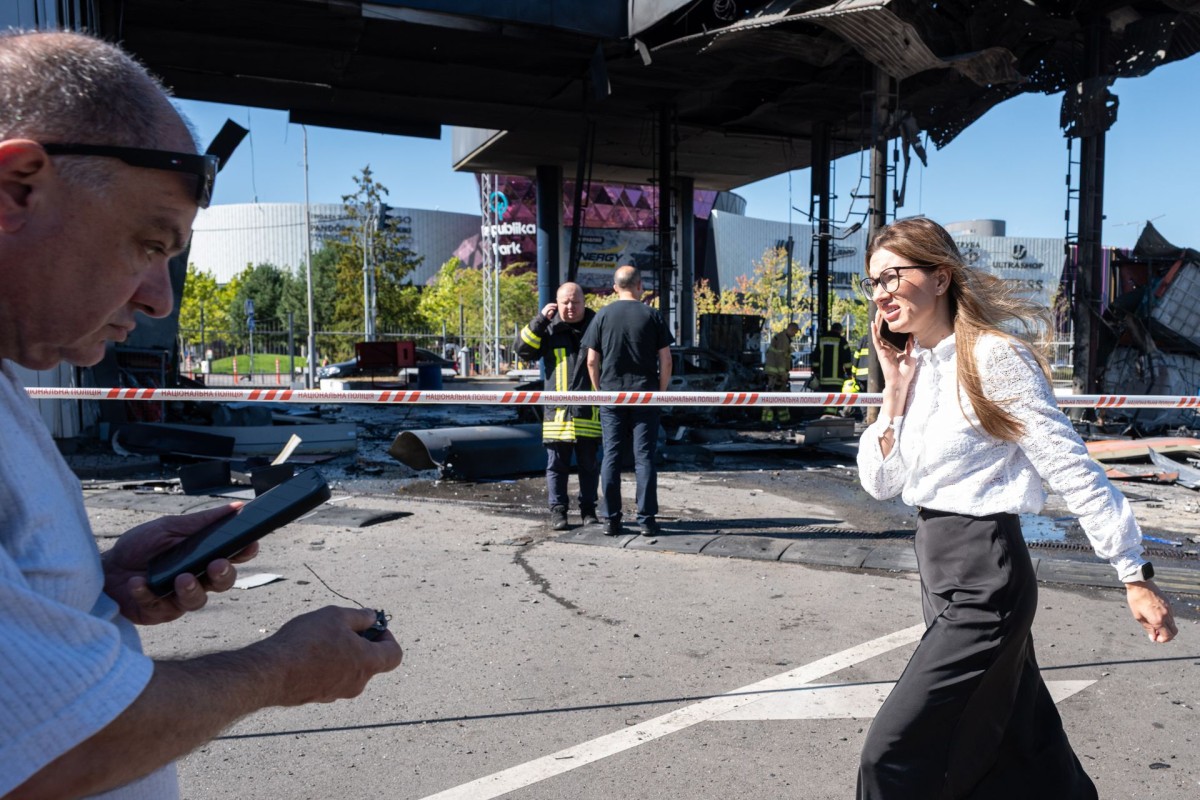
One person died at the scene. A second died in hospital, Klitschko said at 11:45 a.m. local. By around 3 p.m., the Kyiv City Military Administration reported twelve people injured, including a 12-year-old boy. Five people were hospitalised, one was treated at the scene, and by 3 p.m. seven remained hospitalised, according to Klitschko. Ukraine's State Emergency Service said one emergency responder was among the injured, the Kyiv Independent reported, citing the service's Telegram channel.
A strike in the Desnianskyi district caused no fatalities, reportedly because workers took shelter when the sirens sounded. Debris damaged a car in the Obolonskyi district. Locations reported across the morning were the Obolonskyi, Dniprovskyi and Desnianskyi districts, the Kyiv Independent reported.
The Double-Tap at Pochaina and What It Means
At the Ukrnafta petrol station in the Pochaina area of northern Kyiv, witnesses said three people were hurt, including a car wash manager, his wife and a passing driver, and reported hearing two distinct explosions. The Kyiv City Military Administration later clarified that Russia had carried out a double-tap attack on the petrol station in the Obolonskyi district — striking once and then again shortly afterwards.
Zelensky said one of the injured was a first responder "wounded in a double-tap strike," DW reported.
Ukrnafta CEO Bogdan Kukura condemned what he called "yet another deliberate strike on civilian facilities." He said: "There is no military objective in such attacks. This is terror against the civilian population." Sergiy Fedorenko, acting head of Naftogaz, Ukrnafta's parent company, said: "There is, and can be, no military objective behind such attacks. This is an act of terror aimed at the civilian population, at innocent people."
A Weapon Changed: Jet-Powered Drones Over Kyiv
Russia has for two weeks been carrying out almost constant attacks with faster jet-powered drones that have killed a number of Kyiv residents and disrupted daily life in the capital, Reuters reported. Around half of the drones in the 11-12 September overnight wave were fitted with jet engines, complicating interception, according to Euronews. Russia attacked the two Kyiv petrol stations with jet-powered drones early on Friday, 11 September, Reuters reported.
Zelensky addressed the shift directly on X, writing: "Russia's escalation with jet-powered 'shaheds' is gradually becoming increasingly terrorist in nature." He added: "We cannot simply wait while Russia hones its repertoire of killing. Right now, maximum attention must be focused on protecting the skies, finding solutions to protect people, and scaling up countermeasures against Russian drones."
The president said Russia had hit a building used by Ukraine's largest mobile operator, Kyivstar, in Kyiv, and that there were strikes in eight other Ukrainian regions that day, according to Reuters and the Kyiv Independent. Speaking at the Yalta European Strategy forum on Friday, 11 September, Zelensky said: "Sanctions need to be imposed now."
Why Petrol Stations Are the Target
In recent months, Russia has hit some 300 petrol stations, mainly in or near Ukraine's frontline regions, Reuters reported. The strikes on 10 and 11 September were the first recorded against the capital's fuel network. A list circulating on Ukrainian social media and Telegram earlier in the week identified 18 petrol stations in Kyiv as potential targets; three of the recently attacked stations appeared on that list, according to Ukrainian media and social-media reports that have not been independently confirmed.
The Kyiv Independent documented the human cost of the pattern. Artem, 25, a refuelling technician identified by first name only, said his station previously closed only during "red-level" air raid alerts and began closing during "yellow-level" drone alerts on 11 September. "It's scary that there might be nothing left tomorrow," he said. Rita Shvets, a cook at a station operated by the national OKKO chain, told the Kyiv Independent the company has strengthened its threat-monitoring system and alerts employees as drone attacks intensified.
The Night of 11-12 September: 129 Drones and Eleven Dead
At least 11 people were killed and 96 injured across Ukraine in overnight Russian attacks between 11 and 12 September, according to Euronews. Zelensky's own statement on 12 September put the confirmed death toll at at least three. Odesa region was hit hardest, with strikes also targeting the Dnipropetrovsk, Donetsk, Zaporizhzhia, Kyiv, Sumy, Kharkiv and Kherson regions.
Zelensky said ten regions were under Russian strikes overnight. "Since the night, there have been virtually constant strikes on our cities and communities," he said. "Ten regions were under Russian strikes last night, and Russian attack drones are still flying in many of them."
Ukraine's Air Force reported that Russia used 129 drones of various types, Iskander-M and KN-23 ballistic missiles, eight Kalibr cruise missiles and six guided Kh-59/69 missiles. Air defences destroyed or disrupted 110 aerial targets: six Kalibr missiles, two Kh-59/69 missiles, one S-8000 Banderol cruise missile launched from a drone, and 101 unmanned aerial vehicles, according to official statements cited by Euronews.
In the Kyiv region, one person was killed and three injured, including a child. Drones struck five districts — Brovary, Obukhiv, Bucha, Boryspil and Vyshhorod — damaging fifteen facilities, including seven private homes, vehicles, warehouses, hangars and a power transmission line. The largest number of sites damaged was in Obukhiv district, with six facilities including four private homes, Ukrinform and Euronews reported.
Then Came a Day of 410 Strike Drones
During the day of 12 September, Russian forces attacked Ukraine with 410 strike drones, including 37 jet-powered ones, according to Ukraine's Air Force, as reported by LB.ua. Air defences destroyed or suppressed 336 strike UAVs, including 23 jet-powered. Twenty-one impacts were recorded, and as of 18:00 around 55 strike drones remained in Ukrainian airspace, with new groups entering.
Zelensky said Russia launched nearly 500 strike drones at the country during the day on 12 September, the Kyiv Independent reported. Reuters reported that Russian air strikes in several Ukrainian regions killed six people, injured dozens and damaged residential buildings and infrastructure.
The president described the strategy behind the scale. "In essence, the Russians have expanded this war from the front lines, where they cannot achieve success, into the economic sphere, and their tactics are extremely primitive: to destroy every object that can help people endure the conditions of the war," he said, according to the Kyiv Independent.
Western Ukraine, Far From the Front, Wakes Up to War
Russia launched a mass drone attack on western Ukraine on 12 September, injuring at least five people in Volyn Oblast, which borders Poland and Belarus, and causing power outages in neighbouring Rivne Oblast, the Kyiv Independent reported. Governor Roman Romaniuk said the attack on Volyn lasted more than four hours, with more than 10 Russian UAVs entering the region's airspace. Most drones targeted the Kovel community.
Debris from one drone struck a passenger train in Lutsk. Passengers had been evacuated before impact and no one aboard was injured. In Rivne Oblast, Governor Oleksandr Koval said attacks caused power outages in parts of Dubno and the Rivne district, and an unspecified enterprise in the Sarny district was destroyed.
In the Zhytomyr region, west of Kyiv, Governor Vitaliy Bunechko said a Russian strike on a grocery store killed two people in the town of Zvyahel. Two petrol stations also came under attack, as well as an unidentified "enterprise with foreign investment," Reuters reported.
Elsewhere, the Kherson region recorded 18 wounded, with attacks targeting residential areas and critical and social infrastructure; 15 residential buildings were damaged along with shops, a petrol station, a service station, an ambulance and vehicles, according to Euronews. In the Sumy region, a 68-year-old man was killed in a drone strike on the Myropillia community and a 64-year-old man was wounded in a separate attack on Novoslobidske; Russian forces launched more than 50 attacks on 25 localities using artillery, mortars, FPV drones and guided bombs, European Pulse reported. In Kharkiv, a 32-year-old man was killed and a 19-year-old man was wounded elsewhere in the region, European Pulse reported.
Zaporizhzhia region saw two people killed and six wounded by a Shahed-type drone strike on residential buildings, according to Zelensky. In Kryvyi Rih, a missile attack on "critical infrastructure" killed one person and injured three others, Zelensky said. Overnight strikes also hit a shopping centre near Pavlohrad, killing five and injuring 67, Ukrainian officials said.
Ukraine's Answer: Refineries, Retail Warehouses and the Shadow Fleet
On 12 September, Ukrainian drones struck industrial facilities in Russia's Samara region, Interfax reported, citing regional Governor Vyacheslav Fedorishchev. Ukraine's General Staff said its forces struck the Tolyattikauchuk plant in the Samara region, a factory supplying products used by the Russian military-industrial complex, and that the attack sparked a fire. The plant produces synthetic rubber, monomers, fractions and additives for high-octane fuels; synthetic rubber is used in solid fuel for short-range and ballistic missiles.
Russian e-commerce company Ozon said a drone caused a fire at its logistics hub in the central city of Saratov. Ukraine's military said it hit an oil refinery in Saratov. More than two dozen warehouses owned by Ozon and fellow online retailer Wildberries have been hit in recent attacks, which Ukraine casts as part of a campaign against economic infrastructure underpinning Russia's war effort, Reuters and European Pulse reported. Two people were injured in a missile attack that hit two residential buildings and damaged an industrial facility in Volgograd, Reuters reported.
Russian officials said Ukrainian drone attacks killed two people in the Tula region overnight and one person in the Kursk region on Friday, 11 September; Tula Governor Dmitry Milyayev said three more were injured. A 37-year-old man was killed in a Ukrainian drone strike in the Kursk region. The Moscow-installed head of Russian-controlled parts of eastern Donetsk said two local gas company employees were killed in a drone strike, Reuters reported.
Ukraine's campaign against Russia's so-called shadow fleet continued on 12 September, when Robert "Brovdi" Browdi, commander of Ukraine's Unmanned Systems Forces, announced further attacks on the vessels used to transport Russian oil in circumvention of sanctions. Since the operation began about ten weeks earlier, Ukrainian forces have attacked a total of 285 vessels in the Azov and Black Seas: 215 in July, 54 in August, and 16 between 1 and 11 September. Browdi claims the strikes have almost brought shadow-fleet traffic in the Sea of Azov and the Kerch Strait to a halt and seriously impeded activity in the northern and north-eastern Black Sea. He released footage of an attack on a sanctioned Russian tanker reportedly being escorted by a Russian helicopter. Revenues from Russian oil exports are one of the sources of funding for the war.
An Air-Defence Tour With Winter Closing In
Zelensky is in the midst of a multi-nation tour to shore up his country's air defences ahead of winter. A drone nearly struck a plane carrying Zelensky from Moldova to Oslo, according to Norway's prime minister, DW reported. On 12 September, as European allies debate tapping frozen Russian assets and committing new aid, Ukraine is taking direct action to reduce Russia's oil revenue, European Pulse reported.
Since late August, Kyiv has faced daily drone and missile strikes. The civilian death toll has risen sharply in Ukraine over the past two months as Russia steps up attacks on power plants and other infrastructure, Reuters reported on 12 September.
Fighting on the front line has been largely stalled more than four-and-a-half years into the war, with both sides increasingly striking logistics and other economic targets to damage the other's war effort, according to Reuters. Ukrainian Foreign Minister Andrii Sybiha declared 11 September a day of mourning and said: "Russia is systematically attacking places where it knows people will be spending their time going about their daily lives, seeking to maximise casualties, spread fear and put pressure on Ukrainian society."
What the Numbers Do and Do Not Establish
The figures assembled over three days are large and, in places, contested. Ukraine's Air Force recorded 129 drones, plus ballistic and cruise missiles, on the night of 11-12 September, and 410 strike drones during the day of 12 September, including 37 jet-powered. Zelensky put the daytime figure at nearly 500. Euronews reported at least 11 killed and 96 injured nationwide overnight; Zelensky's own 12 September statement confirmed at least three dead. Reuters reported six killed on 12 September. Each figure carries its own attribution and its own cut-off time.
Russia's Defence Ministry claimed on 12 September that its forces hit the Zaporizhstal steel plant in Zaporizhzhia, an Interpipe Steel complex in Dnipro and several facilities in Kryvyi Rih, including the Northern Iron Ore Beneficiation Works complex. The ministry also said it had downed 230 Ukrainian drones overnight over more than a dozen Russian regions, as well as over Crimea. A separate Russian military claim carried by Ukrainian outlets, also unverified, put the figure at 777 Ukrainian drones downed across 16 regions. Neither figure has been independently confirmed.
What the documented evidence does establish is the direction of the campaign. Three Ukrnafta petrol stations in Kyiv damaged in two days. A confirmed double-tap on a civilian refuelling site. Jet engines on roughly half the drones in one overnight wave. A single day of 410 strike drones. Ten regions under attack in a night. And a Ukrainian counter-campaign that has now struck 285 shadow-fleet vessels in ten weeks. The numbers do not settle the war. They describe how it is being fought.
By Jessica Ali, Staff Writer
This article was produced with AI-assisted research and editorial support. Sources: Reuters, Al Jazeera, Euronews, Kyiv Independent, DW, Ukrinform, LB.ua, European Pulse, United24 Media, Press News Agency.
What's Your Reaction?
 Like
0
Like
0
 Dislike
0
Dislike
0
 Love
0
Love
0
 Funny
0
Funny
0
 Wow
0
Wow
0
 Sad
0
Sad
0
 Angry
0
Angry
0

Editor-in-Chief at Global1.News. Atlanta-based journalist who cuts through the BS and tells it like it is. Lead anchor, host, and the voice you hear when the spin stops and the truth starts.















Comments (0)