
Major Moscow Region Gas Station Chain Closes as Russia Returns to Fuel Rationing
EuroTrans, the operator of the Trassa gas‑station chain in the Moscow region, has shut its doors ahead of a state seizure, a development that underscores the deepening fuel crisis gripping Russia as the Kremlin re‑imposes rationing measures.
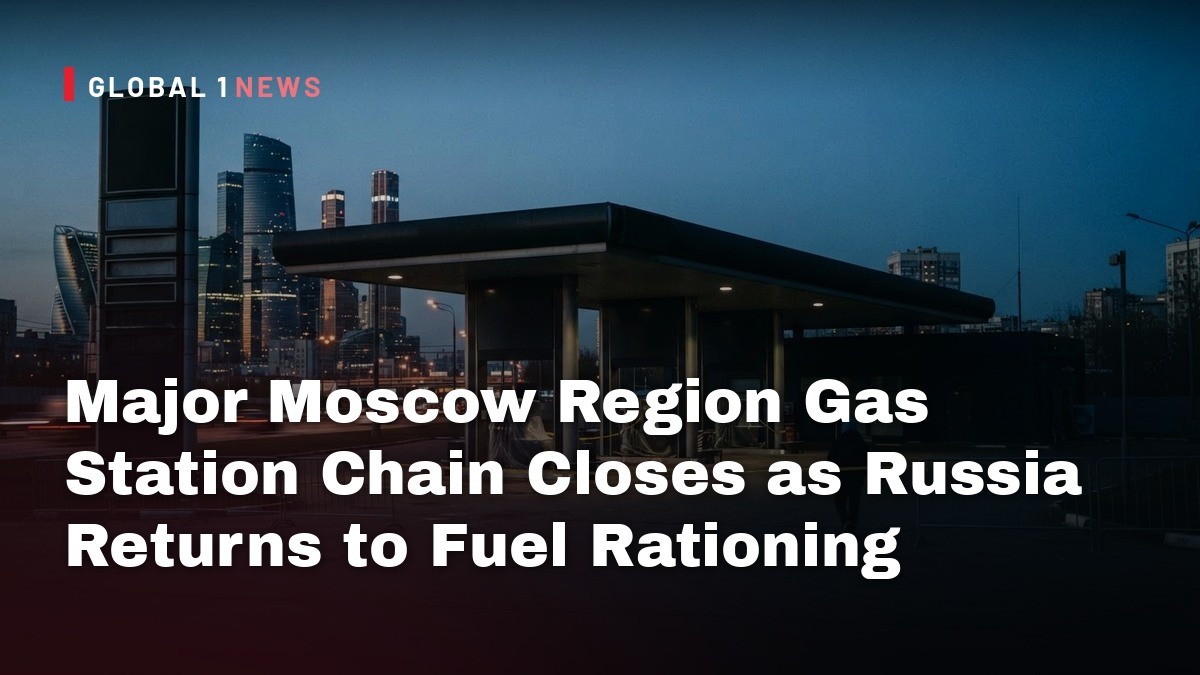
EuroTrans, the operator of the Trassa gas‑station chain in the Moscow region, has shut its doors ahead of a state seizure, a development that underscores the deepening fuel crisis gripping Russia as the Kremlin re‑imposes rationing measures. The chain, which ran 57 stations across the region, defaulted on its bond obligations in September, prompting state‑owned Sberbank to file a bankruptcy petition. The fallout has left roughly 1,400 workers furloughed and has raised fresh questions about the resilience of Russia’s fuel‑distribution network amid intensified drone attacks on refineries.
Bankruptcy filing and state intervention
EuroTrans’ financial distress became public when the company failed to meet its bond payments in September. Sberbank, a state‑controlled lender, responded by filing a bankruptcy petition, signalling the first formal step toward the chain’s dissolution. The move reflects a broader pattern of state‑driven interventions in private enterprises that are deemed unable to safeguard critical infrastructure.
Compounding the financial woes, several EuroTrans executives and senior police officers were arrested in the same month on accusations of diverting fuel earmarked for police vehicles. The arrests, reported by the source, suggest a possible nexus between corporate mismanagement and corruption within law‑enforcement ranks, further eroding confidence in the company’s ability to operate under the current pressures.
Legal basis for seizure under Putin’s decree
In August, President Vladimir Putin issued a decree granting the government temporary management authority over assets that fail to protect critical infrastructure from drone attacks. Analysts interpret this decree as the legal foundation for the impending seizure of Trassa’s assets, a step confirmed by the Moscow region’s Energy Ministry to the Interfax news agency. The ministry’s statement indicates that the seizure is already underway, aligning with the broader state strategy to centralise control over essential services amid the ongoing crisis.
The decree, while framed as a protective measure, also expands the Kremlin’s capacity to intervene in private enterprises, especially those linked to strategic sectors such as energy and transport. This legal instrument thus serves both a defensive purpose and a political one, reinforcing state dominance over the economy.
Impact on employees and local service provision
The closure of Trassa has left approximately 1,400 employees without work, as reported by the Energy Ministry. These furloughed workers face an uncertain future, with limited prospects for immediate redeployment within an industry that is itself under strain. The loss of a major retail network also disrupts fuel accessibility for motorists in the Moscow region, a area already grappling with limited supply.
For many commuters, the shutdown translates into longer travel times and increased reliance on alternative stations, many of which are now subject to strict purchase caps. The ripple effect of Trassa’s exit thus extends beyond the company’s balance sheet, affecting daily mobility and the broader regional economy.
Rosneft’s re‑introduction of rationing
Concurrently, Rosneft, Russia’s leading oil producer, has begun re‑imposing rationing at its stations nationwide. The company limits fuel purchases to 30 liters (approximately 7.9 gallons) within city limits and 50 liters (about 13.2 gallons) at highway stations. In Moscow, the cap is set at 50 liters per vehicle. These limits reflect a direct response to the sharp reduction in refining capacity caused by recent drone strikes.
Industry sources cited by Reuters estimate that the attacks have cut Russia’s oil‑refining capacity by roughly one‑third. The most affected facilities include refineries in Ryazan, Yaroslavl, and the broader Volga region. The reduction in output has forced both state and private operators to tighten distribution, with rationing becoming a visible symptom of the supply shock.
Fuel price dynamics amid the shortage
Since the start of 2026, gasoline prices have risen by about 16 percent, reaching an average of 98 rubles per liter (approximately $4.51 per gallon) as of early November. Diesel prices have similarly climbed, approaching 99.9 rubles per liter. These price hikes are directly linked to the constrained supply caused by refinery damage and the government’s export bans on gasoline and diesel, which were introduced to preserve domestic stocks.
The price increases, while modest in absolute terms, represent a significant burden for Russian consumers, whose purchasing power has already been squeezed by broader economic sanctions. The combination of higher prices and purchase caps intensifies the pressure on households, particularly in regions where public transport alternatives are limited.
Strategic implications of the fuel crisis
The convergence of corporate bankruptcies, state seizures, and rationing measures signals a deepening strategic vulnerability in Russia’s energy logistics. The Kremlin’s reliance on decrees to commandeer private assets underscores a shift toward greater centralisation, a trend that may persist beyond the immediate crisis. This centralisation could reshape the post‑crisis market landscape, potentially marginalising private operators that cannot meet state‑mandated resilience standards.
Moreover, the ongoing drone campaign against refineries, which has forced emergency export bans, illustrates the growing efficacy of low‑cost, high‑impact asymmetric warfare in undermining Russia’s energy security. The sustained pressure on refining capacity not only curtails domestic fuel availability but also hampers Russia’s ability to generate export revenues, a key pillar of its fiscal stability.
Outlook and potential policy responses
Looking ahead, the Russian government is likely to continue leveraging emergency powers to secure critical infrastructure, possibly extending the seizure framework to other sectors deemed vulnerable. The precedent set by the Trassa case may encourage further state takeovers of private firms that operate essential services, especially if they are perceived as unable to safeguard assets against drone threats.
For consumers, the immediate concern remains the availability of fuel at affordable prices. Unless the drone threat is mitigated or refinery capacity is restored, rationing and price pressures are expected to persist. The Kremlin may consider additional measures, such as expanding state‑run fuel stations or imposing stricter controls on private distributors, to stabilise the market.
In the broader geopolitical context, the fuel shortage reinforces Russia’s heightened sensitivity to external pressures. The crisis underscores how targeted attacks on energy infrastructure can translate into domestic economic strain, potentially influencing Moscow’s foreign‑policy calculus and its approach to securing alternative supply chains.
This article was produced with AI-assisted research and editorial support. Reporting is based on the source material cited below. Sources: The Moscow Times; themoscowtimes.com; Global1.News (11 November 2026).
By Irina Volkov, Staff Writer
What's Your Reaction?
 Like
0
 Dislike
0
 Love
0
 Funny
0
 Wow
0
 Sad
0
 Angry
0
Russia/Eastern Europe Correspondent at Global1.News. Covering Russian politics, energy, security, and the shifting dynamics of the post-Soviet space. Provides clear-eyed analysis on one of the world's most opaque regions.











Comments (0)