
Israel's Golan Gamble: Katz Warns Damascus as IDF Digs In on Mount Hermon
In a recent i24NEWS English report, IDF forces allowed journalists inside the military buffer zone Israel holds in southern Syria, offering a rare glimpse of the new frontline that has emerged since the collapse of Bashar al-Assad's regime.
In a recent i24NEWS English report, IDF forces allowed journalists inside the military buffer zone Israel holds in southern Syria, offering a rare glimpse of the new frontline that has emerged since the collapse of Bashar al-Assad's regime. The report, published this week, comes as Defense Minister Israel Katz visited the zone and delivered a blunt message to Damascus, underscoring how Israel's security posture on the Golan has shifted from defensive deterrence to active territorial control.
The video footage shows Israeli troops operating in the rugged terrain of the Syrian side of Mount Hermon, known in Arabic as Jabal al-Sheikh, with the snow-capped peak looming over the northern Galilee and the Syrian capital beyond. It is a visual reminder that the 1974 Disengagement Agreement, which governed the buffer zone for five decades, is now a relic of a bygone era.
Israel's Golan Gamble: Katz Warns Damascus as IDF Digs In on Mount Hermon
Jerusalem, Israel — Defense Minister Israel Katz stood on the Syrian side of Mount Hermon this week and delivered a message that left little room for ambiguity. "We will not leave Mount Hermon or the security zone as long as there are jihadist threats to the State of Israel," Katz said, addressing Syrian President Ahmed al-Sharaa directly. "The message to the president of Syria is clear — when you wake up in the morning in the palace in Damascus and look up at Mount Hermon and see the IDF, you know that we are here to defend our communities and our border."
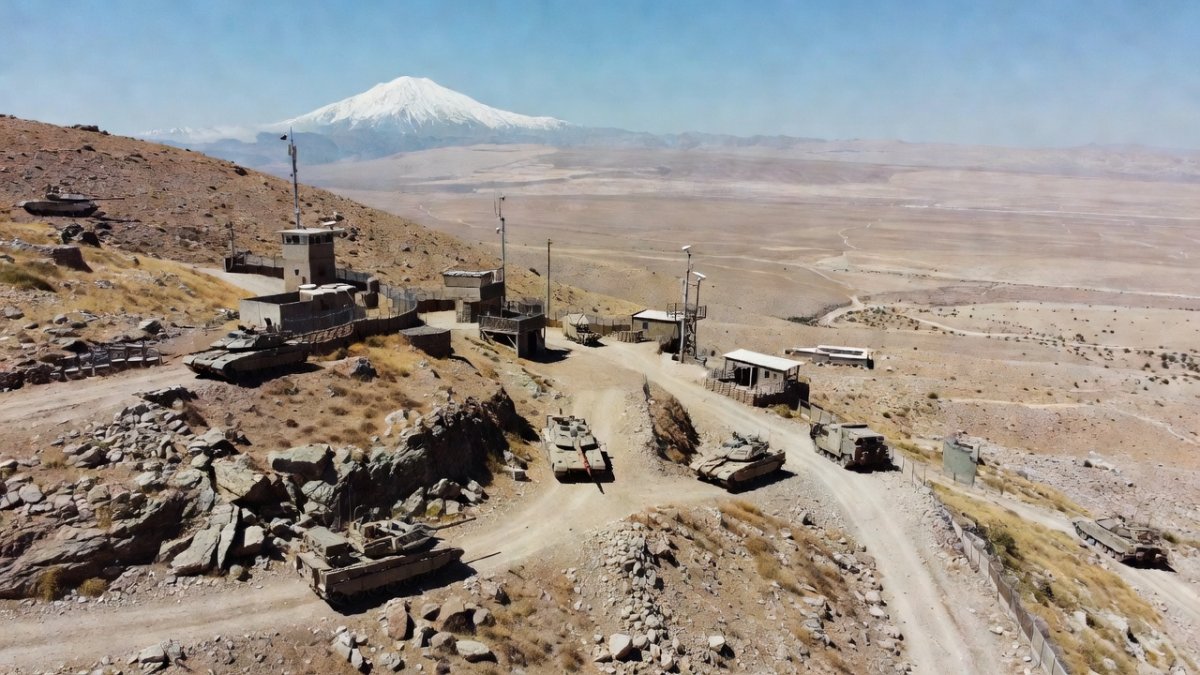
On the Ground: Inside Israel's Security Zone
The i24NEWS report, embedded with IDF troops, shows a military presence that is anything but temporary. At least nine Israeli bases have been established inside the buffer zone since the IDF seized it on December 8, 2024 — hours after Assad's government collapsed in Damascus. Hundreds of ground incursions into Syrian territory were recorded throughout 2025, according to data compiled by Syria Weekly, a monitoring group that tracks Israeli military activity across the border.
The zone itself, a strip of land running from the Golan Heights eastward toward the Syrian towns of Quneitra and Khan Arnabeh, was originally patrolled by the UN Disengagement Observer Force (UNDOF). That arrangement ended abruptly when Israel declared the 1974 Disengagement Agreement null and void, arguing that the agreement's signatory — the Syrian state — had ceased to exist in any meaningful form. Damascus, now under the leadership of Ahmed al-Sharaa, calls the Israeli move a clear violation of the agreement and has made its restoration a central demand in any negotiation.
For Israeli commanders on the ground, the calculus is simple. The buffer zone provides strategic depth against jihadist groups that operate in southern Syria, including remnants of Hayat Tahrir al-Sham and other factions that have filled the vacuum left by Assad's fall. The high ground of Mount Hermon, which rises to over 2,800 meters, offers an unobstructed view of Damascus and the approaches to the Israeli Golan. Losing that vantage point, Israeli officials argue, would expose northern communities to rocket fire and infiltration attempts.
Regional Context: Syria, Turkey and the Northern Front
The Israeli presence in the buffer zone is not happening in a vacuum. The overnight strikes on August 17-18 targeted the Abu al Duhur military airbase in Idlib Governorate, in northern Syria, with the stated goal of preventing Turkish troops from deploying there. Syria condemned the strikes as a violation of its sovereignty, while Turkey denied any intention to use the base. Prime Minister Benjamin Netanyahu addressed the incident on August 19, saying Israel had warned Turkey in advance. "The message was conveyed, but apparently they didn't hear it, so we made sure they understood it more clearly," Netanyahu said.
The Prime Minister's Office added that Israel and Syria had agreed to a status quo in security matters, and that Syria was "on the verge of breaching" that understanding. The strikes, according to Israeli officials, were a preemptive measure to keep Turkish military assets out of Syrian airspace and ground positions that could threaten Israeli operations.
This is where the regional chessboard gets complicated. Turkey, a NATO member with its own interests in Syria, has been expanding its influence in the north, backing factions opposed to al-Sharaa's government. Israel views Turkish military activity in Syria as a direct threat, particularly if it extends southward toward the Golan. The Israeli red lines are clear: no Turkish military activity in Syria, a demilitarized Syrian side of the Golan, security for Syria's Druze community, and a ban on the Syrian army acquiring strategic weapons.
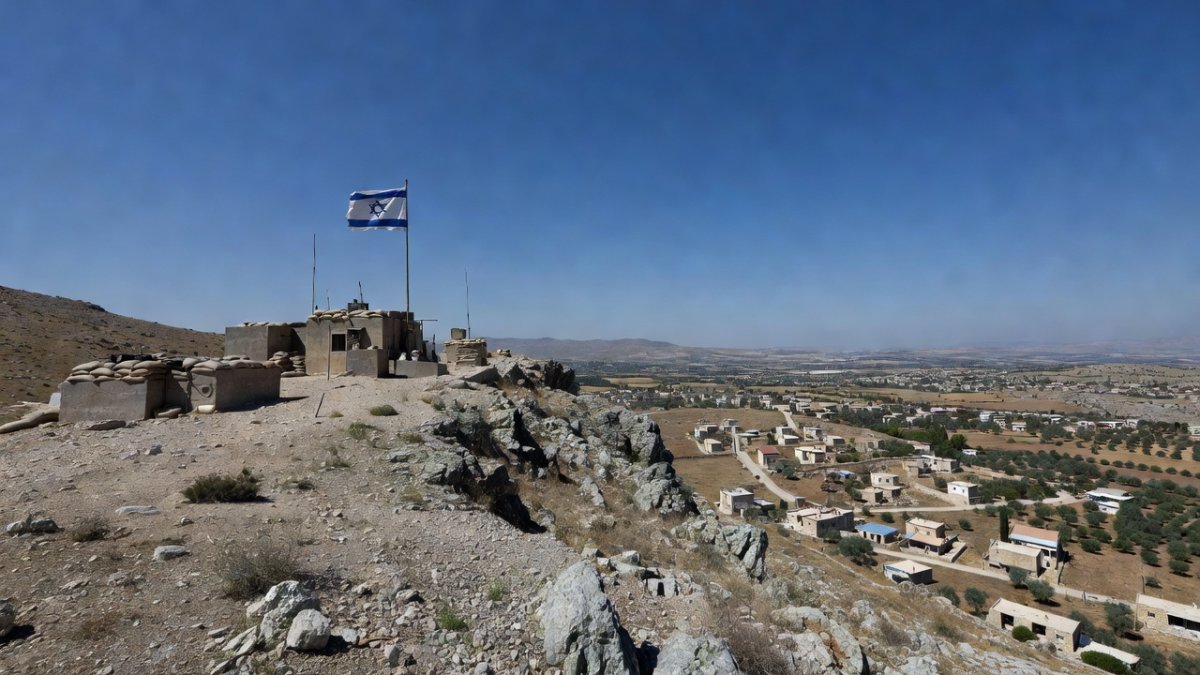
Diplomatic and International Reactions
Amid the military posturing, a diplomatic channel has opened. On Sunday, US-mediated talks took place in Jordan, where Syria's Foreign Minister Asaad al-Shaibani met with Israeli intelligence officials. AFP reported that al-Shaibani met Mossad head Roman Gofman, a meeting that would have been unthinkable just two years ago. Syria's state news agency SANA said the discussions focused on establishing practical mechanisms to halt Israeli attacks, arrests and targeting operations, reviving negotiations for a lasting security agreement, and easing Israel-Turkey tensions so their rivalry does not spill onto Syrian territory.
Syria's stated priorities in these talks are unambiguous: Israeli withdrawal to pre-December 2024 positions, full restoration of the 1974 disengagement agreement, and sovereignty over the Golan. Israel's counter-demands are equally firm, and the gap between the two positions remains wide. Yet the very fact that these talks are happening — with Mossad's chief sitting across from Syria's foreign minister — signals a shift in Damascus's approach. The al-Sharaa government, which came to power on a wave of anti-Israeli sentiment, is now signaling a desire to de-escalate, according to analysts.
The international community is watching with concern. The UN Security Council and UNDOF have both expressed worries that the significant Israeli presence in the buffer zone and repeated violations of the 1974 agreement risk further destabilizing Syria or reigniting an Israeli-Syrian conflict. For the UN, the buffer zone was never meant to be a permanent Israeli holding; it was a demilitarized space designed to prevent direct confrontation between two armies. That concept has now been upended.
Analysis and What This Means
The Israeli position on the Golan is not new — Israel has occupied most of the plateau since 1967 and annexed it in 1981, a move recognized by the United States under the Trump administration but rejected by most of the international community. What is new is the depth of Israel's incursion into Syrian territory beyond the Golan itself. The buffer zone, which was supposed to be a neutral strip, is now effectively Israeli-controlled land, with bases, patrols and a permanent military footprint.
For Israeli security officials, this is a necessary adaptation to a volatile reality. The Assad regime's collapse created a power vacuum that jihadist groups and foreign powers are rushing to fill. Israel's decision to hold the buffer zone and the Syrian side of Mount Hermon is, in their view, a defensive measure aimed at preventing hostile forces from establishing a foothold on Israel's northern border. IDF Chief of Staff Lt. Gen. Eyal Zamir, who visited Golan troops after the Abu al Duhur strikes, framed it in stark terms: "We see what is happening and are monitoring the changes on the Syrian front; we will not allow hostile forces to establish themselves on our borders."
But the strategy carries risks. By holding territory inside Syria, Israel has become a direct party to the Syrian conflict, with all the diplomatic and military consequences that entails. Damascus's demand for withdrawal is backed by the UN and most Arab states, and the longer Israel stays, the harder it will be to leave without a face-saving agreement. Analysts at Al Jazeera note that with Syria now signaling a desire to de-escalate, Israel is likely to bring more demands for the US to negotiate on its behalf. Syria, for its part, fears becoming a battlefield between Israel and Turkey, and is deeply concerned about Israel's territorial presence stretching to Mount Hermon and three southern provinces.
The Druze Factor and Domestic Pressures
One of the most sensitive issues in the buffer zone is the fate of Syria's Druze community, which lives in villages on both sides of the ceasefire line. Israel has repeatedly stated that it will ensure the security of the Druze population in southern Syria, a commitment that has drawn criticism from Damascus, which sees it as interference in Syrian internal affairs. The Druze in Israel, who serve in the IDF and hold senior positions in the security establishment, have lobbied for protection of their co-religionists across the border, adding a domestic political dimension to an already complex military situation.
For Israeli Druze leaders, the buffer zone is not just a strategic asset; it is a moral obligation. They point to incidents in 2025 when Druze villages in southern Syria came under attack from jihadist factions, and Israeli forces intervened to evacuate civilians. The IDF has established liaison channels with Druze community leaders in Syria, a relationship that Damascus views with deep suspicion. This dynamic could either become a model for coexistence or a flashpoint for further conflict, depending on how the broader negotiations unfold.
What Comes Next
The coming months will test whether the Israeli-Syrian status quo can hold. The US-mediated talks in Jordan represent a potential opening, but the gaps remain wide. Israel wants security guarantees that go beyond the 1974 agreement, including a demilitarized zone that it controls and a commitment from Damascus to keep Turkish forces out. Syria wants its territory back and a return to the pre-December 2024 status quo, which Israel has already rejected.
The Abu al Duhur strikes show that Israel is willing to use force to enforce its red lines, even at the risk of escalating tensions with Turkey. The question is whether Damascus can deliver on its promises to restrain jihadist groups and prevent Turkish encroachment, and whether Israel will accept those assurances as sufficient to begin a phased withdrawal. For now, the IDF remains on Mount Hermon, and Katz's message from the summit is clear: Israel is not going anywhere until its security demands are met.
For Israeli readers, the implications are immediate. The buffer zone is now part of Israel's northern defense architecture, and the Golan communities that were once on the front line now have a buffer of Israeli-controlled territory between them and the chaos of post-Assad Syria. But that buffer comes at a cost: a permanent military presence in a contested zone, ongoing diplomatic friction with Damascus and the UN, and the ever-present risk of a miscalculation that could draw Israel into a broader conflict. The status quo may be stable for now, but it is not a solution. It is a holding pattern, waiting for a political breakthrough that neither side seems ready to deliver.
By Hannah Berg, Staff Writer
This article was produced with AI-assisted research and editorial support. Sources: i24NEWS English; Times of Israel; Al Jazeera; Middle East Monitor; FDD's Long War Journal; SANA.
What's Your Reaction?
 Like
0
Like
0
 Dislike
0
Dislike
0
 Love
0
Love
0
 Funny
0
Funny
0
 Wow
0
Wow
0
 Sad
0
Sad
0
 Angry
0
Angry
0

Israel Correspondent at Global1.News. Based in Tel Aviv, covering Israeli politics, security, technology, and society. Provides balanced, deeply-sourced reporting on one of the most closely-watched regions in the world.













Comments (0)