
Israeli Settler Attacks Elderly Palestinian Amputee in Masafer Yatta
In a recent Middle East Eye report, harrowing footage emerged showing an Israeli settler attacking an elderly Palestinian amputee with a metal rod in the village of Khirbet al-Rakeez in Masafer Yatta, a cluster of herding communities in the occupied West Bank's South Hebron Hills.
In a recent Middle East Eye report, harrowing footage emerged showing an Israeli settler attacking an elderly Palestinian amputee with a metal rod in the village of Khirbet al-Rakeez in Masafer Yatta, a cluster of herding communities in the occupied West Bank's South Hebron Hills. The video, published on August 22, 2026, captures a moment of brutal violence that underscores the increasingly precarious existence of Palestinian communities in an area long targeted for displacement. The assault, which left elderly Sheikh Saeed al-Amour injured and hospitalized, is the latest in a pattern of settler violence that the United Nations has described as reaching an "all-time high" in 2026.
Amputee Attacked by Settler in Masafer Yatta, West Bank
Hebron, occupied West Bank – August 23, 2026 — The attack on Sheikh Saeed al-Amour occurred on Saturday morning on his own land in the hamlet of Al-Rakeez, a small community of herding families that has become a flashpoint for settler violence in the South Hebron Hills. According to Osama Makhamreh, an anti-colonial settlement activist in southern Hebron who spoke to the Palestine News Agency (WAFA), armed Israeli colonists, operating under the protection of Israeli occupation forces, severely assaulted al-Amour, leaving him with multiple injuries and bruises. Palestine Red Crescent crews transported the elderly man to Yatta Governmental Hospital, where he received medical treatment for his wounds.

The Attack on Saeed al-Amour
The footage captured by Middle East Eye shows a settler approaching al-Amour and striking him with a metal rod, a scene that local residents say is emblematic of the daily intimidation they face. The assault took place on land that al-Amour and his family have cultivated for generations, land that settlers have been attempting to seize as part of a broader push to establish outposts in the area. Makhamreh told WAFA that the settlers were armed and that the assault took place under the protection of Israeli occupation forces.
The Palestine Red Crescent's rapid response ensured he reached Yatta Governmental Hospital, where medical staff treated him for bruises and multiple injuries. The psychological toll of yet another violent encounter on his own land is incalculable. Figures on the exact number of attacks in Al-Rakeez this year were not immediately available, but residents describe recurring incursions and intimidation.
A Victim Who Already Lost So Much
For Sheikh Saeed al-Amour, Saturday's attack is not an isolated incident but the latest chapter in a painful story of loss and resilience. Roughly a year and a half ago, in April 2025, al-Amour was confronted on his property by an armed settler guard who opened fire at close range. The gunshot inflicted severe trauma to his leg, requiring an emergency amputation at a hospital in Hebron. The procedure left him permanently disabled.
That April 2025 shooting was itself part of the pattern of settler violence that human rights organizations have documented against residents of Al-Rakeez and surrounding herding communities. The fact that al-Amour, now an amputee, was targeted again with a metal rod on his own land speaks to the relentless nature of the pressure facing these communities. His case has become a symbol of the broader struggle of Palestinian herders in the South Hebron Hills, who face physical assaults, property destruction, and systematic restriction of access to their ancestral olive groves and grazing lands.
Occupation Forces' Response
Rather than protecting al-Amour or holding the settler accountable, Israeli occupation forces reportedly responded by raiding his home. According to Makhamreh, soldiers searched the premises, vandalized its contents, and confiscated the family's mobile phones. The raid appeared designed to intimidate the family and prevent them from documenting or reporting the attack.
The confiscation of mobile phones is a particularly telling detail. In communities like Al-Rakeez, phones are often the only means residents have to record settler attacks and alert human rights organizations and journalists. By removing these devices, Israeli forces are effectively attempting to silence the community and erase evidence of violence. This pattern of coordination between settlers and the military has been documented extensively by human rights groups, who note that Israeli forces frequently provide protection to settlers carrying out attacks, and at times participate directly in violence against Palestinian communities.
Masafer Yatta: A Community Under Threat
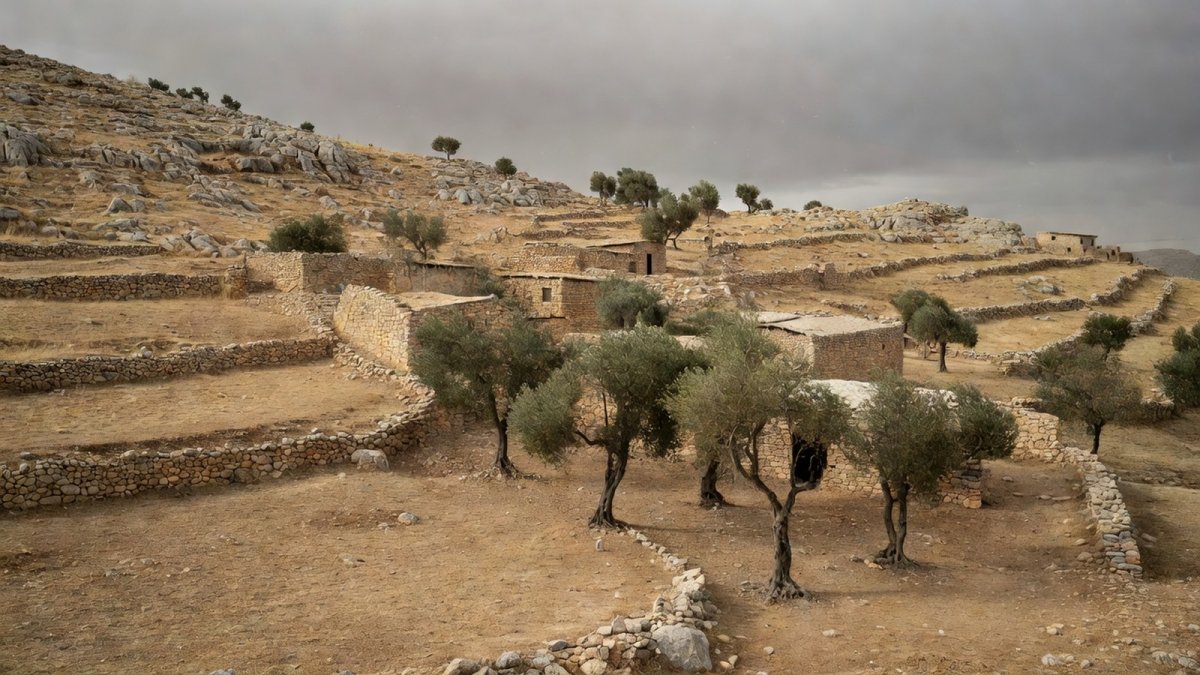
To understand the significance of the attack on al-Amour, one must understand the history of Masafer Yatta. This cluster of herding communities in the South Hebron Hills has been under threat of forcible displacement for nearly three decades. In 1999, the Israeli government issued eviction orders against approximately 700 Palestinian residents, alleging that they were "illegally living in a firing zone" — the area having been designated as a closed military training site known as "Firing Zone 918."
The residents of Masafer Yatta have fought the eviction orders through Israeli courts for years, but in May 2022, the Israeli High Court of Justice rejected their appeals, effectively greenlighting their eviction. The ruling was a devastating blow to the communities, which have lived on this land for generations. Then, in June 2025, during Israel's war on Iran, the Israeli government submitted a letter to the High Court including a request by the army to demolish at least 12 villages in Masafer Yatta and expel the inhabitants. That request, if implemented, would constitute one of the largest forced displacements of Palestinians in the occupied West Bank in decades.
The legal proceedings have created a climate of uncertainty and fear, which settlers have exploited. With the threat of eviction hanging over their heads, residents of Masafer Yatta have become increasingly vulnerable to settler attacks, knowing that the Israeli military and legal system offer them little protection. The attack on al-Amour must be understood in this context: it is not random violence but a calculated act aimed at pushing residents off their land.
West Bank Violence at Record Levels
The attack on al-Amour is part of a broader surge in violence across the occupied West Bank. According to data from the Colonization and Wall Resistance Commission, relayed by WAFA, Israeli forces and colonists carried out 2,256 attacks against Palestinians, their land, and property during July 2026 alone. Of these, Israeli forces committed 1,458 attacks, while colonists were responsible for 798. The attacks were recorded across all governorates, with Ramallah and al-Bireh seeing the highest number at 260, followed by Nablus with 247, Jenin with 190, Bethlehem with 185, and Hebron with 170.
The Commission described the figures as evidence of close coordination between military operations and colonists' violence, stressing that the Israeli military's protection and support of colonists has created an environment conducive to the escalation of attacks. This assessment is echoed by the UN human rights office (OHCHR), which warned on July 29, 2026, that West Bank settler violence has hit an "all-time high." As of July 20, 2026, 18 Palestinians had died in 2026 in attacks involving settlers — 12 at the hands of settlers, 3 by Israeli forces, with responsibility for the remaining 3 disputed.
The trajectory is alarming. The number of settler attacks has increased each year since 2023, rising to 1,835 in 2025. In the first four months of 2026, there were approximately 190 attacks per month, putting the year on track to exceed 2,000 attacks by year's end. The human cost of this violence extends beyond physical injuries and deaths. OCHA, the UN humanitarian affairs office, reported that between January 2023 and February 16, 2026, 883 Palestinian households — comprising 4,765 people — have been displaced across 97 communities, the majority of them Bedouin and herding communities like those in Masafer Yatta.
Analysis and Implications
The attack on Sheikh Saeed al-Amour, and the broader wave of settler violence it represents, raises serious concerns under international human rights law. The Fourth Geneva Convention, which applies to the occupied Palestinian territory, prohibits the forcible transfer of protected persons and the destruction of property not justified by military necessity. The systematic pattern of settler attacks, often carried out with the support or acquiescence of Israeli forces, has led human rights organizations to warn that the situation in the West Bank is increasingly resembling a campaign of forcible transfer.
OHCHR spokesperson Ravina Shamdasani captured the gravity of the moment in her July 29 briefing, stating: "We are alarmed by the Israeli Government's announcement to further increase the number of settlements and outposts and open calls by Israeli leaders for revenge and collective punishment against Palestinian communities, accompanied by threats to turn the West Bank into another Gaza." Her words reflect a growing international concern that the West Bank is being pushed toward a catastrophic escalation, with herding communities like Masafer Yatta bearing the brunt of the pressure.
For the residents of Al-Rakeez and the surrounding hamlets, the implications are immediate and existential. Each attack, each raid, each confiscated phone chips away at their ability to remain on their land. The Israeli government's June 2025 request to demolish 12 villages in Masafer Yatta, if carried out, would uproot hundreds of families and erase communities that have existed for centuries. The international community's response, so far, has been limited to statements of concern, with little concrete action to hold Israel accountable under international law.
As Sheikh Saeed al-Amour recovers in Yatta Governmental Hospital, his family and neighbors are left to wonder what comes next. The settler who attacked him remains free, and the Israeli forces who raided his home face no consequences. The message to the community is clear: they are not safe, and the institutions that should protect them are actively working against them. For the herding families of Masafer Yatta, the question is no longer whether they will be forced to leave, but when — and how many more attacks, how many more injuries, how many more deaths will occur before the world acts.
By Fatima Al-Rashid, Staff Writer
This article was produced with AI-assisted research and editorial support. Reporting is based on sources cited in the article.
What's Your Reaction?
 Like
0
Like
0
 Dislike
0
Dislike
0
 Love
0
Love
0
 Funny
0
Funny
0
 Wow
0
Wow
0
 Sad
0
Sad
0
 Angry
0
Angry
0

Gulf/MENA Correspondent at Global1.News. Based in Doha, covering Gulf politics, energy markets, diplomacy, and development across the Middle East and North Africa. Tracks the economic transformation of the Gulf states.















Comments (0)