
Israeli Court Extends Detention of Palestinian Doctor Dima Amin Despite Heart Attack
RAMALLAH — An Israeli military court on Sunday extended the detention of Dr. Dima Amin, a 55-year-old Palestinian gynaecologist from Ramallah, by an additional five days over social media posts — despite the fact that she suffered a severe heart attack and underwent cardiac catheterisation while in Israeli cu
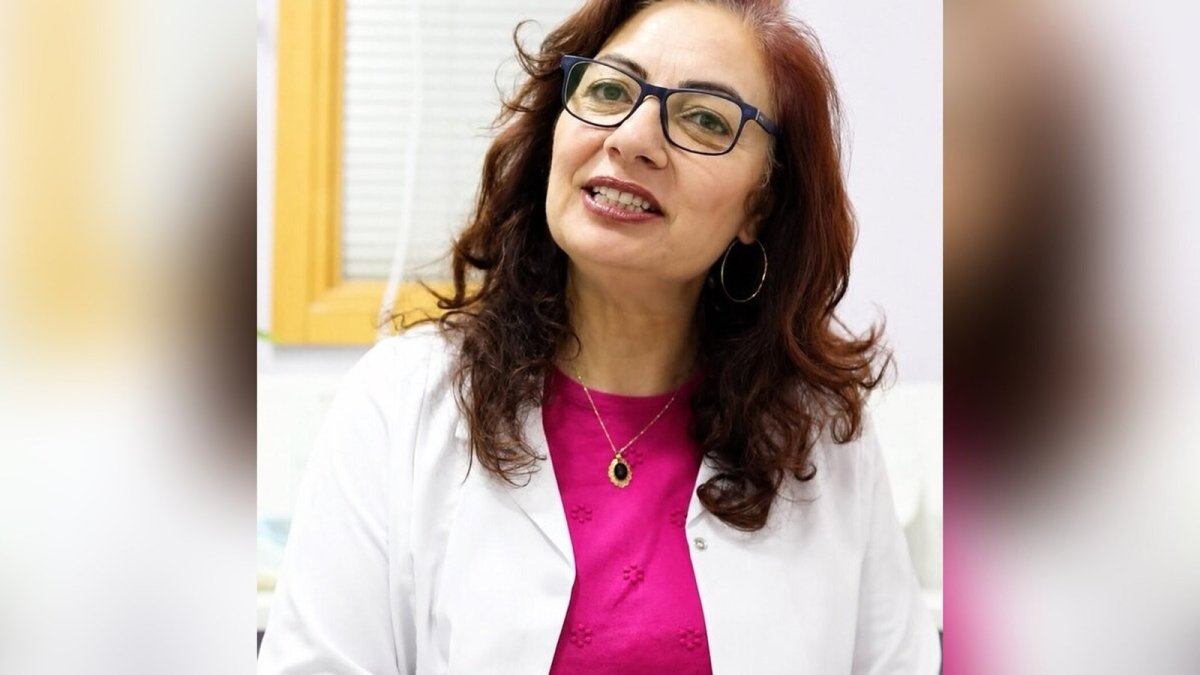
RAMALLAH — An Israeli military court on Sunday extended the detention of Dr. Dima Amin, a 55-year-old Palestinian gynaecologist from Ramallah, by an additional five days over social media posts — despite the fact that she suffered a severe heart attack and underwent cardiac catheterisation while in Israeli custody. The decision, confirmed by her lawyer and reported by Middle East Eye and the Turkish Press, means the physician will remain held at the Moscovia detention centre in Jerusalem even as she recovers from a life-threatening cardiac event.
Dr. Amin, who specialises in obstetrics and gynaecology and treats women's tumours at the Dunia Cancer Centre in Ramallah, was arrested at her home in the al-Tira neighbourhood in the pre-dawn hours of last Tuesday. Her detention has drawn sharp condemnation from human rights organisations, medical associations, and Palestinian civil society, who describe her case as part of a systematic Israeli campaign against Palestinian healthcare workers.
Arrest at 2am: The Family Account
Dr. Amin's husband, Haider Abu Ghosh, told Middle East Eye that dozens of Israeli soldiers stormed their home at approximately 2am on Tuesday, Aug. 18 — breaking the main lock on the door and skipping a regular search of the premises. A female soldier was among those who took Dr. Amin outside and handcuffed her, while Abu Ghosh was held in another room.
"The soldiers, along with a female soldier, took her outside the house and apparently handcuffed her. I didn't see anything because I was being held away from her," Abu Ghosh told Middle East Eye. The family was not informed of her whereabouts, and contact was cut off for roughly 30 to 36 hours, according to the New Indian Express and Middle East Eye. Her children — a son and daughter studying in Germany and Spain — learned of their mother's arrest by phone, thousands of miles away and unable to intervene.
The arrest was not accompanied by any formal charge presented to the family at the time. Israeli authorities have since alleged that Dr. Amin's arrest is linked to Facebook posts considered to constitute incitement or support for a hostile organisation. The precise content of those posts has not been publicly detailed, and no formal charge has been reported as of this writing.
Cardiac Emergency in Custody
According to the Israeli newspaper Haaretz, Dr. Amin suffered a cardiac episode immediately after her arrest, after soldiers forcefully tightened her handcuffs. Marks on her wrists remained visible days later, according to her lawyer, who spoke during a military court hearing and was quoted by the Israeli human rights organisation B'Tselem. The physician was transferred to Hadassah Hospital in Jerusalem, where she underwent cardiac catheterisation — a procedure used to diagnose and treat heart conditions.
Despite the severity of her medical condition, Dr. Amin was returned to detention on Thursday without being able to see her own medical reports. An initial court hearing extended her detention until Monday, and on Sunday a military court extended it by a further five days.
The decision to extend the detention of a woman recovering from a heart attack and a catheterisation procedure has raised serious questions about the Israeli military justice system's treatment of detainees with acute medical needs. B'Tselem, which has documented the case and quoted her lawyer's account of the restraints, has highlighted concerns over her treatment in custody.
The Legal Basis: Social Media Posts and 'Incitement'
The legal foundation for Dr. Amin's detention rests on allegations related to her Facebook activity. Israeli authorities have not publicly detailed the specific posts in question, and no formal charge has been reported. The case fits a broader pattern of Palestinians detained over social media content classified as "incitement" — a policy rights groups have criticised for its widening scope and vague application.
Under Israeli military law in the occupied West Bank, Palestinians can be held through the military court system for activities deemed to threaten security. In recent years, social media posts have increasingly become a basis for arrest, with critics arguing that "incitement" is applied broadly and inconsistently, often criminalising political expression rather than genuine security threats.
Dr. Amin's case is notable not only for her medical condition but also because she is a prominent female physician — a profile that does not fit the typical pattern of those detained over online content. Her specialisation in women's tumours and her work at the Dunia Cancer Centre in Ramallah had made her a respected figure in the Palestinian medical community.
Human Rights Response: MSF, B'Tselem, and Palestinian Civil Society
Médecins Sans Frontières (Doctors Without Borders/MSF) expressed deep concern over Dr. Amin's detention, describing her as the latest victim of a systematic Israeli campaign to pursue and detain Palestinian medical workers. In a statement, MSF called for the release of healthcare workers it considers arbitrarily detained and urged Israeli authorities to provide adequate medical care to those in custody.
The Palestinian Network of Civil Organizations condemned the arrest in strong terms, calling it "a flagrant challenge by the occupying state and its contempt for international norms and treaties." The network called on the World Health Organization, MSF, and international organisations to pressure Israel to release detained doctors and to allow Red Cross and humanitarian visits to those held.
B'Tselem, which has documented the case, quoted Dr. Amin's lawyer as saying during the military court hearing that she was tightly restrained during transfer and in hospital, with restraint marks visible on her wrists.
Israeli Arab Knesset member Dr. Ahmad Tibi, head of the Arab Movement for Change, condemned the arrest in a statement reported by Turkish Press: "The arrest of Dr. Dima Barqat from her home, along with the continued detention of Dr. Hussam Abu Safiya and around 100 other medical personnel, is condemnable and deeply concerning." Tibi also noted that Israeli authorities had barred him from visiting Abu Safiya, a decision in line with a policy attributed to National Security Minister Itamar Ben-Gvir.
The Broader Pattern: Medical Workers Under Detention
Dr. Amin's case is not isolated. According to L'Humanite, approximately 250 members of medical personnel are currently detained by Israel, most of them from the Gaza Strip. Among the most prominent is Dr. Hussam Abu Safiya, director of Kamal Adwan Hospital in northern Gaza, held since late December 2024 and denied visits and lawyer access, with his health reported to be deteriorating.
The detention of medical workers has become a recurring feature of Israel's military operations in the occupied territories. In Gaza, hospitals have been repeatedly raided and medical staff detained, interrogated, and in some cases held for extended periods without charge — practices widely condemned by international medical associations as violations of international humanitarian law, which protects medical personnel in conflict zones.
According to Palestinian figures cited in the source material, Israel is currently holding some 9,400 Palestinian prisoners, including 94 women and more than 350 children. These numbers, while not independently verified, reflect the scale of the detention system that operates across the occupied West Bank and East Jerusalem, as well as the thousands of Palestinians from Gaza held in Israeli facilities.
The Family's Ordeal: Silence and Uncertainty
For Haider Abu Ghosh, the past week has been a nightmare of silence and uncertainty. "The absence of a family member, without any means of communication, even without a health issue, is absolutely devastating for us, and it's deeply distressing that we can't know anything about her," he told Middle East Eye. The family's inability to obtain information about Dr. Amin's medical condition, her location, or the charges against her has compounded the trauma of her arrest.
The lack of communication is particularly concerning given Dr. Amin's cardiac condition. Family members have not been able to confirm whether she is receiving adequate follow-up care after her catheterisation, or whether her detention conditions are appropriate for someone recovering from a heart attack.
What This Means for Palestinian Medical Workers
The detention of Dr. Amin sends a chilling signal to Palestinian healthcare workers across the occupied territories. If a 55-year-old female physician specialising in cancer care can be arrested over social media posts and held despite a heart attack, the message is clear: no one is immune from detention, and medical credentials offer no protection.
The case also highlights the expanding scope of Israeli detention practices. The use of social media content as a basis for arrest, combined with the opaque military court system, creates an environment of fear and self-censorship among Palestinian professionals — including doctors, academics, and journalists — while the absence of publicly detailed charges raises concerns about due process and the right to a fair trial.
For the Palestinian medical community, the case is a reminder of the risks faced by those who choose to remain and serve their communities under occupation. Dr. Amin's work at the Dunia Cancer Centre had made her a vital resource for women with cancer in the West Bank — a population that already faces significant barriers to healthcare access due to checkpoints, permits, and the fragmentation of the health system.
The international response, while vocal, has so far produced no tangible change. MSF, B'Tselem, and Palestinian civil society organisations have called for her release, but Israeli military courts have continued to extend her detention. The case now rests on whether pressure from the WHO, medical associations, and governments can compel Israeli authorities to reconsider a detention that appears to prioritise punishment over medical necessity.
As Dr. Amin remains in custody, her family waits in anguish, her colleagues in Ramallah work under the shadow of similar threats, and the international community watches to see whether a physician's heart attack will be enough to halt the machinery of detention. The evidence so far suggests it will not.
This article was written with the assistance of AI-assisted research tools. All facts have been verified against the source material cited. Sources: Middle East Eye, Haaretz, B'Tselem, Médecins Sans Frontières, New Indian Express, L'Humanite, Turkish Press, Palestinian Network of Civil Organizations.
By Fatima Al-Rashid, Staff Writer
What's Your Reaction?
 Like
0
Like
0
 Dislike
0
Dislike
0
 Love
0
Love
0
 Funny
0
Funny
0
 Wow
0
Wow
0
 Sad
0
Sad
0
 Angry
0
Angry
0

Gulf/MENA Correspondent at Global1.News. Based in Doha, covering Gulf politics, energy markets, diplomacy, and development across the Middle East and North Africa. Tracks the economic transformation of the Gulf states.














Comments (0)