
The Ambiguity Paradox: How Beijing Is Replacing Military Coercion with Gray-Zone Pressure in the Taiwan Strait
The annual Han Kuang exercise in August 2026 saw Taipei spend ten days rehearsing for a war with Beijing, simulating a blockade, attacks on critical infrastructure, and the disruption of internet services. Yet, in a notable departure from previous years, Beijing waited until the final day of the drills to issue its first official comment, dismissing the exercise as a “wasteful charade.” This delayed, almost dismissive response underscores a significant shift in the People’s Liberation Army’s (PL
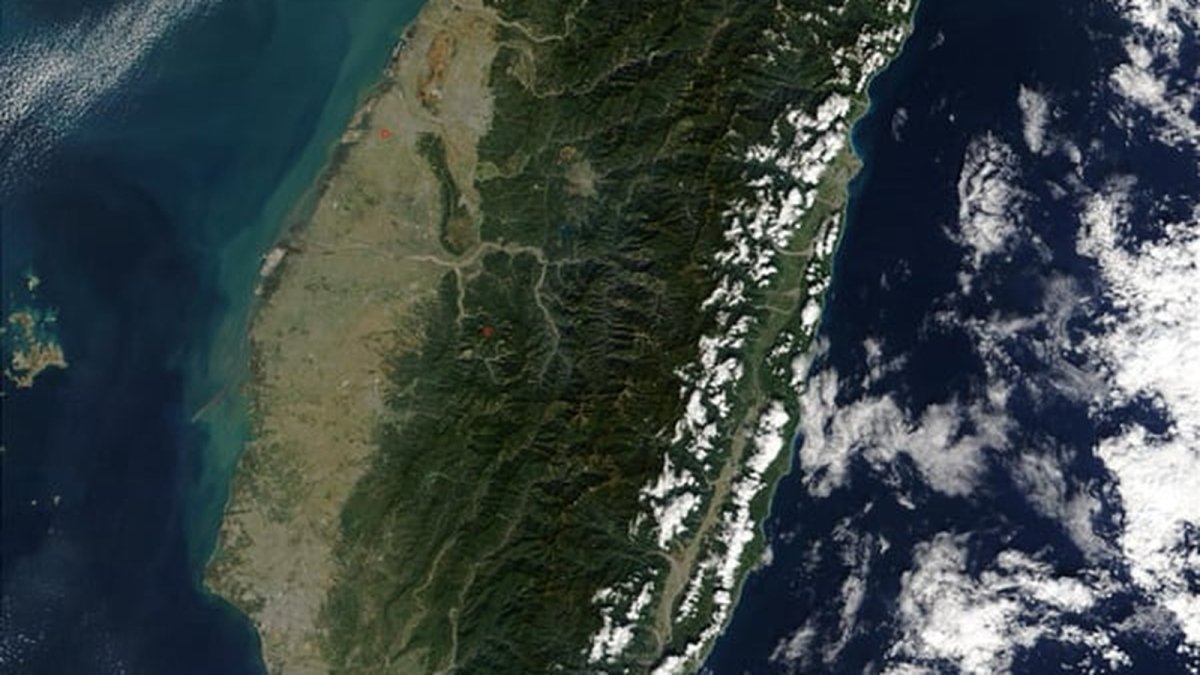
The annual Han Kuang exercise in August 2026 saw Taipei spend ten days rehearsing for a war with Beijing, simulating a blockade, attacks on critical infrastructure, and the disruption of internet services. Yet, in a notable departure from previous years, Beijing waited until the final day of the drills to issue its first official comment, dismissing the exercise as a “wasteful charade.” This delayed, almost dismissive response underscores a significant shift in the People’s Liberation Army’s (PLA) operational profile around Taiwan. While the dramatic encirclement exercises and large-scale military displays of recent years have captured global attention, the first half of 2026 witnessed PLA fighter-jet activity around the island fall to a three-year low. This decline sits uneasily with the conventional assumption that Beijing is steadily escalating military preparations for reunification. Instead, it suggests a strategic recalibration: China appears to be shifting the center of gravity of its pressure campaign away from highly visible military coercion toward methods that are less easily classified, creating a new form of ambiguity that is proving difficult for Washington and Taipei to counter.
The Paradox of Ambiguity Changing Hands
For decades, strategic ambiguity was primarily an American instrument in the Taiwan Strait. Its purpose, however, was not simply to deter mainland China but to restrain both sides of the strait. Beijing was kept guessing about American intervention in the event of a war of reunification, while Taipei was left in the dark regarding the extent of American support for its own political trajectory. This system of dual restraint helped sustain a political middle ground, preventing either side from making a decisive move that would force the question of Taiwan’s final status. Washington’s “One China policy” acknowledged Beijing’s position that Taiwan is part of China without fully endorsing the PRC’s sovereignty claim, while simultaneously withholding support for Taiwan independence. This carefully calibrated ambiguity preserved a status quo whose final political meaning remained deliberately unsettled.
Today, however, an influential part of the American policy community is calling for “strategic clarity,” arguing that China’s expanded military capabilities have made the consequences of miscalculation too severe. Yet, as Washington seeks greater clarity in its commitments, Beijing is increasingly creating ambiguity through gray-zone activities that are harder to identify and even harder to answer with a proportionate response. This is the emerging paradox: as the United States moves toward clarity, China is moving toward ambiguity, effectively relocating the strategic fog from the realm of American intentions to the realm of Chinese actions.
The Breakdown of the Tacit Status Quo
The old equilibrium in the Taiwan Strait depended less on a shared definition of the status quo than on a shared willingness not to force the question. Washington avoided endorsing either unification or formal independence; Beijing tolerated an unresolved political reality as long as the One China framework remained intact; and Taipei maintained its de facto autonomy without formally crossing the line toward independence. As ambiguity changes hands, this tacit understanding is steadily breaking down. Beijing is now attempting to define the status quo through its gray-zone activities. In May, China’s Foreign Ministry stated explicitly that “the two sides of the Strait belong to one China, and this is the ‘real’ status quo across the Taiwan Strait.” From Beijing’s perspective, it is not China that is changing the status quo, but rather Taiwan’s leaders and “outside powers” who are hollowing out the One China framework.
The data supports this shift in tactics. While fighter-jet numbers dropped, Taipei recorded 55 sightings of mainland Chinese government vessels around the island in June, including coast guard and research ships—an 83 percent increase from May and a 120 percent increase year-on-year. China has also begun coast guard patrols east of Taiwan, describing them not as military operations but as “routine law-enforcement patrols” in waters under Chinese jurisdiction. The three parties interpret these actions very differently. Taipei sees them as incremental attempts to establish jurisdiction in areas where Beijing has not previously exercised it. Washington views them as coercive actions below the threshold of war. Beijing, however, describes the same behavior as entirely “normal”—if Taiwan is part of China, then a Chinese coast guard vessel operating around the island is simply carrying out a domestic law enforcement function.
Four Audiences, Four Stories
Beijing’s new ambiguity is not aimed at Taipei and Washington alone. It is a multi-faceted strategy designed to tell different stories to at least four distinct audiences. The first audience is the Chinese public. Beijing has long tied national rejuvenation to eventual unification, but repeated military threats create a credibility problem. If every major exercise is presented as another step toward war that never materializes, the signal loses its force. Gray-zone actions offer a useful middle ground, allowing the leadership to argue that sovereignty is not merely a goal for the future but is already being exercised, incrementally and visibly. A coast guard patrol can demonstrate progress without forcing Beijing to make the far more consequential decision to go to war.
The second audience is Taipei. Overt military intimidation can easily backfire, strengthening the island’s preferred narrative of democratic defense against an authoritarian power and reinforcing support for higher defense spending and closer ties with Washington. Routine civilian activity works differently. A Chinese coast guard vessel appearing for the first time east of Taiwan may generate headlines, but when these vessels appear every month, the media and society begin to lose interest. Beijing does not need Taiwanese society to accept its sovereignty claim; it may be enough to make certain activities seem less exceptional over time.
The third audience is Washington. Here, Beijing’s operational ambiguity runs directly into the American debate over strategic clarity. The United States can make clear that it can arm Taiwan and prepare for a blockade, but what should it do about a coast guard inspection or a fisheries-protection patrol? The clearer Washington becomes about the actions that could trigger military intervention, the stronger Beijing’s incentive to concentrate on actions that do not cross that threshold. Clear red lines work best when the prohibited act is easy to identify; they are far less effective against a strategy built from dozens of individually limited moves, none of which clearly crosses the line.
The fourth audience is the rest of Asia, particularly Southeast Asian governments. In August, while the Han Kuang exercise was underway, Chinese and Indonesian naval vessels conducted what Beijing called a navigation exercise east of Taiwan. Taipei condemned it as a dangerous attempt to strengthen China’s jurisdictional claims, while Jakarta described it as a routine passing exercise unrelated to war fighting. This contrast is revealing. A missile launch is easy to recognize as a crisis, but a civilian exercise is much harder to classify. Many Southeast Asian governments have strong incentives to treat such incidents as limited disputes and avoid endorsing either Taipei’s or Beijing’s stance. Beijing’s new type of ambiguity gives them political room to stay on the sidelines—and for Beijing, that is already a strategic gain.
The Limits of Strategic Clarity
Washington’s strategic clarity may seem like a good offer for Taipei, but it can easily go too far. The Taiwan Relations Act requires the United States to maintain the capacity to resist force or coercion against Taiwan, but it does not require Washington to automatically enter a war on Taiwan’s behalf. Even today, strategic clarity remains a proposal debated in Washington rather than a treaty-like security guarantee. Nor should stronger American support be confused with support for whatever political course Taipei chooses. Washington’s One China policy has always combined assistance to Taiwan with restraints on Taiwan, opposing unilateral changes to the status quo from both sides of the strait.
Repeated demands for ever clearer American signals can become counterproductive. Greater clarity may reassure Taiwan in the short term, but it can also weaken the uncertainty that once constrained political risk-taking by both Beijing and Taipei. If Taipei begins to treat clearer rhetorical support from Washington as evidence of an eventual U.S. commitment to fight under almost any circumstances, it risks confusing political sympathy with strategic obligation. American interests in the Taiwan Strait are substantial, but they are not identical to Taiwan’s. No responsible U.S. government can write Taipei a blank check whose terms are determined by decisions made on the island. Beijing watches this debate closely, and increasingly explicit U.S. signals can look less like deterrence and more like evidence that the old One China policy is being hollowed out—reinforcing Beijing’s turn toward its own forms of ambiguity.
Implications for the Korean Peninsula and Northeast Asian Security
The dynamics unfolding in the Taiwan Strait carry profound implications for the Korean Peninsula, where a similar strategic calculus is at play. The debate over strategic clarity in Washington regarding Taiwan mirrors the ongoing discussions about U.S. extended deterrence for South Korea. Just as Taipei seeks ever more explicit promises from Washington, Seoul has periodically pressed for clearer security guarantees against North Korean threats. The lesson from the Taiwan Strait is that clarity has limits: it may deter one form of pressure while encouraging another. For the ROK, this suggests that an over-reliance on explicit American red lines could inadvertently incentivize Pyongyang to employ gray-zone tactics—cyberattacks, maritime incursions, and low-level provocations—that stay below the threshold of overt military conflict.
North Korea has long been a practitioner of gray-zone tactics, from the 2010 shelling of Yeonpyeong Island to frequent cyber operations and drone incursions. Beijing’s evolving playbook in the Taiwan Strait offers a template that Pyongyang may study closely. The use of civilian and paramilitary vessels to assert jurisdiction, the framing of coercive actions as routine law enforcement, and the deliberate cultivation of ambiguity to complicate alliance responses are all tactics that resonate with North Korean strategic thinking. For Seoul, this underscores the need to develop robust responses to gray-zone challenges that do not rely solely on the threat of overwhelming military force.
South Korea also has a significant economic stake in cross-strait stability. The ROK’s export-driven economy is deeply integrated into regional supply chains, particularly in semiconductors, shipping, and petrochemicals. A crisis in the Taiwan Strait that disrupts shipping lanes or semiconductor production would have immediate and severe repercussions for the Korean economy. This gives Seoul a strong interest in maintaining stability, even as it navigates the delicate diplomatic balance between its security alliance with Washington and its economic relationship with Beijing. South Korea’s cautious stance on the One China policy reflects this reality: Seoul recognizes Beijing’s position while maintaining unofficial relations with Taipei, seeking to avoid being forced to choose sides in a way that would damage its economic interests.
The broader lesson for Northeast Asia is that peace in the Taiwan Strait has historically depended not on unconditional guarantees but on all three sides believing that restraint remains preferable to testing one another’s red lines. If mutual restraint disappears, even the clearest American promise may produce a less predictable strait, eventually leaving the rest of Asia to pay the price. For Japan and Southeast Asian states, stability is less about choosing between competing political narratives than about preventing a crisis that would disrupt supply chains and regional security. The relocation of ambiguity from American intentions to Chinese actions does not eliminate the risk of miscalculation; it merely changes its form. The challenge for Washington, Taipei, Seoul, and the wider region is to develop strategies that can respond to this new form of pressure without triggering the very escalation they seek to avoid.
This article was produced with AI-assisted research and editorial support. Sources: The Diplomat (Shinan (Austin) Hao, August 21, 2026).
By Prof. David Park, Staff WriterWhat's Your Reaction?
 Like
0
Like
0
 Dislike
0
Dislike
0
 Love
0
Love
0
 Funny
0
Funny
0
 Wow
0
Wow
0
 Sad
0
Sad
0
 Angry
0
Angry
0

East Asia/Technology Correspondent at Global1.News. Seoul-based voice covering Korean politics, technology, business, and culture. Analyzes how technology and geopolitics intersect across East Asia.










Comments (0)