
Israeli Attacks Kill 18 Palestinians Across Gaza Despite Ceasefire
Israeli attacks killed at least 18 Palestinians across the Gaza Strip on Sunday, including three children and an unborn baby, in the latest violations of the ceasefire that has been in effect since Oct. 10, 2025. This incident underscores the persistent fragility of the truce amid repeated breaches that have already claimed over a thousand lives since it began. The ongoing strikes continue to erode any sense of stability for civilians in the enclave.
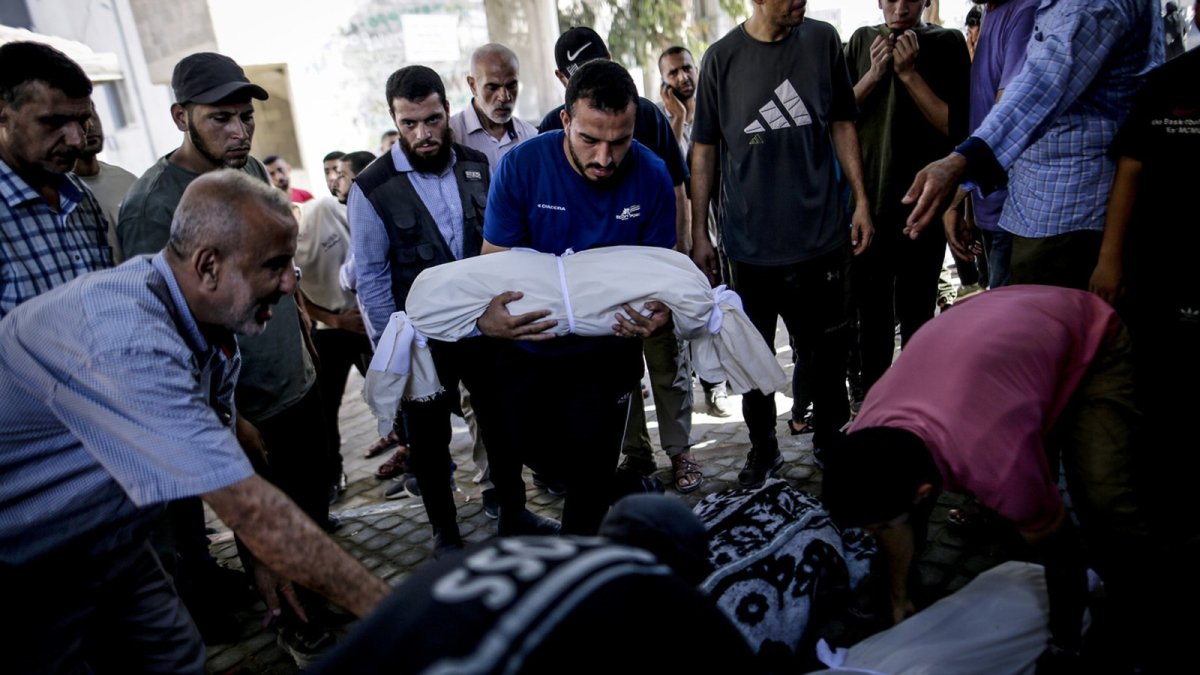
Israeli attacks killed at least 18 Palestinians across the Gaza Strip on Sunday, including three children and an unborn baby, in the latest violations of the ceasefire that has been in effect since Oct. 10, 2025. This incident underscores the persistent fragility of the truce amid repeated breaches that have already claimed over a thousand lives since it began. The ongoing strikes continue to erode any sense of stability for civilians in the enclave.
Scale of Sunday's Casualties
Medical sources and witnesses documented deaths and injuries from multiple Israeli airstrikes and drone strikes throughout the day. The attacks targeted residential areas, a tent shelter for displaced people, a motorcycle, and a vehicle in different parts of the enclave.
Three children and one unborn baby were among those killed. Several other people sustained wounds in the strikes.
Khan Younis Strike on Al-Hams Family
A medical source at Nasser Hospital in Khan Younis reported that an Israeli airstrike hit an apartment belonging to the Al-Hams family in the Al-Qarara area northwest of the city. The strike killed Mahmoud Zaki Al-Hams, 38, his wife Fatima Al-Hams, 37, and their young daughter.
Three other people were injured in the same attack. Witnesses confirmed the identities of the victims to Anadolu Agency.
Central Gaza Helicopter and Airstrikes
In the Al-Mashaala area west of Deir al-Balah, an Israeli helicopter strike killed Kamal Abu Muailiq, 68, and his wife Huda, 59. Two additional people died in a separate airstrike on a motorcycle in the same city.
These incidents added to the daily toll reported across central Gaza.
Gaza City Attacks on Displaced People and Apartments
In Gaza City, an Israeli strike on a tent sheltering displaced people killed two Palestinians, including a child, and wounded eight others, including children. A separate strike on an apartment in the Al-Sousi Tower killed four Palestinians.
The victims in the Al-Sousi Tower were identified as Abdullah Abu Taif, 33, his wife Abeer Anan, 29, their 5-year-old son Azzam, and their unborn baby, according to a medical source at Al-Shifa Hospital.
Strikes targeting tent shelters for displaced families, alongside incidents near medical facilities, illustrate the severe humanitarian strain in Gaza where civilian infrastructure faces repeated pressure. The reported injury from an apartment strike near the Palestine Mosque and artillery activity in central areas further compound challenges for health services already overwhelmed by prior destruction of roughly 90 percent of infrastructure. Aid restrictions exacerbate these conditions, limiting access to essentials and forcing reliance on fragile local systems amid widespread displacement. Palestinians describe the ceasefire as an illusion precisely because such incidents continue to disrupt daily life, turning supposed periods of calm into extensions of hardship. Medical infrastructure bears the brunt through increased caseloads from sporadic attacks, while the broader environment of uncertainty discourages safe movement or reconstruction. This reality underscores how violations translate into tangible barriers to recovery, perpetuating cycles of vulnerability for communities seeking basic security and services.
Northern Gaza and Vehicle Strike
One Palestinian was killed after being directly targeted in the Jabalia refugee camp in northern Gaza, and another was critically wounded in the attack. Four more Palestinians died when an Israeli drone struck a vehicle in Gaza City.
Separately, Israeli military vehicles opened fire toward eastern areas of the Al-Tuffah neighborhood in eastern Gaza City, with no casualties immediately reported. Israeli artillery also shelled the Dar Al-Salam area in central Khan Younis.
These incidents completed the reported total of at least 18 deaths for the day.
Hamas Statement on Deliberate Escalation
Hamas accused Israel of deliberately escalating its attacks on the Gaza Strip to derail understandings reached with mediators and the US administration on completing implementation of the ceasefire agreement. The group said Israeli attacks since Sunday morning had killed more than 18 Palestinians and wiped out entire families.
The bombardment constituted a deliberate escalation by the government of war criminal Netanyahu, aimed at obstructing the understandings reached with the mediators, including the US administration, to complete the implementation of the ceasefire agreement, it said. Hamas called on the mediators and guarantors of the ceasefire agreement to assume their responsibilities, condemn the Israeli attacks and immediately pressure Israel to halt its assaults.
The group described the attacks as acts that amount to war crimes and crimes against humanity, and called on the international community to take legal action to hold Israeli leaders accountable. It also urged measures to protect Palestinians, who it said continued to face the threat of genocide and displacement.
Ceasefire History and Cumulative Violations
The first phase of the ceasefire took effect on Oct. 10, 2025. Palestinian officials say Israel has violated the agreement thousands of times through continued attacks, arrests and military incursions, killing 1,230 Palestinians and injuring 4,076 others since then.
The ceasefire followed two years of Israel's genocidal war on Gaza, which began on Oct. 8, 2023. The assault has killed more than 73,000 Palestinians, wounded over 174,000 others, devastated about 90 percent of the enclave's civilian infrastructure and left reconstruction costs estimated by the UN at around $70 billion.
The Gaza Health Ministry's report of 152 Palestinians killed in July marks the highest monthly death toll this year, underscoring a persistent pattern of violations. These figures reveal the truce's inherent fragility, as even a formal halt in major operations has failed to prevent repeated strikes that erode any sense of stability. The cumulative toll since the ceasefire began demonstrates how incremental breaches accumulate into a broader erosion of the agreement, with each incident compounding civilian suffering and straining limited resources. Such numbers highlight the disconnect between declared pauses and ground realities, where daily risks persist despite international expectations for de-escalation. This pattern suggests that without robust enforcement mechanisms, ceasefires remain vulnerable to gradual unraveling, leaving populations exposed to ongoing threats that undermine humanitarian planning and long-term recovery efforts in an already devastated enclave.
Agreement on Next Phase and Continued Attacks
Two days before Sunday's strikes, US President Donald Trump and the Board of Peace announced an agreement to implement the next phase of the Gaza ceasefire, with the board saying Hamas had accepted a detailed roadmap. Israel has not officially commented on the proposal.
Palestinians say Israel's continued attacks, coupled with restrictions on humanitarian aid despite the ceasefire, have turned the truce into an illusion and further deepened their humanitarian crisis.
The Friday announcement by Trump and the Board of Peace of a next-phase agreement, which Hamas accepted as a detailed roadmap covering security, administrative, transitional arrangements, and a proposed political track, stands in contrast to Israel's silence on the matter. This development introduces potential pathways for broader implementation, yet Sunday's escalations raise questions about commitment to advancing beyond the initial truce phase. Hamas has framed the violations as deliberate efforts to derail progress, highlighting tensions that could stall momentum toward the roadmap's goals. Internal Israeli dynamics, including opposition voices aligned with hardline positions, may contribute to the non-response, complicating negotiation dynamics. The pattern of breaches since October 10 2025 suggests that without clear signals of adherence, the next phase risks remaining aspirational rather than operational. Such political friction tests the viability of multilateral frameworks, where one party's acceptance meets another's reticence amid ongoing ground actions that test the boundaries of agreed arrangements.
Human Impact and Calls for Accountability
The pattern of strikes on family homes and shelters for displaced people has compounded the suffering of Gaza residents already living amid widespread destruction. Entire families, including the Al-Hams family and the Abu Taif family, were wiped out in single attacks.
These developments underscore the fragility of the truce and the urgent need for mediators to enforce its terms to prevent further loss of life.
Attacks on civilian homes and shelters, including incidents wiping out entire families, raise serious concerns under international humanitarian law, which mandates the protection of non-combatants and prohibits indiscriminate force. The framing of these events as war crimes and crimes against humanity by Hamas points to calls for accountability mechanisms that could address alleged breaches through legal channels. Obligations to distinguish between military targets and civilian areas remain central, yet repeated strikes on residential zones and tent encampments test compliance with these standards. Families affected in such incidents highlight the human cost when protections fail, prompting discussions on enforcement through international bodies. This context emphasizes the need for investigations into patterns that may violate core principles of distinction and proportionality, potentially leading to broader legal scrutiny. Sustained attention to these duties is essential to prevent further erosion of norms designed to safeguard populations during conflicts.
By Fatima Al-Rashid, Staff WriterThis article was produced with AI-assisted research and editorial support. Reporting is based on sources cited in the article.
What's Your Reaction?
 Like
0
Like
0
 Dislike
0
Dislike
0
 Love
0
Love
0
 Funny
0
Funny
0
 Wow
0
Wow
0
 Sad
0
Sad
0
 Angry
0
Angry
0

Gulf/MENA Correspondent at Global1.News. Based in Doha, covering Gulf politics, energy markets, diplomacy, and development across the Middle East and North Africa. Tracks the economic transformation of the Gulf states.









Comments (0)