
Smotrich Ties 'Complete Victory' to Gaza Resettlement as Settlement Plans Advance
In a recent Middle East Eye report, Israeli Finance Minister Bezalel Smotrich made his clearest statement yet on what he means by victory in Gaza: the resettlement of the Strip by Israeli settlers. Speaking on a podcast, he described such an outcome as the necessary price for the October 7, 2023 attack, saying there must be a price for what he called the most horrific massacre against Israel since the Holocaust.
In a recent Middle East Eye report, Israeli Finance Minister Bezalel Smotrich made his clearest statement yet on what he means by victory in Gaza: the resettlement of the Strip by Israeli settlers. Speaking on a podcast, he described such an outcome as the necessary price for the October 7, 2023 attack, saying there must be a price for what he called the most horrific massacre against Israel since the Holocaust. The remarks come as plans for new settlements in northern Gaza sit ready for approval.
Smotrich Ties "Complete Victory" to Gaza Resettlement as Settlement Plans Advance
Jerusalem – August 2, 2026 — Israeli Finance Minister Bezalel Smotrich has defined his vision of victory in Gaza as the establishment of Israeli settlements on Palestinian land, a position that directly threatens the fragile ceasefire and the stalled international effort to stabilize the territory after nearly three years of war. His comments arrive amid ongoing ceasefire violations and as plans for three northern Gaza settlements await Prime Minister Benjamin Netanyahu's approval.
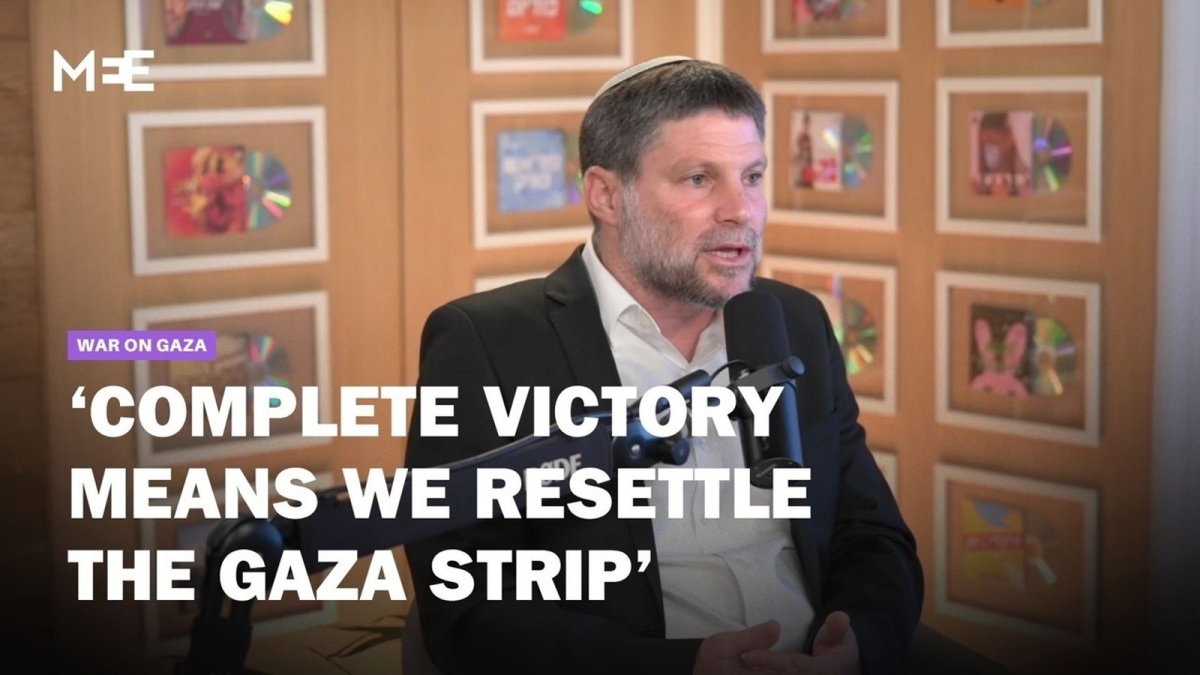
The Price of Victory: Smotrich's Vision for Gaza
Bezalel Smotrich, born in 1980 in the Golan Heights settlement of Haspin and a lifelong resident of the West Bank settlement of Kedumim, has long framed Palestinian land as compensation for perceived defeats. In the podcast referenced by Middle East Eye, he insisted that "there has to be a price, a price for the mistake, a price for the defeat suffered by our enemies." He added that those responsible for the October 7, 2023 attack, which killed about 1,200 people in Israel and took 251 hostage, must lose territory. "That's the price, that's the only language our enemies understand," he said.
His Religious Zionist worldview treats territorial expansion as the sole currency understood by adversaries. As leader of the Religious Zionist Party and head of the Defense Ministry's Settlements Administration established in 2023, Smotrich has previously announced plans to annex 82 percent of the occupied West Bank. After October 7, he said he weighed quitting government but "couldn't find anything he did wrong," a remark that underscores his refusal to reassess policy even as the conflict has devastated Gaza. For Palestinians, this worldview translates into the prospect of permanent exclusion from their land.
A Plan Already in Motion
The settlement plans are not abstract. On June 30, 2026, after meeting Sderot Mayor Alon Davidi, Smotrich announced that staff work for three Israeli settlements in northern Gaza had been completed and awaited only Netanyahu's approval. "The Settlement Administration, under my leadership in the Defense Ministry, has completed its staff work, and we are ready to establish three settlements immediately once we receive the green light from the prime minister," he said, calling on Netanyahu to "complete the mission, and restore real security to the residents of the South."
Smotrich said Israel needed to "complete the conquest of the remaining area, defeat Hamas, and establish a belt of Jewish settlements that will serve as a security buffer for Sderot and the Gaza border communities." He emphasized that "where there is no settlement, there is no security" and that Israel would not return to the reality before October 7. The mechanism leverages Defense Ministry powers to advance construction, embedding settlement infrastructure directly into military operations. In late July, the Nachala settler group organized a march near the Gaza border with ministers including Smotrich and National Security Minister Itamar Ben-Gvir, drawing thousands of demonstrators. Israeli Heritage Minister Amichai Eliyahu of Ben-Gvir's Otzma Yehudit party said on July 23 that the government's ultimate goal is to "regain control of Gaza, including establishing settlements."
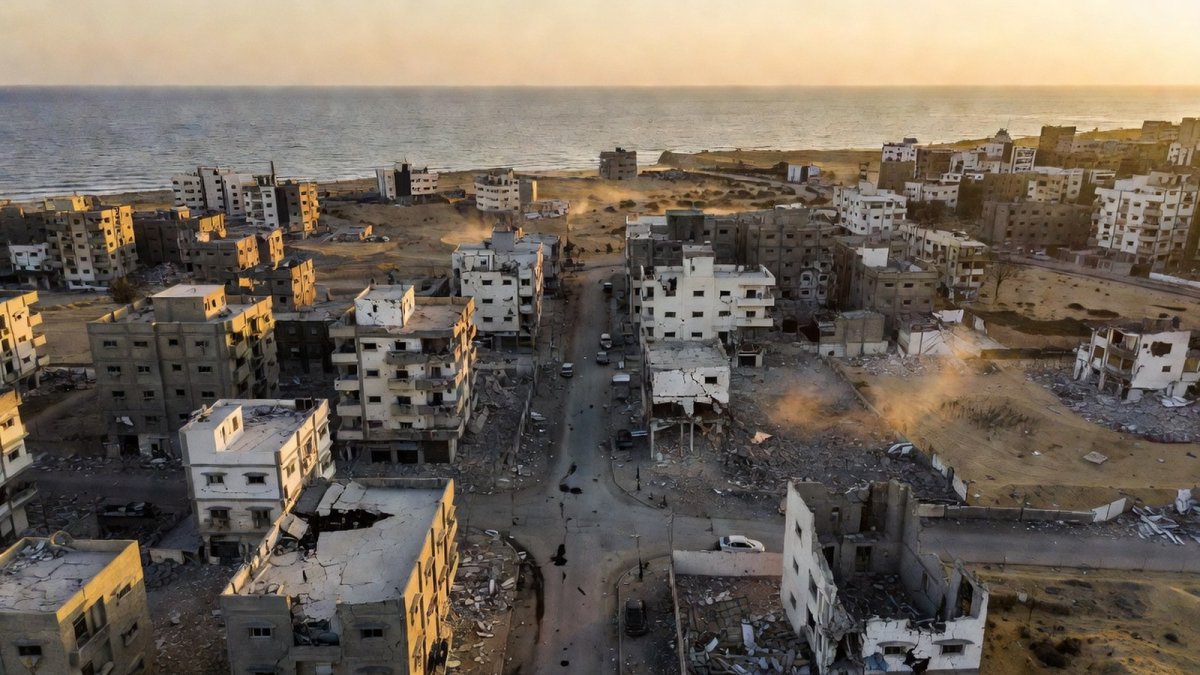
Gaza Under a Fragile Ceasefire
A ceasefire has held since October 10, 2025, yet Israeli strikes have continued. On Sunday, attacks killed at least 18 Palestinians across Gaza, including three children and an unborn baby. July saw 152 people killed, the highest monthly toll this year, according to Gaza's Health Ministry. Repeated breaches of the truce have claimed over a thousand lives since the ceasefire began.
Israel controls nearly 70 percent of Gaza despite the truce, according to NPR reporting, with authorities citing up to 80 percent in some assessments. At the 1,000-day mark of the war, more than 90 percent of the Gaza Strip stood destroyed, according to Gaza authorities. Palestinians in areas such as al-Shujaiya remain among the few still living inside zones of expanding Israeli control, facing daily uncertainty.
The political track has offered little relief. A phased disarmament deal announced by the Trump administration in late July, under which Hamas agreed to disarm for the first time in its history, was framed as a breakthrough, but questions over sequencing — whether Israeli withdrawal or Hamas disarmament comes first — have gone unanswered. President Donald Trump said last week that "Israel is very happy" with the plan without clarifying the order of implementation. Israeli strikes persisted even as the deal was announced, with the Gaza Health Ministry reporting six deaths and 34 wounded on Thursday alone, according to i24NEWS. Nine months after the ceasefire was brokered, the plan has stalled.
What Resettlement Would Mean for Palestinians
Resettlement plans would directly affect Gaza's more than two million residents, most of whom have already endured repeated displacement amid widespread destruction. The return of settlers would occur on land emptied by bombardment and would reverse the 2005 disengagement, which removed roughly 8,000 to 9,000 settlers from 21 Gaza settlements under then-Prime Minister Ariel Sharon.
Israel retained control of Gaza's borders, airspace, and coastline after 2005 — an arrangement the United Nations and the International Court of Justice continued to classify as occupation. Reversing the withdrawal would entrench permanent exclusion from land, turning temporary displacement into lasting loss for families now sheltering in rubble. The psychological toll includes the constant threat of further upheaval for children who have already witnessed strikes that killed hundreds. Permanent resettlement would eliminate any prospect of return, deepening the lived reality of dispossession for a population navigating the aftermath of sustained conflict and restricted access to basic resources.
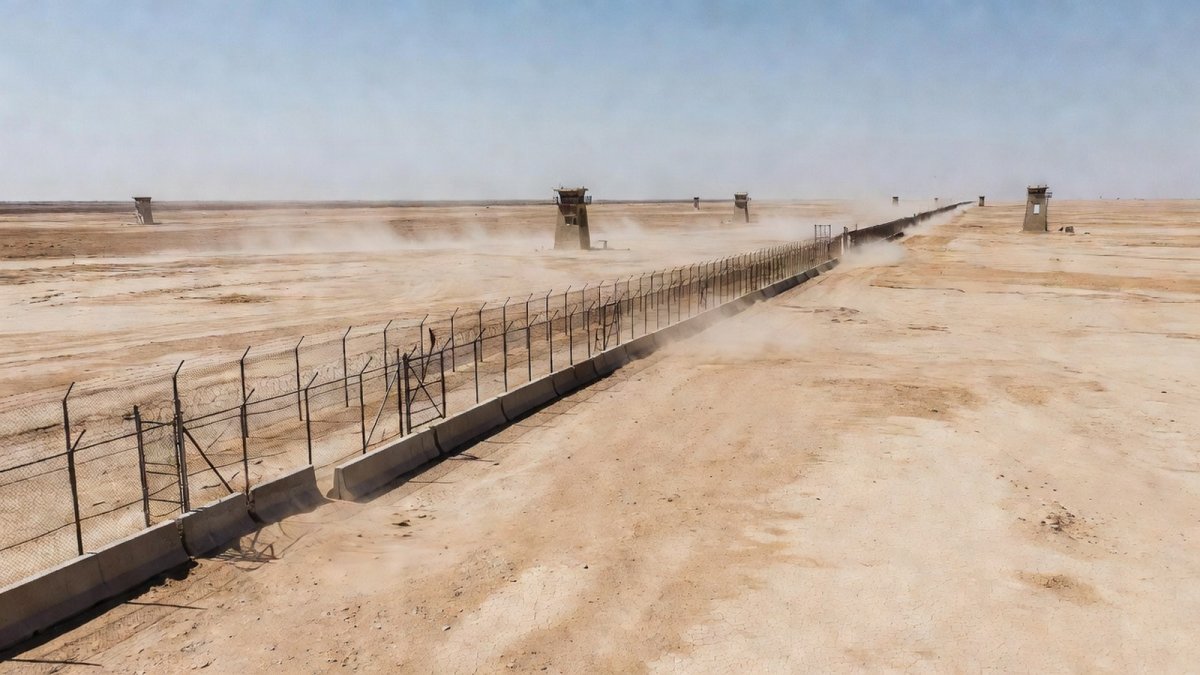
International Law and the Settlement Enterprise
Under international law, the plans are unequivocally prohibited. The Fourth Geneva Convention, Article 49, states that an occupying power shall not deport or transfer parts of its own civilian population into the territory it occupies. The Rome Statute of the International Criminal Court lists such transfers as a war crime under Article 8(2)(b)(viii).
The International Court of Justice's July 2024 advisory opinion declared Israel's occupation and settlement enterprise unlawful and required Israel to cease settlement activity and dismantle existing settlements. United Nations Security Council Resolution 2334, adopted in 2016, affirmed that settlements have no legal validity and constitute a flagrant violation of international law. Despite these frameworks, the current Israeli government has shown limited adherence. Several European allies have sanctioned Smotrich for his role in settlement activities, yet the mechanisms that would extend settlement construction into Gaza continue to operate.
Political Calculations in Israel
With elections approaching, settlement advocacy serves clear electoral purposes. Al Jazeera's July 4 analysis noted that politicians such as Smotrich and Netanyahu benefit from positioning Gaza's emptied land as an opportunity to cement a buffer between Israel and the Strip, appealing to settler constituencies. Netanyahu's coalition depends on far-right parties, including Religious Zionism and Otzma Yehudit, and settlement expansion is central to their political survival.
European sanctions on Smotrich underscore external pressure, yet domestic reliance on these partners sustains the push for Gaza settlements. This dynamic ties settlement expansion to political survival: Smotrich's Defense Ministry role enables administrative progress on the plans even as the ceasefire framework remains unresolved. For Palestinians, such calculations translate into policies that prioritize Israeli electoral gains over civilian stability in Gaza.
Analysis and Implications
Implementation of resettlement would directly undermine the October 10, 2025 ceasefire and the stalled disarmament deal, in which Hamas agreed to disarm as a historic step. Linking territorial resettlement to military success risks renewed escalation and further displacement of Gaza's population. International reactions — including sanctions and legal opinions — have so far not altered the trajectory set by coalition dependencies inside Israel.
For Palestinians on the ground, these developments mean prolonged exclusion from land, compounding the effects of 90 percent destruction and repeated displacement on more than two million residents. The stakes involve not only immediate humanitarian conditions but the long-term denial of return, as families navigate rubble and ongoing strikes that have claimed over a thousand lives since the ceasefire began.
Regional actors are watching closely. Egyptian officials and international mediators have continued discussing the next phase of the ceasefire, seeking to preserve a framework that settlement construction would effectively demolish. Arab governments that normalized or expanded ties with Israel have largely avoided public comment on the settlement proposals, a silence that Palestinians say amounts to acceptance. The coming weeks will test whether diplomatic pressure can match the administrative momentum behind the settlement plans.
Looking ahead, the coming weeks will test whether Netanyahu grants approval for the northern settlements or whether international and domestic constraints hold the line. For the people of Gaza, the outcome will determine whether any space remains for recovery — or whether displacement becomes permanent under new settlement construction.
By Fatima Al-Rashid, Staff Writer
This article was produced with AI-assisted research and editorial support. Reporting is based on sources cited in the article.
What's Your Reaction?
 Like
0
Like
0
 Dislike
0
Dislike
0
 Love
0
Love
0
 Funny
0
Funny
0
 Wow
0
Wow
0
 Sad
0
Sad
0
 Angry
0
Angry
0

Gulf/MENA Correspondent at Global1.News. Based in Doha, covering Gulf politics, energy markets, diplomacy, and development across the Middle East and North Africa. Tracks the economic transformation of the Gulf states.














Comments (0)