
Israel Forces Kill 14-Year-Old in Nablus Raid as West Bank Violence Deepens
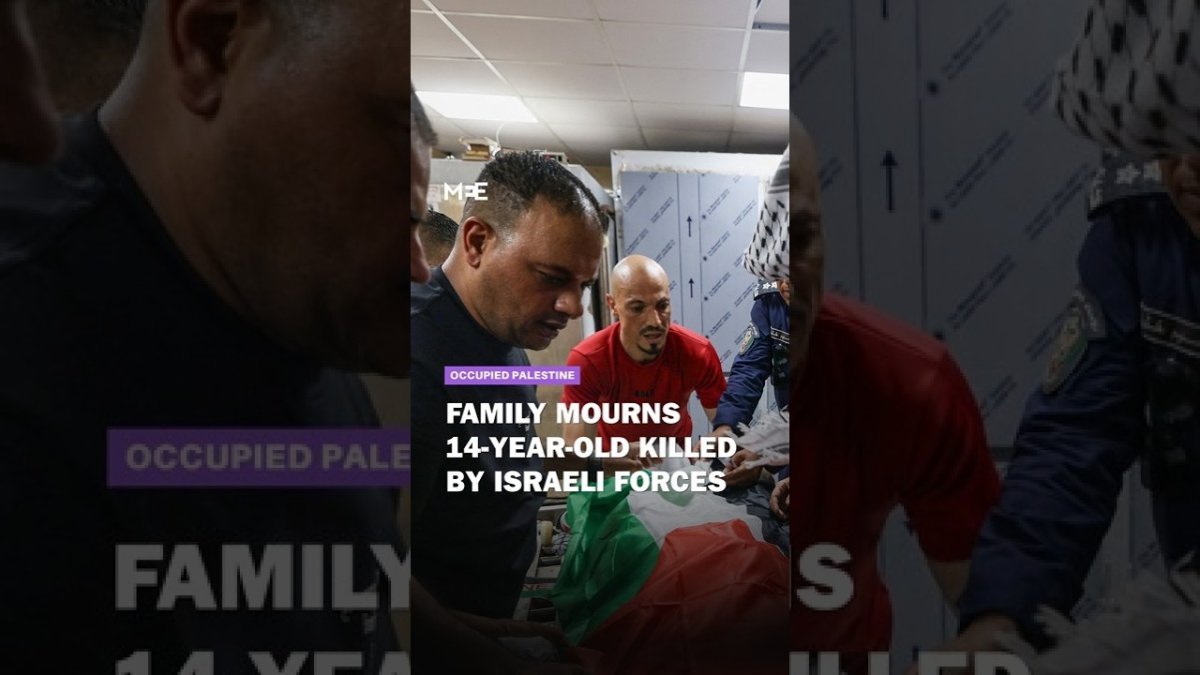
In a recent Middle East Eye report, the grief of a family in Nablus was laid bare as they gathered at Rafidia Hospital, their world shattered by the loss of a 14-year-old boy. Islam Ahmad Maher Ajouri was shot in the chest by Israeli army gunfire during a raid on the Askar refugee camp east of Nablus on Sunday, and despite the desperate efforts of medics, he succumbed to his wounds.
In a recent Middle East Eye report, the grief of a family in Nablus was laid bare as they gathered at Rafidia Hospital, their world shattered by the loss of a 14-year-old boy. Islam Ahmad Maher Ajouri was shot in the chest by Israeli army gunfire during a raid on the Askar refugee camp east of Nablus on Sunday, and despite the desperate efforts of medics, he succumbed to his wounds. His death marks yet another child lost to a conflict that continues to exact its heaviest toll on the youngest residents of the occupied West Bank.
Israel Forces Kill 14-Year-Old in Nablus Raid as West Bank Violence Deepens
Nablus, Occupied West Bank – August 23, 2026 — The killing of Islam Ahmad Maher Ajouri has plunged the Askar refugee camp into mourning, as hundreds gathered for his funeral on Monday, a procession that doubled as a defiant display of community solidarity in the face of relentless military operations. The Palestinian Red Crescent Society transferred the boy to hospital in critical condition after he was struck by live fire during the incursion, but medical staff could not save him. The Palestinian health ministry and the official WAFA news agency identified the teenager and confirmed his death, while the Israeli military said it was reviewing the incident, according to Reuters.
A Childhood Cut Short in Askar
Islam Ahmad Maher Ajouri was not a fighter, nor was he a political figure. He was a 14-year-old boy living in New Askar, a densely populated area that grew out of the original Askar camp established in 1950 on the outskirts of Nablus. The camp, which borders the Nablus municipality, has long been a flashpoint for Israeli military raids, its narrow alleyways and close-knit homes bearing the scars of decades of occupation. New Askar, settled by camp residents about a kilometre from the original site, has become a particular focus of recent operations, according to UNRWA, the UN agency for Palestinian refugees.
On Sunday morning, the routine of daily life was violently interrupted. Israeli forces entered the camp, a manoeuvre that residents say has become almost commonplace in the northern West Bank. The raid escalated quickly, and by the time the gunfire subsided, Islam lay wounded, bleeding from a chest wound that would prove fatal. The Palestinian Red Crescent Society rushed him to hospital, but the damage was too severe. His death was confirmed by the Palestinian health ministry, which has documented a staggering number of similar fatalities over the past three years.
The circumstances of his shooting remain unclear, with the Israeli military stating only that it is reviewing the incident. For the residents of Askar, however, the pattern is painfully familiar: a raid, a shot, a child dead. The camp has seen more than its share of tragedy, and each new funeral adds to a collective trauma that shows no signs of abating.
Funeral and Grief in Nablus
The Middle East Eye video captures the raw emotion of Islam's family as they received the news at Rafidia Hospital in Nablus. The footage shows relatives collapsing in grief, their hands reaching out to touch the body of a boy who should have been preparing for another school year, not lying motionless on a hospital gurney.
Hundreds of mourners joined the funeral procession on Monday, a march that wound through the streets of Nablus before reaching the cemetery. Al Jazeera reported on the funeral, noting that Islam's death adds to a grim statistic: more than 1,100 Palestinians have been killed by Israeli forces and settlers in the occupied West Bank since 2023. The number, which includes a disproportionate share of children, reflects a sustained escalation that has transformed the West Bank into a secondary front of the broader conflict.
At the graveside, speakers condemned the killing and called for international intervention. But for the family, such words offer little comfort. They are left with memories of a boy who dreamed of a future that will now never come. The funeral was not just a farewell to Islam; it was a reminder to every family in Askar that their children are not safe, even in their own neighbourhoods.
Raid After Raid: The Toll on the Northern West Bank
The northern West Bank, particularly the Nablus and Jenin areas, has borne the brunt of Israeli military operations since the war in Gaza began in October 2023. The raids, which the Israeli military describes as counter-terrorism operations, have resulted in hundreds of deaths and widespread destruction of infrastructure. According to the Shireen Observatory, a Palestinian monitoring group, since the beginning of 2026, Israeli soldiers and settlers have killed 90 Palestinians in the occupied West Bank, including 24 children and 6 women. Of those killed, 19 were in Nablus, making it one of the deadliest districts in the territory.
The frequency of raids has disrupted every aspect of life in Askar and neighbouring communities. Schools are often closed during incursions, businesses shutter their doors, and residents live in a state of constant alert. The psychological toll on children is immense, with many showing signs of severe trauma. Aid workers on the ground describe a generation growing up with the sound of gunfire as a backdrop, their childhoods defined not by play and learning but by checkpoints, arrests, and funerals.
The Israeli military maintains that its operations are necessary to dismantle armed groups and prevent attacks on Israeli civilians. However, the human cost of these operations, as documented by Palestinian health officials and international observers, raises serious questions about proportionality and the protection of civilians under international humanitarian law. For the people of Nablus, the raids are not abstract policy debates; they are the lived reality of a community under siege.
Settler Violence and Displacement
While military raids account for the majority of Palestinian deaths in the West Bank, settler violence has emerged as a parallel and escalating threat. UN OCHA, the UN humanitarian office, recorded 3,033 settler attacks from January 1, 2025, through June 30, 2026, a figure that represents a significant increase over previous years. These attacks range from stone-throwing and property destruction to armed assaults on villages and the burning of agricultural land.
The impact of this violence extends beyond physical harm. A Human Rights Watch report dated August 20, 2026, found that settler violence and settlement expansion had fully or partially displaced 107 Palestinian communities since January 2023. Entire villages in the Jordan Valley and the southern Hebron Hills have been emptied as families flee the relentless pressure of settler attacks, often carried out with the apparent support or tacit approval of Israeli security forces.
The West Bank is home to about 3 million Palestinians and more than 500,000 Israeli settlers living in settlements that are considered illegal under international law. Israel disputes this designation, citing historical and biblical ties to the land. But for Palestinians, the expansion of settlements is a direct threat to their ability to remain on their land. Each new settlement outpost, each new road, each new attack chips away at the viability of a future Palestinian state and the daily security of Palestinian families.
International Law and a Community Under Pressure
The killing of Islam Ajouri raises again the question of accountability under international law. The Fourth Geneva Convention, to which Israel is a signatory, prohibits the use of lethal force except in cases of absolute necessity and requires that all operations distinguish between combatants and civilians. The shooting of a 14-year-old boy, regardless of the circumstances, appears to violate these fundamental principles. Yet, as with so many similar cases, the Israeli military's internal review process rarely results in prosecutions or public accountability.
Human rights organisations have repeatedly called for international mechanisms to investigate and prosecute those responsible for violations in the occupied territories. The International Criminal Court has an ongoing investigation into the situation in Palestine, but progress has been slow, and the political will to hold powerful actors accountable remains limited. For the family of Islam Ajouri, justice seems a distant and unlikely prospect.
The broader context is one of a territory in crisis. The war in Gaza, now in its third year, has diverted international attention away from the West Bank, allowing for a quiet but relentless escalation of violence and settlement activity. The Palestinian Authority, which exercises limited self-rule in parts of the West Bank, has been weakened by years of political stagnation and financial crisis, leaving many communities without effective protection or recourse.
Analysis and Implications
The death of Islam Ahmad Maher Ajouri is not an isolated incident but a symptom of a systemic failure to protect civilians in the occupied West Bank. The statistics are stark: 90 Palestinians killed since the start of 2026, including 24 children; 3,033 settler attacks in 18 months; 107 communities displaced. Behind each number is a family like Islam's, a community like Askar, a future cut short.
The international community's response has been largely rhetorical. Statements of concern from the UN and various governments have not translated into meaningful pressure on Israel to change its policies. The United States, Israel's closest ally, has continued to provide military and diplomatic support, effectively shielding Israel from consequences at the Security Council. This impunity emboldens further violence and undermines the credibility of international law.
For the people of Askar and the wider West Bank, the implications are immediate and existential. Every raid brings the risk of another funeral. Every settler attack brings the threat of displacement. Every day brings the question of whether their children will survive to adulthood. The killing of Islam Ajouri is a reminder that the occupation is not a distant political issue but a daily, violent reality that shapes every aspect of Palestinian life.
As the sun set over Nablus on Monday, the mourners dispersed, returning to homes that feel increasingly unsafe. The camp of Askar, established 76 years ago to house refugees from the 1948 war, has become a symbol of Palestinian endurance and suffering. Its residents, like Islam's family, are left to grieve and to wonder what the future holds. The international community, meanwhile, watches from a distance, offering condolences but little else.
The killing of a 14-year-old boy should be a moment of reckoning. Whether it will be remains to be seen. For now, the people of Askar bury their dead and prepare for the next raid, the next funeral, the next loss. Their resilience is remarkable, but it should never be mistaken for acceptance. They are waiting, as they have for generations, for a world that will finally act to end their suffering.
By Fatima Al-Rashid, Staff Writer
This article was produced with AI-assisted research and editorial support. Reporting is based on sources cited in the article.
What's Your Reaction?
 Like
0
Like
0
 Dislike
0
Dislike
0
 Love
0
Love
0
 Funny
0
Funny
0
 Wow
0
Wow
0
 Sad
0
Sad
0
 Angry
0
Angry
0
Gulf/MENA Correspondent at Global1.News. Based in Doha, covering Gulf politics, energy markets, diplomacy, and development across the Middle East and North Africa. Tracks the economic transformation of the Gulf states.












Comments (0)