
Illegal Israeli settlements, outposts in West Bank reach 592, says Palestinian body
The Wall and Settlement Resistance Commission says 592 illegal Israeli settlements and outposts now dot the occupied West Bank, where Israel controls 42 percent of the territory, as more than 100 former French and British diplomats urge sanctions and an arms halt.
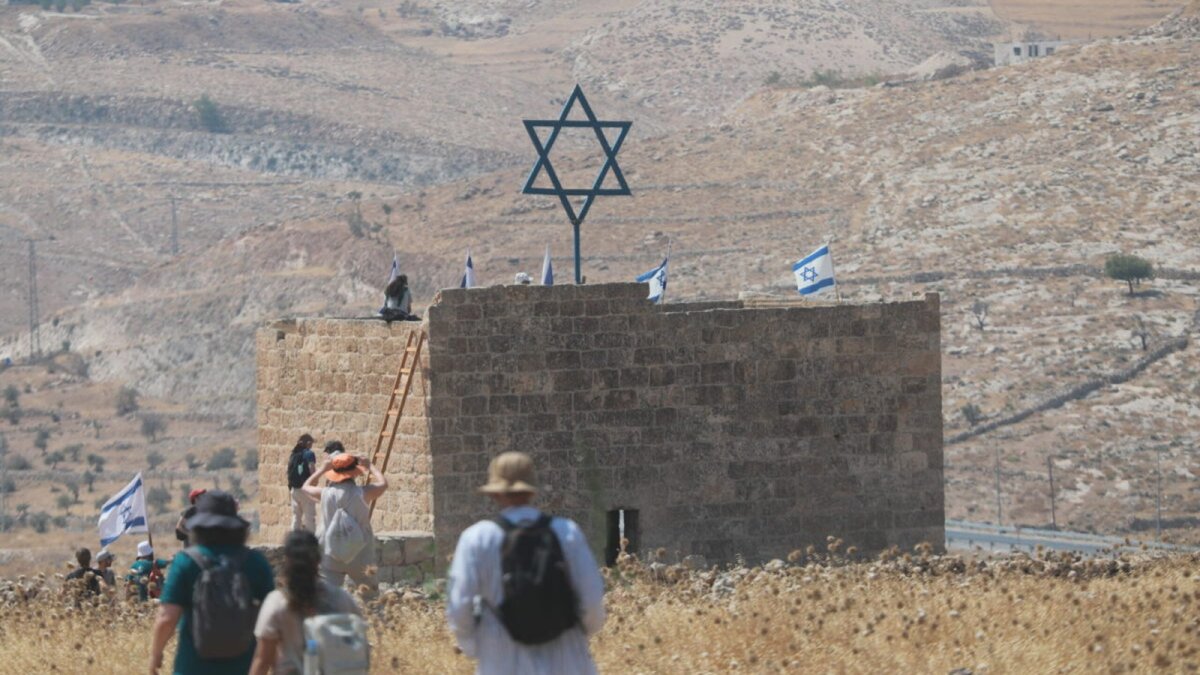
RAMALLAH — The number of illegal Israeli settlements and outposts across the occupied West Bank has reached 592, with Israel now controlling roughly 42 percent of the territory, according to new data published Saturday by the Palestinian Wall and Settlement Resistance Commission. The figures, which document the scale of Israeli control as of the end of July, land in the same week that more than 100 former French and British diplomats issued a joint letter warning that Israel's policies are "erasing Palestine in front of the world's eyes" and urging their governments to act to uphold international law.
The convergence of the two developments — a granular accounting of settlement expansion and a diplomatic intervention from senior former officials of two European powers that recognized Palestinian statehood in 2025 — underscores what Palestinian officials describe as a moment of acute crisis for the two-state solution. The commission's briefing, reported by Anadolu, offers the most detailed official Palestinian accounting yet of the scale of Israeli control; the letter is a rare joint Franco-British rebuke of Israeli policy from within the European establishment.
Settlement Numbers Paint a Picture of Deepening Control
The Wall and Settlement Resistance Commission, a Palestinian government body tasked with monitoring Israeli settlement activity, said Saturday that 780,000 Israeli occupiers were living in the West Bank, including occupied East Jerusalem, as of the end of July. Of those, approximately 333,600 live in illegal settlements in Jerusalem, with 446,400 elsewhere in the West Bank.
According to the commission, Israeli occupiers are spread across 192 illegal settlements and 400 settlement outposts, including 231 pastoral outposts — the latter often established as small, remote encampments that gradually expand into larger built-up areas. The figures were cross-checked by palinfo, which confirmed the same totals. The commission said official Israeli orders show that Israeli control extends to 42 percent of the West Bank's total area of some 5,660 square kilometers (2,185 square miles), and that control is not evenly distributed: Israel controls 71 percent of Area C — the roughly 60 percent of the West Bank under full Israeli administrative and security control — and as much as 91 percent of the Palestinian Jordan Valley, the territory's most agriculturally productive region.
Oslo's Fragmented Geography, Twenty-Nine Years Later
The current map of Israeli control is a direct legacy of the 1995 Oslo II Accord, which divided the West Bank into three administrative zones. Area A was placed under Palestinian administrative and security control, Area B under Palestinian administrative control with Israeli security oversight, and Area C — which makes up about 60 percent of the West Bank — under full Israeli control. The accord was intended as an interim arrangement, to be followed within five years by final status negotiations on settlements, borders, Jerusalem, and refugees. Those negotiations never produced a final agreement; the interim arrangement became permanent, and Area C — where the vast majority of Israeli settlements are located — has been progressively integrated into Israel through settlement construction, occupier-only roads, and military zoning that restricts Palestinian access to their own land.
The Jordan Valley figure is particularly significant. The valley, often described by Israeli officials as Israel's "security border" with Jordan, is now 91 percent under Israeli control, meaning the vast majority of Palestinian communities there are hemmed in by military zones and settlement blocs, with limited access to their agricultural land and water resources.
Diplomatic Letter Cites 'Contempt for the Law'
Against this backdrop, the open letter from 102 former French and British diplomats — addressed to British Prime Minister Andy Burnham, with copies to French President Emmanuel Macron and British Foreign Secretary Ed Miliband — calls for a fundamental shift in how the two countries engage with Israel. The signatories said the Israeli government was seeking to "destroy any prospect of an independent Palestinian state" and accused it of showing "contempt for the law, the rulings of the International Court of Justice and countless UNSC Resolutions." "Those responsible for war crimes and crimes against humanity must be held to account," they wrote, adding that only such action would allow the two governments to "rebut the accusation of double standards." The letter, reported by Anadolu and The Guardian, accuses Israel of ethnic cleansing and warns that "Palestine is being erased in front of the world's eyes."
The diplomats also took aim at Israeli Prime Minister Benjamin Netanyahu's assertion that Israel "must live by the sword," describing the approach as "morally wrong and counterproductive" and saying it "imperils Israel's security and leaves no room for negotiation." The letter's language is notably sharper than typical diplomatic communiques from serving officials, reflecting what the signatories describe as a failure of the international community to act on its own stated commitments.
Seven Demands, From Sanctions to Aid Access
The former diplomats urged France and the UK to take seven specific measures. First, they called on both governments to uphold decisions by the International Court of Justice and the International Criminal Court — a reference to the ICJ's July 2024 advisory opinion declaring Israel's occupation unlawful and the ICC's arrest warrants for Israeli leaders over alleged war crimes in Gaza. Second, they urged the suspension of the EU-Israel Association Agreement and the UK-Israel Trade and Partnership Agreement over alleged breaches of human rights provisions. Third, they called for suspending arms transfers to and from Israel and bilateral military cooperation.
The remaining demands focus on humanitarian access: "unrestricted aid access to Gaza," led by UNRWA, other UN agencies, and international nongovernmental organizations, as well as access for journalists, diplomats, and parliamentarians. The letter's timing is notable: France and the UK both recognized the state of Palestine in 2025, a move hailed by Palestinian officials and condemned by Israel. The signatories said recognition carries obligations, and that the two governments should take "urgent action" to safeguard the Palestinian people's right to self-determination — implicitly criticizing a broader European approach that has combined rhetorical support for a two-state solution with continued trade agreements and, in many cases, arms sales to Israel.
On the Ground: Escalation Since October 2023
The commission's settlement data must be understood in the context of the broader escalation that has defined the West Bank since Israel launched its war on the Gaza Strip in October 2023 — continued Israeli military offensives and occupier attacks, alongside the expansion of illegal settlement outposts, occupier-only roads, and tighter restrictions on Palestinian movement. Farmers in Area C and the Jordan Valley face increasing difficulty accessing their land, much of it now surrounded by settlements, military zones, or roads Palestinians are barred from using. The expansion of the 231 pastoral outposts is particularly destabilizing: these small encampments often move into areas used by Palestinian herders, displacing them through a slow process of attrition rather than a single dramatic eviction.
The human cost is not captured in the raw numbers. Each of the 592 settlements and outposts represents land taken, roads built, and movement restricted. Each of the 780,000 settlers represents a community that, in many cases, is actively expanding into areas that Palestinians have farmed for generations. The commission's figures document the physical infrastructure of an occupation the ICJ has declared unlawful, but they cannot fully convey what it means to live under it.
International Law and the Question of Enforcement
The diplomats' letter is, at its core, a demand for enforcement. International law has been clear on settlements for decades: Article 49 of the Fourth Geneva Convention prohibits an occupying power from transferring parts of its own civilian population into the territory it occupies. The ICJ has repeatedly affirmed this — most recently in its July 2024 advisory opinion, which found Israel's presence in the occupied Palestinian territory unlawful — and called on states to distinguish between Israel and the occupied territories in their diplomatic and economic relations.
Yet enforcement has been consistently absent. The EU-Israel Association Agreement remains in force, as does the UK-Israel Trade and Partnership Agreement signed in 2020. Arms transfers continue, despite mounting evidence of their use in alleged violations of international humanitarian law in Gaza. The reference to "double standards" is pointed: France and the UK have imposed sanctions on Russia over its invasion of Ukraine, and the diplomats argue that the same standards must apply to Israel — and that failure to apply them undermines the credibility of the international legal order.
What Comes Next
For Palestinians, the question is whether the letter will translate into action. The commission's data, published the same week, offers a sobering reminder of the scale of the challenge: 592 settlements and outposts, 780,000 settlers, 42 percent of the West Bank under Israeli control. These are not abstract figures. They represent the physical reality any future Palestinian state would have to contend with — a reality that, as the diplomats note, is becoming less viable with each passing month. Whether Burnham, Macron, and Miliband will act on the recommendations remains to be seen. But the letter, combined with the commission's data, makes one thing clear: the status quo is not static. It is actively eroding the possibility of Palestinian statehood, one settlement at a time.
This article was produced with AI-assisted research and editorial support. Sources: Anadolu, Middle East Monitor, The Guardian, palinfo.
By Fatima Al-Rashid, Staff Writer
What's Your Reaction?
 Like
0
Like
0
 Dislike
0
Dislike
0
 Love
0
Love
0
 Funny
0
Funny
0
 Wow
0
Wow
0
 Sad
0
Sad
0
 Angry
0
Angry
0

Gulf/MENA Correspondent at Global1.News. Based in Doha, covering Gulf politics, energy markets, diplomacy, and development across the Middle East and North Africa. Tracks the economic transformation of the Gulf states.












Comments (0)