
Ra'am's Abbas Backs Two-State Solution in Taiba Policy Speech
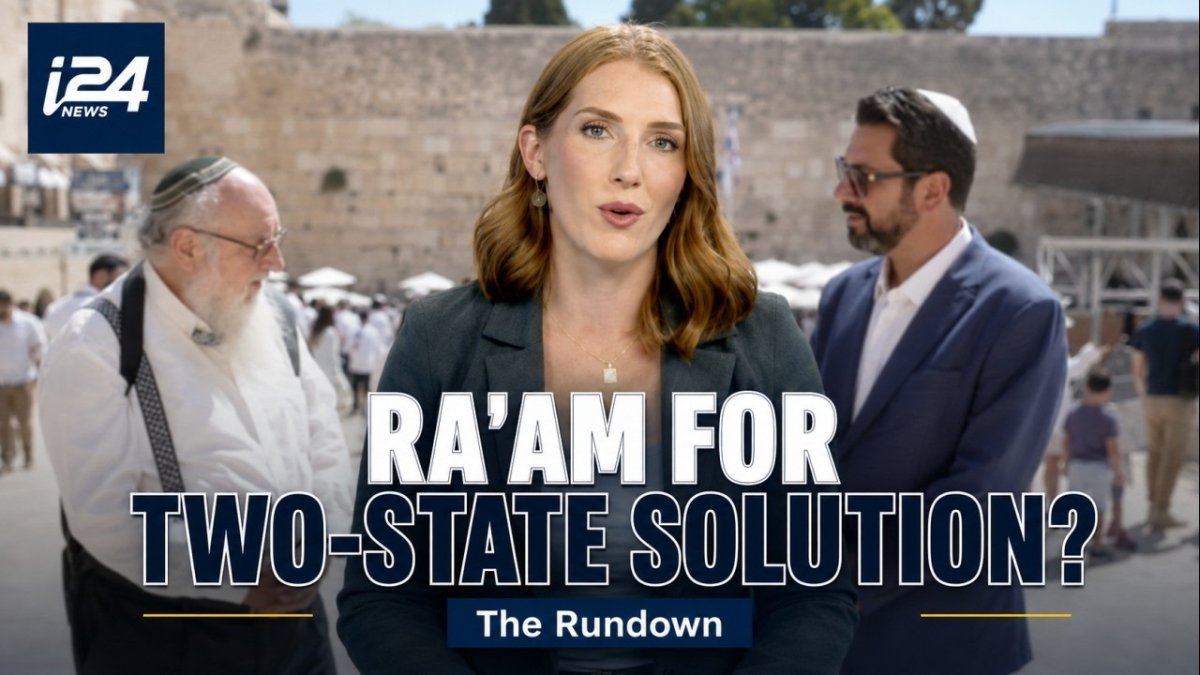
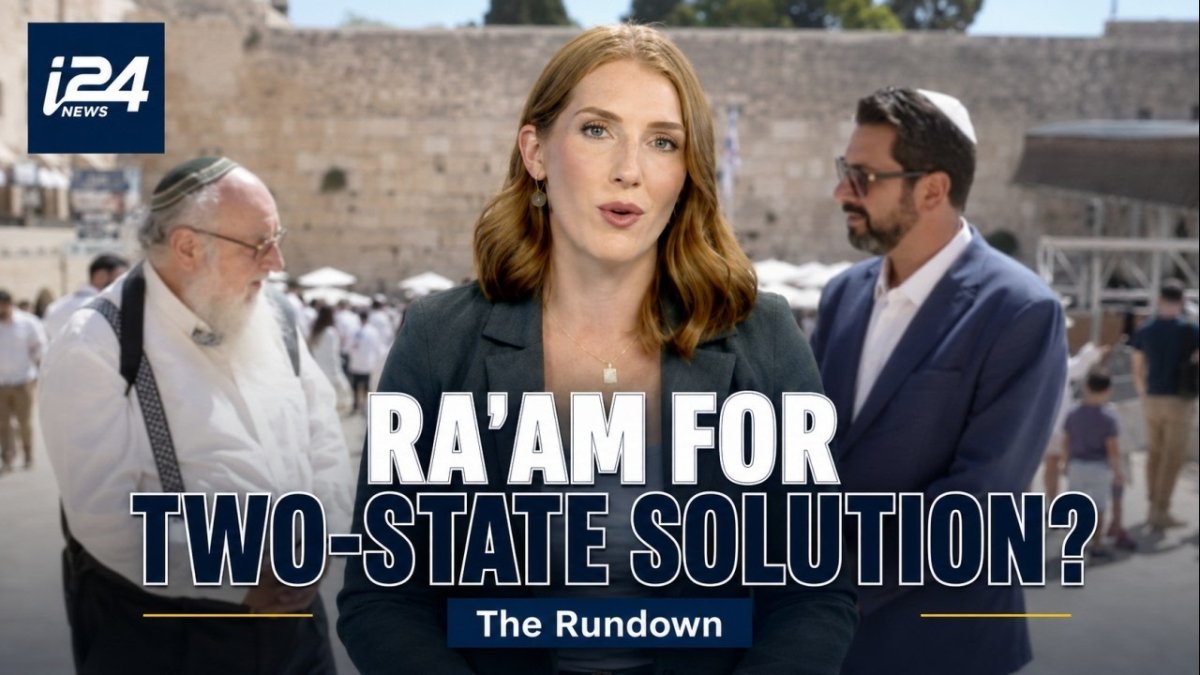
In a recent i24NEWS English report on the Israeli election breakdown, Ra'am party chairman Mansour Abbas used his party's 28th national conference in Taiba to make a bold declaration: Arab citizens of Israel are a "bridge to achieving peace," and he reiterated his support for a two-state solution. The speech, delivered before roughly 1,050 party members in the Arab-Israeli city of Taiba (Tayibe), comes as Israel barrels toward the October 27,...
In a recent i24NEWS English report on the Israeli election breakdown, Ra'am party chairman Mansour Abbas used his party's 28th national conference in Taiba to make a bold declaration: Arab citizens of Israel are a "bridge to achieving peace," and he reiterated his support for a two-state solution. The speech, delivered before roughly 1,050 party members in the Arab-Israeli city of Taiba (Tayibe), comes as Israel barrels toward the October 27, 2026 elections — the first time since 1988 that the Knesset has completed a full four-year term without early dissolution. Abbas's words were not merely a policy statement; they were a direct challenge to Prime Minister Benjamin Netanyahu's right-wing coalition and a signal that the Arab vote intends to be a kingmaker in what is shaping up to be a referendum on the October 7, 2023 Hamas attack and the war that followed.
On the Ground in Taiba
The conference in Taiba was more than a routine party gathering. It was the stage for Ra'am's election primaries, where party members selected candidates for the top five positions on its Knesset list ahead of the October 27 vote. Men and women from across the country traveled to the central Israeli Arab city to participate, underscoring the party's claim to represent a broad cross-section of Arab society. The event was held on Saturday, and the atmosphere was charged with the knowledge that these primaries would determine who leads Ra'am into what Abbas has hinted will be his final electoral campaign.
Abbas used the platform to frame Ra'am's strategy in stark terms: influencing events from within the political system rather than from outside it. "Ra'am has placed Israeli democracy before a genuine test," he told the assembled delegates. This is the core of the party's identity — a bet that participation in coalition politics yields more for Arab citizens than perpetual opposition. The party's history supports this approach: in June 2021, under Abbas's leadership, Ra'am joined the government of then-Prime Minister Naftali Bennett and alternate Prime Minister Yair Lapid, marking the first time an independent Arab-majority party served in an Israeli coalition. That government collapsed in late 2022, and Netanyahu returned to power, but the precedent remains a cornerstone of Ra'am's political narrative.
The choice of Taiba as the venue is itself significant. The city, located in the Triangle region, has a population of roughly 45,000 and is a stronghold of the Islamic Movement's southern branch, from which Ra'am draws its support. Holding the conference here, rather than in a neutral venue, was a deliberate assertion of the party's grassroots base. It also served as a counterpoint to the other Arab parties — Hadash, Ta'al, and Balad — which have reached an agreement to run together on a separate joint list, effectively splitting the Arab vote into two competing camps.
The Two-State Pitch
Abbas's central message was unambiguous: "We want peace between the State of Israel and the State of Palestine to be achieved as well. The State of Palestine exists, the entire world recognizes it, and the United States and Israel must recognize it as well." This is not a new position for Abbas, but the timing and framing are notable. He is explicitly calling on Israel and the United States to recognize Palestinian statehood as a fait accompli, arguing that international recognition already exists and that what remains is "to establish that existence through action on the ground."
He went further, describing an agreement as the path to ending "the conflict and the occupation," with Arab citizens serving as "a bridge to understanding, reconciliation and security for everyone in the region." For Israeli readers, this language carries weight. Abbas is positioning Ra'am not as a fringe voice but as a pragmatic actor capable of delivering security and stability — a message aimed squarely at Jewish Israeli voters who might otherwise dismiss the party as a non-starter in coalition talks. He also took aim at the right: "The extreme right in Israel wants to bring all of us to the point of despairing of the possibility of a two-state solution."
In a separate interview with Independent Arabia, Abbas went further, saying the upcoming elections would be his last. He plans to retire from the Knesset to make way for a younger generation of leadership. This announcement adds a layer of urgency to his campaign. He described Ra'am's goal as becoming "the complementary bloc needed to achieve a coalition of more than 61 seats" and called for replacing the current government, which he labeled "racist and fascist," with a government of change that benefits Arab society. The retirement announcement is a calculated move — it signals to voters that this is a final push, not a long-term political project.
Netanyahu's Blistering Response
The Prime Minister's Office did not wait long to respond. On Saturday night, Netanyahu's office released a statement that left no room for ambiguity: "As long as I am prime minister, there will be no Iranian-controlled Palestinian state—not in Gaza and not in Judea and Samaria. Period." The statement went on to attack the broader opposition, saying, "The cost of a left-wing coalition with the Muslim Brotherhood has once again been exposed. These are the partners of Eisenkot, Lieberman, and Tropper, who boycott Likud voters but welcome supporters of Tibi and Balad."
The reference to the Muslim Brotherhood is a direct swipe at Ra'am's roots in the Islamic Movement, and the mention of Tibi and Balad — referring to MK Ahmad Tibi of Ta'al and the Balad party — is an attempt to paint any coalition involving Arab parties as a security risk. Netanyahu's framing is consistent with his campaign strategy: position the election as a choice between his leadership and a coalition that would rely on Arab parties with ties to Islamist movements. The statement also serves to rally his base by invoking the October 7 attack and the ongoing war, reminding voters of the stakes as they perceive them.
MK Gadi Eisenkot of the National Unity party, an opposition figure and former IDF chief of staff, also weighed in, stating flatly: "There is no Palestinian state, and no Palestinian state will be established under a government that we form." Eisenkot's comment is notable because it comes from the center-left opposition, not the right. It signals that even among Netanyahu's rivals, there is little appetite for embracing Abbas's two-state vision. This is a significant obstacle for Ra'am: the party's potential coalition partners are not rushing to endorse its core policy demand.
A Historic Gamble or a Bridge?
The "Choosing Life" Forum, representing bereaved families and victims of terrorism, issued a sharp rebuke of Abbas's speech. "Mansour Abbas is once again saying clearly what we have been warning about for years... After October 7, it must be clear: Ra'am and the Islamic Movement cannot be partners in or provide support for any government in Israel." This statement reflects a deep-seated mistrust that transcends political lines. For many Israeli voters, particularly those directly affected by terrorism, the idea of bringing Ra'am into a coalition is not a matter of policy but of principle.
Abbas's defenders would argue that his record in the 2021-2022 coalition government demonstrates his willingness to work within the system. During that period, Ra'am secured significant budget allocations for Arab communities, including funding for housing, education, and crime prevention. The party also played a role in maintaining the coalition's stability during a period of intense political turbulence. But critics counter that this participation came at a cost — legitimizing a government that continued settlement expansion and military operations in the West Bank and Gaza.
The question for Israeli voters is whether Abbas's "bridge" metaphor holds up under scrutiny. He is asking Jewish Israelis to trust that Arab citizens can be partners in peace, while simultaneously demanding recognition of a Palestinian state that Netanyahu and much of the right reject outright. This is a delicate balancing act, and the reaction from both the PMO and the opposition suggests that Abbas's message is not gaining traction beyond his traditional base. The election on October 27 will be the ultimate test of whether his vision can translate into political power.
The Arab Vote Fractures
One of the most significant developments in this election cycle is the split in the Arab vote. Hadash, Ta'al, and Balad have reached an agreement to run together on a separate joint list, distinct from Ra'am. This means that for the first time in years, Arab voters will have two competing lists to choose from, rather than a unified Joint List. The fracture is both ideological and personal. Hadash, Ta'al, and Balad have historically been more hawkish on Palestinian statehood and more critical of Israeli policy, while Ra'am has positioned itself as a pragmatic, coalition-ready party.
The split has practical implications for the election. In the 2022 elections, the Joint List won 10 seats, while Ra'am won 5. If the two lists now compete separately, they risk cannibalizing each other's votes, potentially leaving both below the electoral threshold. This would be a disaster for Arab representation in the Knesset. Abbas's response has been to double down on his message of influence from within, arguing that Ra'am's approach is the only viable path to power. But the other Arab parties are betting that voters will reject Ra'am's willingness to sit with right-wing governments, particularly after October 7.
The stakes are high. The 25th Knesset dissolved on July 17, 2026, and party primaries are already underway across the political spectrum. For Arab citizens, the choice is not just about which party to support but about what role they want to play in Israeli politics: inside the tent, as Ra'am proposes, or outside it, as the joint list suggests. Abbas's retirement announcement adds another layer of complexity — he is asking voters to trust his legacy and his chosen successors, even as he prepares to step aside.
What This Means for October 27
The October 27, 2026 elections are widely seen as a referendum on Netanyahu's handling of the October 7, 2023 Hamas attack and the war that followed. The fact that the Knesset completed a full four-year term without early dissolution is itself remarkable — a sign of political stability in a country that has seen five elections in four years. But the underlying tensions have not disappeared. The war in Gaza continues, the hostages have not all been returned, and the northern front with Hezbollah remains volatile. Netanyahu's government has survived, but its majority is fragile.
Abbas's speech in Taiba is an attempt to position Ra'am as a potential kingmaker in the post-election coalition negotiations. His stated goal of being "the complementary bloc needed to achieve a coalition of more than 61 seats" is a direct appeal to whichever bloc falls short of a majority. But the reactions from Netanyahu, Eisenkot, and the bereaved families' forum suggest that the path to coalition is blocked from both sides. The right rejects Ra'am outright, and the center-left is not embracing its two-state vision.
For Israeli readers, the implications are clear. The Arab vote is fractured, the opposition is divided, and Netanyahu is campaigning on a platform of security and rejection of any Palestinian state. Abbas's "bridge" may be a noble aspiration, but the political reality on the ground is that neither major bloc is willing to cross it. The election on October 27 will determine not just the composition of the next Knesset but whether Ra'am's experiment in coalition politics survives its founder's departure. As Abbas prepares for his final campaign, the question is whether his vision of Arab citizens as a bridge to peace will resonate with Israeli voters — or whether it will be swept away by the tide of security concerns that have dominated Israeli politics since October 7.
The i24NEWS report captured the essence of this moment: a party leader making a final, defiant pitch for relevance in a political landscape that has shifted dramatically. Whether that pitch succeeds will depend on the voters of Taiba, Tel Aviv, and everywhere in between.
By Hannah Berg, Staff Writer
This article was produced with AI-assisted research and editorial support. Reporting is based on sources cited in the article.
What's Your Reaction?
 Like
0
Like
0
 Dislike
0
Dislike
0
 Love
0
Love
0
 Funny
0
Funny
0
 Wow
0
Wow
0
 Sad
0
Sad
0
 Angry
0
Angry
0

Israel Correspondent at Global1.News. Based in Tel Aviv, covering Israeli politics, security, technology, and society. Provides balanced, deeply-sourced reporting on one of the most closely-watched regions in the world.












Comments (0)