
Israel Approves 104 Illegal Settlements in the West Bank
Katz reveals 104 settlements and 160 farms approved since 2022; article covers legal violations, settler violence stats, annexation risks ahead of 2026 elections, and daily Palestinian hardships under occupation.
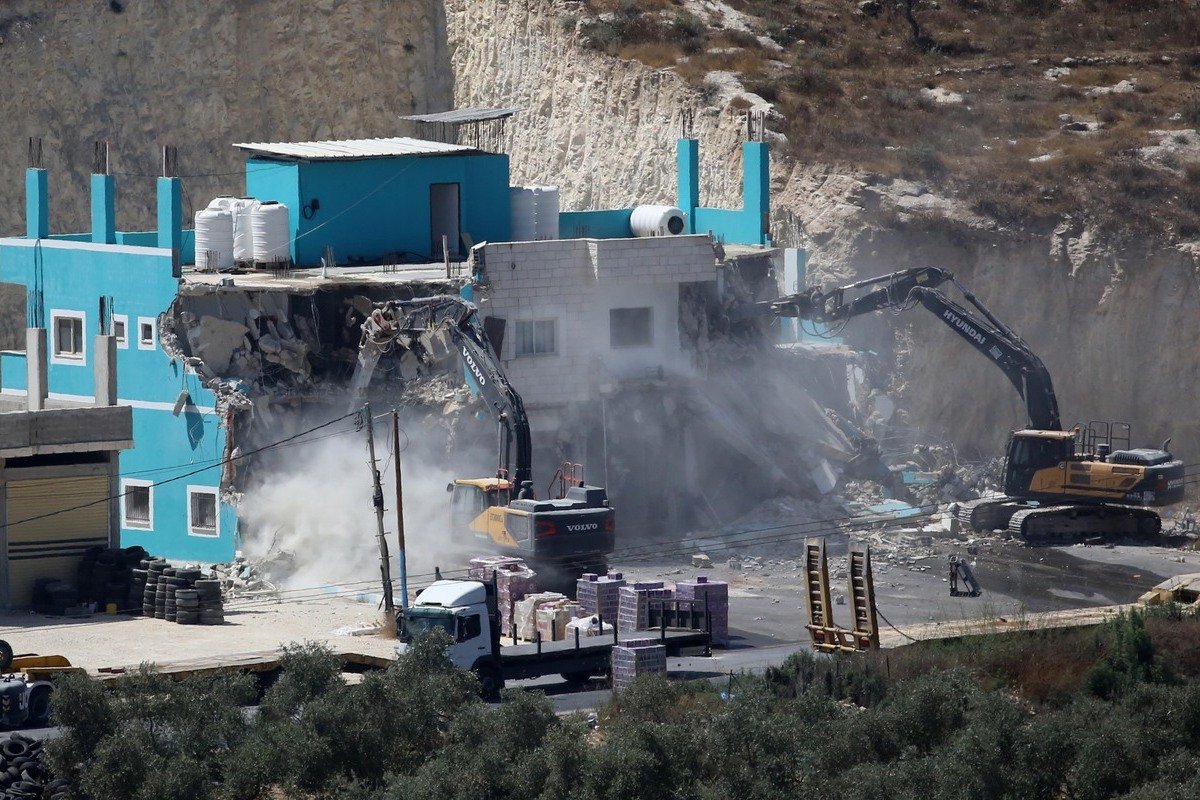
Israeli Defense Minister Israel Katz announced that the government has approved 104 illegal settlements and around 160 settlement farms in the occupied West Bank since November 2022. The move, labeled an unprecedented step by Katz himself, deepens the displacement of Palestinian communities and further erodes prospects for a viable Palestinian state.
Israel Approves 104 Settlements in Occupied West Bank
Ramallah, Occupied West Bank — Defense Minister Israel Katz made the disclosure during a closed meeting with Likud party leaders in Jerusalem. The announcement comes amid rising settler activity and international warnings that settlement growth is accelerating toward de facto annexation.
Katz Announces 104 Settlements and 160 Farms
Israeli Defense Minister Israel Katz said Friday that his government has approved the establishment of 104 illegal settlements and around 160 settlement farms in the occupied West Bank since it was formed in November 2022, Israel’s Channel 7 reported. Speaking during a meeting with leaders of the ruling Likud party in Jerusalem, Katz said the government had taken “a series of important decisions regarding settlement expansion in Judea and Samaria,” using Israel’s term for the West Bank.
“We are not only strengthening security, but also strengthening settlement,” Katz said. “The government approved the establishment of 104 new settlements in Judea and Samaria, along with nearly 160 new farms,” he added. Katz described the move as “an unprecedented step that reflects the commitment to strengthening Israel’s control over the area.”
Settlement expansion has intensified ahead of Israel’s October 2026 parliamentary elections, with parties in the governing coalition treating new construction as a core campaign asset. The settler movement holds decisive influence inside the coalition, particularly through ministers who control planning authorities and allocate dedicated budgets for infrastructure in Area C. These dynamics have turned settlement approvals into a visible demonstration of political loyalty rather than routine policy.
Defense Minister Katz’s disclosure aligns with this pattern. Since the government took office in November 2022, Finance Minister Bezalel Smotrich has directed additional funds toward settlement budgets and streamlined approval processes, embedding expansion within the coalition’s survival strategy. The result is a feedback loop in which electoral calculations and settlement growth reinforce each other, narrowing the space available for any future negotiated outcome.
Outposts: The Seeds of Future Settlements
Settlement outposts, which occupiers establish without official Israeli government authorization, often become the nucleus of settlements that are later legalized or connected to the infrastructure of existing settlements, according to Palestinian and Israeli groups monitoring settlement activity. In recent weeks, the West Bank has seen a rise in occupiers establishing outposts in different areas.
According to Israeli settlement watchdog Peace Now, there are currently 141 settlements and 360 settlement outposts in the West Bank, in addition to 15 settlements in East Jerusalem. These outposts frequently receive retroactive approval, turning temporary structures into permanent facts on the ground that fragment Palestinian territory and restrict movement for local farmers and families.
Outposts operate as flexible instruments of territorial control. Established without prior permits, they are later granted retroactive authorization through military orders or planning committees, converting informal clusters of caravans into permanent neighborhoods linked to existing settlements. This pipeline allows incremental growth while shielding the state from immediate international scrutiny.
Spatially, the combination of recognized settlements and outposts carves Area C into discontinuous Palestinian enclaves surrounded by access roads, security buffers, and agricultural zones reserved for settler use. Monitoring organizations document each stage through aerial imagery, permit records, and field visits, producing maps that show how these fragments obstruct contiguity and restrict Palestinian movement between villages and grazing lands.
International Law: UNSC Resolution 2334 and the ICJ
UN Security Council Resolution 2334, issued in 2016, states that Israeli settlements in Palestinian territory occupied since 1967, including East Jerusalem, have no legal validity and constitute a flagrant violation of international law. In July 2024, the International Court of Justice said in an advisory opinion that Israel’s continued presence in the occupied Palestinian territories is unlawful and must end as soon as possible.
Two years after that ICJ opinion, the UN human rights office reported in July 2026 that settler violence and widening annexation “is only getting worse.” UN monitors documented that West Bank settler violence has reached an all-time high. These rulings underscore that settlement expansion violates core principles of international humanitarian law and blocks the path to Palestinian self-determination.
The ICJ’s July 2024 advisory opinion went beyond earlier findings by declaring the occupation itself unlawful and requiring Israel to end it “as rapidly as possible.” It also outlined third-state obligations, including refraining from recognizing the unlawful situation and avoiding assistance that sustains it. Subsequent debates in the UN General Assembly and European institutions have centered on whether targeted sanctions or restrictions on settlement goods could give practical effect to these legal conclusions.
Despite these developments, enforcement remains limited. No coordinated mechanism has translated the rulings into changes on the ground, allowing settlement activity to continue while diplomatic responses stay largely declarative. The gap between legal determinations and daily realities underscores how accountability structures have yet to constrain the physical transformation of the territory.
Settler Violence and Daily Life Under Occupation
According to the Palestinian Colonization and Wall Resistance Commission, occupiers carried out 3,488 attacks against Palestinians and their property during the first half of 2026, including attacks on people, property and land, the establishment of settlement outposts and preventing farmers from accessing their land. Palestinians and Israeli and international rights groups accuse the Israeli army of protecting settlers and sometimes participating in the attacks.
Amnesty International’s June 2026 report detailed what it describes as Israel’s ethnic cleansing of West Bank Palestinian communities. Daily life for families in villages near new outposts involves restricted access to grazing land, damaged olive groves, and constant fear of nighttime raids. These incidents disrupt schooling, agriculture, and basic movement between towns.
The documented surge in settler violence has produced cumulative restrictions on Palestinian agriculture and mobility. Families report repeated incidents of olive-tree damage, blocked access to fields during harvest seasons, and the destruction of irrigation systems, all of which erode livelihoods built over generations. Home demolitions compound these pressures, leaving households without shelter or legal recourse in areas targeted for further expansion.
UN monitoring bodies have described the current level of settler violence as unprecedented, deepening the sense of isolation felt by villages encircled by new outposts.
Annexation Fears and the Two-State Horizon
Palestinians warn that Israeli policies in the occupied West Bank, including home demolitions and settlement expansion, are paving the way for formal annexation, undermining the possibility of establishing a Palestinian state under relevant UN resolutions. Israeli media and analysts describe the accelerated settlement activity as part of a pre-election land grab ahead of the October 2026 parliamentary vote, with the cabinet recently approving 13 new settlements in the central West Bank.
Israeli Defense Minister Israel Katz has refused to use administrative detention against suspected Jewish extremists, while Shin Bet head David Zini avoids the term “Jewish terror,” according to The New York Times. This political climate leaves Palestinian communities facing irreversible changes to their landscape with little recourse.
What Comes Next
International observers expect further UN statements and possible additional advisory proceedings as settlement numbers grow. Palestinian officials continue to document each new outpost and farm, pressing for accountability under international law. The human impact is immediate: families lose access to ancestral fields, children grow up behind barriers, and entire villages watch their horizons shrink under expanding settlement infrastructure.
By Fatima Al-Rashid, Staff Writer
This article was produced with AI-assisted research and editorial support. Reporting is based on sources cited in the article.
What's Your Reaction?
 Like
0
Like
0
 Dislike
0
Dislike
0
 Love
0
Love
0
 Funny
0
Funny
0
 Wow
0
Wow
0
 Sad
0
Sad
0
 Angry
0
Angry
0

Gulf/MENA Correspondent at Global1.News. Based in Doha, covering Gulf politics, energy markets, diplomacy, and development across the Middle East and North Africa. Tracks the economic transformation of the Gulf states.











Comments (0)