
Gaza family identifies son in photo of Israeli soldiers posing by blindfolded Palestinian
A Palestinian family in Gaza says a viral photo of Israeli soldiers posing beside a blindfolded detainee shows their missing son Mahmoud Al-Drimli — the first news of him in nearly two years. Rights groups say such images corroborate abuse reports and may constitute war crimes.
In a recent Middle East Eye report, Aida and Atallah Al-Drimli recognised their 22-year-old son Mahmoud in a photograph of Israeli soldiers posing beside a blindfolded Palestinian detainee, the first news the family had received of him in nearly two years. The image, which circulated widely online after being posted by a former Israeli soldier, reached the family on Wednesday and immediately reignited anguish over the fate of thousands of Gazans held without charge or contact. The discovery underscores how social media has become both a source of torment and a rare channel of information for families searching for the disappeared.
Gaza Family Identifies Son in Soldiers' Viral Photo
Gaza City, Palestine – 31 July 2026 — For Aida and Atallah Al-Drimli, the moment of recognition arrived without warning. Scrolling through images that had spread across Instagram this week, they saw their son Mahmoud, blindfolded and seated on the ground between two female Israeli soldiers who smiled beside their captain. It was the first confirmation in nearly two years that Mahmoud was alive, or at least had been alive when the photograph was taken. The family received the news on Wednesday, 29 July 2026, through the Middle East Eye report that brought the image to wider attention.
A Photograph That Ended Two Years of Silence
The photograph was posted by Nikol Stelmashvski, an Israeli who had recently completed her military service. In the image, two female soldiers smile while posing next to an unidentified young Palestinian sitting with his head down. Stelmashvski’s Hebrew caption marked the end of her service: “Two years and eight (months), four wars… Thousands of memories, a million and one experiences. And here came the end of a chapter of my life that I will never forget.” The post, documented in Middle East Eye’s live blog, treated the blindfolded detainee as a backdrop to a personal milestone rather than a human being whose family had been left without word.
For the Al-Drimli family, the image cut through the void that has defined life for relatives of the disappeared since Israel’s war on Gaza intensified in October 2023. Mahmoud had been 20 when contact ceased. Now 22, he appeared in the frame as an object of casual documentation. The photograph sparked widespread anger online, with users condemning the soldiers’ decision to pose beside a restrained and blindfolded man as both dehumanising and potentially unlawful. No official statement from the Israeli military regarding this specific image had been issued at the time of reporting, and figures on Mahmoud’s current condition or location were not immediately available.
The family’s ordeal reflects a broader pattern in which Gazans learn the fate of loved ones not through formal channels but through the social media posts of those who detained them. In the absence of regular consular access, lawyer visits, or even basic notification, Instagram and similar platforms have become unintended registries of the missing. Each new image carries the dual possibility of relief and fresh trauma.
Earlier Viral Image Revealed Parallel Agony
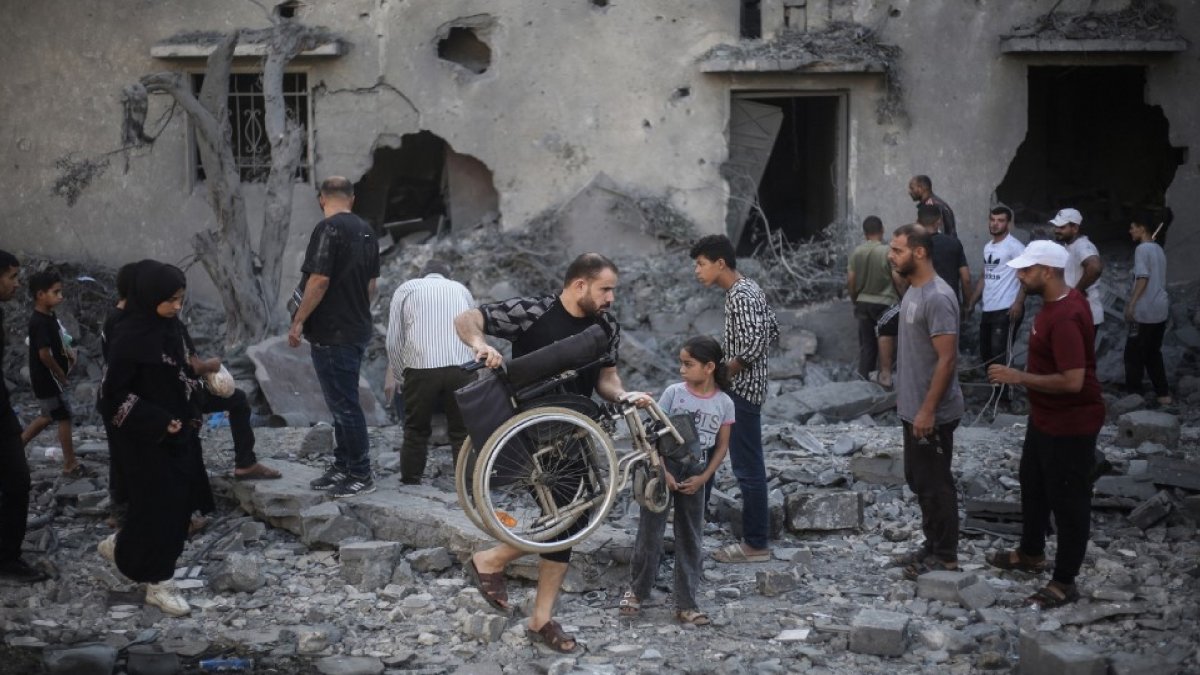
The Al-Drimli discovery follows an earlier viral photograph that surfaced in early July 2026. That image showed a Palestinian man from Gaza blindfolded, stripped to his underwear and restrained face down on a cot while in Israeli custody. The Israeli military acknowledged the photograph was genuine and stated that an inquiry was under way. A military spokesperson said “those involved will be dealt with in accordance with the findings” and added that the treatment “does not align” with the military’s values, according to reporting by Reuters carried on Al Jazeera.
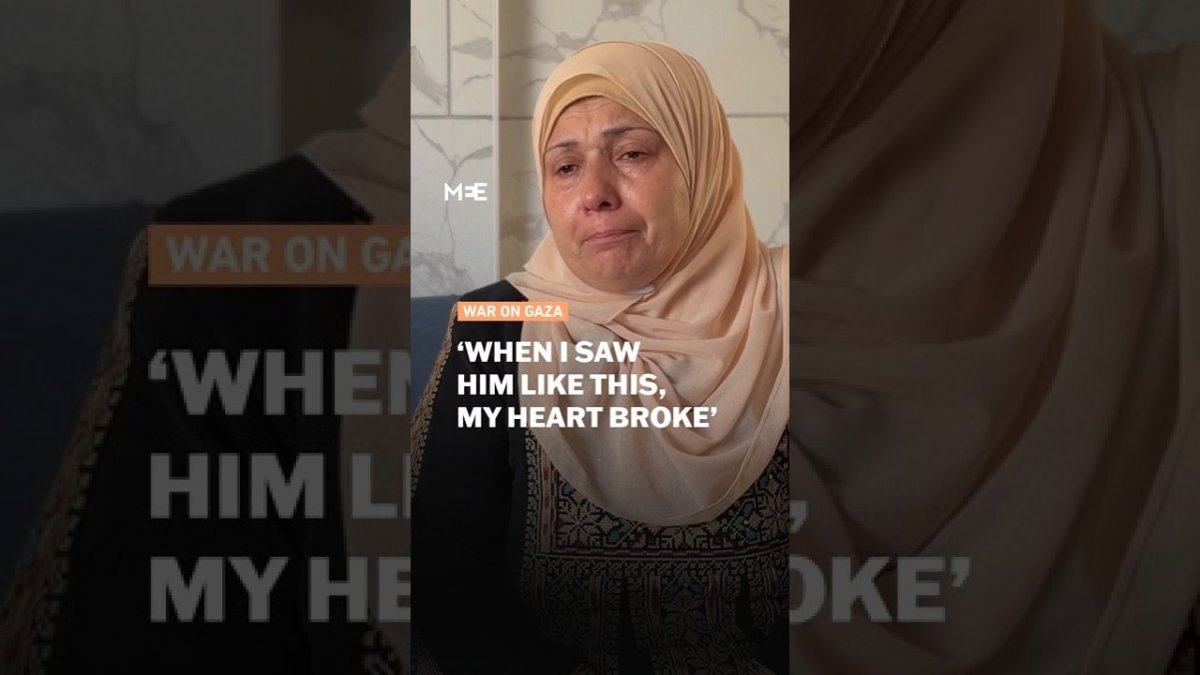
Two Gaza mothers identified their sons in that earlier image. Rana Abu Nassar said she recognised her son Osama, who had been arrested in March near the so-called “Yellow Line” demarcating Israeli control within Gaza. She cited swelling in his foot and scars on his leg, stating, “I know the details of his body.” Joudeh Al-Ghoul identified her son Ameen, arrested in November 2023 while trying to travel from southern Gaza to the north. “A mother’s heart can recognise her son. I hugged the mobile phone and started crying,” she said. Both women described the moment of recognition as simultaneously confirming life and confirming suffering.
Amani Sarahneh of the Palestinian Prisoners Society said the organisation had submitted both men’s names to the military in an effort to secure lawyer visits. “Visits do take place, but with great difficulty. The coordination process takes a very long time,” Sarahneh explained. The delays leave families suspended between hope and dread, unable to verify conditions or deliver even basic messages of support.
Scale of Detention and Legal Framework
Approximately 1,200 Palestinians from Gaza are held in Israel under the Internment of Unlawful Combatants Law, which permits unlimited detention of those suspected of participating directly or indirectly in hostile acts. Palestinian and Israeli human rights groups report that about 9,500 Palestinians in total are held in Israeli prisons. Detainees face torture, starvation, and medical neglect that have resulted in the deaths of dozens of prisoners, according to the same organisations.
Rights groups have stated that the July photograph corroborates extensive reporting on Israeli torture of Palestinians in detention and may itself constitute a war crime. The act of photographing a blindfolded, restrained detainee for personal or commemorative purposes raises questions under international humanitarian law regarding the dignity of persons hors de combat and the prohibition on outrages upon personal dignity.
Since October 2023, Israel’s war on Gaza has killed tens of thousands of Palestinians, displaced nearly the entire population, and produced widespread detention operations. Families of the disappeared move between hospitals, prison inquiry offices, and social media feeds in search of any fragment of information. In November 2025, Middle East Eye reported that an Israeli soldier had posted a photograph of a Palestinian detainee “for sale” on Instagram, another instance of soldiers documenting captives in ways that treat them as trophies or commodities rather than protected persons.
Daily Life Under the Shadow of Disappearance
In Gaza City and across the territory, the search for the missing has become a grim routine woven into daily survival. Parents compare notes at aid distribution points, share screenshots in neighbourhood WhatsApp groups, and study every new image that surfaces for familiar scars, posture, or clothing. The Yellow Line and other zones of Israeli military control have become sites of sudden arrest, after which individuals simply vanish from family contact. For those whose relatives were taken in the early months of the war, the passage of time has not dulled the urgency; it has only deepened the fear that silence equals death.
The Al-Drimli family’s experience illustrates how recognition itself can be double-edged. Seeing Mahmoud alive in the photograph ended one form of uncertainty while opening another: Where is he now? What conditions has he endured? Will the family ever be permitted a visit or even a confirmed location? These questions hang over thousands of households. The Palestinian Prisoners Society and other organisations continue to submit names and request access, yet the coordination process remains protracted and outcomes uncertain.
Local economic and social life has been reshaped by this reality. Extended families pool scarce resources to pursue any lead. Young people who might once have planned studies or marriages now calculate the risk of movement that could end in detention. The cultural expectation that a son or daughter will one day return home collides daily with the knowledge that return is neither guaranteed nor, in many cases, even formally acknowledged by the detaining power.
Analysis and Implications
The successive appearance of these photographs—first the early July image of the stripped and restrained man, then the late July image of Mahmoud Al-Drimli between smiling soldiers—points to a pattern of documentation that rights organisations argue goes beyond isolated misconduct. When soldiers treat the bodies of detainees as props for end-of-service commemorations or casual posts, the practice normalises the erasure of Palestinian personhood. International law requires that protected persons be treated humanely and shielded from public curiosity and humiliation. The Israeli military’s own statement that the earlier treatment “does not align” with its values acknowledges a gap between stated standards and observed conduct; whether internal inquiries produce accountability remains an open question.
Geopolitically, the detention regime operates alongside the broader military campaign that has devastated Gaza’s infrastructure and civilian life. The Internment of Unlawful Combatants Law provides a legal architecture for prolonged holding without the procedural safeguards ordinarily associated with criminal process. When combined with restricted lawyer access and the near-total absence of family notification, the system produces precisely the information vacuum that forces families onto social media. Each viral image then becomes both evidence and indictment, circulating faster than official channels can respond.
For people on the ground, the implications are immediate and intimate. Mothers like Rana Abu Nassar and Joudeh Al-Ghoul, and parents like Aida and Atallah Al-Drimli, must absorb the shock of recognition while continuing to navigate siege conditions, displacement, and the search for food, water, and medical care. The photographs do not free their sons; they merely confirm that the sons once occupied a particular frame. Until systematic access, transparent lists of detainees, and independent monitoring are established, families will remain dependent on the next soldier’s post, the next shared screenshot, the next moment when a familiar face appears under a blindfold. That dependence itself is a form of ongoing harm, one that compounds the physical suffering inside the prisons with psychological attrition outside them. The coming weeks will test whether the anger generated by these images translates into concrete pressure for disclosure and accountability, or whether the silence simply resumes until the next photograph surfaces.
By Fatima Al-Rashid, Staff Writer
This article was produced with AI-assisted research and editorial support. Reporting is based on sources cited in the article.
What's Your Reaction?
 Like
0
Like
0
 Dislike
0
Dislike
0
 Love
0
Love
0
 Funny
0
Funny
0
 Wow
0
Wow
0
 Sad
0
Sad
0
 Angry
0
Angry
0

Gulf/MENA Correspondent at Global1.News. Based in Doha, covering Gulf politics, energy markets, diplomacy, and development across the Middle East and North Africa. Tracks the economic transformation of the Gulf states.










Comments (0)