
Israel Advances Control Over Solomon's Pools Near Bethlehem
In a recent Middle East Eye report detailing events from late July 2026, Israeli occupation forces raided the Solomon's Pools tourist area between the town of Al-Khader and the village of Artas, south of Bethlehem, expelling Palestinian visitors at gunpoint and declaring the historic site a closed military zone.
In a recent Middle East Eye report detailing events from late July 2026, Israeli occupation forces raided the Solomon's Pools tourist area between the town of Al-Khader and the village of Artas, south of Bethlehem, expelling Palestinian visitors at gunpoint and declaring the historic site a closed military zone. The July 31 action followed a similar raid three days earlier and came after Israeli Finance Minister Bezalel Smotrich publicly called Palestinian administration of the 2,000-year-old reservoirs unacceptable. These developments highlight an ongoing effort to assert control over a site that remains Islamic waqf land managed by the Palestinian Authority.
Israel Advances Control Over Solomon's Pools Near Bethlehem
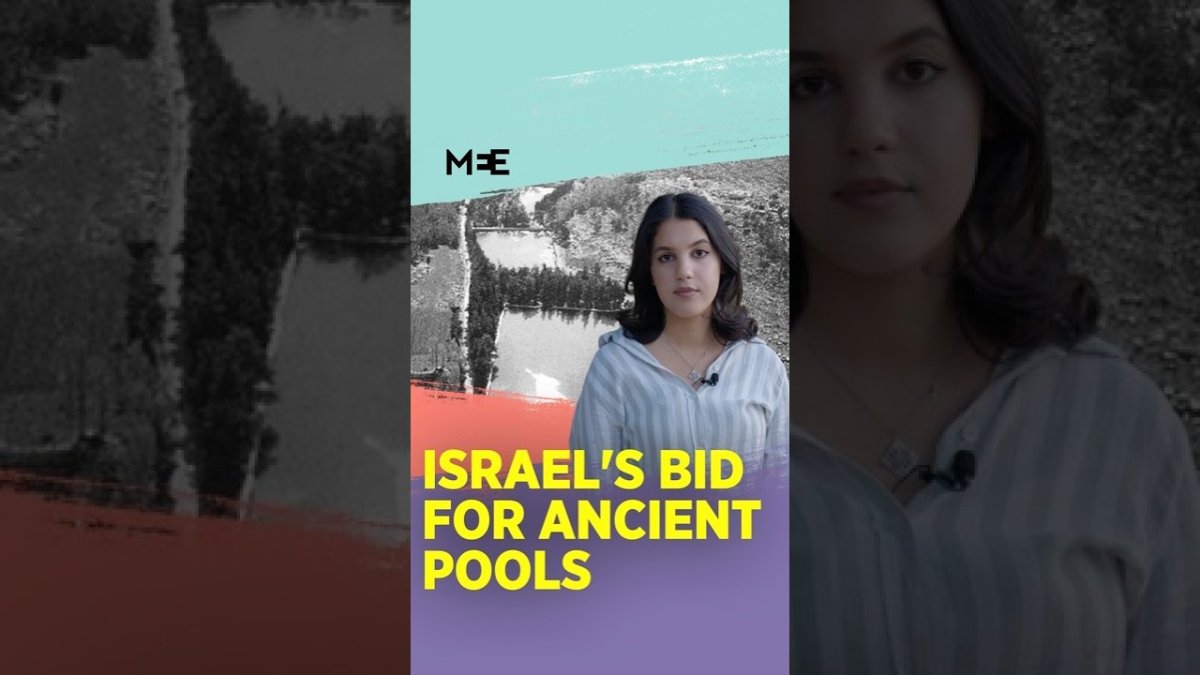
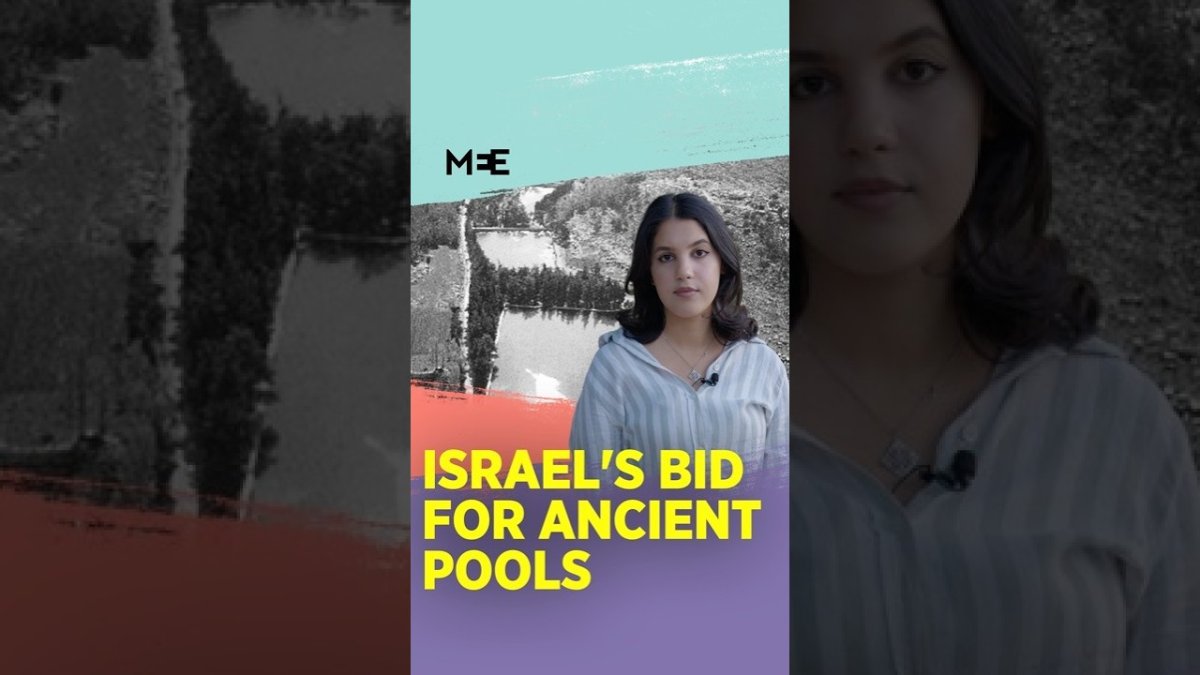
Bethlehem, Occupied West Bank – August 3, 2026 — Israeli occupation forces raided the Solomon's Pools site on July 31, 2026, forcing Palestinian families from the area, closing a commercial kiosk, and establishing a closed military zone around the first reservoir. Palestinian security sources told WAFA that soldiers deployed around the historic pools and prevented public access. The operation followed an earlier raid on July 28 and repeated statements by Israeli officials favoring Israeli control of the location.
A Heritage Site Under Siege
Solomon's Pools consists of three large reservoirs built during the Herodian period and traditionally linked in some accounts to King Solomon. The system supplied water to Bethlehem and Jerusalem through an aqueduct network that includes the Lower Aqueduct along Wadi al-Byar. For generations, Palestinian families from Al-Khader, Artas, and Bethlehem have used the site for recreation, picnics, and swimming during the summer months.
Local residents report that incursions have become nearly weekly occurrences. Israeli forces and settlers have repeatedly entered the area, disrupted gatherings, and restricted movement. These actions have turned a once-open recreational space into a location of frequent tension and limited access for the surrounding communities.
The engineering of the three reservoirs reflects advanced hydraulic planning from the Second Temple period. The largest reservoir holds roughly 200,000 cubic meters of water and was constructed in stages to capture and store seasonal rainfall. An extensive aqueduct system, including the Lower Aqueduct along Wadi al-Byar, channeled water northward to serve Jerusalem and surrounding areas.
In Palestinian cultural memory the pools represent a shared public space where families from Al-Khader, Artas, and Bethlehem have gathered for generations. Summer picnics, wedding celebrations, and informal swimming outings have formed part of local tradition, turning the reservoirs into a living link between ancient infrastructure and contemporary community life.
The site operates as a Palestinian Authority tourist attraction under the management of the Ministry of Tourism and Antiquities. It has featured on itineraries for international visitors seeking to understand the region's layered history, drawing attention to both its engineering heritage and its role in daily Palestinian life.
Smotrich's Visit and the Settlement Agenda
Weeks before the July 31 raid, Israeli Finance Minister Bezalel Smotrich visited the pools accompanied by settlers and Knesset member Zvi Sukkot. During the visit, Smotrich swam in one of the reservoirs and stated that continued Palestinian administration of the site was unacceptable. The tour occurred amid broader Israeli efforts to expand settlement activity in the Bethlehem governorate.
Smotrich's remarks aligned with calls from other officials to place the pools under direct Israeli oversight. Such statements have coincided with increased military presence at the location and restrictions on Palestinian movement along roads connecting Al-Khader and Artas to the site.
Smotrich serves as finance minister with direct authority over West Bank settlement administration and holds an additional ministerial portfolio overseeing settlement affairs. His public statements have consistently favored expanded settlement construction and the transfer of administrative control from Palestinian institutions to Israeli bodies.
The July visit formed part of a broader push by far-right members of Israel's governing coalition to assert Israeli authority over historic sites in the occupied West Bank. These efforts have intensified since the current coalition took office, linking archaeological claims to settlement expansion goals in the Bethlehem governorate and beyond.
The Judea and Samaria Heritage Authority
Earlier in 2026, Israel established the Judea and Samaria Heritage Authority to manage archaeological sites across the West Bank. The new body includes locations that remain Islamic waqf property under Palestinian Authority administration. Officials have indicated that the authority will oversee preservation and visitor access at multiple historic places, including Solomon's Pools.
Palestinian officials have rejected the authority's mandate, noting that it operates without coordination with the Palestinian Authority. The creation of the body has raised concerns that Israeli control over heritage sites will further limit Palestinian use of spaces tied to local history and daily life.
The authority is modeled on the operational approach of the Israel Antiquities Authority in the occupied territories. It has drawn criticism from international bodies and Palestinian officials who argue that the new entity functions as an instrument of unilateral control rather than neutral preservation.
Waqf status designates the land as an Islamic religious endowment whose ownership is considered inalienable under Islamic law. This legal framework, recognized across Ottoman, British, Jordanian, and Palestinian systems, places the pools under the stewardship of Palestinian religious and governmental institutions rather than Israeli administrative bodies.
Waqf Land and International Law
Solomon's Pools remains Islamic waqf land, an endowment status recognized under Ottoman, British, Jordanian, and Palestinian legal frameworks. The Palestinian Authority continues to manage the site through its tourism and antiquities departments. International humanitarian law prohibits an occupying power from altering the legal status of property in occupied territory.
Human rights organizations have documented similar patterns at other West Bank sites where Israeli authorities have assumed control under archaeological or security pretexts. These measures have often preceded settlement expansion and restricted Palestinian access to land and resources.
Article 53 of the Fourth Geneva Convention explicitly prohibits the destruction or alteration of property in occupied territory except where rendered absolutely necessary by military operations. The Hague Regulations of 1907 further require an occupying power to respect and safeguard cultural institutions and places of worship.
UNESCO has repeatedly called on Israel to halt excavations and administrative changes at sites in the occupied West Bank, including East Jerusalem, citing violations of international conventions on cultural heritage. The pools lie near the biblical aqueduct system and form part of a recognized cultural landscape that extends across the Bethlehem region.
Human Cost for Bethlehem's Families
Families from Bethlehem and nearby villages have long relied on Solomon's Pools as an affordable place for gatherings and relief from summer heat. The July 31 raid interrupted visits by local residents and closed a kiosk that provided income for workers from the area. Similar disruptions on July 28 and in preceding weeks have reduced the number of families able to use the site safely.
Residents describe the cumulative effect of repeated incursions as a gradual loss of a shared public space. Parents report difficulty planning outings for children, while small vendors face uncertainty about future operations. Figures on total economic losses were not immediately available from Palestinian tourism authorities.
Children who grew up swimming in the reservoirs now encounter soldiers and barriers where they once played freely. Parents speak of the difficulty explaining to younger family members why a familiar gathering place has become a site of confrontation and restricted access.
Vendors who operated small kiosks selling refreshments and souvenirs during peak summer months describe lost income and mounting uncertainty. Several families from Artas and Al-Khader have depended on seasonal earnings from visitors to supplement household budgets already strained by movement restrictions and economic pressures.
The psychological toll of seeing a beloved heritage site transformed into a closed military zone weighs heavily on residents. Community members describe feelings of dispossession that extend beyond the immediate loss of recreation to a deeper erosion of connection with a landscape central to local identity.
Analysis and Implications
The sequence of raids, ministerial visits, and the establishment of a new heritage authority points to a coordinated effort to shift administration of Solomon's Pools away from Palestinian hands. This approach mirrors tactics used at other historic locations in the West Bank where control has been transferred under security or preservation justifications.
Continued restrictions at the site will affect daily life for communities in Al-Khader, Artas, and Bethlehem. The pattern also raises questions about the future of other waqf properties and the ability of Palestinian institutions to maintain access to cultural resources under occupation.
Similar patterns appear at the Ibrahimi Mosque in Hebron, Rachel's Tomb near Bethlehem, and the Nabi Musa shrine, where Israeli authorities have imposed layered security measures that gradually limit Palestinian access while expanding Israeli oversight. In each case, initial restrictions framed as temporary security steps have evolved into de facto changes in administration.
The use of security pretexts to justify control over heritage sites has repeatedly preceded settlement expansion and land reclassification. Observers note that such measures contribute to a broader process of de facto annexation that undermines the territorial contiguity required for any viable Palestinian state.
Restrictions on sites like Solomon's Pools also strike at Palestinian cultural sovereignty. When communities lose the ability to manage and visit places tied to their history and daily life, the foundations for a future two-state arrangement become further eroded, leaving residents with diminished prospects for self-determination over their own heritage.
By Fatima Al-Rashid, Staff Writer
This article was produced with AI-assisted research and editorial support. Reporting is based on sources cited in the article.
What's Your Reaction?
 Like
0
Like
0
 Dislike
0
Dislike
0
 Love
0
Love
0
 Funny
0
Funny
0
 Wow
0
Wow
0
 Sad
0
Sad
0
 Angry
0
Angry
0

Gulf/MENA Correspondent at Global1.News. Based in Doha, covering Gulf politics, energy markets, diplomacy, and development across the Middle East and North Africa. Tracks the economic transformation of the Gulf states.













Comments (0)