
Iran unlikely to change position even if US, Israel resume war
Iran’s foreign policy stance amid the renewed threat of conflict with the United States and Israel underscores a broader strategic calculus that transcends the immediate battlefield.
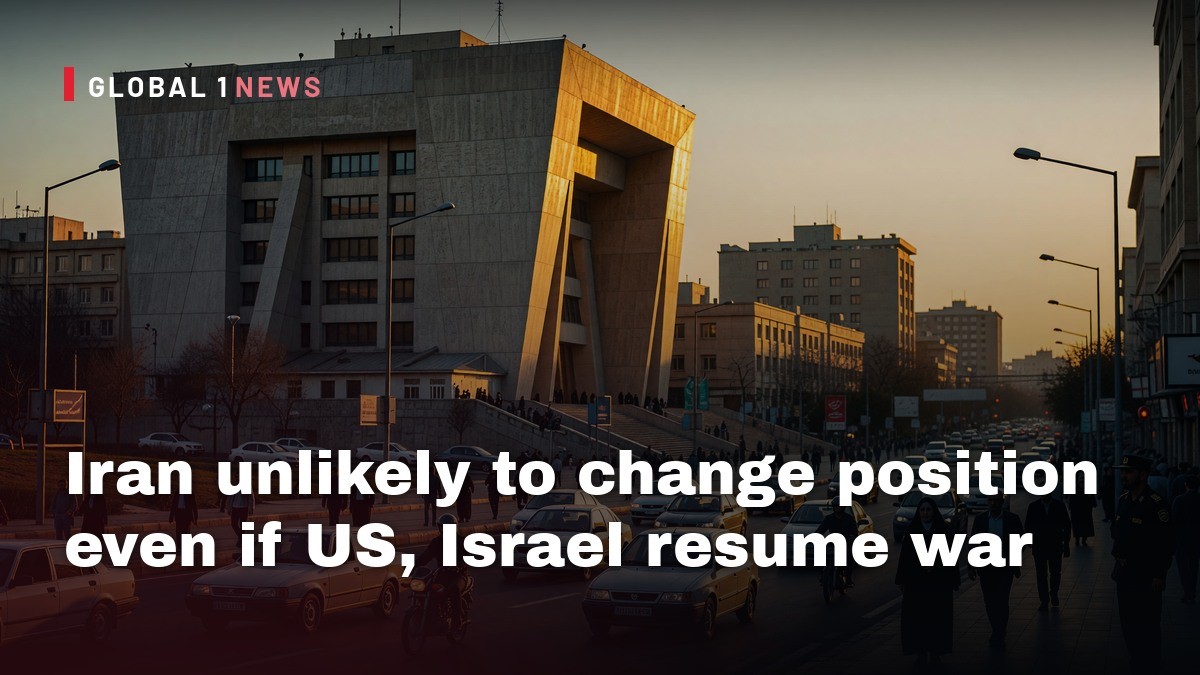
Iran’s foreign policy stance amid the renewed threat of conflict with the United States and Israel underscores a broader strategic calculus that transcends the immediate battlefield. As the region grapples with the fallout of the April 8 cease‑fire and the lingering volatility in the Strait of Hormuz, Tehran’s insistence that its core policies remain unchanged reveals a calculated resilience rooted in both geopolitical ambition and domestic imperatives.
Continuity of Tehran’s Core Policies
Foreign Minister Abbas Araghchi’s recent remarks in Tehran emphasized that, regardless of whether a new war erupts, Iran’s strategic objectives will not shift. He framed the discussion not in terms of short‑term tactical adjustments but in the context of a “post‑war period,” signalling that Tehran’s long‑term vision is already in place. This articulation of continuity reflects a broader pattern in Iranian diplomacy: a willingness to endure short‑term pressures while preserving overarching goals, such as regional influence and resistance to foreign military presence.
Araghchi’s statement that “whether there is war or not, our policies remain the same” aligns with Iran’s historical approach to external threats. By presenting its policy line as immutable, Tehran seeks to project an image of steadfastness that deters adversaries from believing that military pressure can compel a policy reversal.
The Legacy of Past Confrontations
Araghchi referenced the two previous attempts by the United States and Israel to force a change in Iranian behavior, noting that “they have already done so twice and have seen the results.” This allusion to prior escalations—most notably the 2025 campaign that began on February 28, which he described as “another little Epic Fury”—serves to remind regional actors of the limited efficacy of coercive tactics against Tehran. The implication is that any renewed aggression will likely yield the same outcomes as before, reinforcing Iran’s confidence in its strategic resilience.
The memory of these past confrontations also functions as a deterrent narrative. By highlighting the lack of decisive results from earlier wars, Iran signals that further attempts will be met with predictable resistance, thereby raising the political and economic costs for Washington and Jerusalem.
Strategic Importance of the Strait of Hormuz
The Strait of Hormuz remains a critical chokepoint for global energy supplies, and Iran’s claim of control over the waterway has been a central element of its leverage strategy since the conflict began. Araghchi’s acknowledgment that “shipping routes through the Strait of Hormuz will no longer be the same” underscores a recognition that the war has altered the operational environment, even as Tehran continues to assert its authority over the passage.
Iran’s targeting of vessels that attempt to cross without its authorization reflects a broader doctrine of using maritime security to extract political concessions. The United States’ counter‑blockade of Iranian ports, in turn, illustrates the reciprocal escalation that has turned the strait into a theater of indirect confrontation, affecting not only regional actors but also the wider international community dependent on oil flows.
The Unraveling of the June Memorandum
In June, Tehran and Washington reached a memorandum of understanding that outlined a pathway toward a permanent settlement of the conflict. However, the agreement quickly fell apart as each side accused the other of violations. This breakdown highlights the fragility of diplomatic overtures in a context where mistrust runs deep and strategic calculations often outweigh the desire for stability.
Araghchi’s call for a “return to the accord” after the memorandum’s collapse signals Tehran’s willingness to re‑engage in negotiations, provided that its core demands—particularly regarding the removal of foreign forces from the region—are respected. The emphasis on returning to a prior framework suggests that Iran views the memorandum not merely as a temporary cease‑fire but as a potential foundation for a longer‑term arrangement, contingent on reciprocal compliance.
Iran’s Vision of a Foreign‑Force‑Free Region
Central to Tehran’s diplomatic narrative is the demand for the “complete absence of foreign forces” in the region. This objective dovetails with Iran’s broader strategic aim of reshaping the security architecture of the Gulf and the wider Middle East to reduce external interference. By framing the removal of foreign troops as a prerequisite for “peace and stability,” Iran positions itself as a champion of regional sovereignty, even as it pursues its own geopolitical interests.
This rhetoric resonates with a segment of the Arab and Shia populations who view foreign military presence—particularly that of the United States—as an infringement on national autonomy. Tehran’s articulation of this goal thus serves both an external diplomatic purpose and an internal political one, reinforcing its legitimacy among constituencies that value resistance to perceived imperialist encroachments.
Implications for Energy Security and Global Markets
The ongoing volatility in the Strait of Hormuz has direct repercussions for global energy markets. Any disruption to shipping lanes can trigger spikes in oil prices, prompting concerns among energy‑dependent economies. While the source material does not quantify the impact, the strategic importance of the strait as a conduit for oil underscores the broader economic stakes tied to the conflict.
Iran’s continued assertion of control over the strait, coupled with the United States’ naval counter‑blockade, creates a persistent risk environment. Market participants must therefore factor in the possibility of further escalations when assessing supply‑side risks, especially as the region adapts to a “new reality” in which traditional shipping routes may be altered or constrained.
Future Trajectories and Regional Calculus
Looking ahead, Tehran’s steadfast policy line suggests that any future negotiations will likely be anchored around the removal of foreign forces and the redefinition of maritime security in the Gulf. The reference to “new realities” taking hold indicates that Iran is prepared to adapt its operational tactics while preserving its strategic objectives.
For regional actors, the challenge will be to balance the desire for stability with the need to address Iran’s demands without compromising their own security interests. As the United States and Israel contemplate further military options, the historical pattern highlighted by Araghchi—that past attempts have not yielded different outcomes—may serve as a cautionary backdrop. Ultimately, the trajectory of the conflict will hinge on whether diplomatic channels can be revived in a manner that satisfies Tehran’s core conditions while mitigating the broader risks to regional and global energy security.
This article was produced with AI-assisted research and editorial support. Reporting is based on the source material cited below. Sources: Daily Sabah Middle East; dailysabah.com; Global1.News (26 October 2026).
By Malik Hassan, Staff Writer
What's Your Reaction?
 Like
0
 Dislike
0
 Love
0
 Funny
0
 Wow
0
 Sad
0
 Angry
0

Middle East Correspondent at Global1.News. Based in Beirut, covering politics, conflict, energy, and society across the Middle East. Brings context and depth to a region often reduced to headlines.










Comments (0)