
India's 'Cockroach' Youth Revolt: How a Slur Became a Movement
In a recent BBC News report, a correspondent spent a week embedded with India's "Cockroach Janta Party" — the satirical youth movement that has shaken Prime Minister Narendra Modi's government and forced the resignation of the country's education minister. What began as a protest over leaked examination papers has become the most visible expression of youth dissent in India in years.
In a recent BBC News report, a correspondent spent a week embedded with India's "Cockroach Janta Party" — the satirical youth movement that has shaken Prime Minister Narendra Modi's government and forced the resignation of the country's education minister. What began as a protest over leaked examination papers has become the most visible expression of youth dissent in India in years.
\n
India's 'Cockroach' Youth Revolt: How a Slur Became a Movement
\nNew Delhi, India – 1 August 2026 — The resignation of Education Minister Dharmendra Pradhan this week marked a rare victory for a protest movement in Modi's India, and the demonstrators who made the word "cockroach" their own are not finished. From the protest camp at Jantar Mantar in the heart of the capital to street marches in Mumbai, Bengaluru and Patna, the movement has evolved from an online joke into a national political force.
\n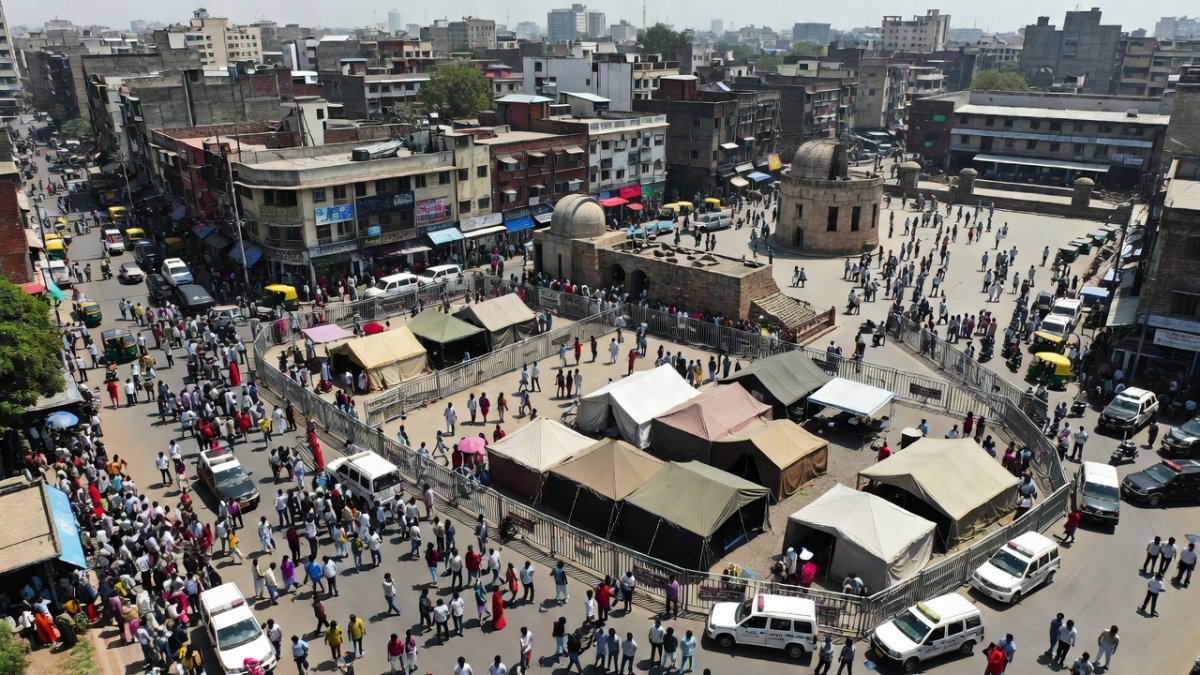 \n
\nHow a Chief Justice's Slur Became a Movement
\nThe Cockroach Janta Party began, by most accounts, as an act of defiance against an insult. Earlier this year, India's chief justice used the word "cockroach" to describe unemployed young people turning to journalism and activism — a remark that sparked immediate outrage across a country where a government job or a university place can decide a family's entire future. After the backlash, the judge insisted he had been referring only to people with "fake and bogus degrees," but the damage was done: young Indians adopted the slur as a badge of honour.
The movement was formally launched in May under the name Cockroach Janta Party, a deliberate satirical play on the ruling Bharatiya Janata Party that has held power since 2014. Founding president Abhijeet Dipke and spokesperson Ashutosh Ranka positioned CJP not as a registered political party but as a platform for students and unemployed youth frustrated by systemic failures. What started as social media hashtags quickly translated into physical camps at Jantar Mantar in New Delhi, drawing participants from across states including Bihar and Maharashtra.
\n\nOrganisers say the name reclaimed dignity from an official insult while highlighting how authorities dismiss legitimate grievances. The movement's online origins allowed rapid spread through platforms that bypassed traditional media filters. Within weeks, local groups formed in Mumbai, Bengaluru and Patna, turning digital solidarity into coordinated street actions. This evolution from hashtag to sustained protest camp reflects broader patterns of youth mobilisation seen in many democracies facing economic stagnation.
\n\nExam Leaks and the Broken Promise of Social Mobility
\nAt the heart of the anger is a system that millions of young Indians depend on: the competitive examinations that determine who gets into medical school, who wins a university place, and who lands a coveted government job. When papers for NEET — the national medical entrance exam — were leaked and the test was cancelled this year, the betrayal was felt by some two million students who had prepared for years. Protesters say at least a dozen students have died by suicide since the exam cancellations, and the movement has demanded financial assistance for their families.
\n\nThe class dimension runs through every account from the camps. Students from wealthier backgrounds with connections reportedly purchased leaked papers, while those from poorer families who spent three or four years preparing on limited resources faced ruined prospects. Eighteen-year-olds described the desperation of watching their only path to stable employment collapse. CJP has demanded 10 million rupees in assistance for each affected family, a figure protesters say reflects the scale of lost opportunity in a country where youth unemployment remains stubbornly high.
\n\nThese leaks exposed deeper distrust in institutions meant to guarantee fair advancement. Educationists note that repeated paper leaks have turned examinations into sources of anxiety rather than merit-based gateways. The movement's focus on accountability for the NEET scandal has drawn support from families who see the system as rigged against those without political or financial leverage.
\n\n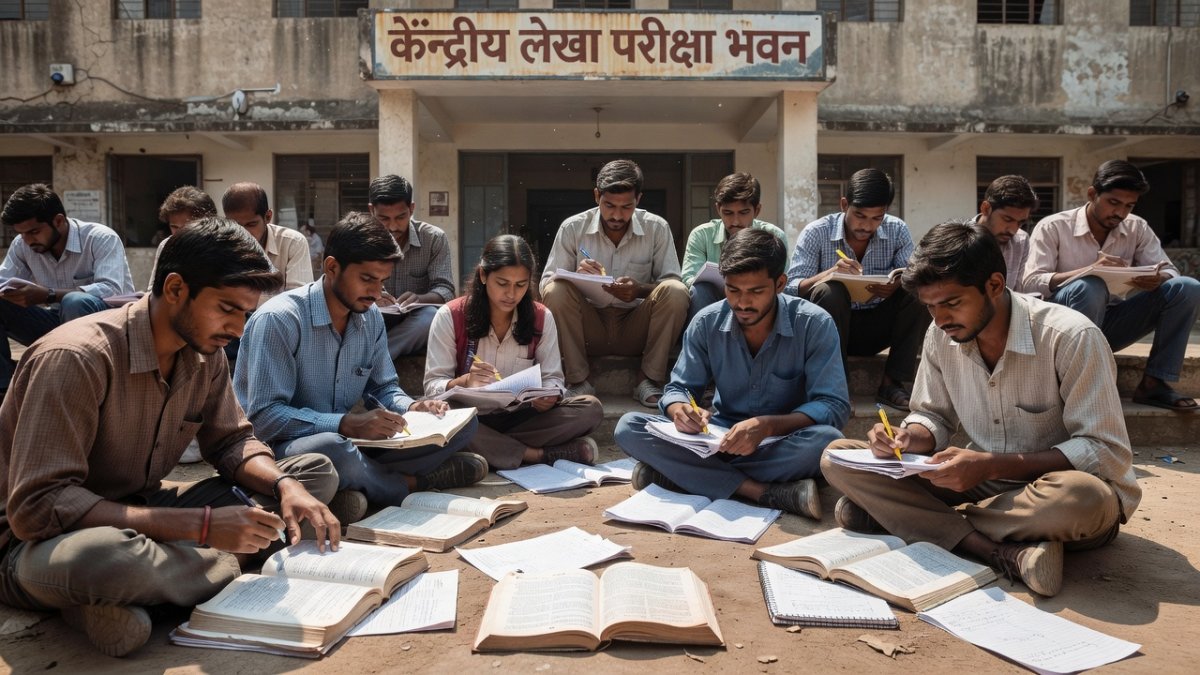 \n
\nThe Crackdown That Changed Everything
\nOn Monday 20 July, tens of thousands of protesters marched toward parliament as the monsoon session began. Police responded with lathi batons, tear gas and pellet guns, leaving at least 60 people injured. Authorities dismantled the stage and tents at Jantar Mantar, yet demonstrators refused to leave and maintained their round-the-clock sit-in despite the monsoon rains. Eyewitnesses described baton charges that struck minors among the crowd, images that spread rapidly online and intensified national attention.
\n\nCJP leaders, including Abhijeet Dipke, insisted the protests remained peaceful and accused authorities of sending outsiders described as "goons" to disrupt the gatherings and justify further action. The use of force drew immediate condemnation from opposition figures and human rights observers. Protesters at the site reported that the crackdown only hardened their resolve, turning a student-led demonstration into a broader symbol of resistance against perceived government overreach.
\n\nThe events of that day marked a turning point. What had been a contained camp at Jantar Mantar became a focal point for nationwide solidarity marches in cities including Mumbai and Bengaluru. The visible injuries and arrests amplified the movement's reach through social media, drawing in participants who had previously remained on the sidelines.
\n\nModi's Response: Fast-Track Courts and a 'Hard Bargain'
\nPrime Minister Narendra Modi's first public response came on 23 July when he pledged fast-track courts to punish those involved in paper leaks. "Nothing is more important than the welfare and future of our youth!" Modi stated, adding that those who try to harm the future of India's youth will not be spared. CJP spokesperson Ashutosh Ranka dismissed the announcement as "merely a distraction" from deeper structural failures in the examination system.
\n\nMeanwhile, activist Sonam Wangchuk, who joined the Jantar Mantar protest camp on 28 June and began an indefinite hunger strike, was forcibly removed by police and hospitalised. He continued his fast and ended the 26-day strike on 24 July after reaching a "hard bargain" with the government. Written assurances included commitments to raise examination accountability on the parliament floor and guarantees that no cases would be registered against young people who participated in the mass Delhi protest.
\n\nAuthorities shut 16-17 metro stations and blocked mobile internet near the protest site during this period, measures criticised by human rights groups as disproportionate restrictions on assembly and communication. Opposition leaders including Rahul Gandhi and Mallikarjun Kharge visited the camp and called for the resignations of Dharmendra Pradhan, Amit Shah and Modi himself.
\n\nA Minister Falls, But the Movement Marches On
\nOn 25 July, Education Minister Dharmendra Pradhan resigned around 2:30 pm. Crowds at Jantar Mantar celebrated the announcement, marking only the second time a BJP minister has been forced from office by a popular movement since MJ Akbar's departure in 2018 amid sexual harassment allegations. In Bihar, unrest turned violent in Patna and Siwan, with 93 state officials and 13 civilians reportedly injured and 694 protesters arrested, half of them minors.
\n\nFollowing national-level negotiations with CJP, Bihar announced on 27 July that all charges would be dropped. The movement stated that students were "being targeted, detained, or arrested by various state agencies." Protests spread to Bengaluru, Mumbai, Nagpur, Jaipur, Hyderabad, Chennai and Kolkata, with some turnouts exceeding 100,000. Bollywood figures including Salman Khan, Alia Bhatt and Kareena Kapoor posted messages of support for the students.
\n\nPradhan's resignation represented a concrete concession, yet CJP leaders emphasised that demands for systemic reform and family assistance remain unmet. The movement continues its sit-in at Jantar Mantar while planning further coordinated actions across states.
\n\n\nAnalysis — What the 'Cockroaches' Mean for Modi's India
\nThe Cockroach Janta Party protests represent the largest youth challenge to Prime Minister Narendra Modi since he took office in 2014. Analysts suggest this signals deepening frustration among young Indians over stagnant employment opportunities and repeated failures in the education system that is supposed to provide pathways out of poverty. Social media has played a central role in transforming localised grievances into a coordinated national movement, allowing rapid sharing of images from police actions and examination scandals that traditional outlets might have downplayed.
\n\nSurveillance measures, including facial recognition systems in police vans near Jantar Mantar and warnings from the University of Delhi urging students to avoid the protests, have raised concerns about shrinking space for dissent. These tactics echo responses seen in other countries where governments face mass youth mobilisation. In Russia, similar patterns of economic discontent among young people, combined with distrust in state institutions, have produced sporadic protest waves that authorities have met with internet restrictions and targeted detentions. The Indian experience shows how a single slur or policy failure can ignite broader demands when social media lowers the barriers to collective action.
\n\nCJP has handed the opposition, including Congress figures such as Rahul Gandhi, a platform to challenge the BJP on issues beyond traditional partisan lines. Whether the movement converts its victory over Dharmendra Pradhan into lasting examination reforms or sustained political influence remains an open question. The coming months will test if the "cockroach" label continues to unite disparate student groups or fragments under sustained pressure from state agencies. This dynamic reflects global trends where youth-led movements test the limits of governments that have grown accustomed to managing dissent through a mix of concessions and controls.
\n\nBy Irina Volkov, Staff Writer
This article was produced with AI-assisted research and editorial support. Reporting is based on sources cited in the article.
What's Your Reaction?
 Like
0
Like
0
 Dislike
0
Dislike
0
 Love
0
Love
0
 Funny
0
Funny
0
 Wow
0
Wow
0
 Sad
0
Sad
0
 Angry
0
Angry
0

Russia/Eastern Europe Correspondent at Global1.News. Covering Russian politics, energy, security, and the shifting dynamics of the post-Soviet space. Provides clear-eyed analysis on one of the world's most opaque regions.












Comments (0)