
Trump's Board of Peace Disarmament Roadmap Tests Israeli-Palestinian Sequencing
The July 31, 2026 announcement by US President Donald Trump of a Hamas disarmament agreement under the Board of Peace framework intersects directly with the stalled Israeli-Palestinian dynamics, Iranian regional influence, and the shifting roles of Egypt, Turkey, and Qatar as mediators in Gaza's tra
The July 31, 2026 announcement by US President Donald Trump of a Hamas disarmament agreement under the Board of Peace framework intersects directly with the stalled Israeli-Palestinian dynamics, Iranian regional influence, and the shifting roles of Egypt, Turkey, and Qatar as mediators in Gaza's transitional governance. This development tests the sequencing of Israeli withdrawal against verifiable decommissioning steps, amid ongoing Israeli strikes that have killed more than 1,000 Palestinians since the October 2025 ceasefire. The plan's reliance on the National Committee for the Administration of Gaza and an International Stabilisation Force raises questions about enforcement in a territory where far-right Israeli ministers openly reject any rollback of control.
Trump's Board of Peace Disarmament Roadmap Tests Israeli-Palestinian Sequencing Amid Regional Mediator Pressures
Washington, United States – August 1, 2026 — US President Donald Trump announced via Truth Social on July 31, 2026, a historic agreement for the complete disarmament of Hamas and all other armed groups in Gaza, describing it as a monumental step toward lasting peace and security. The deal emerged from the Board of Peace, the Trump-led international body established in September 2025 to oversee Gaza's transitional governance under a UN Security Council-endorsed 20-point plan with a two-year mandate. Board of Peace high representative Nickolay Mladenov stated that months of negotiations in Cairo produced an actionable plan for relinquishing weapons, followed by Israeli withdrawal, though he stressed that implementation and verification must be real.
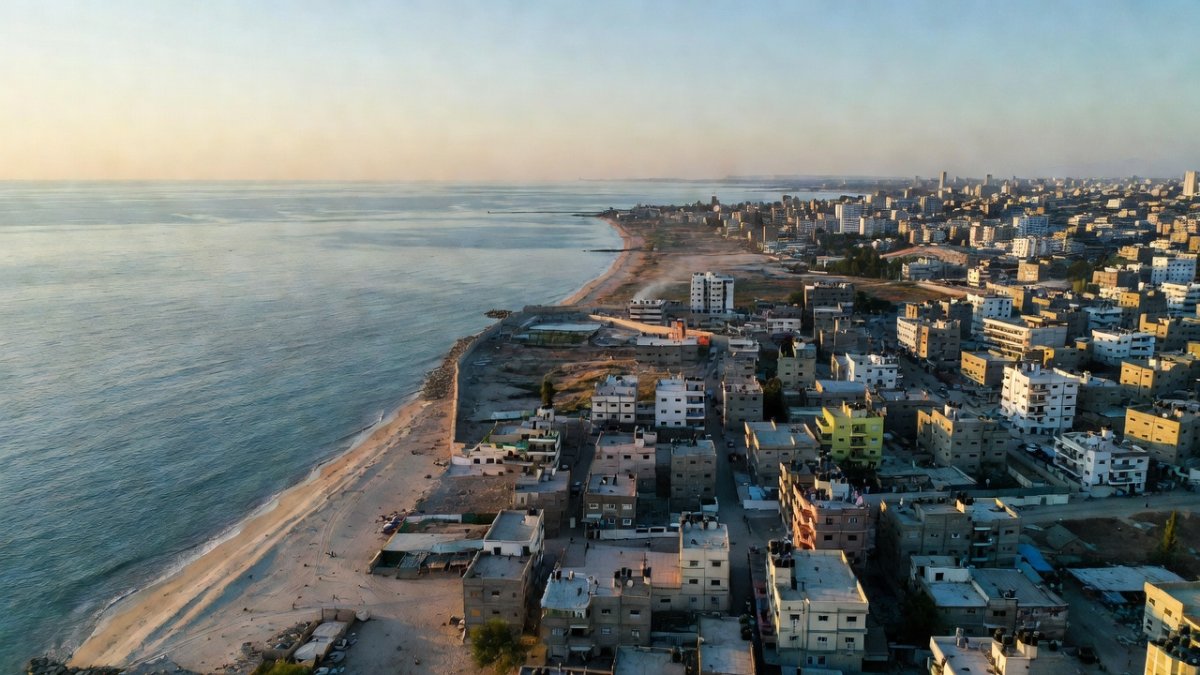
Geopolitical Context: The Board of Peace Framework
The announcement positions the Board of Peace as the central mechanism linking Hamas's commitment to hand over all civilian governance and security functions to the 13-member National Committee for the Administration of Gaza with phased Israeli withdrawal from areas under its control. Mediators from Egypt, Turkey, and Qatar facilitated the 15-point roadmap published on August 1, 2026, which ties gradual, sequential, and time-bound disarmament to Israeli pullback. An unidentified Palestinian party will conduct the initial weapons inventory, with transfer and storage supervised by the International Stabilisation Force drawing troops from Morocco and Kosovo among other volunteers. The plan also calls for an International Verification Committee and a 14-day period after acceptance to finalize the timetable.
The Board of Peace structure places Nickolay Mladenov at the intersection of these mechanisms, coordinating between the National Committee for the Administration of Gaza and the International Stabilisation Force to ensure that governance handover precedes any major territorial concessions. Egypt, Turkey, and Qatar have each calibrated their involvement to protect distinct interests, with Cairo focused on border security, Ankara on Sunni political influence, and Doha on maintaining channels to Hamas. This mediator triangle has shaped the 15-point plan's emphasis on verifiable steps, yet the National Committee for the Administration of Gaza remains excluded from Gaza itself while the International Stabilisation Force and International Verification Committee await deployment decisions.
Sequencing under the Board of Peace framework requires that disarmament inventories begin only after Israeli forces complete initial withdrawals, a condition that directly tests the International Stabilisation Force's ability to secure storage sites without triggering renewed clashes. The 13-member National Committee for the Administration of Gaza is expected to assume civilian functions once the International Verification Committee certifies compliance, but the absence of clear enforcement powers for the Board of Peace leaves open the possibility that delays in International Stabilisation Force arrivals could stall the entire process. Regional actors view this architecture as fragile precisely because it depends on simultaneous movement by parties that have historically distrusted one another's commitments.
Historical Background
The current framework builds on the October 2025 US-brokered ceasefire that confined Israeli forces to the Yellow Line demarcation encompassing roughly 53 percent of Gaza, a line that has since shifted eastward as Israeli operations expanded control and compressed the population. Hamas had already announced in July 2026 the dissolution of its governing authority after nearly two decades, transferring powers to the National Committee for the Administration of Gaza after the head of its government emergency committee resigned. This move followed Hamas's earlier insistence that no disarmament would occur until Israel fulfilled the first phase of the ceasefire, including halting bombing, withdrawing to the agreed line, and surging humanitarian aid to 600 trucks daily. Israel's 2005 unilateral disengagement, which removed approximately 8,500 settlers, now faces renewed far-right calls for resettlement ahead of looming elections.
The October 2025 ceasefire established the Yellow Line as the initial boundary, yet subsequent Israeli operations have steadily eroded that demarcation and increased pressure on remaining civilian areas. Hamas's July 2026 decision to dissolve its structures and hand authority to the National Committee for the Administration of Gaza reflected both internal exhaustion and external pressure, coming after years of managing parallel military and administrative roles. The 2005 disengagement precedent, which saw the removal of roughly 8,500 settlers, is now invoked by Israeli far-right voices as a cautionary tale rather than a model, with calls for reversing that withdrawal gaining traction before the next elections.
Under the 20-point plan endorsed by the UN Security Council in November 2025, the Board of Peace was tasked with overseeing a two-year transition that would link disarmament to territorial concessions. Hamas conditioned its participation on completion of the first phase of the October 2025 ceasefire, particularly the daily entry of 600 trucks carrying aid, before any weapons-related measures could begin. This historical layering means that current negotiations must simultaneously address the legacy of the 2005 disengagement, the shifting Yellow Line, and the National Committee for the Administration of Gaza's still-unrealized entry into Gaza.
Regional Dynamics
Regional mediators Egypt, Turkey, and Qatar shaped the roadmap through extended Cairo talks, reflecting their shared interest in stabilizing Gaza to prevent spillover into Sinai or broader Sunni-Shia tensions involving Iran. Reports indicate Iran attempted to dissuade Hamas from signing, contributing to Hamas leaders' expressed disappointment that Gaza was omitted from Iran's June memorandum of understanding with the United States. Muhammad Shehada of the European Council on Foreign Relations noted Hamas's growing internal resentment over governing burdens, including salaries for 35,000 employees, and its fear that Israel might relaunch full-scale war. Palestinian Islamic Jihad separately dismissed early reports of the agreement as inaccurate, underscoring fractures among Gaza factions.
Egypt's calculus centers on preventing militant spillover across the Rafah crossing, while Turkey seeks to expand its diplomatic footprint among Sunni actors and Qatar maintains financial and political leverage with Hamas. Iran's reported effort to dissuade Hamas from the deal highlights Tehran's concern that any disarmament precedent could weaken allied factions elsewhere. Muhammad Shehada's assessment of the 35,000-employee burden underscores why Hamas viewed the National Committee for the Administration of Gaza transition as a potential relief valve, even as Palestinian Islamic Jihad's rejection signals that not all factions accept the same trade-offs.
Gulf states have adopted a cautious posture, offering rhetorical support for the Board of Peace framework without committing resources that could be seen as endorsing Israeli security demands. The mediator trio of Egypt, Turkey, and Qatar has therefore carried the primary load in Cairo, balancing their individual interests against the risk that Israeli far-right pressure for resettlement could derail the 15-point plan. These dynamics reveal a region where short-term stabilization incentives compete with longer-term fears of renewed conflict.

Strategic Calculus
Hamas senior official Ghazi Hamad confirmed to multiple outlets that the group reached agreement with the Board of Peace contingent on International Stabilisation Force deployment and Israeli adherence to October ceasefire obligations, stating the deal is a package and that no weapons-related steps would begin until Israel implements its commitments. Israeli officials conveyed objections that the 15-point document fails to meet demands for complete demilitarization and removal of all weapons as a precondition, with one source insisting there would be no withdrawal from the current line without genuine disarmament. Far-right ministers Itamar Ben-Gvir and Orit Strouk publicly rejected the plan, with Ben-Gvir calling for continued targeted killings and Orit Strouk labeling the negotiations a contradiction of Israel's position. A US official noted Washington coordinated every step with Israel yet acknowledged Israeli skepticism, while Board of Peace officials emphasized that sequencing, verification, and reciprocity matter more than fixed timetables.
Ghazi Hamad's conditions explicitly tie any International Stabilisation Force deployment to prior Israeli fulfillment of the first phase of the October 2025 ceasefire, including the 600-truck daily aid target. Israeli objections center on the absence of upfront full demilitarization, with officials arguing that the 15-point plan's phased approach leaves weapons in Palestinian hands during the transition. Itamar Ben-Gvir and Orit Strouk's public rejections reflect domestic political calculations ahead of elections, while the US official's remark that the arrangement is "not really a trust deal" captures Washington's recognition that verification mechanisms must substitute for mutual confidence.
The principle of reciprocity articulated by Board of Peace officials requires that each Israeli withdrawal step be matched by verifiable disarmament milestones, yet the lack of agreed enforcement tools leaves the International Verification Committee without clear recourse if either side stalls. Hamas's insistence on sequencing protects its remaining leverage, while Israeli far-right opposition seeks to block any rollback that could be portrayed as weakness. This tension over verification and timing now defines whether the 14-day implementation window can produce tangible movement.
Regional Implications
If implemented, the roadmap's provisions for rehabilitating approximately 10,000 Hamas-linked police officers under National Committee for the Administration of Gaza authority and storing heavy weapons under Palestinian control rather than transferring them to Israel could alter the balance of leverage in future phases. However, with the National Committee still barred from entering Gaza and International Stabilisation Force troops yet to arrive, the 14-day implementation window faces immediate logistical hurdles. Continued Israeli airstrikes hours after the announcement and the steady expansion beyond the Yellow Line suggest that second-order effects may include heightened domestic pressure on Israel's government ahead of elections and renewed questions over whether the Board of Peace can enforce reciprocity across all parties.
Should Israel decline to accept the 15-point plan, the National Committee for the Administration of Gaza would remain sidelined and the International Stabilisation Force deployment from Morocco and Kosovo would face indefinite postponement. Delays in International Stabilisation Force arrivals would also keep the International Verification Committee from beginning its work, leaving the Board of Peace without operational presence inside Gaza. Israeli election timing adds further uncertainty, as far-right rejection of the framework could translate into coalition pressure against any government that appears to endorse phased withdrawal.
Failure to achieve reciprocity would further erode US credibility in Arab capitals already wary of normalization talks that hinge on Gaza stability. The combination of continued strikes beyond the Yellow Line and the National Committee for the Administration of Gaza's exclusion from the territory risks turning the 14-day window into a period of renewed escalation rather than measured implementation. These second-order effects extend beyond Gaza to the broader question of whether international bodies like the Board of Peace can impose verifiable sequencing on parties that prioritize unilateral security calculations.
By Malik Hassan, Staff Writer
This article was produced with AI-assisted research and editorial support. Reporting is based on sources cited in the article.
What's Your Reaction?
 Like
0
Like
0
 Dislike
0
Dislike
0
 Love
0
Love
0
 Funny
0
Funny
0
 Wow
0
Wow
0
 Sad
0
Sad
0
 Angry
0
Angry
0

Middle East Correspondent at Global1.News. Based in Beirut, covering politics, conflict, energy, and society across the Middle East. Brings context and depth to a region often reduced to headlines.











Comments (0)