
IIT Student Suicides: 115 Deaths Since 2005, 8 at IIT Delhi Alone
Eight IIT Delhi students have died by suicide in 30 months, and protesters rejected the inquiry panel after Rishikesh Kumar's death on August 22. With 14,488 student suicides in 2024 and 115 IIT deaths since 2005, IIT Kanpur Director Prof Manindra Agrawal tells India Today what must change.
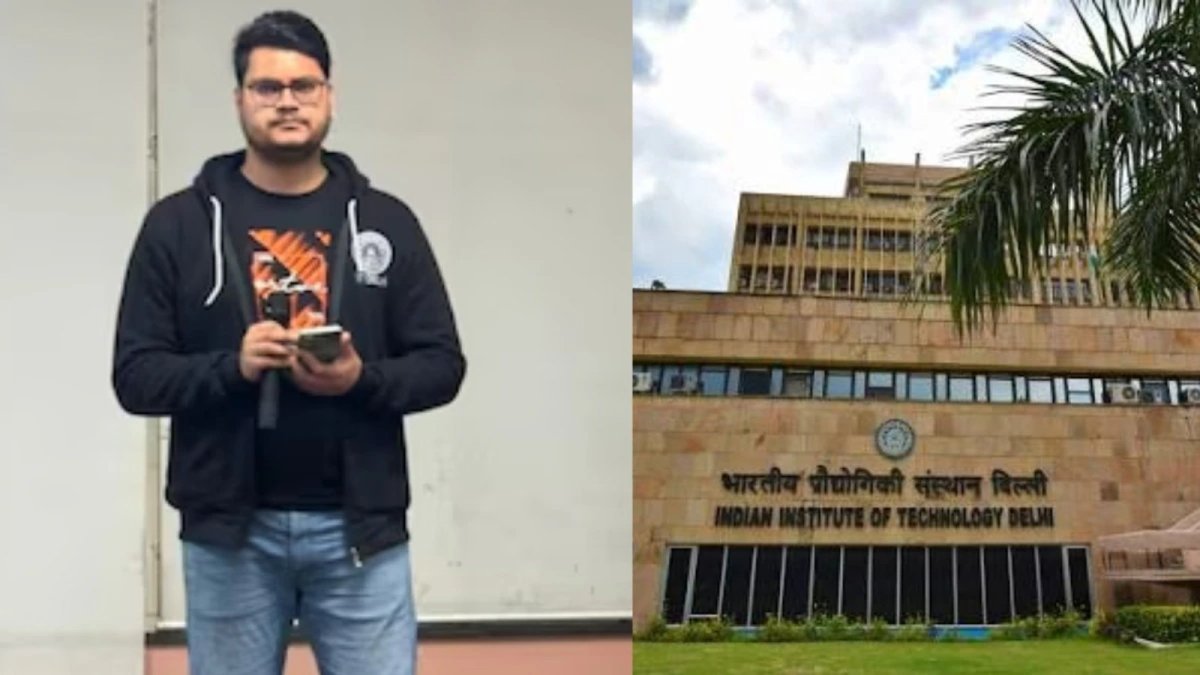
The death of 31-year-old MSc Physics student Rishikesh Kumar at IIT Delhi on August 22, 2026 — the eighth student suicide at the institute since 2023 — has triggered a campus-wide protest that students rejected the administration's response to on August 25. The crisis comes as NCRB data confirms 14,488 student suicides nationally in 2024, and as IIT Kanpur Director Prof Manindra Agrawal, in an exclusive interview with India Today, outlined the systemic failures and physical infrastructure changes needed to address what he calls a mental wellness emergency across India's premier engineering institutes.
Eight Deaths in 30 Months: Why India's Premier IITs Are Failing Their Students on Mental Health
New Delhi, August 25, 2026 — The protest note read: "In the last 30 months, eight IIT Delhi students died by suicide on campus. This pattern points to a systemic problem." Around 300 students had staged a sit-in near the Lecture Hall Complex on August 24, then moved to the Main Building's first-floor lobby, forcing the suspension of classes for the day. By August 25 evening, they had formally rejected the administration's five-member External Inquiry Committee as inadequate, demanding instead a panel headed by a retired Supreme Court or High Court judge, with student members nominated collectively by the protesters.

The August 22 Death and the Immediate Aftermath
Rishikesh Kumar, a second-year MSc Physics student from Bihar residing in Shivalik Hostel, entered the IIT Delhi campus around 8 am on Saturday, August 22. He took the elevator to the sixth floor of the Lecture Hall Complex and jumped. At 8:33 am, the Kishangarh police station received a PCR call. Police found no suspicious marks beyond fall injuries and a mobile phone in his pocket; no suicide note was recovered. A case was registered under Section 108 (abetment of suicide) of the Bharatiya Nyaya Sanhita (BNS), and the institute handed over Kumar's counselling records to investigators.
Students who protested on August 24 cited three specific grievances: denial of hostel accommodation, lack of academic project allocation, and insufficient mental health support. An audio message from Kumar's mother, circulated among protesters, described repeated unsuccessful attempts to secure on-campus housing. Kumar had been under financial and emotional strain following his father's death. Protesters put it bluntly: "We are not here after one suicide. Not after two. We are here after eight. How is it not enough for them?"
IIT Kanpur Director's Exclusive: Infrastructure and Systemic Reform
In an exclusive discussion with India Today published August 25, IIT Kanpur Director Prof Manindra Agrawal addressed the pattern of student suicides across premier engineering institutes. IIT Kanpur has recorded at least nine student suicides over the past three years and more than 12 in the last five years; most cases did not involve suicide notes. Agrawal revealed that the institute is establishing a Centre for Mental Wellness with both clinical and non-clinical tracks, and has expanded suicide-prevention training and student mentor programmes.
But the most concrete changes have been physical. After repeated deaths, IIT Kanpur began removing certain fixed pipes in hostels and installing spring-loaded safety devices on ceiling fans across its 14 hostels. These devices trigger an alarm and respond to excessive load. The January 13, 2026 death of PhD scholar Swaroop Ishwaram, 25, of the Department of Earth Sciences — a native of Rajasthan's Churu district who died after jumping from the sixth floor of a residential building on campus, leaving behind his wife Manju and their two-year-old daughter — triggered a student protest questioning the availability and effectiveness of counselling. Deputy Commissioner of Police (West) SM Qasim Abidi confirmed Ishwaram had been battling anxiety and depression for a long time and had undergone counselling on multiple occasions.
The National Data: 14,488 Student Suicides in 2024
The IIT crisis is a subset of a national emergency. NCRB data shows India recorded 14,488 student suicides in 2024, up 4.3% from 13,892 in 2023. Students accounted for 8.5% of all 1,70,746 suicide deaths recorded that year. Over the decade 2014-2024, student suicides rose by nearly 80%. Among children below 18, 1,071 deaths were recorded under the cause "failure in examination." Family problems, at 3,101, remained the largest reported cause, followed by love affairs and illness.
RTI data filed by Dheeraj Singh, an IIT Kanpur alumnus and founder of the Global IIT Alumni Support Group, paints an even starker picture for the IIT system specifically: at least 115 IIT students have died by suicide since 2005 — 98 on campus, 17 off campus. IIT Madras recorded the highest number with 26. Separate data shows 65 IIT students died by suicide since 2021, rising from nine cases in 2021 to 15 in 2025; IIT Kharagpur recorded the highest number in that period. Singh's analysis, quoted by India Today, is damning: "If there is so much clustering taking place, certainly there is an effectiveness problem or an impact problem." He described some institutional responses as "knee jerk reaction for optics," citing counselling access problems — "he was told to come the next day" — trust and privacy issues where "therapy sessions become gossip fodder discussed in staff rooms," and asymmetry in the student-supervisor relationship. He said PhD students are "considered almost free slaves" and that the highest suicide risk is among undergraduate males and female PhD students.
Beyond Delhi: A System-Wide Pattern Across IITs and IISc
The pattern extends well beyond IIT Delhi and IIT Kanpur. At IISc Bengaluru, two student deaths occurred within 15 days — a 19-year-old BTech student died in early August, followed by the death of a 22-year-old MTech student on August 20. Police indicated personal or relationship-related issues rather than academic pressure. IIT Bombay recorded the death of a 21-year-old BTech student in February 2026 and a 20-year-old student in July 2026. IIT Kharagpur saw two students die within 10 days in April 2026, following several deaths over the preceding 15 months; the institute appointed a dedicated Dean of Student Wellbeing in 2025, expanded its SETU counselling centre (offering psychological assessment, therapy, group therapy and psychiatric support), and launched a Mental Health and Wellbeing Policy in April 2026.
Physical infrastructure changes are spreading. IIT Guwahati has floated work for replacing existing hostel fan rods with anti-suicide ceiling-fan rods. IISc had replaced ceiling fans with wall-mounted fans back in 2021 after a spate of student suicides. IIT Delhi, for its part, has 14 counsellors, provides introductory and online sessions for first-year students, counselling in dormitories, psychotherapeutic support, and — since October 2023 — emergency psychological and psychiatric support via agreements with hospitals. Discontinuation of studies due to mental health issues is available. None of this prevented the March 2026 death of a 19-year-old first-year BTech student found dead in an apartment on the IIT Delhi campus, nor the August 22 death of Kumar.
Government Response: Task Forces, Guidelines, and the October 2026 Deadline
The institutional response at the national level is underway but incomplete. The Supreme Court National Task Force, constituted in March 2025 and headed by former judge Justice S Ravindra Bhat, is examining student mental health and suicide prevention across higher education. Its mandate covers academic pressure, discrimination, financial stress, institutional shortcomings and mental health stigma. The task force has conducted a nationwide survey involving 16,732 institutions and more than 12.8 lakh students. Its final report is due by October 31, 2026.
The Supreme Court's 2025 directive in the Sukdeb Saha case tasked the Centre — and indirectly the UGC — to frame a national policy on student mental health. The UGC issued an advisory on the National Suicide Prevention Strategy in January 2023 and separate guidelines in April 2023 covering physical fitness, student health, welfare and psychological and emotional wellbeing. UGC draft mental health guidelines released January 14, 2026 mandate mental health centres, monitoring committees and professional support in all institutions. The Education Ministry circulated a broad mental health framework in July 2023 asking higher education institutions to integrate emotional and mental wellbeing into campus functioning, including sports, yoga and meditation. The Malaviya Mission Teacher Training Programme, run by the Department of Higher Education, aims to help faculty identify student mental health concerns and intervene early.
What Students Are Demanding at IIT Delhi
Despite these measures, the IIT Delhi protest continues. Students have grouped their demands under three heads: investigation, resignation and compensation. Specifically, they demand the resignation of the Dean and Associate Deans of Student Welfare and Hostel Management and the Head of the Physics Department; Rs 1 crore compensation for Kumar's family; and assurance of no disciplinary action against protesters. They objected to the administration's account focusing on Kumar's medical history rather than statements from his mother, friends and Physics Department students. They also objected to the inclusion of former Uttarakhand Director General of Police Ashok Kumar on the External Inquiry Committee, citing his past comments on student protests. The committee, announced by Director Rangan Banerjee via email early Tuesday morning, includes former DGP Ashok Kumar (an IIT Delhi alumnus, now Vice Chancellor of Sports University Haryana), Professor Pratap Sharma (Head of the Department of Psychiatry at AIIMS New Delhi), two student representatives, and the IIT Delhi Registrar as secretary and convenor. The report is due within two weeks.
The administration has also announced plans to appoint an external Ombudsperson, a faculty-and-student mentor support system, reimbursement of medical expenses and financial assistance for Kumar's family through the benevolent fund, and a separate fund from voluntary contributions of faculty, students and staff. Students rejected all of this on August 25 evening.
Expert Warning Signs and the Road Ahead
Dr Om Prakash, Professor of Psychiatry at IHBAS (Institute of Human Behaviour and Allied Sciences), said warning signs include withdrawal from friends and family, loss of interest in previously held interests, decline in academic or work performance, frequent absence, irritability or depression, and significant changes in daily routine. Several signs appearing simultaneously or increasing rapidly warrant a sensitive conversation.
The IIT Kanpur Director's exclusive interview with India Today, alongside the same-day programming — "Rajdeep Hosts Debate On IIT Student Suicides: Experts Call For Faculty Empathy And Systemic Reform" and "Rajdeep Sardesai Show Live: Why Are IITs Unable To Check Campus Suicides" — signals that the conversation has moved from denial to structural critique. Dheeraj Singh has noted that after IIT Madras found allegations of academic harassment correct and suspended a professor, the institute reported no student suicides in the subsequent two years. He has demanded a commission of enquiry headed by a sitting judge.
The Bottom Line
The numbers are unambiguous: 115 IIT student deaths since 2005, 14,488 student suicides nationally in 2024, an 80% rise over the decade 2014-2024, and eight deaths at IIT Delhi alone in 30 months. The Supreme Court task force's report, due October 31, 2026, will land in a system where students at IIT Delhi have already rejected the administration's inquiry committee and where IIT Kanpur is installing spring-loaded ceiling fan devices as a suicide-prevention measure. For Indian parents, students and taxpayers, the question is no longer whether the IIT system has a mental health problem — it is whether the system's leadership, from directors to deans to faculty supervisors, is willing to accept that the problem is structural, not individual. The students at IIT Delhi have made their position clear: eight deaths is not a statistical anomaly, it is a verdict on the institution.
This article was produced with the assistance of AI tools for research and drafting, reviewed and edited by Global 1 News editorial staff.
— By Dr. Raj Patel, Staff Writer
This article was produced with AI-assisted research and editorial support. Reporting is based on sources cited in the article.
What's Your Reaction?
 Like
0
Like
0
 Dislike
0
Dislike
0
 Love
0
Love
0
 Funny
0
Funny
0
 Wow
0
Wow
0
 Sad
0
Sad
0
 Angry
0
Angry
0

India/South Asia Correspondent at Global1.News. Analytical voice with a background in science and health journalism. Based in New Delhi, covering Indian politics, education, healthcare, technology, and policy. Breaks down complex data into clear, actionable reporting.















Comments (0)