
Putin Grants State Powers to Seize Infrastructure Amid Drone Strikes
President Vladimir Putin has signed an executive order granting the government powers to take control of critical infrastructure deemed poorly protected against Ukrainian drone strikes, as attacks on refineries and warehouses fuel shortages and economic strain across Russia.
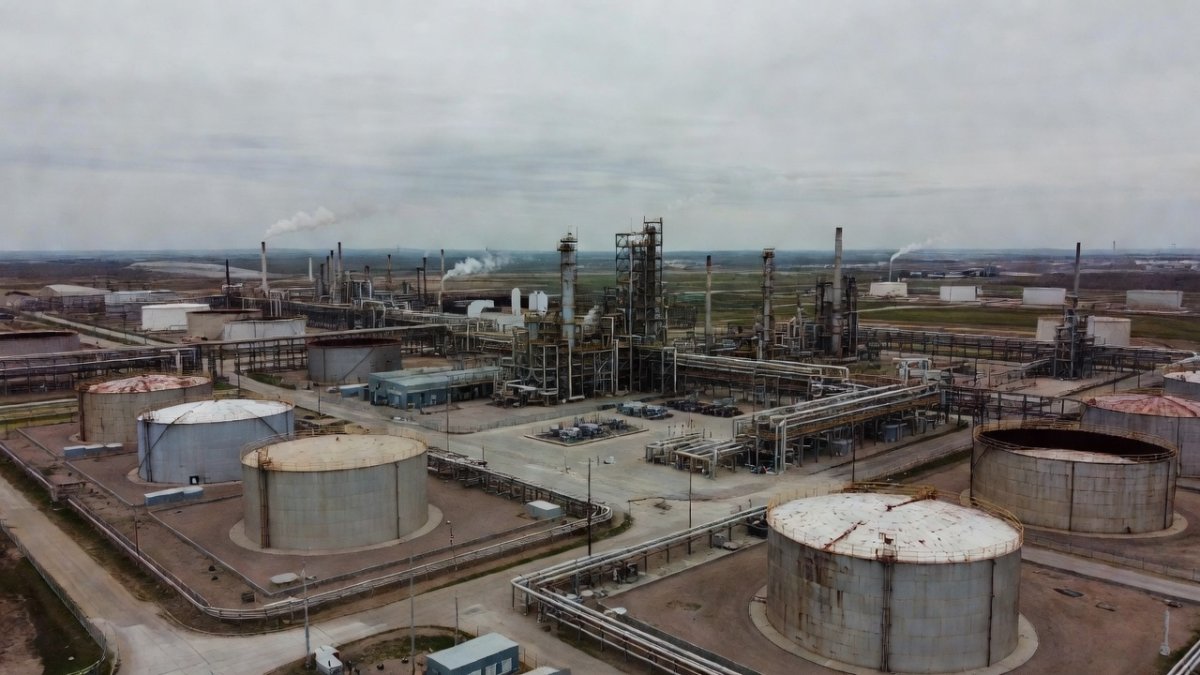
President Vladimir Putin on Monday signed an executive order granting the Russian government sweeping powers to assume control over critical infrastructure sites deemed poorly protected against Ukrainian drone strikes, a move that signals the Kremlin's growing alarm over the economic toll of the escalating aerial campaign. The decree, which covers fuel, energy, industrial, communications, transportation and commercial logistics facilities, allows the state to take over the physical, financial and legal assets of enterprises that fail to maintain adequate security or are slow to repair damage following attacks. The order comes as Ukraine has intensified strikes on Russian oil refineries and e-commerce warehouses, causing nationwide fuel shortages and public frustration that has forced the Kremlin to confront a new front in the war.
Putin Grants State Powers to Seize Critical Infrastructure as Ukrainian Drone Strikes Bite Deep
Moscow, Russia – Tuesday — The executive order, published on the Kremlin's website on Monday, grants the government authority to intervene in the management of facilities deemed essential to national security and economic stability. The decree's broad language encompasses physical assets, financial resources and legal control, but Kremlin officials were quick to insist that the measure does not amount to nationalization.
Kremlin Defends the Decree as a Security Necessity
Kremlin spokesman Dmitry Peskov said Tuesday that "often business owners do not pay enough attention to taking measures to ensure safety, anti-drone safety." Given the threat to vital economic infrastructure, "we must take measures, we must ensure our own safety," he told reporters. Deputy Prime Minister Denis Manturov, who oversees industry and trade, issued a statement clarifying that the decree "doesn't imply the nationalization of companies or a change of ownership — only involvement of the state in the management of an enterprise to solve specific security problems." He added that the measure "doesn't imply widespread use," and that "targeted, carefully considered decisions will be made at the highest level."
Escalating Ukrainian Attacks on Refineries and Logistics Hubs
The new powers come just a week after Putin instructed the government to help rebuild commercial warehouses damaged in Ukrainian attacks. Since the start of the summer, Ukraine has ramped up its assaults on Russian oil refineries and, increasingly, on warehouses and logistics hubs belonging to major online retailers. On Monday, Russia's second-largest online retailer Ozon said four of its facilities in southern Russia were targeted in Ukrainian attacks. The strikes have caused nationwide disruptions, with fuel rationing, soaring prices and hours-long lines at gas stations across the country — an unprecedented crisis for a nation that is one of the world's biggest energy producers.
Deadly Strikes in Southern Russia Force Refinery Shutdown
In the latest wave of attacks, Ukraine's General Staff said Tuesday its forces struck facilities at Russia's Afipsky oil refinery in the Krasnodar region overnight, causing a fire. Krasnodar Gov. Veniamin Kondratyev wrote on Telegram that falling drone debris killed two people and injured two others during the strike. In the neighboring Rostov region, the Novoshakhtinsk oil refinery sustained damage and temporarily suspended processing operations following a separate attack, according to Rostov Gov. Yuri Slyusar, who did not elaborate. According to data from Ukraine's General Staff, it was the eighth time in a year that Ukrainian drones have targeted the Afipsky refinery and the fourth time in the past year they have aimed at Novoshakhtinsk. The latest strikes follow an August 21 attack on the Perm oil refinery, which was forced to suspend operations after drone impacts ignited fires and damaged key technical processing units, industry sources told Reuters.
Analysts See an Ultimatum to Reluctant Business Owners
Russian political analyst Abbas Gallyamov, a former Putin speechwriter, said the measure might be a "tactical" step designed to force the owners of repeatedly damaged oil refineries into making repairs. "Given the fact that the same refinery has already been hit three to five times, it's safe to assume that the owners are now reluctant to invest in restoring what's been destroyed," he said on the Telegram messaging app. "Why spend billions if they're going to get hit again tomorrow?" Gallyamov said the government is giving companies an ultimatum: "If you don't finance the restoration of the refineries, we'll take them away from you."
Pressure on Businesses to Shoulder Their Own Defense
Chris Weafer, the CEO of Macro-Advisory Ltd. Consultancy, said the Kremlin is trying to compel companies to spend more on drone protection and reduce the number of successful, high-profile Ukrainian attacks. "This is an effort to force companies to look at their own security, to take measures and to spend their own money on security measures and not just be relying on the state," Weafer told The Associated Press. "The state doesn't want any additional budget burdens and having to repair businesses or having to provide security. They want the companies to do it themselves." The decree follows a May bill approved by Russian lawmakers that allowed the Central Bank, state-controlled Sberbank and other financial services to fend off drone attacks by installing air defenses on their premises.
Economic Strain and the Wildberries Factor
Russian businesses face fundamental economic challenges as the costly war drags on into its fifth year. The government has raised taxes and increased domestic borrowing to keep its budget deficit under control, and taking over major companies could potentially bring in revenue. At the same time, seizing damaged assets could bring another financial burden. The Kremlin may intend the measure as a way to pressure companies to shoulder more responsibility for air defense, as Russia's vast territory is hard to protect. Russia is also offering more help for its biggest online retailer, Wildberries, and the thousands of sellers working with it, who have been hit hard by repeated Ukrainian strikes on warehouses. The Finance Ministry proposed Monday extending deadlines for tax and insurance payments to give Wildberries and its sellers some financial breathing space.
Putin Vows to Strengthen Air Defenses
On Saturday, Putin told state television that Russia "must and will improve the air defense system and enhance its capabilities." "We need to streamline coordination between defense, law enforcement and civilian agencies at all levels, and to leverage the capabilities of state-run enterprises and private businesses," he said. The remarks underscore the Kremlin's recognition that its vast territory is difficult to protect against swarming drone attacks, and that the burden of defense must be shared with the private sector.
Analysis and Implications
The executive order represents a significant escalation in the Kremlin's response to the drone campaign, but its exact intentions remain unclear. Analysts suggest this could indicate a shift toward greater state control over the economy, or it could be a targeted pressure tactic aimed at specific industries. The fact that the decree applies to such a wide array of sectors — from fuel and energy to communications and commercial logistics — suggests the Kremlin is preparing for a prolonged conflict in which critical infrastructure will remain a primary target. The measure also carries political risks: if the state seizes assets and fails to restore operations, the Kremlin could face blame for the very disruptions it seeks to fix.
For ordinary Russians, the decree is another sign that the war is no longer a distant event but a daily reality. The summer fuel crisis brought the conflict home in a visceral way, with long lines at gas stations and rising prices. As winter approaches, Ukraine is also reeling from relentless Russian aerial attacks that have smashed its power grid and heavily damaged homes. Both sides are locked in a grinding war of attrition, and the infrastructure battle has become a central front. The Kremlin's decision to grant itself the power to seize critical assets is a measure of how seriously it views the threat — and how far it is willing to go to maintain control over an economy under siege.
By Irina Volkov, Staff Writer
This article was produced with AI-assisted research and editorial support. Sources: The Moscow Times, The Associated Press, Reuters.
What's Your Reaction?
 Like
0
Like
0
 Dislike
0
Dislike
0
 Love
0
Love
0
 Funny
0
Funny
0
 Wow
0
Wow
0
 Sad
0
Sad
0
 Angry
0
Angry
0

Russia/Eastern Europe Correspondent at Global1.News. Covering Russian politics, energy, security, and the shifting dynamics of the post-Soviet space. Provides clear-eyed analysis on one of the world's most opaque regions.











Comments (0)