
Five Years of Taliban Rule: Inside the Second Emirate
In a recent BBC News report, the broadcaster gained rare access to Afghanistan's Taliban rulers five years after the movement swept back to power, meeting former insurgent commanders who now govern the country and the women whose lives have been remade — and in many cases broken — by their rule.
In a recent BBC News report, the broadcaster gained rare access to Afghanistan's Taliban rulers five years after the movement swept back to power, meeting former insurgent commanders who now govern the country and the women whose lives have been remade — and in many cases broken — by their rule.
Five Years of Taliban Rule: Inside the Second Emirate
Kabul, Afghanistan – 24 August 2026 — In encounters spread over two years, BBC correspondents met the men who once planned suicide attacks and hid in underground networks, and who now sit in governors' offices, run prisons and command checkpoints across Afghanistan. Their testimony offers the most detailed picture yet of how the Taliban governs its second emirate — and of the society being reshaped beneath it.
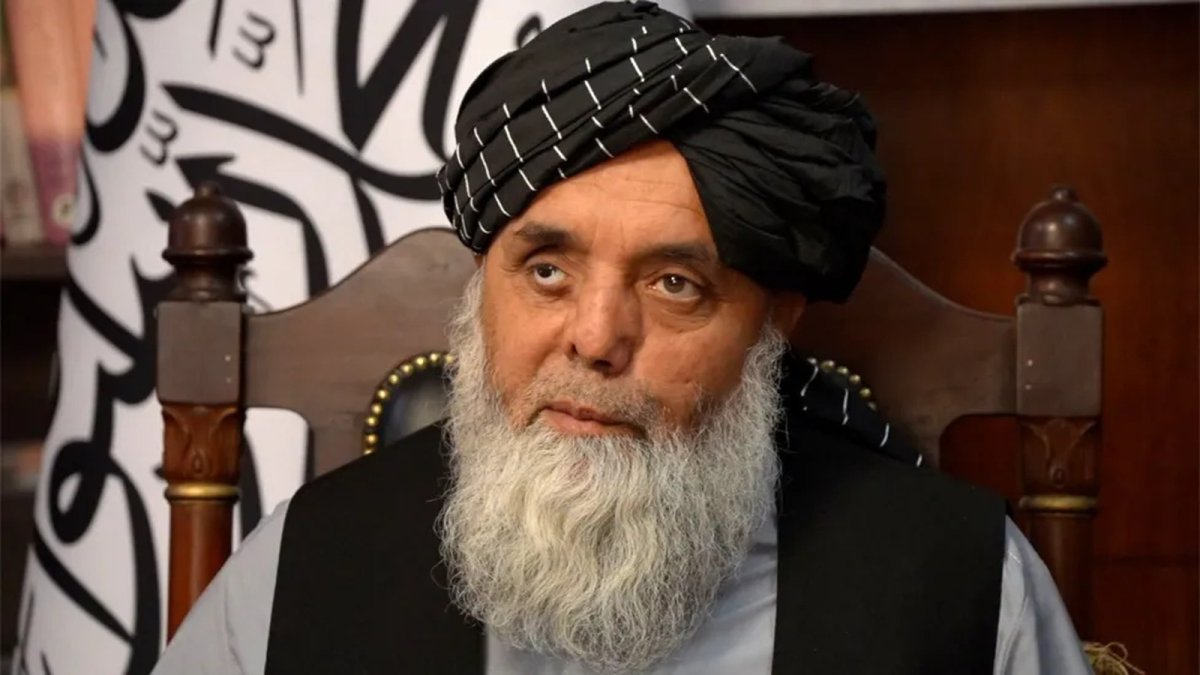
A Rare Glimpse Inside the Taliban's Second Emirate
Five years after the Taliban swept aside the US-backed government in a matter of weeks, the movement's second emirate is defined by a paradox that its leaders seem unwilling — or unable — to confront. On one hand, senior officials insist they have changed, that the movement which once sheltered al-Qaeda and imposed a brutal interpretation of Islamic law has learned the lessons of its first rule in the late 1990s. On the other, the policies enforced from Kabul to Kandahar bear a striking resemblance to the hard-line Sharia interpretation that defined the first emirate: women excluded from most workplaces, girls banned from secondary education and universities, and a population subjected to ever-tightening restrictions on daily life.
The BBC's access, granted over two years, allowed correspondents to sit face-to-face with the men who now hold power — former insurgent commanders who once planned suicide attacks in Kabul's crowded streets or hid in underground networks, and who now occupy governors' offices, run the country's prisons and command checkpoints in provincial capitals. What emerged from these encounters was a portrait of rulers who sought to present themselves as reasonable and pragmatic, yet who grew visibly uncomfortable when pressed on their violent pasts or the human cost of their policies. The BBC observed moments of profound unease between rulers and ruled: a tribal elder's microphone cut off mid-sentence when he dared to ask for girls' schools to reopen, and a governor laughing openly as he dismissed an 18-year-old woman's intellect to the amusement of his male officials.
Kandahar's Tightening Grip and the Invisible Supreme Leader
Nowhere is the Taliban's control more visible — or more suffocating — than in Kandahar, the movement's spiritual heartland and de facto capital. In this southern city, where the Taliban was born in the chaos of the 1990s civil war, restrictions have tightened considerably in recent months. Men must grow beards, with enforcement carried out by religious police who patrol the streets. Radio stations are prohibited from playing music or broadcasting women's voices, a measure that has silenced half the population from public discourse. Filming in the city is not allowed at all, making independent verification of conditions there nearly impossible. The BBC's own reporting team had to navigate these restrictions carefully, aware that any transgression could end their access — or worse.
The power dynamic between Kandahar and Kabul is a subject of intense speculation among analysts. While Kabul remains the administrative capital, where ministries operate and foreign diplomats occasionally visit, Kandahar is where the real authority resides. Supreme leader Hibatullah Akhundzada, the reclusive cleric who has ruled the movement since 2016, rarely appears in public and has never given a media interview. His edicts — issued from his base in Kandahar — carry the weight of divine decree, and his word on matters of women's education, public morality and governance is final. This centralisation of authority has created a system where provincial governors like Abdullah Sarhadi wield considerable power over local affairs but remain subordinate to the supreme leader's will. Even the recent ban on smartphones for officials, implemented to prevent corruption and unauthorised communication, has slowed governance considerably. When asked about the ban's impact, Sarhadi was cautious: "It will cause trouble," he said, declining to elaborate further.
The Governor Who Destroyed the Buddhas
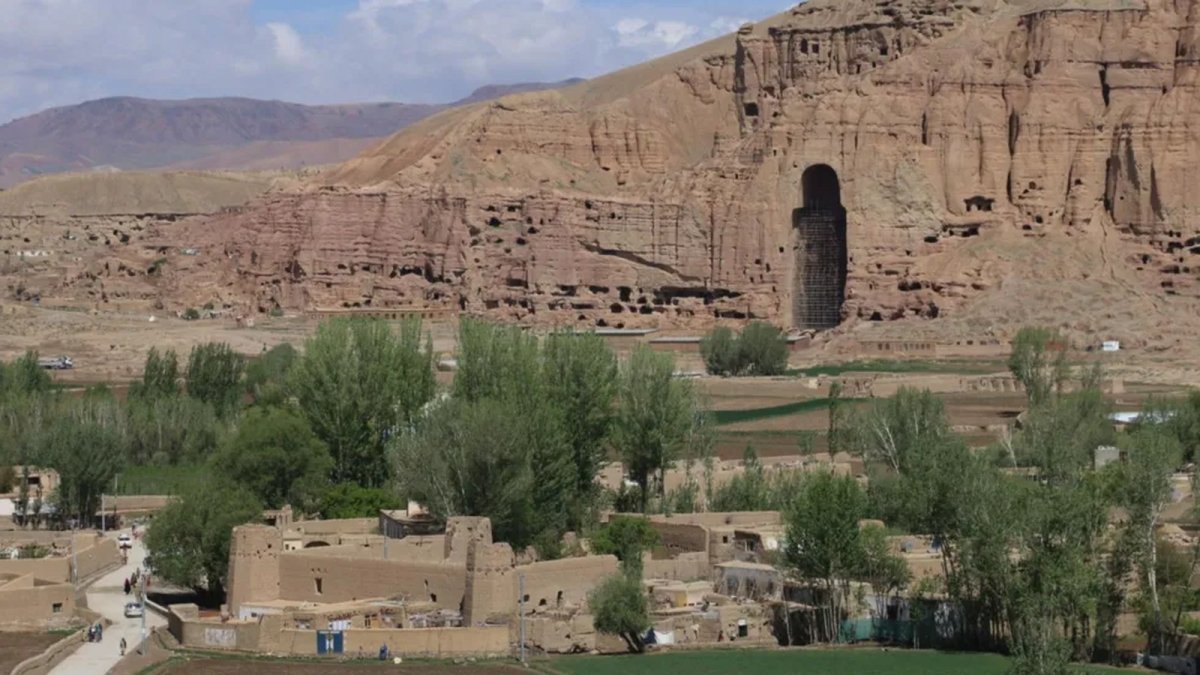
In the northern province of Jawzjan, the BBC met Governor Abdullah Sarhadi, a man whose personal history encapsulates the Taliban's journey from insurgency to power. Sarhadi was a military commander in the 1990s, fighting for the Taliban as it swept across Afghanistan. He surrendered in late 2001, after the US-led invasion toppled the first emirate, and was held for several years in US detention at Guantanamo Bay before being released. His path back to power was neither quick nor easy, but it was relentless. When the BBC met him in Sheberghan in late June, he was governor of Jawzjan province — a position he has since left to become deputy commander of a military corps in Kunduz province, a promotion that speaks to his standing within the movement.
Sarhadi's most notorious moment came in 2001, when he was a commander in Bamiyan province at the time the Taliban blew up the ancient giant Buddha statues carved into the cliffs there — monuments that had stood for 1,500 years. Asked about the destruction, Sarhadi showed no remorse. "I destroyed it with my own hands," he told the BBC, his voice flat and matter-of-fact. "Whatever we did and we do is in accordance with the guidance and God's law. We smash idols rather than sell them. Why should I regret? It was God's will." The statement, delivered without hesitation, offers a chilling reminder that the men now governing Afghanistan are the same men who carried out some of the most culturally devastating acts of the past quarter-century. For Sarhadi, the destruction was not an act of vandalism but of piety — and he sees no reason to apologise for it.
Tuba's Fight for Divorce
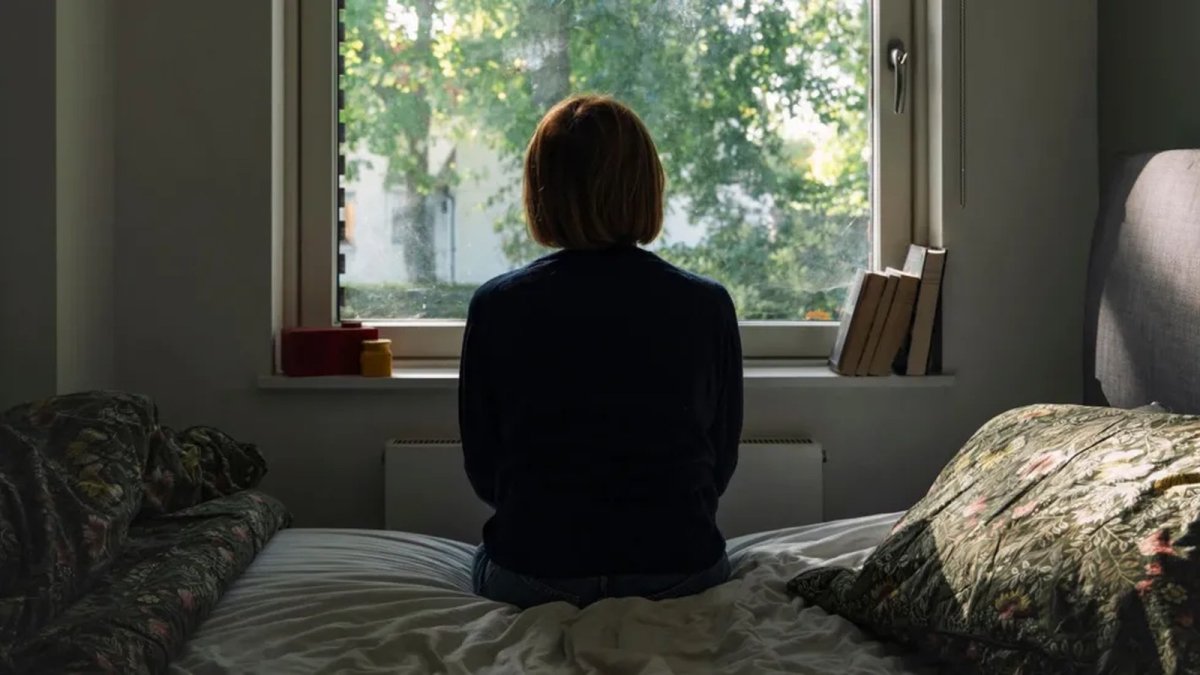
In Sarhadi's office in Sheberghan, the BBC witnessed a scene that laid bare the human reality of Taliban justice. An 18-year-old woman, identified only as Tuba to protect her identity, sat before the governor in a full-face veil, arguing her case calmly and confidently. She was seeking a divorce from a husband she accused of months of abuse and beatings. "If there was any chance to live together, I wouldn't be here," she said, her voice steady despite the intimidating setting. "I have taken my decision." The governor listened, then responded with words that revealed the movement's deeply entrenched views on women. Women, he said, are "mindless" and "deficient in intellect" — a statement that drew laughter from the male officials in the room. He then turned to Tuba with a question that seemed designed to shame her into submission: "Ask yourself: 'Who would marry me after I get my divorce?' You'll have to compromise a lot or you'll lose your dignity and honour."
Tuba's reply was quiet but devastating. "Mr Governor, my honour and dignity have already been ruined," she said. The exchange encapsulated the impossible position of Afghan women under Taliban rule. Her husband demanded four times the money given at marriage as a condition for granting the divorce — a sum her family refused to pay. Her father told the BBC they would pursue the divorce through the courts, but under Taliban courts it is very difficult for a woman to obtain a divorce without her husband's consent. The system is stacked against her, and she knows it. Tuba's case is not unique. Across Afghanistan, women told the BBC of deep despair over dreams thwarted by education restrictions, of friends jailed for protesting, and of the constant fear of being summoned by the Taliban intelligence organisation, Estikhbaraat. Most journalists who spoke to the BBC said they had been questioned or summoned at some point, a reminder that even the limited freedoms that remain are conditional and revocable.
From Death Row to Running the Prison
Perhaps no figure embodies the Taliban's transformation more starkly than Habibullah Badr, a man who was once "responsible for the operations of suicide attackers" in Kabul. Under the previous government, Badr was captured and held on death row — condemned for his role in attacks that killed dozens of civilians. When the Taliban returned to power in August 2021, Badr was released from prison. His trajectory since then has been remarkable: he became deputy head of prisons for the whole country, running the very jail where he had been held. The irony was not lost on the BBC's correspondents, who met Badr during their reporting. He is currently taking time out for medical treatment, but his rise through the ranks speaks to the movement's willingness to elevate its most committed fighters to positions of authority.
When asked about specific attacks in civilian areas, Badr evaded the questions, offering no direct answers about the bombings and suicide missions he once orchestrated. His reluctance to discuss the past is telling — a sign that the Taliban leadership is aware of how its history is viewed internationally, even as it refuses to acknowledge wrongdoing. At a tribal gathering honouring Badr, the BBC witnessed another revealing moment. Sultan Mohammad Talaee, head of a charitable foundation honouring Badr, publicly asked for girls' schools to reopen. "I requested for the girls' schools to reopen," he said. "Seeking knowledge is an obligation for both men and women in Islam." His microphone was swiftly removed, and he was not allowed to continue. "There were other things I wanted to say but they didn't let me talk more," Talaee later told the BBC. The incident demonstrated the limits of dissent even within the Taliban's own ranks — and the supreme leader's absolute authority over matters of education and women's rights.
Five Years of Humanitarian Crisis
The human cost of Taliban rule extends far beyond the restrictions on women. Five years on, Afghanistan remains one of the world's largest humanitarian crises, with the UN warning that three in four Afghans cannot provide for their basic needs. The World Food Programme projects that nearly one-third of the population — about 13.8 million people — will face acute food insecurity in 2026, with 4.9 million women and children expected to require treatment for malnutrition. UNICEF estimates that about 23.2 million people need humanitarian aid. These are not abstract statistics; they represent families struggling to feed their children, mothers watching their babies waste away, and a generation growing up stunted by hunger. The economic situation, marked by poverty, unemployment and instability, shows no signs of improving despite the Taliban's claims of restored security.
On Saturday, the Taliban marked the fifth anniversary of their return to power with a celebration at the Loya Jirga hall in Kabul, where officials claimed to have restored security and stability to the country. The event was carefully staged, with speeches praising the movement's achievements and promising a brighter future. But UN officials warned that the anniversary exposed deepening repression of women and a wider human rights emergency. No country has formally recognised the Taliban government since 2021, leaving Afghanistan in diplomatic limbo — its rulers shunned internationally, its people bearing the consequences. The Taliban's spokesman, Zabihullah Mujahid — whose real name, Tahir Shah Seddiqi, was revealed publicly for the first time in the BBC's reporting — defended the movement's record. "We are committed to women's rights, freedom of speech and other things within Sharia," he said. "We should see everything through the Sharia lens." On women working in offices, he claimed it "would lead to immoralities" and "their dignity would be undermined." On media restrictions, he said: "In a society like Afghanistan we have our restrictions... they can't broadcast against Islamic laws and rites." On women's education, he said the matter was "under discussions" and that "we need a Sharia-based solution for it."
Analysis: What the Fifth Year Signals
The picture that emerges from the BBC's reporting is one of a regime that has proven more durable than many predicted, yet remains fundamentally unstable. Foreign Policy analysis published this week suggests the Taliban have been surprisingly stable until now, with the economy performing better than many expected despite sanctions and the absence of formal recognition. This stability, however, masks growing internal and external pressures. The tightening grip in Kandahar — the beard requirements, the ban on music and women's voices on radio, the prohibition on filming — suggests a leadership that feels the need to control every aspect of public life. Analysts suggest this could indicate confidence, but it could equally signal anxiety: a recognition that the movement's ideological purity is under threat from a population that remembers a different way of life.
The testimony of Hoda, a woman who protested when the Taliban returned, offers a stark warning about the long-term consequences of the movement's policies. "I'm speechless about how a group that has no understanding about life is suddenly in power," she told the BBC. "I think the Taliban are scared of educated women. That's why they restrict women. They want uneducated women so they can't raise wise men. Because that would end the Taliban." Her words carry a prophetic weight. By denying women education, the Taliban is not just punishing half its population — it is undermining the future of the country itself. A generation of girls is growing up without schooling, without the skills to participate in the economy or society. The consequences will be felt for decades, regardless of what happens to the Taliban.
For the international community, including Russia and China, which have maintained diplomatic contacts with the Taliban without formal recognition, the fifth year of the second emirate presents a dilemma. The West's withdrawal from Afghanistan in 2021 was meant to end a failed nation-building experiment, but it left behind a humanitarian catastrophe and a regime that shows no signs of moderating its most extreme policies. The Taliban's leaders speak of wanting international legitimacy, yet they continue to enforce policies that make recognition impossible. As the movement enters its sixth year in power, the question is not whether it can survive — it has proven it can — but whether it can evolve. The evidence so far suggests it cannot, or will not. The men who destroyed the Buddhas and planned suicide attacks in Kabul are the same men who now govern, and they show no inclination to change. Afghanistan's tragedy is that its rulers learned nothing from their first emirate — and its people are paying the price again.
By Irina Volkov, Staff Writer
This article was produced with AI-assisted research and editorial support. Reporting is based on sources cited in the article.
What's Your Reaction?
 Like
0
Like
0
 Dislike
0
Dislike
0
 Love
0
Love
0
 Funny
0
Funny
0
 Wow
0
Wow
0
 Sad
0
Sad
0
 Angry
0
Angry
0

Russia/Eastern Europe Correspondent at Global1.News. Covering Russian politics, energy, security, and the shifting dynamics of the post-Soviet space. Provides clear-eyed analysis on one of the world's most opaque regions.










Comments (0)