
Hungary Nuclear Plant Shutdown as Extreme Heat Hits Europe
Hungary's Paks nuclear plant is shutting down as the Danube hits record lows, while Greek wildfires rage and nearly 500,000 hectares burn across the EU - extreme heat is breaking Europe's energy, water and climate systems at once.
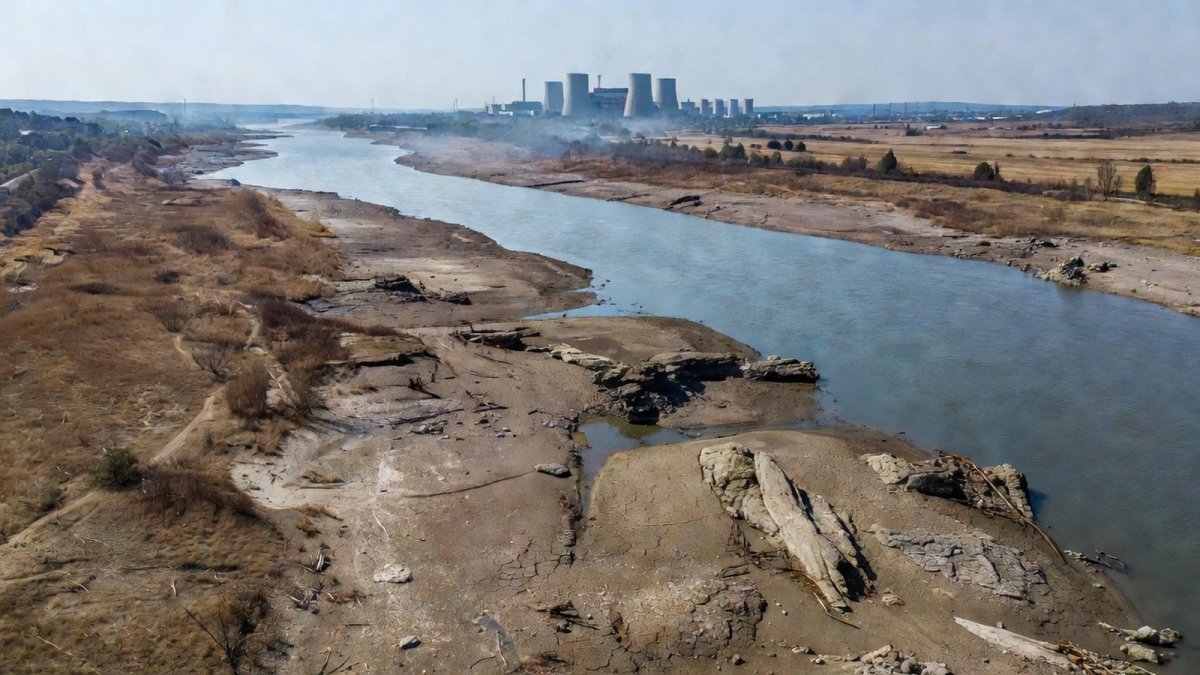
Paks Plant Hits Breaking Point From Record Danube Lows
Hungary's 2-gigawatt Paks nuclear power plant, which supplies 40-50% of the nation's electricity, is shutting down after the Danube River reached record lows that prevent cooling water from reaching the Soviet-era reactors. The plant operated at just over 10% capacity on Sunday evening, August 2, 2026, with suction nozzles unable to access sufficient river water.
Prime Minister Peter Magyar warned that the next five days represent the most critical period, with the facility set to generate no power while temperatures climb to 40 degrees Celsius. The operator described the shutdown as unavoidable and potentially lasting weeks, placing the power grid and public services under enormous strain.
Voluntary demand reductions by households and more than 300 companies have already cut usage by 400 MW, yet mandatory restrictions could begin as early as Monday if conditions worsen. This development marks the first time extreme heat has forced such a direct halt at the facility.
Energy Minister Details Corporate Cutbacks
Energy Minister Istvan Kapitany confirmed that major firms including Hungarian energy group MOL, South Korean battery maker Samsung SDI, Volkswagen's Audi brand, and Japanese supplier Denso have all reduced operations to ease grid pressure. These measures represent targeted industrial responses rather than broad mandates.
Water-use restrictions now apply in more than 100 cities and villages, extending to Budapest's outskirts as authorities scramble to conserve resources. The crisis could cost Hungary between 100 and 200 billion forints, or 235 million to 471 million pounds, from surging imported electricity prices, according to Tisza party vice chairman Mark Radnai.
Officials continue monitoring the situation closely, with no immediate plans for forced blackouts but clear signals that further steps remain on the table if voluntary efforts fall short during peak heat.
Greek Wildfires Claim Lives in Midair Collision
A major wildfire west of Athens near Porto Germeno on the Gulf of Corinth burned through the weekend under gale-force winds, prompting fresh evacuations early Monday, August 3. Two firefighting helicopters collided, killing one Greek and one Danish crew member while injuring Greek and British nationals from the second aircraft.
First responder Giorgos Doulas described gusts exceeding 73 kph as making conditions extremely hard, with five water-dropping planes and five helicopters launching at first light to support hundreds of ground firefighters. Evacuations hit Agia Paraskevi, Kryo Pigadi, and Agios Nektarios, while more than 200 people left Agios Vasileios by sea.
Resident Ilias Papadimitropoulos, 65, from Kryo Pigadi noted the annual anxiety of living under constant fire threat, highlighting how extreme wildfire risk now blankets Boeotia, Attica, and Evia.
France and Spain Battle Renewed Blazes
In southeastern France's Var department, a fire that had stabilized flared again Friday, forcing the evacuation of nearly 2,500 people from Montfort-sur-Argens. Prefect Simon Babre reported the blaze burned 1,800 hectares before crews regained control.
Spain faced multiple hotspots Saturday, including a Zamora province fire that ravaged about 11,000 hectares and a Vall d'Uixo blaze in Castellon that stabilized after burning nearly 10,000 hectares on its seventh day. Police suspect arson in the latter due to two separate ignition points.
Fires in Madrid and Avila provinces, which burned more than 70,000 hectares, have now stabilized following the government's earlier declaration ending the national emergency in central areas.
EU Data Reveals Half a Million Hectares Burned
The European Commission reported that wildfires have consumed nearly 500,000 hectares across the EU this year, with more than 1,400 fires detected and nearly 20 million tons of CO2 released. These figures underscore the scale of destruction driven by successive heatwaves and minimal rainfall.
National health impacts compound the crisis, with Austria recording 395 heat-related deaths in June, Britain estimating 2,877 such fatalities year-to-date, France logging 5,764 excess deaths between June 17 and July 2, and Germany attributing 9,800 deaths to high temperatures so far.
Scientists link these patterns directly to climate change, noting how record heat and drought have intensified fire behavior and strained infrastructure like Hungary's nuclear cooling systems.
Europe's summer of 2026 marks the latest escalation in a lengthening sequence of record heatwaves that have steadily eroded the continent's margin for error. Western Europe logged its hottest June on record, with prolonged drought leaving soils parched and vegetation primed as fuel. Heat domes have intensified under a warming atmosphere, driving higher evaporation rates that create thirstier air and accelerate the drying of forests and grasslands. Scientists have warned for years that infrastructure designed for a cooler climate, including river-cooled nuclear plants and inland waterways, would face mounting stress once temperatures and drought patterns shifted beyond historical norms.
Broader Economic and Infrastructure Fallout
The shutdown at Paks exposes how a single river's low level can cascade through an entire national grid. Hungary must now import electricity at sharply higher prices, with the projected bill reaching 100 to 200 billion forints, as the government scrambles to keep the lights on through the hottest stretch of the summer.
The Danube normally supplies both cooling water and a vital freight corridor. Its current state has already revealed sunken vessels, including a Nazi-era ship near Prahovo, Serbia. The European Investment Bank estimates roughly 200 such wrecks lie on the riverbed, with annual removal costs for Serbia alone running to 4.3 million pounds, underscoring how one environmental stressor can simultaneously disrupt power generation and commercial navigation.
Energy analysts note the shutdown will force Hungary to lean harder on cross-border interconnectors and gas-fired plants just as regional demand peaks, a stress test for the same European grid that has weathered multiple heat-driven alerts this decade. Neighboring states facing their own drought pressures may have less spare capacity to export, which is why Magyar's government has moved early to secure imports rather than gamble on a quick Danube recovery.
These interconnected crises demand coordinated responses beyond national borders, as heat-driven disruptions cascade through energy, water, and emergency services.
What This Means for Citizens and Required Actions
Everyday Europeans face direct risks from power shortages, evacuation orders, and health threats, with voluntary conservation now essential to avoid mandatory curbs. Households should reduce usage immediately while governments accelerate grid resilience investments.
Leaders must prioritize climate adaptation funding, including upgraded cooling infrastructure and expanded firefighting resources, rather than relying on reactive measures. Companies like MOL and Audi have shown industrial flexibility is possible and must become standard practice.
Across the continent the crisis pits energy security against the urgent need for climate adaptation. Nuclear and hydroelectric facilities that depend on consistent river flows are losing their primary cooling and generation resource, echoing strains seen during earlier heat episodes but at greater scale. Meanwhile the European Commission's tally of nearly 500,000 hectares burned and nearly 20 million tons of CO2 released from fires this year directly undercuts the bloc's emissions-reduction targets, illustrating how unchecked heat and drought create feedback loops that both damage infrastructure and accelerate the very warming that intensifies future risks.
Public pressure on officials to enforce stricter emissions cuts and cross-border water management will determine whether future summers avoid similar breaking points. Citizens can track local alerts and support resilient energy policies to protect their communities.
Meeting these converging threats requires concrete adaptation steps: retrofitting or replacing water-intensive cooling systems, strengthening cross-border grid interconnections, negotiating binding water-management treaties, and deploying advanced early-warning networks for fires. Political leaders must also deliver credible emissions reductions rather than repeated emergency responses. The alternative is a future in which every extreme summer tests the same fragile systems until they break.
By Jessica Ali, Staff WriterThis article was produced with AI-assisted research and editorial support. Reporting is based on sources cited in the article.
What's Your Reaction?
 Like
0
Like
0
 Dislike
0
Dislike
0
 Love
0
Love
0
 Funny
0
Funny
0
 Wow
0
Wow
0
 Sad
0
Sad
0
 Angry
0
Angry
0

Editor-in-Chief at Global1.News. Atlanta-based journalist who cuts through the BS and tells it like it is. Lead anchor, host, and the voice you hear when the spin stops and the truth starts.













Comments (0)