
How Indian Households Can Hit 50g Protein Daily Without Supplements Using Traditional Meals
India's urban households face a silent protein crisis where 73 percent of diets remain deficient despite stable calorie intake, according to the PRODIGY survey by IMRB. The ICMR-NIN 2024 Dietary Guidelines set the target at 0.83 grams of protein per kilogram of body weight, translating to roughly 50 grams daily for a 60 kg adult.
India's urban households face a silent protein crisis where 73 percent of diets remain deficient despite stable calorie intake, according to the PRODIGY survey by IMRB. The ICMR-NIN 2024 Dietary Guidelines set the target at 0.83 grams of protein per kilogram of body weight, translating to roughly 50 grams daily for a 60 kg adult. A new India Today Health 360 report demonstrates how everyday Indian kitchens already contain the ingredients to meet this benchmark without expensive supplements.
Smart Indian Meal Combinations Deliver 50 Grams of Protein Daily, Bypassing Costly Supplements
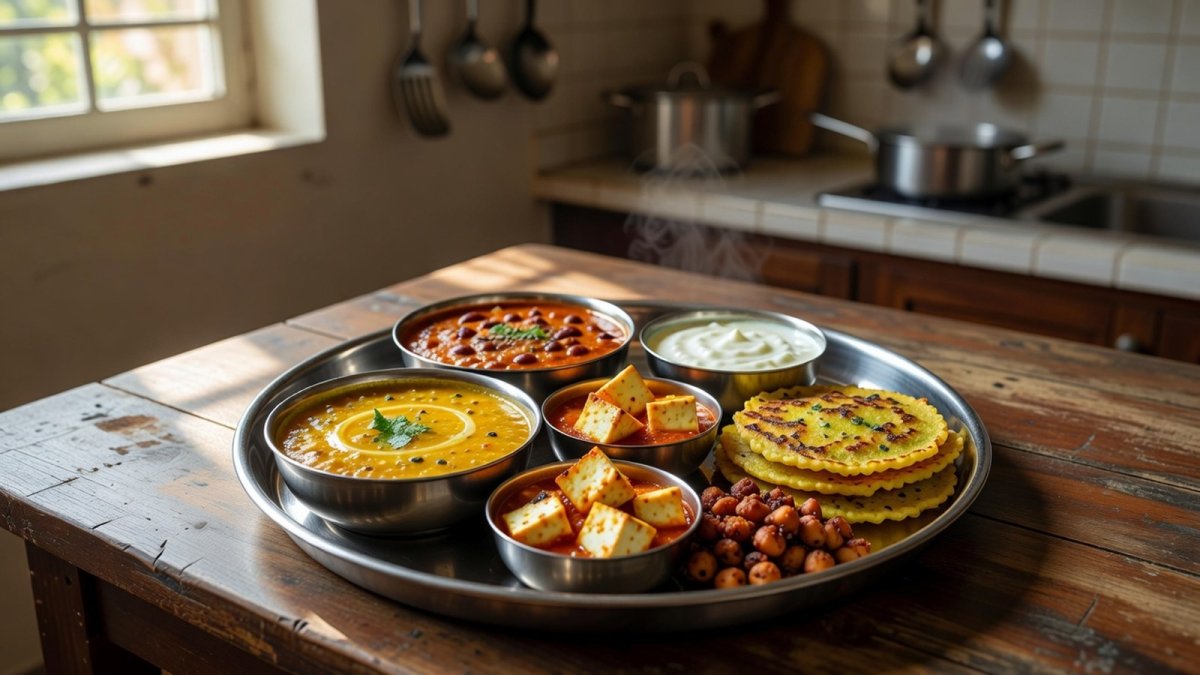
New Delhi, Delhi – August 3, 2026 — The India Today special report aired on July 31, 2026, under the Health 360 series hosted by Sneha Mordani, walks viewers through precise food pairings drawn from common Indian pantries. The segment highlights that 100 grams of soya chunks provide 52 grams of protein while one cup of cooked rajma delivers 15 grams and 200 grams of paneer salad supplies 36 grams, allowing a single vegetarian thali of rajma-chawal with paneer salad to exceed the 50-gram daily target.
India's Protein Intake Shortfall: Data from National Surveys
The NSO Nutritional Intake in India report released July 2, 2025, based on the Household Consumption Expenditure Survey from August 2022 to July 2024, confirms that protein consumption remains suboptimal across both rural and urban areas with wide state-level disparities. Adults derive 65-75 percent of calories from carbohydrates and only 9-11 percent from protein, among the highest carbohydrate reliance rates globally. The CEEW study of December 10, 2025, using the same NSSO dataset, found that nearly half of at-home protein now originates from cereals such as rice, wheat, suji and maida, which offer incomplete amino acid profiles. These patterns directly affect the 84 percent of urban Indians who follow largely plant-based diets. Protein deficiency manifests as fatigue, hair loss, poor muscle mass and weakened immunity, yet the PRODIGY survey reveals that only one-third of respondents connect these symptoms to inadequate protein.
The India protein ingredients market reached INR 9,992.8 crore in 2026, growing at 17.7 percent CAGR, while the whey protein segment alone hit INR 1,690.7 crore, underscoring rising supplement dependence amid policy focus on Poshan Abhiyaan nutrition targets. State disparities remain stark. Households in Uttar Pradesh and Bihar record the lowest protein shares according to NSO figures, while Delhi and Maharashtra show slightly better but still inadequate intakes. The 93 percent unawareness rate from the PRODIGY survey compounds the problem, leaving families unable to adjust traditional thalis effectively. Deficiency proves more alarming among vegetarians who lack awareness of cereal-legume complementarity.
ICMR-NIN 2024 guidelines revised the earlier 1 gram per kilogram standard to the more precise 0.83 gram figure for healthy adults. This change reflects updated science on protein needs for a 60 kg Indian adult requiring about 50 grams daily. NSO data highlight how calorie intake stays stable while protein quality lags, with 65-75 percent of energy from carbs dominating plates in rural Bihar and urban Mumbai alike. Public health systems bear the cost through higher rates of fatigue-related productivity losses among working adults.
What This Means for India
Protein security forms a core pillar of India's nutrition policy under Poshan Abhiyaan and the revised ICMR-NIN framework. When nearly half of household protein comes from low-quality cereal sources, the burden falls on public health systems in states such as Uttar Pradesh, Bihar and Maharashtra where NSO data show the widest gaps. Taxpayers ultimately fund higher healthcare costs linked to preventable fatigue and immunity issues among working-age adults in Delhi, Bengaluru and Hyderabad. Families in these regions face daily trade-offs between affordable dals and rising supplement prices that strain monthly budgets.
Education and healthcare frameworks must integrate cereal-legume complementarity lessons into school midday meals and Anganwadi protocols. The FSSAI tightening of supplement labelling norms signals regulatory recognition that whole-food solutions remain preferable for the majority of citizens who cannot afford whey protein priced at premium rates. Working families in Mumbai and Chennai face direct economic pressure as supplement marketing targets urban consumers unaware of traditional pairings like rajma-chawal.
Long-term implications include slower progress on Poshan Abhiyaan malnutrition targets if awareness stays at the current 7 percent level shown in PRODIGY data. Citizens in smaller towns across Rajasthan and Tamil Nadu continue relying on cereal-heavy thalis that fail to deliver complete proteins. Policy must prioritize household-level education over market-driven supplement growth to close these gaps equitably.
Traditional Combinations Close the Gap Without Supplements
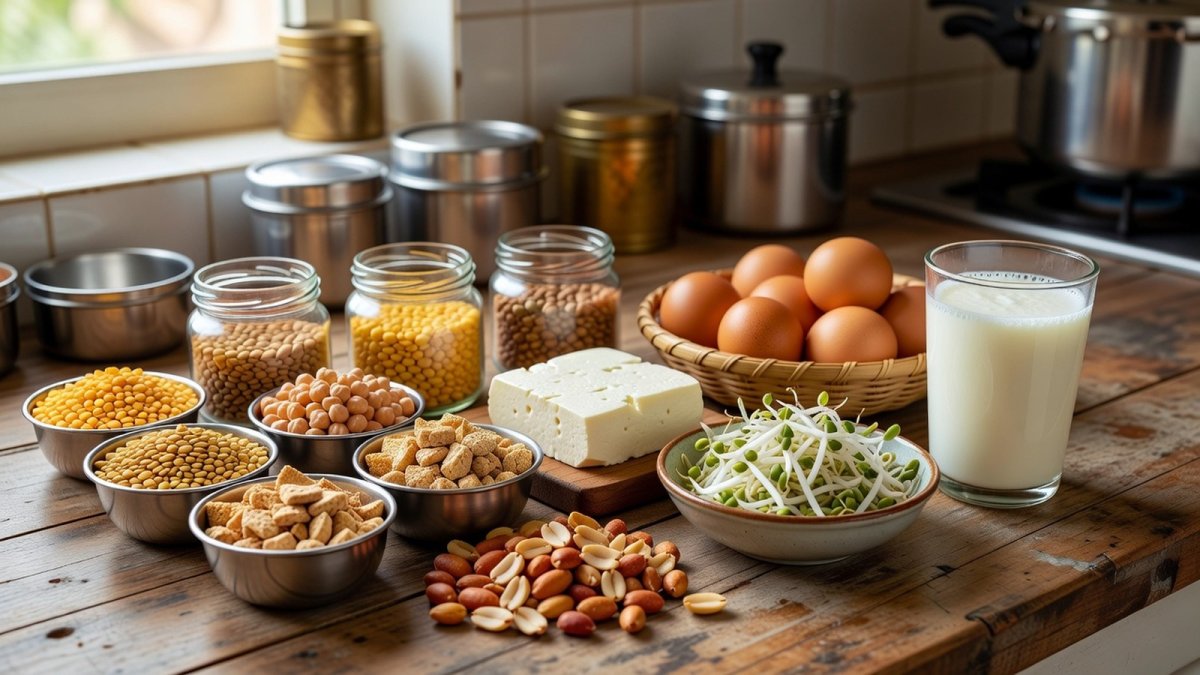
Nutritionist Palak, quoted in the India Today report, emphasises that Indian kitchens already hold high-protein staples. Two boiled eggs plus whole wheat toast yield 12-14 grams at breakfast. Overnight oats with milk and nuts reach 20-25 grams. Besan chilla with curd provides 15-18 grams while paneer-stuffed paratha with curd supplies 18-20 grams. Lunch combinations of one bowl dal or rajma, two rotis, curd and paneer sabzi easily surpass 30 grams. Snacks such as roasted chana or sprouts chaat add another 10-12 grams, and dinner options like egg curry with roti or millet khichdi with dal complete the daily 50-gram target.
These pairings exploit traditional cereal-legume complementarity to improve amino acid profiles without requiring imported powders. The approach aligns with ICMR-NIN recommendations that moved away from the earlier 1 gram per kilogram standard to the more precise 0.83 gram figure. Four boiled eggs deliver 24 grams while two moong dal chillas add 16 grams and a glass of buttermilk contributes 4 grams, allowing flexible vegetarian or non-vegetarian plates across Indian regions from Punjab to Kerala.
High-protein breakfasts such as besan chilla with curd deliver 15-18 grams using ingredients available in every Indian home. Lunch thalis built around rajma or chole with curd and vegetables reach 30 grams or more without extra cost. Evening snacks like roasted chana or peanut butter toast add 8-12 grams, supporting sustained energy for schoolchildren and office workers alike.
Expert Perspectives from Nutrition and Policy Circles
Nutritionists cited in the report stress that most Indians equate protein solely with chicken or shakes, overlooking dal, paneer, eggs and soya. Government officials linked to Poshan Abhiyaan note that scaling awareness of these combinations could reduce reliance on the INR 9,992.8 crore protein ingredients market. Academics from AIIMS nutrition departments highlight that state disparities documented in the NSO report require targeted interventions in districts with the lowest protein intake. Public health experts warn that continued carbohydrate dominance at 65-75 percent of calories will keep India below global protein adequacy benchmarks unless meal planning changes at household level.
Policy analysts recommend embedding these combinations into midday meal guidelines in Rajasthan and Tamil Nadu to reach children early and shift long-term consumption patterns. Experts stress that plant proteins become complete when paired traditionally, as in dal-rice or rajma-roti meals common across North and South India. This knowledge can empower families in protein-deficient states like Uttar Pradesh and Bihar without new spending.
Nutritionists further note that 93 percent unawareness from the PRODIGY survey stems from outdated messaging focused only on animal sources. Integrating ICMR-NIN 2024 guidelines into community programs offers a scalable fix. Regional experts advocate using local foods such as sambar in Tamil Nadu or moong dal in Maharashtra to meet the 50-gram target affordably.
Data and Market Context for Protein Ingredients
India's protein ingredients market hit INR 9,992.8 crore in 2026, growing at 17.7 percent CAGR, while whey protein WPC bulk leads at INR 1,690.7 crore with a 24.7 percent CAGR. The India whey protein market stands at $387.6 million in 2026 and is projected to reach $1,280.5 million by 2035 at 14.20 percent CAGR. FSSAI has tightened nutritional labelling norms for protein supplements, reflecting concerns over misleading claims amid rising urban demand in cities like Mumbai and Chennai. Market growth tracks rising awareness yet remains concentrated among higher-income groups.
Lower-middle-class households in smaller cities continue relying on affordable dals and legumes that already deliver adequate protein when combined properly. CEEW analysis confirms cereals supply nearly half of at-home protein, underscoring the need for better pairing education rather than increased spending on processed supplements. The PRODIGY survey shows 73 percent urban deficiency persists even as the supplement sector expands rapidly.
State-level NSO data reveal that protein intake varies sharply, with southern states showing marginally better legume consumption than northern cereal-dominant regions. This market expansion risks widening inequality unless whole-food strategies promoted in the India Today report gain traction. FSSAI norms aim to protect consumers from over-reliance on expensive imports.
Policy Implications Under Poshan Abhiyaan
Poshan Abhiyaan targets malnutrition reduction, yet protein security remains central to India's nutrition policy debate. ICMR-NIN 2024 guidelines now serve as the official reference for dietary advice across Anganwadi centres and school programmes in states including Rajasthan and Tamil Nadu. Integrating smart food combinations into national schemes could lower supplement dependence and address the 93 percent unawareness rate revealed by the PRODIGY survey. State nutrition missions can incorporate simple thali examples using local ingredients such as rajma in the north and sambar in the south to improve compliance without additional budgets.
Long-term success depends on updating school curricula and Anganwadi worker training to emphasise quality protein sources already present in Indian kitchens. Policy must counter the 65-75 percent carbohydrate dominance documented in NSO reports by promoting cereal-legume pairings nationwide. This approach supports Poshan Abhiyaan goals while reducing pressure on family budgets strained by rising supplement prices in Delhi and Bengaluru.
Targeted interventions in high-deficiency states like Uttar Pradesh and Bihar could leverage existing midday meal infrastructure. Experts link improved protein security directly to reduced healthcare burdens on taxpayers. National rollout of these evidence-based combinations aligns with ICMR-NIN targets for sustainable nutrition progress.
The Bottom Line
With 73 percent of urban diets currently deficient and India's protein ingredients market expanding at 17.7 percent CAGR, the India Today findings offer a practical, zero-cost pathway for citizens. By combining rajma, paneer, dal, eggs and soya in daily meals, households across Delhi, Mumbai and Chennai can meet the ICMR-NIN 50-gram target using ingredients already present in Indian kitchens. This shift supports broader Poshan Abhiyaan goals while easing pressure on family budgets strained by rising supplement prices.
NSO and CEEW data confirm that cereal-heavy patterns can be corrected through traditional pairings without market dependence. The 50-gram benchmark becomes achievable for 60 kg adults when every meal incorporates these combinations. Citizens and policymakers alike benefit from prioritizing whole-food education over supplement growth.
— By Dr. Raj Patel, Staff Writer
This article was produced with AI-assisted research and editorial support. Reporting is based on sources cited in the article.
What's Your Reaction?
 Like
0
Like
0
 Dislike
0
Dislike
0
 Love
0
Love
0
 Funny
0
Funny
0
 Wow
0
Wow
0
 Sad
0
Sad
0
 Angry
0
Angry
0

India/South Asia Correspondent at Global1.News. Analytical voice with a background in science and health journalism. Based in New Delhi, covering Indian politics, education, healthcare, technology, and policy. Breaks down complex data into clear, actionable reporting.














Comments (0)