
AI Gene Editor Offers Patent-Free Path for Indian Crops
Indian scientists have validated an open-source, AI-designed gene-editing enzyme that matches CRISPR-Cas9 performance in rice, opening a patent-free route to higher-yielding, climate-resilient pulses and oilseeds.
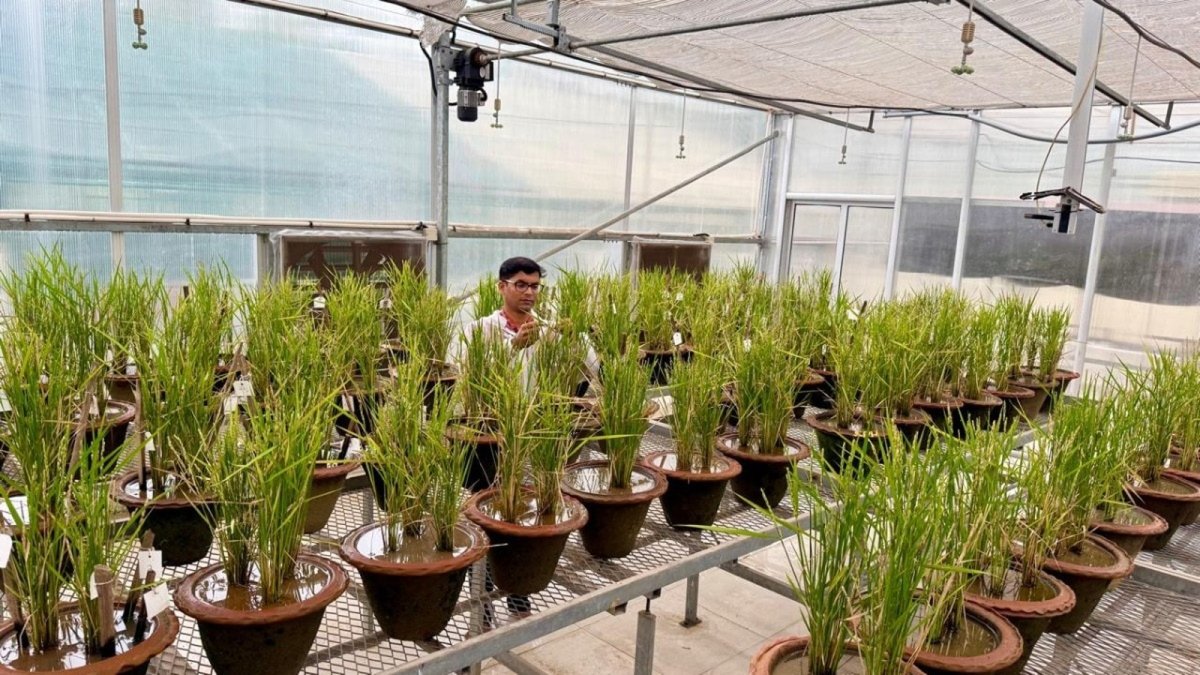
Indian scientists have validated an open-source, AI-designed gene-editing enzyme that matches CRISPR-Cas9 performance in rice, opening a patent-free route to higher-yielding, climate-resilient pulses and oilseeds. The breakthrough at ICAR-NRRI Cuttack uses the plant-adapted POC1 enzyme derived from Profluent Bio’s OpenCRISPR-1, which was released without licensing barriers. With India’s 2025-26 import bill for vegetable oils and pulses reaching $23.1 billion, the tool arrives at a critical moment for domestic food security.
AI Gene Editor Offers Patent-Free Path for Indian Crops
New Delhi, India – August 3, 2026 — Indian researchers have confirmed that an AI-designed, open-source gene editor performs on par with CRISPR-Cas9 in rice, creating a pathway to develop improved pulses and oilseeds without foreign patents or regulatory delays tied to transgenic crops.
Breakthrough at ICAR-NRRI Cuttack
Researchers at the ICAR-National Rice Research Institute in Cuttack, Odisha, led by Dr Kutubuddin Ali Molla, have shown that the plant-adapted enzyme POC1 edits rice DNA with precision matching CRISPR-Cas9. The work covers knockout, base editing and prime editing applications. Findings first appeared as a preprint on January 22, 2026, and were published in New Phytologist. ICAR began genome-editing research in rice in 2018, positioning the institute to translate the new tool rapidly into field-ready varieties suited to Indian conditions.
AI Origin of OpenCRISPR-1
Profluent Bio created OpenCRISPR-1 in 2025 by training large language models on more than one million natural CRISPR systems. The resulting enzyme contains 1,380 amino acids and differs from Cas9 at more than 400 positions. The company published the design in Nature, then released the sequence as open-source to bypass existing licensing constraints. This approach directly supports Indian goals of reducing dependence on foreign intellectual property in critical agricultural technologies.
Editing Efficiency of POC1
Across multiple genes, POC1 edited 10 to 17 per cent of targeted rice cells, statistically indistinguishable from Cas9 performance. Its C-to-T base editor outperformed the Cas9 version at several sites. In whole-plant experiments, POC1 produced edited lines in 36 per cent of cases compared with 48 per cent for Cas9, a difference without statistical significance. The team has already applied POC1 to develop disease-resistant rice and nitrogen-efficient rice that maintains yields with 70 per cent of normal fertiliser, demonstrating immediate relevance for lowering input costs in Indian farming systems.
Off-target behaviour has been measured only in human cells and remains untested in plants. An independent team has verified OpenCRISPR-1 performance in rice, providing complementary data. Before deployment in pulses or oilseeds, field-level validation, multi-location trials and confirmation of stable trait inheritance across generations will be required to establish reliability beyond the laboratory rice systems used so far.
Patent Relief for Indian Institutions
Cas9 remains entangled in patents held mainly by foreign entities, forcing Indian scientists and seed companies to navigate costly licences. OpenCRISPR-1 carries a patent granted to Profluent Bio, yet the firm has positioned it to circumvent rather than create new barriers. The Cuttack team deposited POC1 kits with the Addgene repository for free global access, directly supporting Atmanirbhar Bharat goals in agriculture. By making the system freely available, Indian institutions gain the ability to develop locally adapted varieties without royalty outflows that would otherwise raise seed costs for farmers.
Regulatory Pathway Cleared Since 2022
India exempted SDN-1 and SDN-2 gene edits from GM crop regulations on March 30, 2022, provided no foreign DNA remains. POC1 satisfies this condition. In 2025 the country approved its first two gene-edited rice varieties, Pusa DST Rice 1 and DRR Rice 100, nicknamed Kamala. The 2022 policy has positioned India to deploy tools like POC1 without the controversies that have stalled GM approvals for years, enabling faster translation from lab to field while maintaining public trust through edits that mimic natural mutations.
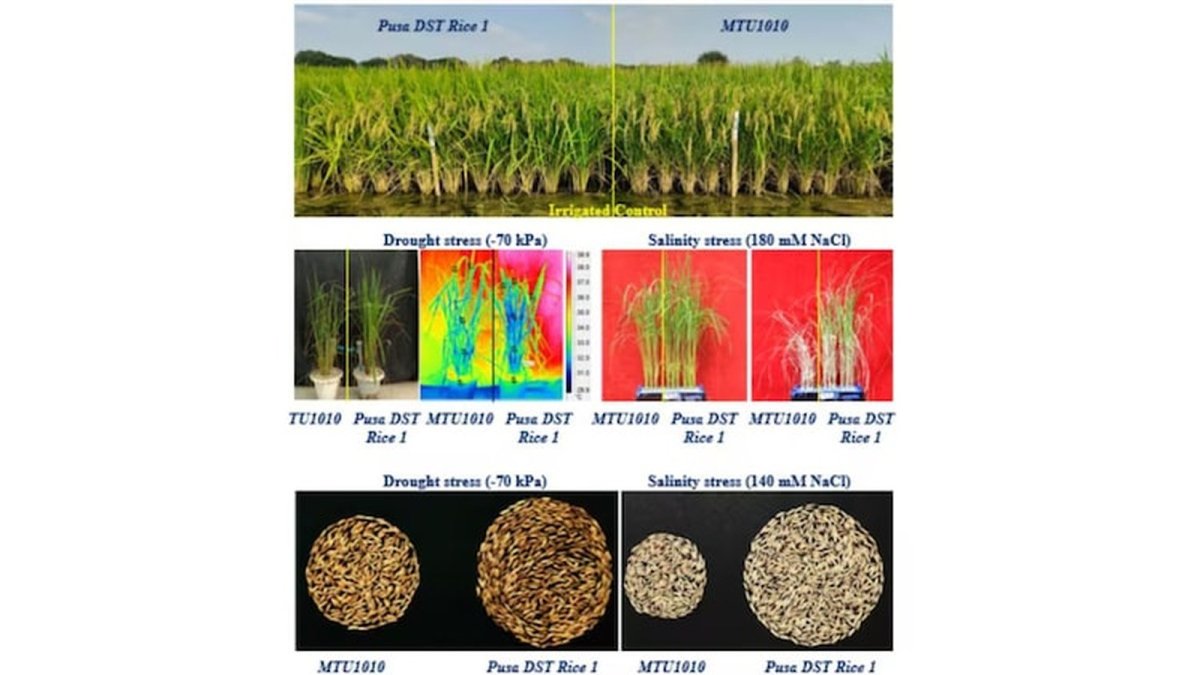
(India Today)
Record Import Dependence on Pulses and Oils
India imported 16.4 million tonnes of vegetable oils worth $19.5 billion and nearly 6 million tonnes of pulses worth $3.6 billion in 2025-26. Pulse import volume fell 12 per cent from 7.34 million tonnes the previous year, yet the fiscal outlook remains pressured by weak monsoon and El Niño conditions. The National Mission on Edible Oils-Oilseeds targets 25.45 million tonnes of domestic edible oil production by 2030-31 to meet 72 per cent of projected demand. These figures underscore how import dependence directly affects food inflation and farmer incomes in the major pulse and oilseed belts of Rajasthan, Maharashtra, Madhya Pradesh, Karnataka and Gujarat.
India stands as the world’s largest edible oil importer, and weak monsoon conditions combined with El Nino effects threaten to push already record volumes even higher in the current fiscal year. Rising incomes and ongoing urbanisation continue to drive stronger domestic demand for both edible oils and protein-rich pulses, placing sustained pressure on import bills despite recent moderation in pulse volumes.
The pulse import bill declined 34 percent to $3.63 billion from the prior record of $5.54 billion. Pulses serve as the primary protein source for India’s large vegetarian population, which is why the NMEO-Oilseeds mission’s target of 25.45 million tonnes of domestic edible oil production by 2030-31 — covering 72 percent of projected demand — matters for reducing strategic vulnerability in key producing states.
Policy Response and What This Means for India
At the 98th ICAR Foundation Day on July 16, 2026, Union Agriculture Minister Shivraj Singh Chouhan asked why countries without GM seeds achieve higher pulse yields while India does not. ICAR Director General Dr Mangi Lal Jat stated that genome editing enables precision mutagenesis and faster variety development. Former National Bureau of Plant Genetic Resources Director Dr K.C. Bansal noted that an open CRISPR system aligns with Atmanirbhar Bharat and addresses climate impacts already affecting crop production. Genome editing shortens breeding cycles compared with the conventional 8-10 year timelines, allowing faster delivery of improved varieties to farmers in states facing heatwaves, floods and erratic monsoons.
Transgene-free gene editing enjoys greater public acceptance than conventional GM crops because it introduces no foreign DNA, resembling enhanced classical breeding at the molecular level. The March 30, 2022 exemption of SDN-1 and SDN-2 edits from GM regulations has already enabled faster progress, in contrast to the prolonged GEAC approval processes still required for traditional GM varieties. This regulatory clarity supports broader adoption of tools such as POC1 across Indian research institutions.
Open availability of POC1 kits through Addgene reduces licence costs that have burdened seed companies and farmers under Cas9 patent thickets. Indian universities and biotech startups gain direct access to advanced editing technology, aligning with Atmanirbhar Bharat goals. Concrete next steps include multi-location field trials, state-level adoption in major pulse and oilseed regions, sustained public funding and integration into formal seed systems to move POC1-derived lines from laboratory to farmer fields at scale.
The Bottom Line
Successful deployment of POC1 in pulses and oilseeds could reduce the $23.1 billion combined import bill while lowering fertiliser use and raising climate resilience. Indian farmers in states such as Madhya Pradesh, Rajasthan and Maharashtra stand to gain from shorter breeding cycles and varieties adapted to local stresses. Taxpayers benefit from reduced foreign exchange outflow, and the education system gains from open tools that accelerate domestic research capacity, all within a regulatory framework cleared since 2022 that distinguishes transgene-free edits from conventional GM processes.
— By Dr. Raj Patel, Staff Writer
This article was produced with AI-assisted research and editorial support. Reporting is based on sources cited in the article.
What's Your Reaction?
 Like
0
Like
0
 Dislike
0
Dislike
0
 Love
0
Love
0
 Funny
0
Funny
0
 Wow
0
Wow
0
 Sad
0
Sad
0
 Angry
0
Angry
0

India/South Asia Correspondent at Global1.News. Analytical voice with a background in science and health journalism. Based in New Delhi, covering Indian politics, education, healthcare, technology, and policy. Breaks down complex data into clear, actionable reporting.















Comments (0)