
Russia's Olympic Return Advances as Federations Restore Access
The International Olympic Committee provisionally lifted its suspension of the Russian Olympic Committee on July 7, 2026, opening a path toward broader reintegration ahead of the Los Angeles 2028 Games. The decision formalized a return that had been building for months, as a wave of international federations restored participation rights to Russian and Belarusian athletes in sport after sport since late 2025.
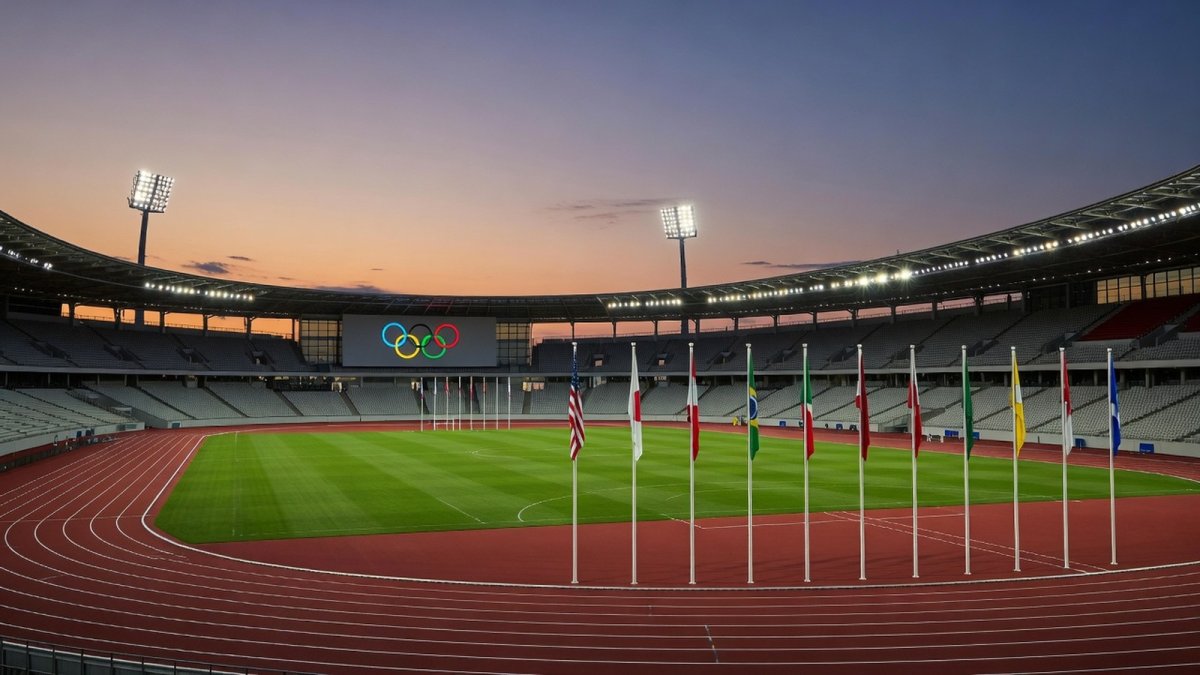
The International Olympic Committee provisionally lifted its suspension of the Russian Olympic Committee on July 7, 2026, opening a path toward broader reintegration ahead of the Los Angeles 2028 Games. The decision formalized a return that had been building for months, as a wave of international federations restored participation rights to Russian and Belarusian athletes in sport after sport since late 2025. The result is a fragmented landscape: full national representation in some disciplines, junior-only or neutral status in others, and an outright ban in football.
Russia's Olympic Return Advances as Federations Restore Access
Moscow, Russia — The International Olympic Committee provisionally lifted its suspension of the Russian Olympic Committee on July 7, 2026, marking a formal step toward reintegration. Russian athletes had already begun competing under restored national rights in several sports following decisions by individual federations that began in late 2025.
The Turning Point: From Paralympics to Provisional Lift
Russia's sporting isolation began immediately after the February 2022 invasion of Ukraine. The Russian Olympic Committee was suspended in October 2023 after it recognized regional Olympic councils in the occupied Ukrainian territories of Luhansk, Donetsk, Kherson and Zaporizhzhia — a move the IOC deemed a violation of the Olympic Charter and Ukraine's territorial integrity. Russian athletes subsequently competed only as neutrals at the 2024 Paris Olympics and the 2026 Milano-Cortina Winter Games.
The first major pathway back opened in September 2025, when the International Paralympic Committee voted against maintaining its ban on Russian and Belarusian athletes, paving the way for them to compete at the 2026 Milano-Cortina Paralympic Games, where Russian competitors won eight gold medals. By December, the IOC recommended that international federations lift their bans on Russian and Belarusian youth athletes.
On July 7, 2026, the IOC executive board provisionally lifted the suspension of the Russian Olympic Committee. IOC President Kirsty Coventry told a press conference that the decision ensures athletes have the possibility to compete, and that the timing reflected the start of the LA 2028 qualification period, when all athletes needed equal access to competition. The provisional nature of the decision leaves key symbols unresolved: the IOC has not yet determined whether Russian athletes may display the national flag, colors or anthem at future Games, and the executive board said it will continue to closely monitor any ROC activities in the disputed territories. Russian Sports Minister Mikhail Degtyarev described the move as a green light for international federations to reinstate all Russian athletes.
Judo Opens the Door
The International Judo Federation was the first body to restore full participation rights to senior Russian athletes, doing so on November 27, 2025. The federation described sport as the "last bridge for reconciliation and peace," and stated that athletes bear no responsibility for the decisions of governments. "Sport must remain neutral, independent and free from political influence," the IJF said. World Taekwondo followed on January 31, 2026, approving the full return of both junior and senior athletes from Russia and Belarus during a council meeting in the United Arab Emirates.
The Summer Sports Wave
World Aquatics lifted its ban on senior Russian and Belarusian athletes on April 13, 2026, two months after acting on juniors; President Husain Al Musallam said the organization was determined to keep conflict outside sporting venues. The International Fencing Federation reinstated Russian and Belarusian athletes on June 2, and Russian fencer Pavel Graudyn won gold in the men's individual sabre at the World Fencing Championships in Hong Kong on July 28 — Russia's first gold at a major championship since the restrictions were lifted. World Gymnastics lifted restrictions on May 18, and European Gymnastics voted on July 28 to allow Russian and Belarusian athletes to compete with national symbols.
World Boxing announced on July 30 that it was restoring full participation rights to all Russian athletes, while stating it would strictly monitor delegation behavior and anti-doping compliance. United World Wrestling acted on May 15, the International Weightlifting Federation on June 26, the International Volleyball Federation on July 8, the International Union of Modern Pentathlon on July 13, and the International Handball Federation on July 15 — the latter citing the IOC's recommendation while reiterating its condemnation of the war and solidarity with the Ukraine Handball Federation.
Partial Returns: Youth and Neutral Status
Several federations have restored only partial access. The World Baseball Softball Confederation reinstated youth athletes on January 19, 2026, but senior athletes remain banned. The International Chess Federation lifted its ban on youth players on December 14, 2025, while seniors compete under a neutral designation. World Curling allowed junior athletes on January 30, with seniors still unable to compete. The International Equestrian Federation approved juniors on May 19 but maintained neutral status for seniors. World Sailing approved juniors on June 9, the International Ski Mountaineering Federation reinstated youth athletes, and World Triathlon lifted its junior ban in April 2026 while seniors continue as neutrals.
What Remains Off Limits
UEFA extended its ban on Russian national teams and clubs through the 2026/27 season, keeping football the most prominent holdout. The Guardian has reported that UEFA is prepared to block Russia's return to international football, and the exclusion leaves a visible gap in the return compared with the Olympic federations that have restored full rights. FIFA and UEFA's indefinite stance stands in contrast to the IOC's recommendation, reflecting the political sensitivity of the sport's biggest stage.
The unresolved status of the Russian flag, anthem and colors at Los Angeles 2028 adds further uncertainty. While the IOC lifted the Olympic Committee suspension, it has deferred any ruling on national symbols, leaving qualification pathways and ceremonial participation subject to future executive board review. Analysts suggest this ambiguity could prolong diplomatic negotiations over how Russian athletes are presented on the world stage.
The patchwork of federation decisions produces markedly unequal access across disciplines. Sports such as judo, fencing and gymnastics now permit full national representation, while baseball, curling and equestrian maintain junior-only or neutral-status rules. This fragmented landscape could indicate that Russian athletes face sport-specific barriers rather than a uniform return, complicating national preparation efforts ahead of major multi-sport events.
Ukraine's Outcry and the CAS Challenge
Ukraine's National Olympic Committee filed a complaint with the Court of Arbitration for Sport in Lausanne challenging the IOC's provisional decision. Ukrainian officials argue that the restoration of rights overlooks ongoing territorial violations and fails to uphold the Olympic Charter's principles of territorial integrity, and the complaint seeks stronger safeguards until full compliance is verified.
Several federations have balanced their decisions with statements of solidarity. The International Handball Federation reiterated its commitment to the Ukraine Handball Federation and strongly condemned the war and its consequences, while the International Volleyball Federation said it remains deeply concerned about the conflict and highlighted its Volleyball Empowerment programme for the Ukrainian community. These declarations reflect an attempt to reconcile reintegration with acknowledgment of the conflict's human cost.
The diplomatic stakes for the Olympic movement remain high. Ukraine's legal action underscores persistent tensions between the IOC's neutrality framework and demands for accountability. Observers note that the outcome of the CAS proceedings could influence how other international bodies weigh similar complaints from affected nations in future eligibility disputes.
The Doping Shadow and LA 2028
Russia's return to competition comes against the backdrop of one of the most damaging doping scandals in Olympic history. A 2015 World Anti-Doping Agency-commissioned report documented systematic doping in Russian athletics, followed by findings of a state-sponsored cover-up around the 2014 Sochi Winter Olympics. WADA imposed a four-year ban in 2019 after Moscow was found to have manipulated laboratory data — a sanction later cut to two years by the Court of Arbitration for Sport. Russian officials have consistently denied the existence of a state-backed doping program.
IOC President Kirsty Coventry has explicitly requested adequate testing for Russian athletes ahead of the Los Angeles 2028 Games, and said the IOC would continue to monitor Russia closely, including whether athletes can serve as role models. This request suggests that enhanced verification protocols could form part of any final conditions attached to full participation.
Analysts suggest the combination of historical sanctions and current monitoring requirements could shape the terms of Russia's return, with additional safeguards or case-by-case reviews possible for athletes seeking to compete under national colors at LA 2028 — extending the legacy of earlier restrictions into the next Olympic cycle.
Analysis and Implications
This sequence of federation decisions could indicate a gradual normalization of Russian participation driven by the start of the LA 2028 qualification cycle rather than a single coordinated policy. Analysts suggest the pattern may strengthen the Kremlin's sports diplomacy by allowing visible national representation in high-profile events while football and certain Olympic symbols remain restricted.
The coming months will test whether these partial openings translate into broader access or encounter renewed obstacles from legal challenges and remaining sanctions. For Russian athletes, the immediate picture is one of opportunity in the pool, on the mat and in the gym — and continued uncertainty on the football pitch and at the Olympic podium. The IOC's provisional lift has opened a door, but the conditions of Russia's full return remain very much in negotiation.
By Irina Volkov, Staff Writer
This article was produced with AI-assisted research and editorial support. Reporting is based on sources cited in the article.
What's Your Reaction?
 Like
0
Like
0
 Dislike
0
Dislike
0
 Love
0
Love
0
 Funny
0
Funny
0
 Wow
0
Wow
0
 Sad
0
Sad
0
 Angry
0
Angry
0
Russia/Eastern Europe Correspondent at Global1.News. Covering Russian politics, energy, security, and the shifting dynamics of the post-Soviet space. Provides clear-eyed analysis on one of the world's most opaque regions.











Comments (0)