
Greece Fires: Helicopters Collide Near Athens as Wildfires Rage
Two firefighting helicopters collided on Sunday while battling wildfires west of Athens, with the crew of one now located and safe while search and rescue teams continue efforts to reach the occupants of the second aircraft. The incident came as Greek forces confronted multiple blazes that have already destroyed more than 100 homes and forced evacuations on the tourist island of Kefalonia.
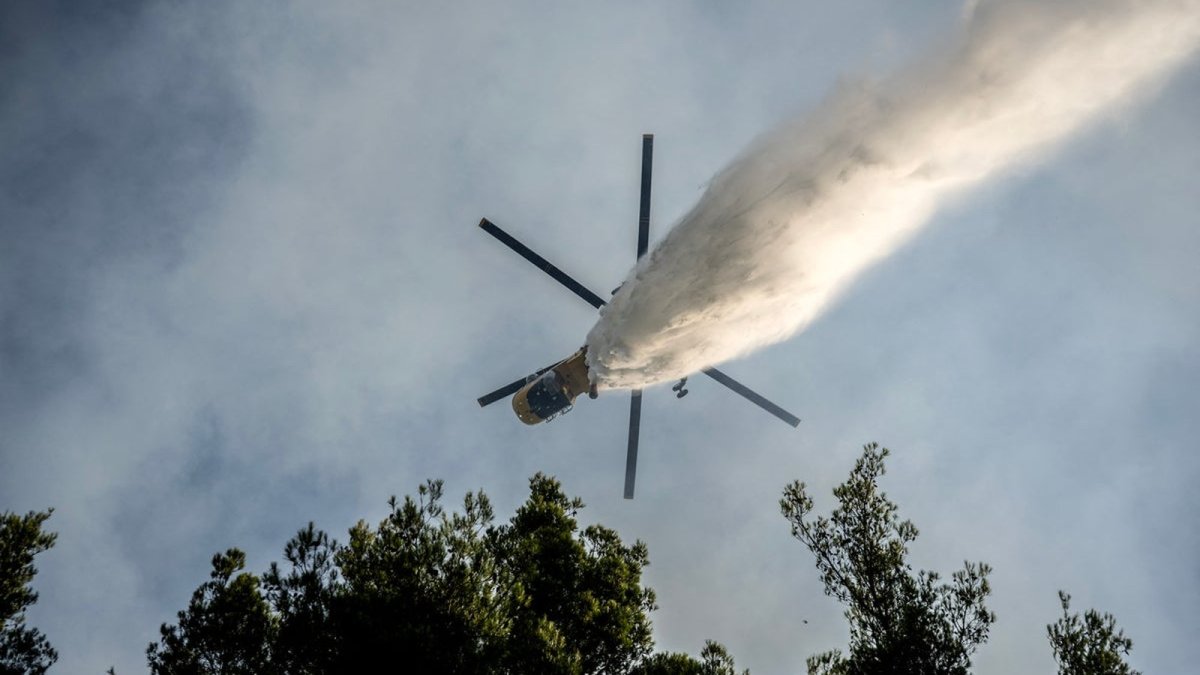
Two firefighting helicopters collided on Sunday while battling wildfires west of Athens, with the crew of one now located and safe while search and rescue teams continue efforts to reach the occupants of the second aircraft. The incident came as Greek forces confronted multiple blazes that have already destroyed more than 100 homes and forced evacuations on the tourist island of Kefalonia. For British holidaymakers, who flock to Greece every summer, the crisis raises urgent questions about safety and the state of this season's travel plans.
Greece Fires: Helicopters Collide in Athens Battle
Athens, Greece — Two BELL helicopters leased by the Greek fire department crashed in the wider area of Psatha, Attica, after taking off from Elefsina military airport during an aerial operation against wildfires. Each aircraft carried a crew of two. One crew has been located and an ambulance dispatched, while the second helicopter has been found and a search and rescue operation is under way for its occupants.
The Helicopter Collision and Rescue Efforts
The Greek fire service confirmed the collision took place during operations against a fire fuelled by gale-force winds around Porto Germeno, near Athens. Footage posted on the Forecast Weather Greece Facebook page shows the two helicopters closing to cross paths at low altitude before the main rotor of the lower aircraft struck the underside of the one above, sending it down in flames. The second helicopter dumped its water load and flew away — a reminder of the split-second decisions demanded when multiple aircraft coordinate over an active fire zone.
The incident underscores how heavily Greece depends on aerial assets. Much of the country's terrain is mountainous and inaccessible to ground crews, so the fire service leases helicopters specifically for rapid water-bombing in remote areas where roads are limited and fire fronts can shift quickly. Without these aircraft, containing blazes in places such as western Attica would prove far more difficult, and the demands on aerial units only grow as wildfire campaigns drag on across southern Europe. The search and rescue effort at Psatha reflects that pressure: crews worked through the afternoon to reach the second helicopter's occupants, with an ambulance standing by at the scene.
Scale of the Wildfire Destruction
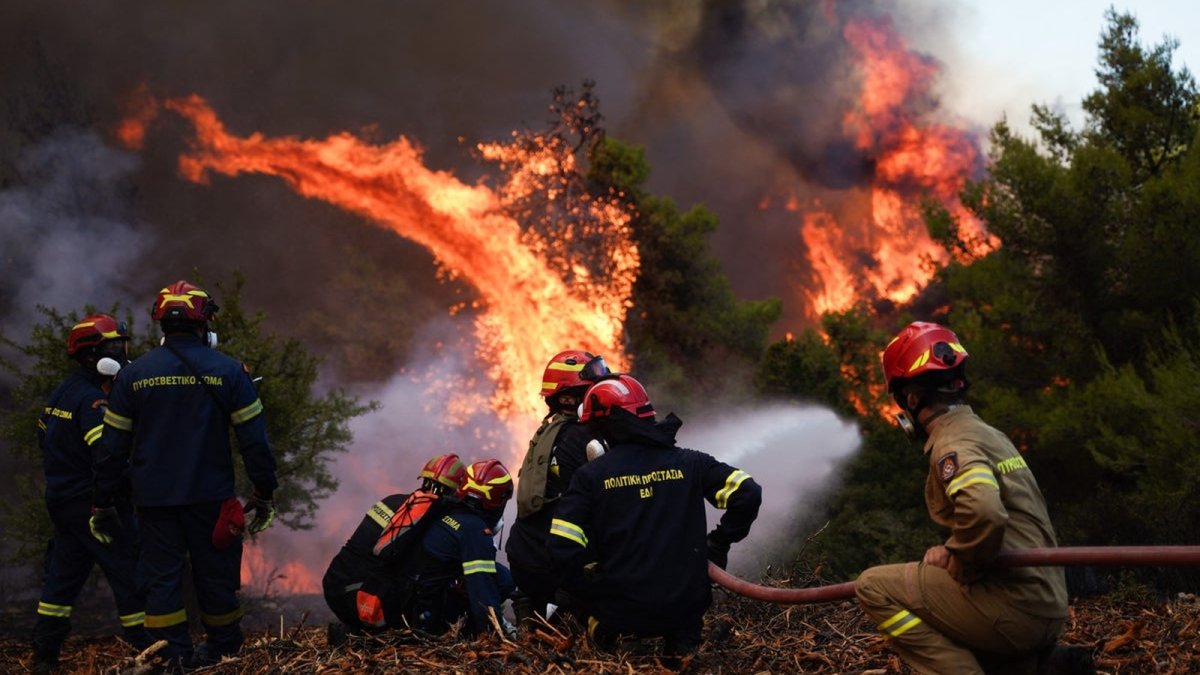
The wildfire northwest of Athens has destroyed more than 100 homes and is estimated to have burned over 10,000 hectares of land, according to Greek daily Protothema. A fresh blaze in the Pastra area of southern Kefalonia forced overnight evacuations of several settlements on the Ionian island popular with British tourists.
Gale-force winds fuelling the fire around Porto Germeno have since subsided, but flames crossed a mountain southwards and reached the settlement of Veniza and a military firing range, where unexploded ordnance ignited and added further hazards for responders. Firefighters are now concentrating resources on protecting the coastal town of Megara, home to around 30,000 residents, and nearby industrial sites. Emergency alerts have been issued for several settlements in western Attica, including an industrial estate near the town.
The human cost extends beyond property. The loss of more than 100 homes has left families without shelter at a time when seasonal winds continue to threaten additional communities, and repeated evacuations are stretching emergency services to their limits.
Three Firefighters Killed This Week
This week has already claimed the lives of three firefighters battling out-of-control blazes. Two died after becoming trapped between fire fronts in the Rethymno region of Crete on Wednesday, while a third was found unconscious near the southern Peloponnese port town of Gytheio and later pronounced dead. The fire department said they "fell heroically in the line of duty, safeguarding the lives and property of citizens as well as the natural environment".
Such incidents illustrate the extreme dangers faced by crews working in rapidly changing conditions, where escape routes can close without warning. The deaths have sharpened the debate in Athens about firefighting resources, aerial support and the adequacy of preparations for a fire season that shows no sign of easing.
Official Responses from Greek Leadership
Prime Minister Kyriakos Mitsotakis acknowledged the scale of the challenge in his regular Sunday message: "There are moments when the force of nature and the intensity of weather conditions exceed all human planning and every operational capability."
On the ground, residents describe conditions that have made normal life impossible. Chrissa Gioukaki, a resident of Krya Vrysi near the affected area, recalled: "The wind is unbelievable – you can't stand sometimes. The flames were huge, it was really scary."
Broader European Wildfire Context
Europe has been ravaged by wildfires this summer after a period of record-breaking heatwaves and little rain — conditions scientists say have been exacerbated by climate change, which lengthens the fire season across southern Europe and extends periods of extreme heat and drought well into the summer months.
The European Union has warned that the "whole continent" is at risk, and the bloc's Civil Protection Mechanism, including the rescEU fleet of firefighting aircraft, stands ready to support member states facing overwhelming blazes. This summer's crisis has already seen hundreds of thousands of people evacuated across France and Spain, where destructive fires showed signs of easing only over the weekend.
Greece has faced similar large-scale events in recent years, and the current combination of heat, wind and dry vegetation continues to test both national resources and cross-border cooperation mechanisms. The EU's July warning reflected the shared vulnerability of southern member states to a threat that is no longer exceptional but seasonal.
For Athens, the pattern is uncomfortably familiar. In the summer of 2021, fires on the island of Evia and in the Peloponnese burned for weeks, forcing mass evacuations and prompting then-prime minister Kyriakos Mitsotakis to apologise for failures in the initial response. Two years later, in August 2023, the Rhodes blaze triggered the largest wildfire evacuation in Greek history. Each crisis has pushed the country to invest more heavily in aerial firefighting and civil protection co-ordination — and each new season has demonstrated the limits of that preparation when winds, heat and drought align.
What It Means for British Holidaymakers
Greece remains one of the United Kingdom's most popular summer destinations, with Kefalonia, Crete and Athens drawing thousands of British visitors every year. The 2023 Rhodes wildfires, which prompted the largest evacuation in Greek history involving around 19,000 people including many British holidaymakers, serve as a recent precedent for how quickly a holiday can turn into an emergency.
The Foreign, Commonwealth & Development Office has not issued any specific travel advice regarding the wildfires as of 2 August, though it maintains a general warning of "high risk" during the April to October season. In its standard guidance, the FCDO stresses that "wildfires are highly dangerous and unpredictable" and that "the situation can change quickly". Travellers are advised to register mobile phones to receive emergency alerts and to contact airlines or tour operators immediately if evacuations affect their plans. Heraklion and Chania airports in Crete are operating departures and arrivals largely as scheduled, though delays and cancellations remain possible while blazes continue in the south of the island.
Because the FCDO has not warned against travel, holiday providers are not automatically required to offer full refunds; the conditions for cancelling depend on the individual operator. Some travel insurance policies include natural disaster cover for events that prevent travellers reaching their destination, so holidaymakers should review their terms before making decisions about ongoing trips — and keep an eye on official advice as the situation develops.
By Erica Thornton, Staff Writer
This article was produced with AI-assisted research and editorial support. Reporting is based on sources cited in the article.
What's Your Reaction?
 Like
0
Like
0
 Dislike
0
Dislike
0
 Love
0
Love
0
 Funny
0
Funny
0
 Wow
0
Wow
0
 Sad
0
Sad
0
 Angry
0
Angry
0

US Politics and Policy Correspondent at Global1.News. Based in Washington DC, covering American politics, policy, elections, and the courts. Knows how the system works and tells you what it actually means.











Comments (0)