
Gabon's Festival of Cultures Returns After Eight Years With Senegal as Guest of Honour
After eight years away, Libreville has once again become a stage for Gabon's rich cultural tapestry, as the 15th edition of the Festival of Cultures brings together traditions, languages and craftsmanship from across the country — with Senegal taking pride of place as guest of honour. The three-day celebration, which ran from August 21 to 23 along Avenue Jean-Paul II, was conceived as both a homecoming and a handover to a new generation.
After eight years away, Libreville has once again become a stage for Gabon's rich cultural tapestry, as the 15th edition of the Festival of Cultures brings together traditions, languages and craftsmanship from across the country — with Senegal taking pride of place as guest of honour. The three-day celebration, which ran from August 21 to 23 along Avenue Jean-Paul II, was conceived as both a homecoming and a handover to a new generation.
Gabon's Festival of Cultures Returns After Eight Years With Senegal as Guest of Honour
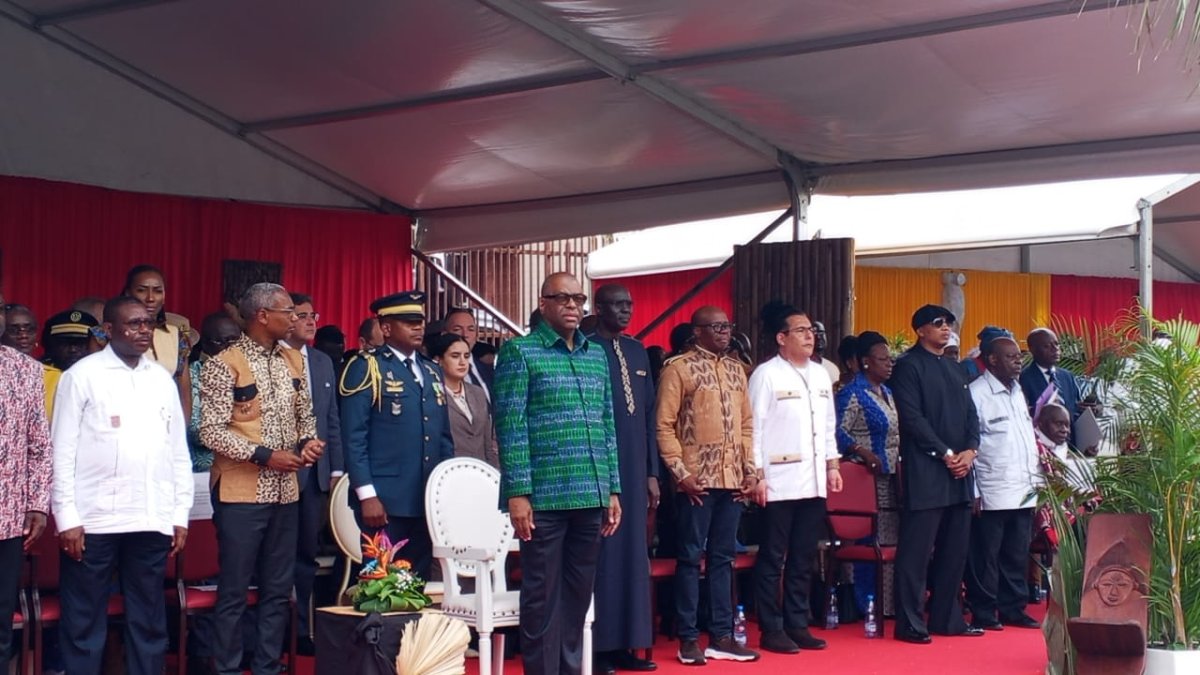
Libreville, Gabon — August 24, 2026 — Vice-President Alexandre Barro Chambrier gave the official kick-off on Friday, relaunching a celebration that first began in 1997 and whose previous edition was held in 2018. Under the theme "Reappropriation of Our Cultural Values," the festival gathered representatives of Gabon's nine provinces alongside artists, artisans and visitors from across the region.
A Long-Awaited Homecoming on Avenue Jean-Paul II
The return of the Festival of Cultures after an eight-year absence was felt in every corner of Libreville's second arrondissement, where Avenue Jean-Paul II — known to older generations as Boul Bess — transformed into a living museum of Gabonese heritage. The thoroughfare, usually a busy artery of shops and traffic, became a pedestrian promenade of colours, sounds and aromas that drew families from all walks of life.
Vice-President Alexandre Barro Chambrier delivered the official opening address on Friday morning, standing before a crowd that included government ministers, diplomats and elders from across the country. His presence signalled the importance the transitional government places on cultural revival as part of national reconstruction, a message that resonated deeply with the artisans and performers who had waited eight long years for this moment.
The opening ceremony paid a moving tribute to Paul Mba Abessole, the former mayor of Libreville who founded the festival in 1997. Abessole was honoured for his vision of creating a space where Gabon's diverse cultures could meet, exchange and flourish. His legacy was visible in the faces of the young performers who took the stage, many of whom were not yet born when the festival held its first edition.
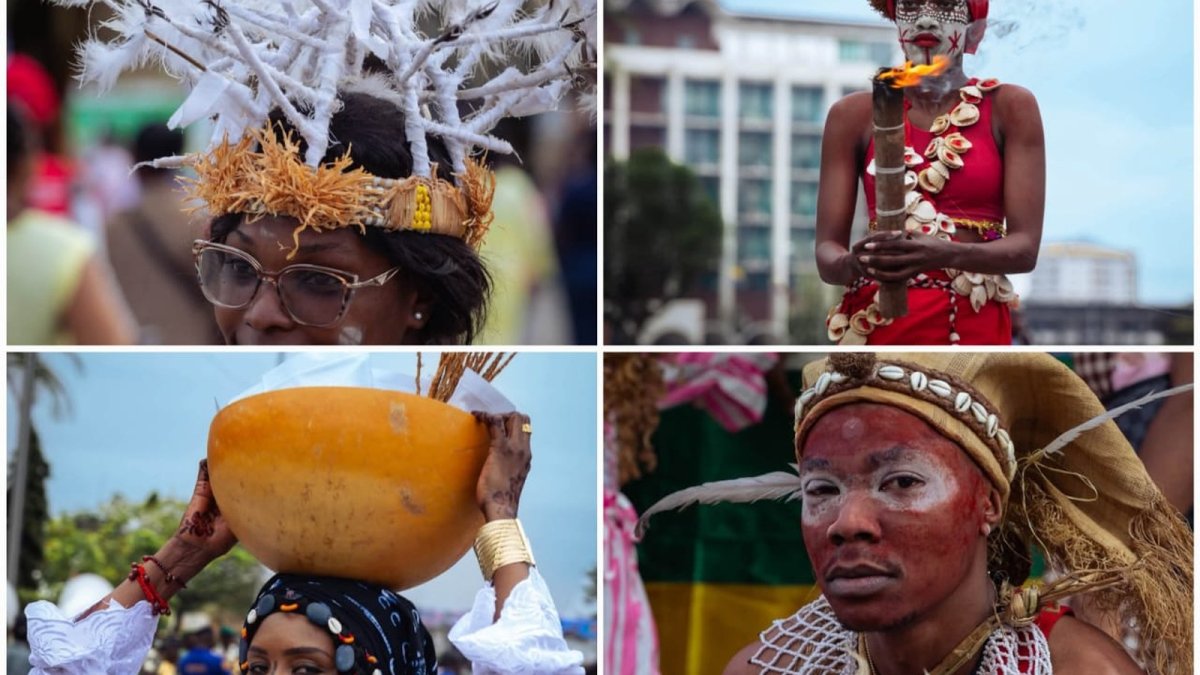
Traditional rhythms opened the ceremony with power and precision. The Mwiri, Bwiti and Ikokou — three of Gabon's most significant spiritual and initiatory traditions — were performed with a reverence that silenced the crowd. The drumming, chanting and masked dances were not mere entertainment; they were statements of continuity, declarations that these practices remain alive and meaningful in contemporary Gabon.
The festival's history as one of the great showcases of Gabonese heritage was evident in the programme's ambition. Since 1997, the event has served as a national platform where the country's many ethnic groups — from the Fang in the north to the Punu in the south — present their distinct traditions side by side. The 2018 edition, the last before this year's return, had set a high standard; this year's organisers clearly intended to exceed it.
"Reappropriation of Our Cultural Values"
The official theme of this year's festival, "Reappropriation of Our Cultural Values," was not chosen lightly. Culture Minister Paul Ulrich Kessany, who oversaw the organisation of the event through the Ministry of Culture and Arts, spoke at length about what the theme means in practice. His words carried particular weight in a country where colonial history and rapid modernisation have sometimes created distance between generations and their ancestral traditions.
"A culture does not always disappear because someone wants to destroy it," Kessany warned during the opening proceedings. "It can disappear simply because we stop transmitting it." This observation struck a chord with many in the audience, particularly the elders who have watched with concern as younger generations increasingly engage with global digital culture while losing touch with local languages and practices.
The minister was careful to frame reappropriation not as a rejection of modernity but as a foundation for it. "Reappropriating one's culture is not living in the past," he insisted. "It's not turning your back on modernity." Instead, he argued, a strong sense of cultural identity allows Gabonese people to engage with the wider world from a position of confidence rather than uncertainty.
This philosophical approach shaped the entire festival programme. Rather than presenting culture as a static museum piece, the organisers framed it as a living, breathing force that evolves while maintaining its core values. Workshops, performances and exhibitions were all designed to demonstrate how traditional knowledge can coexist with contemporary expression.
The theme also responded to specific concerns about practices that risk being forgotten. Initiation rites, traditional healing knowledge, oral histories and craft techniques — all of these were showcased at the festival as valuable heritage deserving of active preservation. The message was clear: these are not relics of the past but resources for the future.
Transmission at the Heart of the Programme
The festival programme was designed as a space for transmission as much as celebration, with storytelling sessions, traditional and contemporary dances, and workshops that introduced children to rites of passage from various Gabonese cultures. Local-language workshops gave young participants the opportunity to learn greetings, songs and proverbs in languages they may only hear spoken by their grandparents.
Many of the young visitors who wandered through the festival grounds were born after the previous edition in 2018. For them, this was not a return but a first encounter — a discovery of cultural practices that exist in their own country but which they had never seen performed. The organisers had anticipated this, structuring the programme to be accessible and engaging for first-time visitors of all ages.
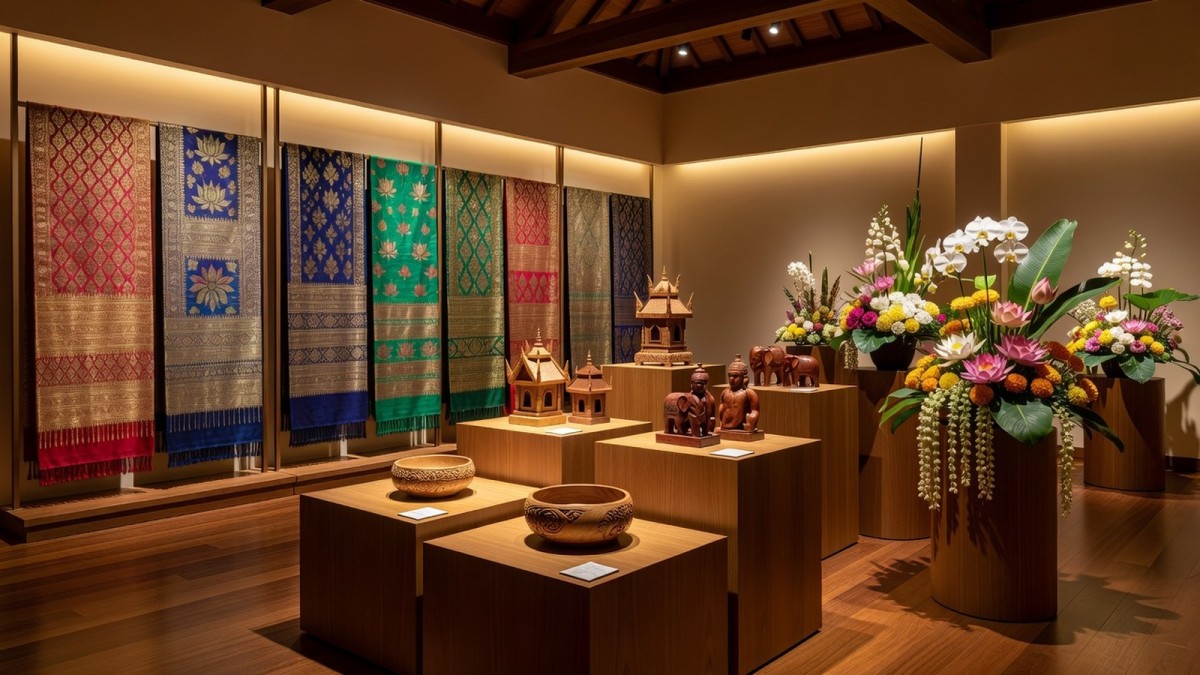
One young visitor, examining a display of traditional objects, reflected on what she was seeing. "It's our heritage," she said. "Nowadays, it's very old and very rare, because even at the National Museum, you can no longer find many of these objects." Her observation highlighted a troubling reality: the national collection itself has gaps, making festivals like this one essential for keeping knowledge alive.
The same visitor was quick to correct any misunderstanding about the objects on display. "It has nothing to do with witchcraft," she insisted. "It's about preserving our history, so that we have a record of it." Her words echoed the festival's educational mission, which seeks to demystify traditional practices and present them as legitimate cultural heritage rather than superstition.
Another young attendee, visibly moved by the experience, described the festival in terms of opportunity. "We can rediscover our culture, our history and our heritage through this festival," he said. "It's truly a wealth of knowledge being offered to us." This sense of discovery was palpable throughout the three days, as children and teenagers engaged with traditions their parents had grown up with but which had faded from daily life.
Senegal, Guest of Honour and Bridge Between Nations
Senegal's presence as guest country of honour added a pan-African dimension to the festival, with a dedicated cultural village showcasing the best of Senegalese crafts, clothing, music and traditions. The village became one of the most visited attractions of the event, drawing crowds eager to experience the cultural richness of the West African nation.
Senegalese artisans demonstrated their craft with remarkable skill, creating objects from coconut, forest seeds and palm wood that drew admiration from passersby. These demonstrations were not merely commercial — they were educational, showing the techniques and materials that define Senegalese craftsmanship and inviting comparison with Gabonese equivalents.
Senegal's ambassador to Gabon, Mame Oumar Thiaw, hailed the choice of his country as guest of honour as a sign of the strong relations between Libreville and Dakar. "The risk is great for Africa to drift away from itself," Thiaw warned, speaking of the challenges posed by rapid technological change and globalisation. His words resonated with the festival's broader theme of cultural reappropriation.
This was not Senegal's first appearance as guest of honour — the country held the same position in 2010 — but its return in 2026 carried additional significance. The relationship between the two countries has deepened in recent years, and the festival provided an opportunity to celebrate that friendship through culture rather than diplomacy alone.
Senegal's participation was comprehensive, featuring chants, dances, traditional costumes, gastronomy and even Senegalese wrestling, known as la lutte. The wrestling demonstrations, in particular, drew large crowds, offering Gabonese audiences a taste of one of Senegal's most beloved sporting traditions. The festival's ambition to make culture a bridge between communities and countries was fully realised in the Senegalese village.
A Showcase for Artisans and Living Heritage
For the artisans who participated, the festival was a platform to display their work and connect with the public in ways that markets and shops cannot provide. Traditional arts and crafts were presented alongside performances and demonstrations, allowing visitors to see not just finished products but the processes that create them.
The programme included several new attractions designed to broaden its appeal. The Bal des Anciens, or Ball of the Elders, gave older generations their own space to celebrate and share memories. The Ntcham competition, a traditional game, drew competitive spirits from across the provinces. A Comedy Show brought laughter and contemporary humour to the proceedings, while the Rue des Saveurs, or Flavours Street, offered a culinary journey through Gabon's diverse gastronomy.
The diversity of the nine provinces was framed throughout the festival as a source of national cohesion rather than division. Organizers emphasised that Gabon's strength lies in its multiplicity — the many languages, traditions and practices that together form a single national identity. This message of unity through diversity was reinforced by the presence of representatives from every province.
A representative from UNESCO, attending the festival, offered a broader perspective on its significance. "Culture is perhaps the most living form of memory," the representative said. "But it is also the most living form of hope." These words captured the dual nature of the event: it looks backward to preserve what might otherwise be lost, while looking forward to what cultural revival might bring.
Festivals like this one play a crucial role in protecting living heritage across the continent. Across Africa, similar events — from FESPACO in Burkina Faso to the Saint-Louis Jazz Festival in Senegal — serve as anchors for cultural preservation and celebration. The Libreville festival now rejoins this continental network, strengthened by its eight-year absence and the determination of those who brought it back.
What to Watch For
The successful return of the Festival of Cultures signals a renewed commitment to cultural identity in Gabon. After eight years without this national gathering, the enthusiasm of the crowds and the participation of all nine provinces suggest that the appetite for cultural celebration remains strong. The question now is whether this momentum can be sustained.
There is potential for the festival to become an annual anchor for cultural tourism in Central Africa. The region has few events of this scale, and Libreville's position as a coastal capital with good air connections makes it an accessible destination for visitors from across the continent and beyond. The presence of Senegal as guest of honour demonstrated the festival's capacity to attract international participation.
The parallels with other African cultural celebrations are instructive. FESPACO in Burkina Faso has become the continent's premier film festival, drawing participants from around the world. The Saint-Louis Jazz Festival in Senegal has put that historic city on the global cultural map. Each of these events has shown that consistent, well-organised cultural programming can have lasting economic and reputational benefits.
For Gabon, the festival's return is also a statement about the importance of cultural transmission. The workshops, performances and demonstrations all served to protect languages and traditions for the next generation. The young visitors who discovered their heritage for the first time this week will carry those memories forward, and some will become the custodians of the traditions they witnessed.
The wider continental ambition is clear: to use culture as a bridge between African nations and between generations. The festival's theme of reappropriation speaks to a continent-wide movement of cultural rediscovery, as African countries seek to define their identities on their own terms. The warm reception of the Senegalese delegation and the enthusiastic participation of Gabon's provinces suggest that this movement has deep roots.
As the crowds dispersed on Sunday evening and Avenue Jean-Paul II returned to its everyday rhythm, there was a sense that something significant had been rekindled. The Festival of Cultures is back, and with it, a renewed commitment to the idea that culture is not a luxury but a necessity — a foundation for identity, cohesion and hope. For Gabon, for Senegal, and for Africa, that is a promise worth celebrating.
By Amara Diop, Staff Writer
This article was produced with AI-assisted research and editorial support. Reporting is based on sources cited in the article.
What's Your Reaction?
 Like
0
Like
0
 Dislike
0
Dislike
0
 Love
0
Love
0
 Funny
0
Funny
0
 Wow
0
Wow
0
 Sad
0
Sad
0
 Angry
0
Angry
0

West Africa/Sahel Correspondent at Global1.News. Dakar-based journalist covering politics, security, climate, and development across Francophone and Anglophone West Africa. Tells the stories of a region undergoing profound transformation.










Comments (0)