
First Nations, Carney, premiers to gather for ceremony ahead of historic meeting
First Nations leaders, Prime Minister Mark Carney and a cohort of provincial premiers gathered in Ottawa today for a solemn ceremony that will precede what officials are describing as a historic meeting on Monday.
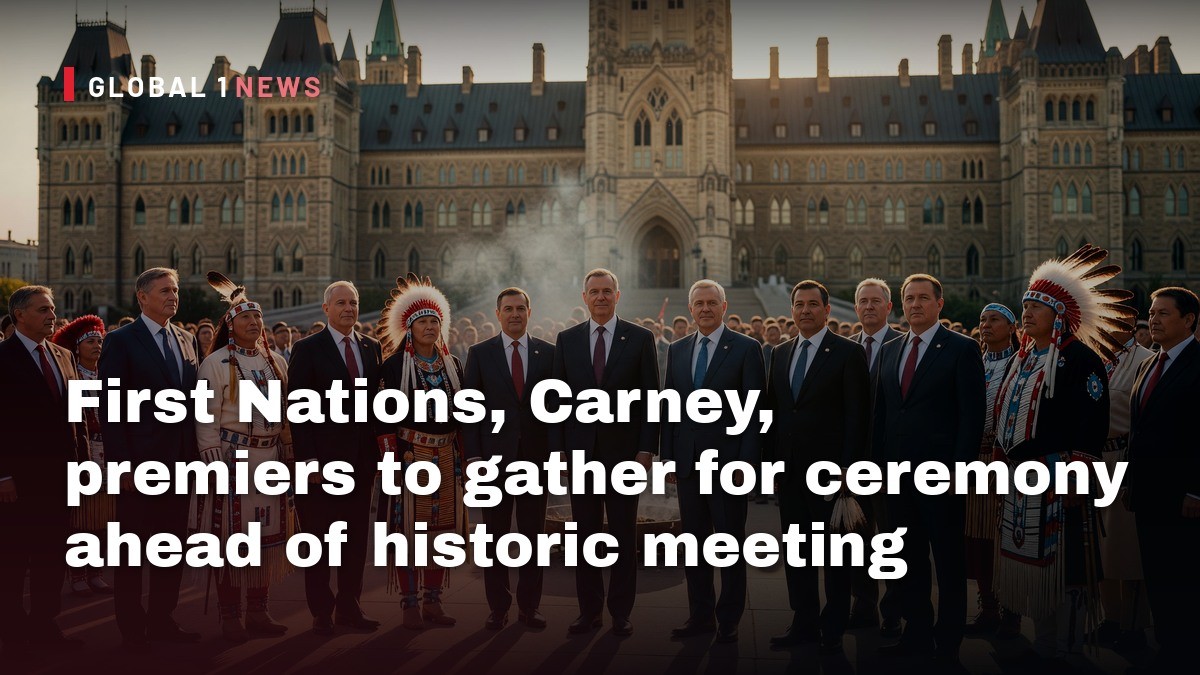
First Nations leaders, Prime Minister Mark Carney and a cohort of provincial premiers gathered in Ottawa today for a solemn ceremony that will precede what officials are describing as a historic meeting on Monday. The gathering marks the first time since the 2005 Kelowna Accord talks that the nation’s top political figures will sit together with Indigenous representatives to discuss closing long‑standing socioeconomic gaps. National Chief Cindy Woodhouse Nepinak underscored the importance of beginning the dialogue with ceremony, noting that it grounds participants in First Nations spirituality and ensures a shared frame of mind for the discussions ahead.
Historical context of the Kelowna Accord
The Kelowna Accord, negotiated in 2005 under Prime Minister Paul Martin, brought together premiers and First Nations leaders in an effort to address disparities in health, education and housing for Indigenous communities. Although the accord was never fully funded, it set a precedent for high‑level engagement on Indigenous issues and remains a reference point for today’s talks. Analysts have noted that the 2026 meeting, by convening the same mix of federal and provincial leadership, signals a renewed willingness to revisit commitments that have lingered unresolved for more than two decades.
Since the Kelowna discussions, successive governments have introduced a patchwork of policies aimed at reconciliation, yet many Indigenous communities continue to face challenges related to clean water, affordable housing and employment. The upcoming meeting therefore arrives at a moment when the gap between promised outcomes and lived realities remains stark, prompting both Indigenous leaders and provincial officials to seek concrete, actionable steps.
Composition of the meeting
While the exact roster of premiers attending the Monday session has not been disclosed by the Privy Council Office, it is known that Quebec Premier Paul St‑Pierre Plamondon and Alberta Premier Danielle Smith have indicated they will be absent. This leaves a still‑significant representation from other provinces, though the precise balance of regional voices remains to be confirmed. The closed‑door nature of the meeting means that the public will learn the outcomes only after the fact, a practice that has drawn both support for candid dialogue and criticism for lack of transparency.
First Nations representation will be provided primarily by regional chiefs from the Assembly of First Nations, ensuring that the perspectives of Indigenous communities are central to the conversation. The inclusion of knowledge keepers and elders in the preceding ceremony further highlights the intention to embed Indigenous worldviews into the policy discourse.
Purpose and expectations
Officials have framed the gathering as an opportunity to chart a path toward closing the socioeconomic gaps that persist in First Nations communities. The agenda is expected to touch on health outcomes, education attainment, housing shortages and economic development, echoing the themes of the original Kelowna Accord. While no specific policy proposals have been released, the presence of the prime minister alongside provincial premiers suggests a coordinated approach that could align federal funding with provincial implementation.
National Chief Woodhouse Nepinak’s remarks about the ceremony reflect a broader expectation that the meeting will be guided by Indigenous principles of relationship and respect. By starting with a spiritual grounding, leaders hope to move beyond tokenistic consultation toward substantive, mutually agreed‑upon actions.
Political dynamics at play
The absence of the Quebec and Alberta premiers introduces a subtle political dimension to the talks. Both provinces have distinct approaches to Indigenous relations, and their non‑attendance may influence the balance of provincial input. Nonetheless, the presence of other premiers signals a willingness across much of the country to engage on reconciliation, a stance that could be leveraged by the federal government to demonstrate national unity on the issue.
Prime Minister Mark Carney, who has positioned Indigenous reconciliation as a cornerstone of his administration, is likely to use the meeting to reinforce his commitment ahead of upcoming federal budget deliberations. The outcome could shape funding allocations for Indigenous infrastructure projects, a point of particular interest to provinces that rely on federal transfers to support local initiatives.
Community response
Indigenous communities across Canada have responded with cautious optimism. The ceremony, which featured knowledge keepers, elders and community members, was seen as a respectful acknowledgement of the cultural protocols that underpin Indigenous governance. For many, the visual of national leaders standing alongside First Nations elders conveys a powerful message of partnership, even as they await concrete policy outcomes.
Local media in several regions have highlighted the ceremony’s symbolism, noting that the inclusion of spiritual elements aligns with calls from Indigenous organisations for any reconciliation effort to be rooted in cultural understanding. Observers stress that the true test will be whether the discussions translate into measurable improvements in health, education and housing for First Nations peoples.
Implications for future policy
Should the meeting yield a renewed framework reminiscent of the Kelowna Accord, it could set a precedent for regular, high‑level Indigenous‑government dialogues. Such a mechanism would provide a structured avenue for monitoring progress and adjusting policies in real time, addressing a long‑standing criticism that past agreements lacked enforceable follow‑up.
Moreover, the involvement of both federal and provincial leaders may encourage the development of joint funding models, where provinces commit resources to complement federal investments. This collaborative approach could accelerate the delivery of clean‑water projects, affordable housing initiatives and culturally appropriate education programmes in First Nations communities.
Looking ahead
As the ceremony concluded and participants prepared for the closed‑door meeting, the atmosphere in Ottawa was one of measured anticipation. The historic nature of the gathering, framed against the backdrop of the 2005 Kelowna Accord, underscores a renewed national focus on Indigenous reconciliation. While the details of any agreements will emerge only after Monday’s discussions, the symbolic weight of the ceremony suggests a collective desire to move beyond rhetoric toward tangible outcomes.
For Canadians watching from coast to coast, the meeting represents both a test of political will and a reminder of the enduring partnership between First Nations and the broader Canadian polity. The hope, articulated by National Chief Woodhouse Nepinak, is that the ceremony’s grounding in Indigenous spirituality will translate into policies that honour the promises of the past and deliver real, lasting benefits for First Nations peoples.
This article was produced with AI-assisted research and editorial support. Reporting is based on the source material cited below. Sources: Global News Canada; globalnews.ca; Global1.News (25 October 2026).
By Alex Thompson, Staff Writer
What's Your Reaction?
 Like
0
 Dislike
0
 Love
0
 Funny
0
 Wow
0
 Sad
0
 Angry
0
Canada Correspondent at Global1.News. Based in Toronto, covering Canadian politics, energy, trade, and US-Canada relations. Provides the Canadian perspective on North American and global affairs.












Comments (0)