
Censorship in Pakistan Goes From ‘Pleasant’ to ‘Unpleasant’
This procedural requirement effectively forces broadcasters to delay or omit real‑time reporting of violent events, curtailing the immediacy that has become a hallmark of modern news coverage.
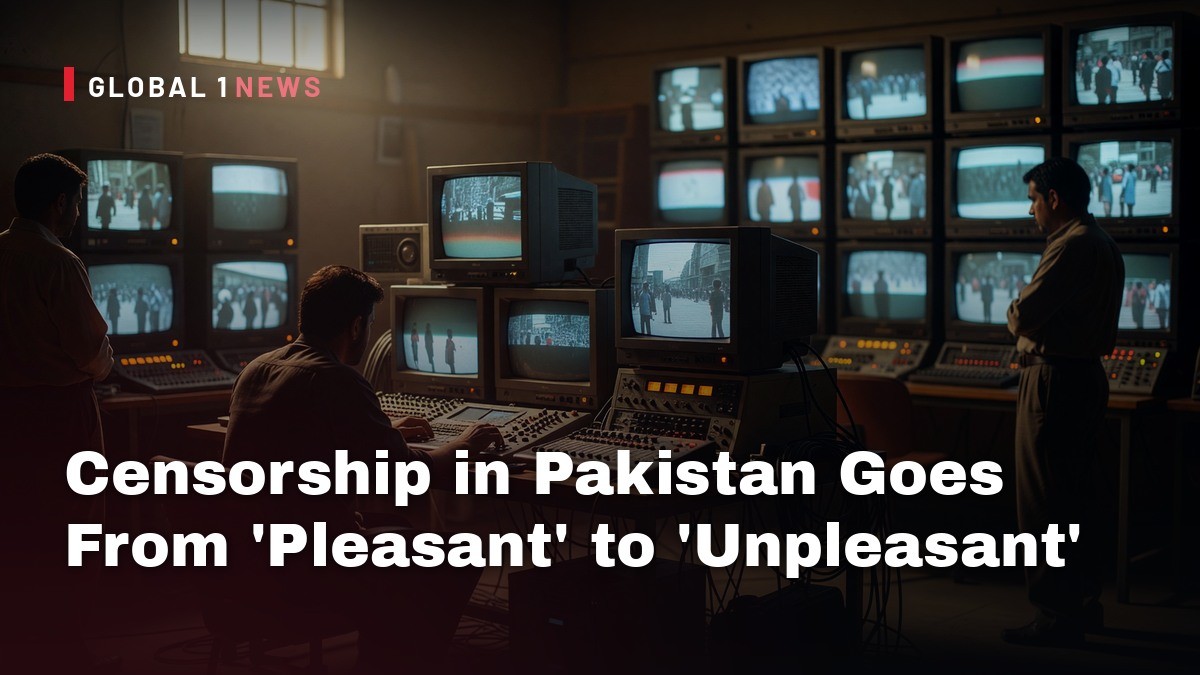
Pakistan’s media landscape has entered a new phase of self‑censorship after the Pakistan Electronic Media Regulatory Authority (PEMRA) issued a directive on 13 October that explicitly bars satellite television channels from broadcasting or providing live coverage of what it terms “unpleasant incidents.” The term, defined in the notice as explosions, blasts, firing and terrorist attacks, signals a tightening of control over the flow of information about violence and instability, extending a pattern of media restrictions that has deepened since the 2023 protests surrounding former Prime Minister Imran Khan.
PEMRA’s latest directive and its immediate implications
The PEMRA notification instructs all satellite TV licensees to refrain from “broadcast, re‑broadcast and live coverage” of any incident it classifies as “unpleasant.” It further requires channels to rely only on “verified information, warranted by the concerned department/law enforcement agency,” and to employ a “time delay mechanism” to filter content before it reaches the audience. This procedural requirement effectively forces broadcasters to delay or omit real‑time reporting of violent events, curtailing the immediacy that has become a hallmark of modern news coverage.
In addition, the notice calls for the formation of an “independent editorial board” in line with PEMRA’s own regulations, a Supreme Court judgment from suo motu case No. 28 of 2018, and an Islamabad High Court order dated 5 September 2022. While the language suggests a move toward editorial independence, the practical effect is to embed state‑aligned oversight within newsrooms, ensuring that any deviation from the prescribed narrative can be swiftly corrected or suppressed.
Historical context: From Imran Khan to “unpleasant” terminology
The current directive follows a series of media restrictions that began in earnest after the May 9 2023 protests triggered by the arrest of former Prime Minister Imran Khan. PEMRA ordered broadcasters to “screen out” “hate mongers, rioters, their facilitators and perpetrators,” a vague phrasing that effectively singled out coverage of Khan’s supporters and legal battles without naming him directly. Television channels responded by avoiding the former premier’s name altogether, substituting euphemisms such as “chairman Pakistan Tehreek‑e‑Insaf (PTI)” or “PTI chief.” Some anchors resorted to cryptic references like “Kasim ke Abba,” invoking the name of Khan’s elder son as a covert shorthand.
This pattern of indirect naming illustrates how media outlets have adapted to regulatory pressure by developing a coded language that skirts explicit bans while still conveying the intended story to informed viewers. The new “unpleasant incidents” clause extends this practice from political figures to the very act of reporting on violence, further narrowing the space for open discourse.
The satirical lens: Anwar Maqsood’s weather analogy
Renowned satirist Anwar Maqsood famously likened the state broadcaster’s weather forecast to the country’s reality, noting that while the forecast declares “pleasant” weather, the actual temperature is “scorching hot.” He used the metaphor to critique the systemic censorship that sanitises the public’s perception of unemployment, inflation, poverty and social unrest. By equating the omission of harsh economic and social conditions to a weather report that misleads the public, Maqsood underscores how media control can mask the nation’s underlying crises.
His analogy resonates strongly with the latest PEMRA directive. Just as a weather forecast that ignores a heatwave misinforms citizens about immediate health risks, a news broadcast that excludes live coverage of explosions or terrorist attacks deprives the public of timely information about safety threats. The satirical framing highlights the broader impact of censorship: it not only shields the state from criticism but also erodes the public’s capacity to respond to real‑world dangers.
Impact on journalistic practice and newsroom culture
Television anchors and producers have already begun to adjust their reporting strategies. The mandated “time delay mechanism” forces newsrooms to pre‑screen footage, often resulting in the omission of graphic or unsettling visuals that would otherwise inform viewers about the scale of an incident. This procedural hurdle can delay critical alerts, compromising public safety in a country where rapid dissemination of information during emergencies is vital.
Moreover, the requirement to rely on “verified information” from law‑enforcement agencies places journalists in a dependent relationship with state actors. In practice, this can translate into a de‑factoring of independent verification, as newsrooms may prioritize official statements to avoid regulatory penalties. The cumulative effect is a newsroom culture that privileges compliance over investigative rigor, reinforcing a self‑censoring environment that aligns with governmental narratives.
Broader societal implications: From restaurants to cyberspace
Writer Mohammed Hanif, in a satirical blog for BBC Urdu, reflected on the expanding reach of censorship beyond the broadcast sphere. He recalled posters urging patrons to avoid political discussions in restaurants, a subtle cue that political expression is increasingly policed in everyday spaces. Hanif notes that while he has not witnessed overt enforcement in eateries, the threat of cyber authorities interpreting any comment as “anti‑national” or “disturbing public peace” looms large.
This ambiguity in what constitutes prohibited content creates a climate of uncertainty. Citizens may self‑censor even innocuous remarks for fear of triggering a “midnight knock on the door.” The extension of censorship into digital and private realms amplifies the chilling effect, limiting not only public debate but also personal conversation, thereby reshaping the social fabric of Pakistani life.
Legal backdrop: Supreme Court and High Court precedents
The PEMRA directive references a Supreme Court judgment from suo motu case No. 28 of 2018, which addressed the need for an independent editorial board within media organisations. While the judgment aimed to safeguard editorial autonomy, the current application appears to co‑opt that framework to enforce state‑aligned oversight. The Islamabad High Court order of 5 September 2022, also cited, similarly underscores the judiciary’s involvement in shaping media regulation.
These legal touchstones illustrate how the judiciary has been enlisted to legitimize regulatory measures that, in effect, constrain press freedom. By anchoring the directive in existing court rulings, PEMRA positions its restrictions within a veneer of legality, making it more challenging for media entities to contest the orders without appearing to defy judicial authority.
Future outlook: Navigating a constrained media environment
As Pakistan’s regulatory apparatus tightens, media organisations will need to balance compliance with the public’s right to information. The emergence of coded language and indirect references suggests a resilient, albeit constrained, journalistic ingenuity. However, the increasing scope of censorship—from live coverage of violent incidents to the policing of everyday conversation—raises concerns about the long‑term health of the public sphere.
Stakeholders, including civil society groups and international press freedom advocates, may need to monitor how PEMRA’s “unpleasant incidents” clause is enforced, particularly regarding the definition of “verified information” and the operational independence of editorial boards. The trajectory set by recent directives indicates a shift toward a more sanitized media narrative, one that mirrors Anwar Maqsood’s weather metaphor: a forecast that declares “pleasant” while the nation endures a scorching reality.
This article was produced with AI-assisted research and editorial support. Reporting is based on the source material cited below. Sources: The Diplomat; thediplomat.com; Global1.News (25 October 2026).
By Kenji Tanaka, Staff Writer
What's Your Reaction?
 Like
0
 Dislike
0
 Love
0
 Funny
0
 Wow
0
 Sad
0
 Angry
0

Japan Correspondent at Global1.News. Tokyo-based voice covering Japanese politics, technology, economy, and culture. Tracks the intersection of tradition and innovation in one of the world's most dynamic societies.









Comments (0)