
Fighters Without Borders: Mercenaries, Adventurers, and Volunteers in Myanmar’s Civil War
In July 2026 the Myanmar regime released footage of Russian Airborne Forces (VDV) troops training alongside Myanmar soldiers, an event officially designated as the “Tiger‑2026” joint exercise.
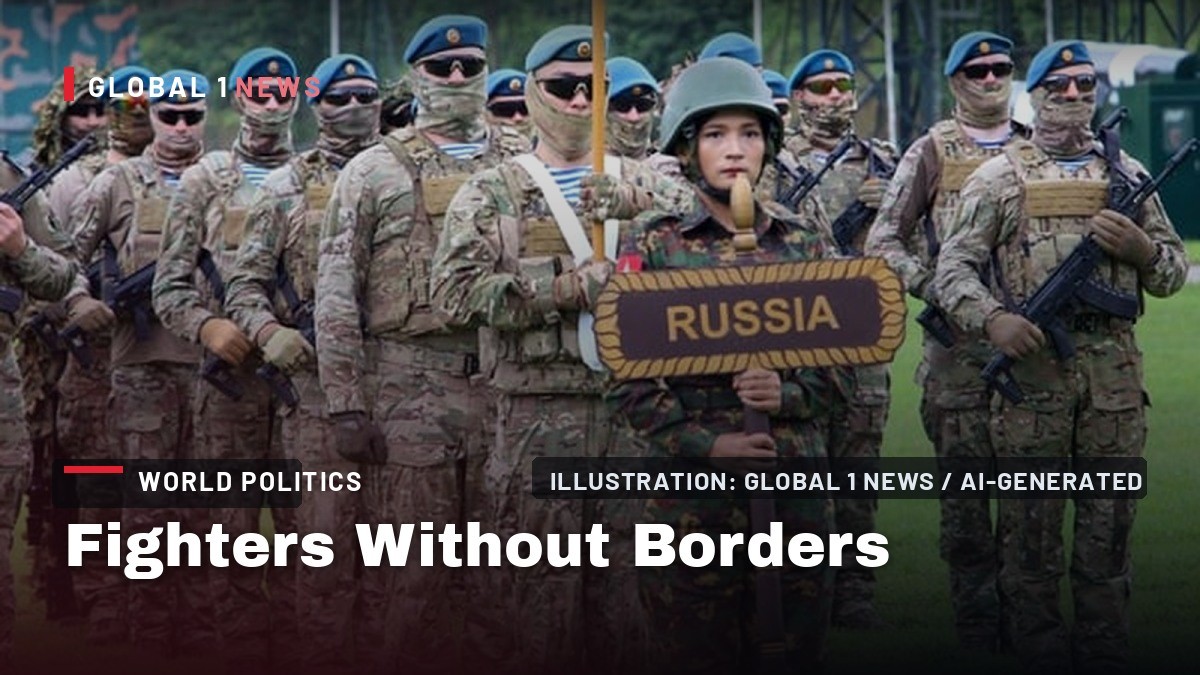
In July 2026 the Myanmar regime released footage of Russian Airborne Forces (VDV) troops training alongside Myanmar soldiers, an event officially designated as the “Tiger‑2026” joint exercise. This development, coupled with President Min Aung Hlaing’s subsequent visit to Moscow and the signing of multiple agreements covering both military and broader economic cooperation, signals a deepening of the Myanmar–Russia partnership. The presence of VDV personnel, unmanned vehicles and Russian military instructors has revived scholarly interest in the historical pattern of foreign combatants in Myanmar’s protracted civil wars, prompting a reassessment of how contemporary Russian involvement fits within a longer continuum of mercenaries, volunteers and ideological adventurers on Burmese soil.
Historical Roots of Foreign Combatants in Burma
The phenomenon of non‑Myanmar fighters on the peninsula predates the nation’s modern foundation. During the early years of the Second World War, American pilots organized as the American Volunteer Group—later mythologized as the “Flying Tigers”—operated from British‑controlled airfields in Burma, providing air defence against Japanese raids on Rangoon. Although these pilots were funded and equipped by the Chinese Nationalist government, their status as volunteers rather than regular troops established an early template for foreign actors engaging in Burmese conflicts.
In the immediate post‑war period, the Chinese Expeditionary Force fought alongside Allied forces in the Burma Campaign, yet because it was a national army, scholars distinguish it from later mercenary incursions. Nonetheless, the presence of foreign military elements continued, as illustrated by reports from the U Nu administration of Republican Chinese and American advisors linked to Kuomintang remnants that had fled into eastern Shan State after being expelled by Mao Zedong’s forces. These Kuomintang units received logistical support from Air America, an airline covertly managed by the United States Central Intelligence Agency, and the U Nu government lodged formal protests at the United Nations over such covert operations.
Cold‑War Ideological Volunteers
The 1960s and 1970s introduced a new class of foreign participants motivated by ideological solidarity rather than financial gain. When the Communist Party of Burma established its Northeastern Military Region in 1968, Chinese volunteers bearing Mao’s “Little Red Book” joined its ranks, embedding a revolutionary ethos within the emerging ethnic armed movements. Scholars at the Asan Institute note that several contemporary northeastern groups—including the United Wa State Army, the National Democratic Alliance Army and the Myanmar National Democratic Alliance Army—trace elements of their political lineage to this Maoist volunteer network.
Simultaneously, the Karen National Union (KNU) under General Saw Bo Mya recruited foreign mercenaries, particularly former members of the French Foreign Legion, to serve as instructors and defensive planners in the 1980s. These Frenchmen contributed to the construction of KNU fortifications along the Thailand–Myanmar border, a fact documented in captured correspondence and personal items recovered by Myanmar military forces. The KDI’s archival research confirms that such foreign expertise was instrumental in enhancing the KNU’s tactical capabilities during that era.
Post‑Cold‑War Continuities and the Rise of Humanitarian Volunteers
Even after the 1990s military offensives that dismantled many border fortifications, foreign fighters continued to appear in Myanmar’s conflict zones. The networks established during the Cold War facilitated the persistence of a borderland marketplace for military services, a trend observed by the Korea Institute for International Economic Policy (KIEP). In the late 1990s and 2000s, reports of foreign combatants—ranging from mercenaries to technical advisors—remained frequent, underscoring the durability of these transnational linkages.
During the same period, a distinct category of foreign participants emerged: humanitarian volunteers. Following a series of missionary trips to Myanmar’s war‑torn borderlands and a 1996 meeting with Aung San Suu Kyi, former U.S. Special Forces officer David Eubank founded the Free Burma Rangers (FBR). Officially a humanitarian organization, the FBR provided medical assistance, training and, at times, armed protection for civilians, operating closely with the KNU and other resistance groups. After the 2021 coup, the FBR’s visibility surged as urban evacuees fled to KNU‑controlled territories, where the group organized resistance training and facilitated the integration of displaced youths into armed units.
The Emergence of Ideologically Driven Internationalists
Recent years have witnessed an influx of volunteers motivated primarily by political conviction rather than remuneration. A notable example is Azad, a U.S. national and former combatant in the Syrian Civil War, who leads the Anti‑Fascist Internationalist Front (AIF) along the India–Myanmar border. Azad’s stated commitment to combating authoritarianism aligns with a broader trend of left‑wing internationalists who view Myanmar’s struggle as part of a global anti‑fascist movement. The AIF claims involvement in combat operations, including sniper and drone warfare, and has publicized a female‑operated drone unit, reflecting a novel gender dynamic within foreign volunteer forces.
These ideological volunteers differ markedly from earlier mercenaries in that their participation is framed as solidarity rather than profit. Nevertheless, their presence adds a new layer of complexity to Myanmar’s conflict ecology, as they bring specialized skills—such as drone operation—that can alter battlefield dynamics. The KDI notes that the integration of such technology, supplied by foreign volunteers, may shift the tactical balance in favor of resistance forces in certain contested regions.
Russia’s Expanding Footprint in 2026
The July 2026 “Tiger‑2026” exercise marks the most overt state‑level military cooperation between Myanmar and a foreign power since the Cold War. Russian VDV troops, unmanned aerial vehicles and military instructors participated alongside Myanmar forces, indicating a transfer of both conventional and asymmetric warfare capabilities. In his meeting with President Vladimir Putin, Min Aung Hlaing described Myanmar as a “reliable partner” of Russia, underscoring the strategic calculus that underpins this partnership.
Beyond the official exercises, there is emerging evidence that Russian “soldiers of fortune” may already be operating alongside Myanmar troops on the ground. While the source material does not provide specific numbers, the presence of Russian instructors and equipment suggests a conduit through which private Russian combatants could be embedded within Myanmar’s military structure. This development raises the prospect of a more direct Russian footprint in the civil war, a scenario that the Ministry of Foreign Affairs (MOFA) of South Korea is monitoring closely given its implications for regional security dynamics.
Implications for Regional Geopolitics and Korean Policy
The renewed Myanmar–Russia nexus must be understood within the broader context of Northeast Asian power competition. South Korea’s Ministry of Education (MOE) has incorporated case studies of foreign mercenary involvement in Myanmar into its curricula on international security, highlighting the risks of external actors exacerbating intra‑state conflicts. Meanwhile, think tanks such as the Asan Institute have warned that Russia’s deepening military ties with Myanmar could provide Moscow with a strategic foothold in Southeast Asia, potentially complicating the security calculations of the United States and its allies.
For Korean policymakers, the Myanmar situation underscores the importance of multilateral engagement through platforms like the ASEAN Regional Forum and the United Nations. The historical pattern of foreign volunteers—ranging from the Flying Tigers to contemporary AIF members—demonstrates how external actors can both empower resistance movements and entrench authoritarian regimes, depending on the nature of their involvement. Accordingly, Seoul’s diplomatic strategy must balance condemnation of mercenary activity with support for humanitarian initiatives, such as those championed by the Free Burma Rangers, which align with Korea’s broader commitment to human rights and conflict‑affected populations.
Future Trajectories and Scholarly Outlook
Looking ahead, the convergence of state‑level cooperation (as exemplified by Tiger‑2026) and the proliferation of ideologically motivated volunteers suggests a multifaceted evolution of foreign participation in Myanmar’s civil war. If Russian military assistance expands, we may witness an escalation in the sophistication of Myanmar’s conventional capabilities, potentially altering the balance of power between the Tatmadaw and ethnic armed groups. Conversely, the growing presence of internationalist volunteers equipped with drones and other asymmetric tools could amplify the tactical effectiveness of resistance forces, especially in border regions where terrain favors guerrilla operations.
For scholars of Korean diplomacy and regional security, the Myanmar case offers a fertile laboratory to examine how external military partnerships intersect with non‑state actor dynamics. Ongoing monitoring by ministries such as MOFA and research institutions like KDI will be essential to assess the impact of these developments on broader Northeast Asian stability. As the conflict continues to attract a diverse array of foreign participants, the historical continuum—from the Flying Tigers to today’s Russian instructors—reminds us that Myanmar’s civil war remains a magnet for those seeking adventure, profit or ideological purpose, and that each new wave of involvement reshapes the geopolitical calculus of the region.
This article was produced with AI-assisted research and editorial support. Reporting is based on the source material cited below. Sources: The Diplomat; thediplomat.com; Global1.News (16 September 2026).
By Prof. David Park, Staff Writer
What's Your Reaction?
 Like
0
Like
0
 Dislike
0
Dislike
0
 Love
0
Love
0
 Funny
0
Funny
0
 Wow
0
Wow
0
 Sad
0
Sad
0
 Angry
0
Angry
0

East Asia/Technology Correspondent at Global1.News. Seoul-based voice covering Korean politics, technology, business, and culture. Analyzes how technology and geopolitics intersect across East Asia.












Comments (0)