
Europe's First Arctic Summit Names Russia — and Moscow Answers With Flares
Twelve European governments signed a joint statement at the first European Arctic Summit in Rovaniemi, Finland, naming Russia a long-term Arctic threat. The same day, a Russian frigate fired two flares at a Danish air force helicopter over the Baltic.
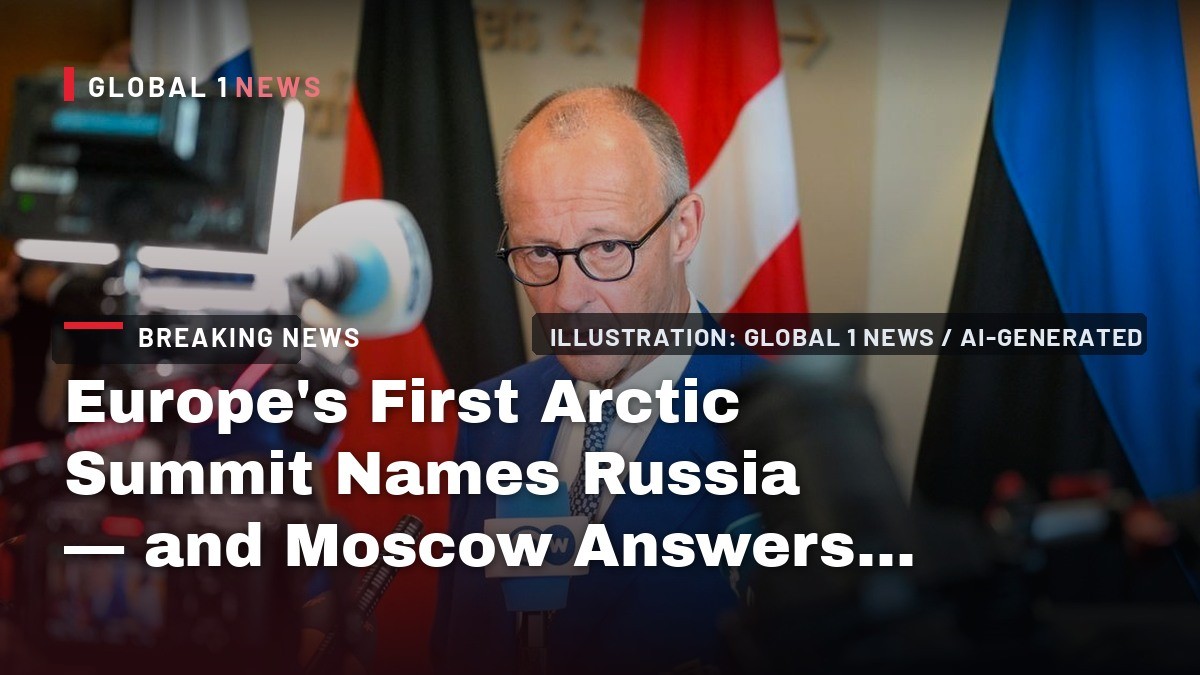
Twelve European governments have signed a single sentence about the Arctic, and Moscow answered it the same day with two flares fired at a Danish helicopter over the Baltic Sea.
The European Arctic Summit in Rovaniemi, Finland — the first of its kind — closed on Monday 14 September 2026 with a joint statement from twelve countries demanding a bigger, harder European role in the High North. No treaty was signed and no deployment was ordered. But a bloc that spent three decades treating the Arctic as a science project has now named Russia as the threat on its own border.
Europe's First Arctic Summit Names Russia — and Moscow Answers With Flares
Rovaniemi, Finland — The two-day meeting, held on 13 and 14 September and hosted by Finnish Prime Minister Petteri Orpo, brought the leaders of more than ten EU member states to a city better known for its Santa Claus village.
A First, Held Against Autumn Foliage in Lapland
German Chancellor Friedrich Merz and Danish Prime Minister Mette Frederiksen attended, alongside Estonian Prime Minister Kristen Michal, Latvian Prime Minister Andris Kulbergs, Lithuanian President Gitanas Nausėda, Romanian President Nicușor Dan and French Foreign Minister Jean-Noël Barrot. European Council President António Costa, EU foreign policy chief Kaja Kallas and Commissioner Jozef Síkela joined them. Greece, the Netherlands, Poland and Sweden signed the statement without sending a head of government.
Twelve countries put their names to the document: Finland, Denmark, Estonia, France, Greece, Germany, Latvia, Lithuania, the Netherlands, Poland, Romania and Sweden. Of the EU's 27 members, only three sit inside the Arctic — and Finland and Sweden joined NATO only in 2023 and 2024. Twelve states signed up to a policy for a region almost none of them occupy.
What the Twelve Actually Signed
The statement describes a region in motion. "The Arctic is undergoing rapid and far-reaching transformation, with growing implications for European security and stability," it reads. It then draws a line that matters legally as well as politically: "The European Arctic areas are an integral part of the European Union, encompassing both land and maritime areas, and including a long external EU border with Russia. Security in the Arctic must be achieved collectively."
The operative paragraph is blunter. "We note with serious concern the significant and long-term threat Russia poses to Euro-Atlantic security. Russia's ambitions to increase its influence in the Arctic, combined with its hostility towards Europe, including the increase in hybrid activities highlight the need to strengthen the EU's Arctic policy."
"We call for the European Union to take on a more strategic and proactive role in the European Arctic," the leaders wrote. Costa reduced it to one line for the cameras: "What happens here is not a regional story. It is a European one." Orpo closed the summit by saying the main message was "a high demand for concrete action by the EU in the Arctic."
Kallas Wants Icebreakers
Asked what the EU actually needs, Kallas named hardware. "Given the situation that we are in, and considering climate change and the opening of maritime routes, we need icebreakers or ships that are able to navigate in these very difficult conditions," she told reporters at the Arktikum science centre.
It was not immediately clear whether she was proposing joint acquisition or urging member states to build their own capacity. The idea has a history: in January, European Commission President Ursula von der Leyen suggested the EU could direct part of its surging defence spending towards a "European icebreaker capability," traditionally classified as a civilian capability. The statement also flagged satellite launching, critical infrastructure, military mobility and the extraction of critical minerals, and committed to strengthening maritime domain awareness using EU space-based assets.
Merz, Costa and the Case for the North
Merz called the region a "geopolitical hotspot," argued that Russia is expanding its military capabilities there, and pressed for the Arctic to move up the EU's agenda on economic grounds as well — raw materials, energy and shipping. He also insisted the conversation cannot be a purely European one, naming Iceland, Norway, Britain and Canada as parties who had to be in the room. Costa said the EU would remain a reliable, long-term partner to all Arctic allies, European and non-European alike.
Michal was the most direct about why a Baltic state cares about a polar ocean. Security in the Baltic Sea and the Arctic, he said, is "one and the same" for Tallinn.
The backdrop was not abstract. The summit followed Norway's seizure earlier this month of a Russian vessel in the Svalbard archipelago at Ukraine's request — a move that drew condemnation from President Vladimir Putin. The Centres for European Policy Network, a think tank, called the setting "extremely dynamic," pointing to accelerating climate change, China's growing trade through the Arctic, and the conflict around the Strait of Hormuz, which has raised the value of the Northeast Passage as a shipping lane.
Two Flares Off Gedser, the Same Day
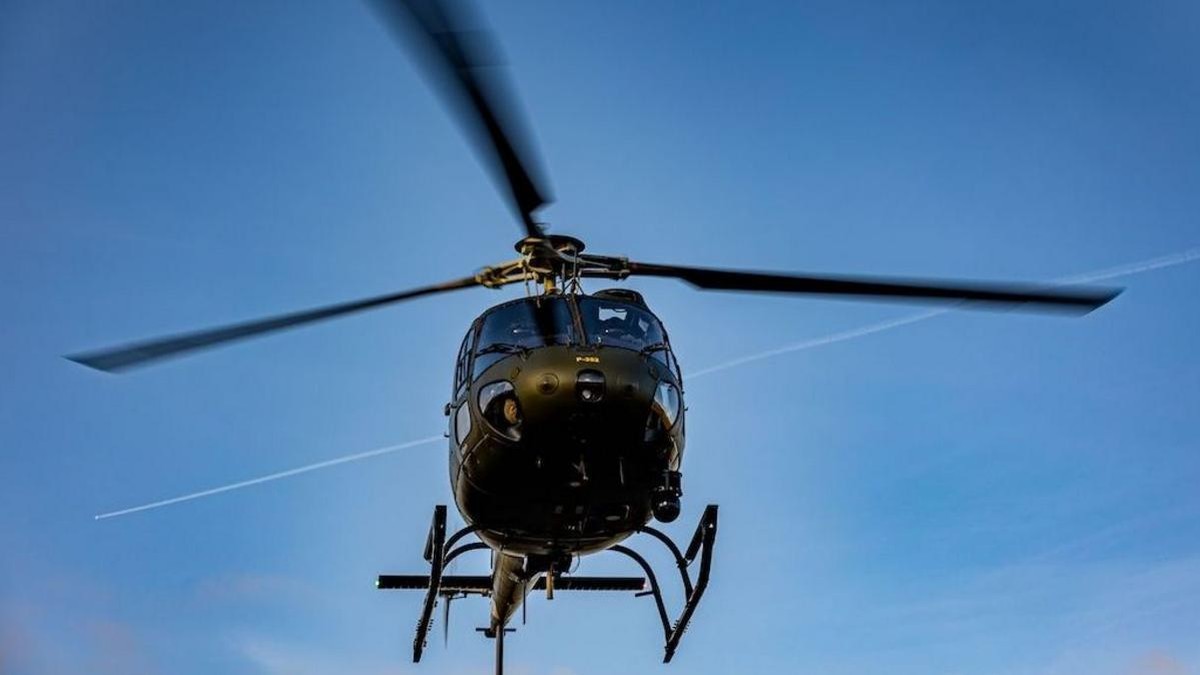
On the day the leaders were signing, the Royal Danish Air Force was flying a routine photographic mission over the Baltic. According to the Danish armed forces, "one of the air force's Fennec helicopters was today fired at with flares during a routine photographic operation of a Russian frigate, which was located in international waters off Gedser." Gedser sits at the southern tip of the Danish island of Falster, at the mouth of the Danish straits. One of the two flares passed close to the helicopter.
Nobody was hurt and the aircraft was undamaged. Copenhagen summoned the Russian ambassador anyway, and the foreign ministry called the incident "completely unacceptable." Frederiksen branded the action "reckless" and said it was designed to "intimidate and divide." Foreign Minister Lars Løkke Rasmussen accused Russia of "gradually shifting the boundary for what they consider acceptable behaviour. That is something we cannot accept." Moscow has not commented on the incident; the Russian ambassador instead accused the Danish helicopter of provoking the frigate and warned Copenhagen against "reckless" action.
The Baltic was not the only flashpoint that night. Overnight into Tuesday, NATO fighter pilots shot down a drone that entered Lithuanian airspace. Authorities said it most likely crossed from neighbouring Belarus into southern Lithuania, near Kaunas, shortly after midnight. President Gitanas Nausėda wrote on X that "with Russia intensifying its aggression against Ukraine, such readiness is vital for our region."
400 Troops at Narsarsuaq
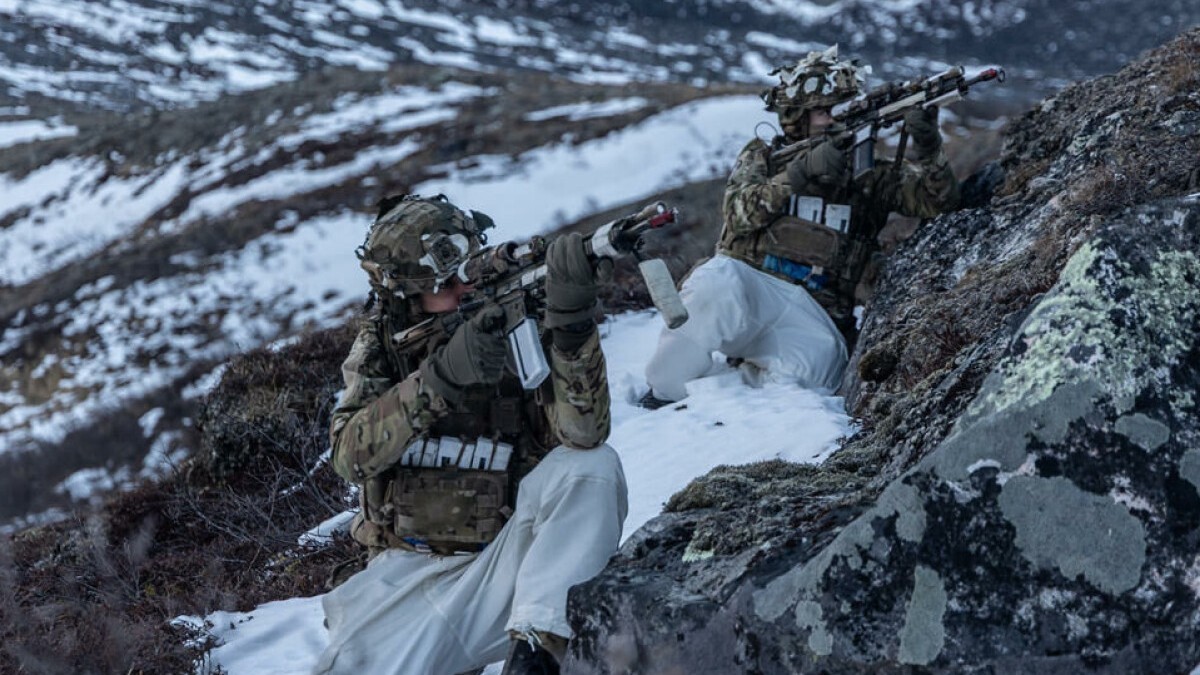
North-west of the summit hall, NATO is already rehearsing the scenario. Exercise Arctic Shield 2026 runs in southern Greenland and around Kangerlussuaq from 7 to 18 September — a Danish-led, multi-domain activity involving around 400 soldiers, sailors and airmen from roughly ten NATO nations in the area around the village of Narsarsuaq.
The Danish Armed Forces say it includes French infantry, units from the Danish, Swedish and Norwegian Home Guards, a Belgian drone unit and special operations forces from Finland and Denmark, with observer teams from Poland and Slovenia and German observers plus logistical support. Dutch marines are training separately in the fjord system around Kangerlussuaq, north of the Arctic Circle. Air operations over Iceland, Greenland and Canada are running alongside, with Canadian, American and Danish fighter jets operating together.
Arctic Shield sits inside NATO's wider Arctic Sentry activity and inside Denmark's Arctic Endurance framework, conducted in close coordination with Greenland's government, Naalakkersuisut. The Danish Armed Forces have said plainly that there will be an increased military presence in and around Greenland in the coming period — aircraft, ships and troops. Søren Andersen, head of Denmark's Arctic Command, told the Danish news agency Ritzau why: "If one is to be able to operate in the Arctic, one has to train up here." His framing goes further than one exercise. "For us, it is about helping to transform NATO's northern flank into a hard target. Meaning all the way from Alaska across Canada, Greenland, and to the northern part of Norway."
The Working Group Nobody Will Discuss
The most consequential thing said in Rovaniemi may have been said quietly. Frederiksen confirmed that a high-level working group on closer cooperation on security and defence — including Greenland — is running. "The working group is still working, and therefore it's too early to draw any conclusions," she said. "But I'm quite optimistic that we can find a way, and I think we already now see some very clear signs and signals." Her hope, she added, is that Washington and Copenhagen "find a way forward peacefully."
The group is trilateral — Denmark, the United States and Greenland — and was set up after a January visit to Washington by Danish Foreign Minister Lars Løkke Rasmussen and Greenland's then-foreign minister, Vivian Motzfeldt, who met Vice President JD Vance and Secretary of State Marco Rubio. Its work has largely stayed out of public view, even as President Donald Trump's demands for US control of Greenland triggered a crisis in transatlantic relations this year. Trump argued that fellow NATO member Denmark could not defend the island; he later ruled out taking it by force.
Frederiksen said Greenland has been under "big pressure" and thanked European partners for their "broad, strong support." She also drew the contrast with her own early years in office: "When I became prime minister of Denmark, the Arctic region was not really on the agenda in the European Union, neither in NATO." Defence Minister Jeppe Bruus declined to discuss the substance during a visit to Narsarsuaq last week. "I cannot comment on that," he told Ritzau. "What goes on in that working group, goes on in that working group."
Narsarsuaq and the GIUK Gap
What Bruus would not discuss is not hard to infer from geography. Narsarsuaq, in southern Greenland, would be an obvious location for a larger American presence. Denmark's Chief of Defence, Michael Hyldgaard, has said as much, pointing to its position on transatlantic routes, its access to the Denmark Strait and its proximity to the GIUK gap — the corridor between Greenland, Iceland and the United Kingdom where NATO watches for Russian submarines heading into the Atlantic.
There is precedent. The United States operated a base at Narsarsuaq from July 1941 to November 1958. The New York Times reported in the spring, citing American sources, that Washington wants three bases in Greenland as part of any agreement, with Narsarsuaq and Kangerlussuaq among the possible locations. Bruus has said the government wants to extend the operating period of Narsarsuaq Airport by one year if it wins support from the Folketing. "Initially, it is a one-year extension," he said. "That gives us the opportunity to extend the playing board."
What Moscow Says
Russia's position is that it is the one being encircled. Foreign Minister Sergey Lavrov said last month that NATO was trying to turn the Arctic into a new front against Russia and its partners, that the risk of incidents was rising, and that it could lead to an armed confrontation with "potentially catastrophic consequences." Moscow maintains that it does not threaten NATO states and remains open to Arctic cooperation.
Russian analysts read the Rovaniemi statement as a change of register. Irina Strelnikova, director of the Center for Interdisciplinary Arctic Studies at the Higher School of Economics in Moscow, said European Arctic policy had been "largely devoted to fairly constructive issues: science, climate, and cooperation." Now, she said, "climate, science, and cooperation have effectively been pushed down to the fourth tier of priorities. Security has moved to the forefront." Her worst case would be "the inclusion of military mobility and EU-NATO coordination directly in the EU's new documents and emerging Arctic strategy."
What Happens Next
No formal decisions were taken in Rovaniemi. That is the honest read of the summit. The European Commission is expected to present a new Arctic strategy within weeks, and the Centres for European Policy Network called the meeting a "dress rehearsal" for a revamp that will put security at the centre of EU Arctic policy for the first time.
The twelve signatories also welcomed the 200-million-euro EU-Greenland partnership package — roughly $232 million — announced by von der Leyen during a visit to Greenland on 7 September, accompanied by Frederiksen, when she vowed to "be more present and to be more engaged in Greenland and in the Arctic." Some of that money, and most of that attention, is aimed at Washington as much as at Moscow: NATO launched its Arctic mission in what Agence France-Presse described as an apparent move to assuage Trump.
Three things are now true at once. The EU has declared the Arctic a security theatre rather than a science one. The trilateral working group on Greenland's future is meeting in private while a US president's interest in the island stays on the record. And a Russian frigate fired two flares at a Danish helicopter at the mouth of the Baltic on the very day twelve European governments put their names to a document about standing firm.
The strategy document lands within weeks. The flares landed on Monday.
By Jessica Ali, Staff Writer
This article was produced with AI-assisted research and editorial support. Sources: Associated Press, Reuters, Agence France-Presse, BBC, Al Jazeera, Finnish Government, Danish Armed Forces, High North News, Copenhagen Post, Anadolu Agency, Ukrainska Pravda, RT.
What's Your Reaction?
 Like
0
Like
0
 Dislike
0
Dislike
0
 Love
0
Love
0
 Funny
0
Funny
0
 Wow
0
Wow
0
 Sad
0
Sad
0
 Angry
0
Angry
0

Editor-in-Chief at Global1.News. Atlanta-based journalist who cuts through the BS and tells it like it is. Lead anchor, host, and the voice you hear when the spin stops and the truth starts.










Comments (0)