
Esports World Cup 2026: AG.AL Dethrone Falcons in Paris as Macron and MBS Look On
The Esports World Cup 2026 concluded in Paris with Macron and MBS in attendance. AG.AL won the Club Championship, unseating Team Falcons. Record $75M prize pool and 850M viewers signal esports' global rise, with major implications for South Africa's esports ecosystem.
The world's biggest esports stage just got a Parisian makeover, and the aftershocks are being felt from the Champs-Élysées all the way to Johannesburg. The Esports World Cup 2026 wrapped up this weekend with a closing ceremony at the iconic Grand Palais, attended by French President Emmanuel Macron and Saudi Crown Prince Mohammed bin Salman. This wasn't just a trophy handover; it was a geopolitical handshake, a record-breaking spectacle, and a massive signal for the future of competitive gaming on the African continent.
Esports World Cup 2026: Paris Closing Ceremony Sees Macron and MBS Unite as AG.AL Dethrones Falcons
Paris, France – August 24, 2026 — The third edition of the Esports World Cup (EWC) concluded in spectacular fashion on Sunday, marking the first time the tournament has been held outside Saudi Arabia. With a record $75 million prize pool on the line, the event drew over 2,000 players from 200 clubs and more than 100 countries, culminating in a closing ceremony that doubled as the launchpad for Crown Prince Mohammed bin Salman's two-day state visit to France. The atmosphere at the Grand Palais was electric, a fitting end to a seven-week festival that has redefined the global esports calendar.
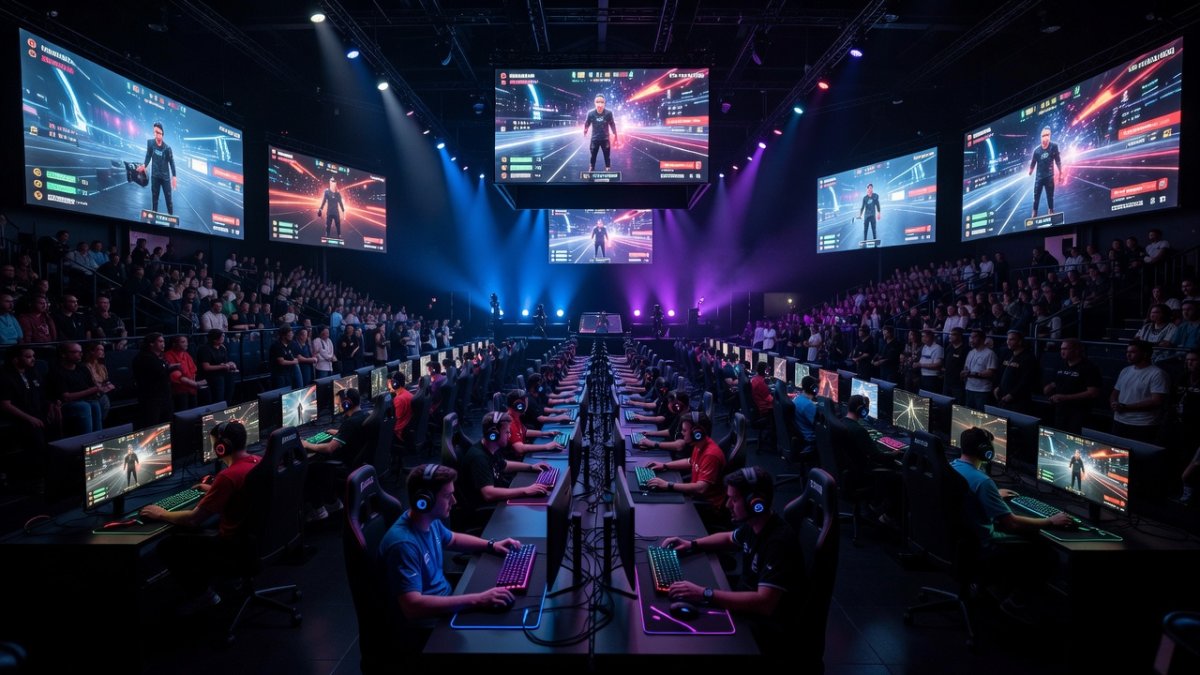
AG.AL's Historic Club Championship Triumph
The headline sporting story of the night was the crowning of a new Club Champion. AG.AL (All Gamers / AG.AL Esports International), the Chinese-led organisation with divisions spanning All Gamers, All Combo and Anyone's Legend, clinched the coveted title with a commanding 5,300 points. Their reward? A staggering $7 million top prize from the $30 million allocated to the top 24 clubs in the Club Championship. This was a seismic shift in the esports hierarchy, as AG.AL unseated the two-time defending champions, Team Falcons, who had to settle for second place with 4,600 points. Team Vitality rounded out the podium in third, proving that European organisations can still mix it with the global superpowers.
The tournament, which ran from 2 July to 23 August, was a marathon of skill and endurance. Venues across Paris, including the Paris Expo Porte de Versailles and the 20,000-seat Accor Arena (which hosted the CS2 final), saw 175,000 esports tickets sold—a phenomenal 94% increase on the 2025 edition. When you factor in the Fan Fest and city-wide activations, total visits crossed the 2 million mark. This wasn't just a tournament; it was a cultural takeover of the French capital.
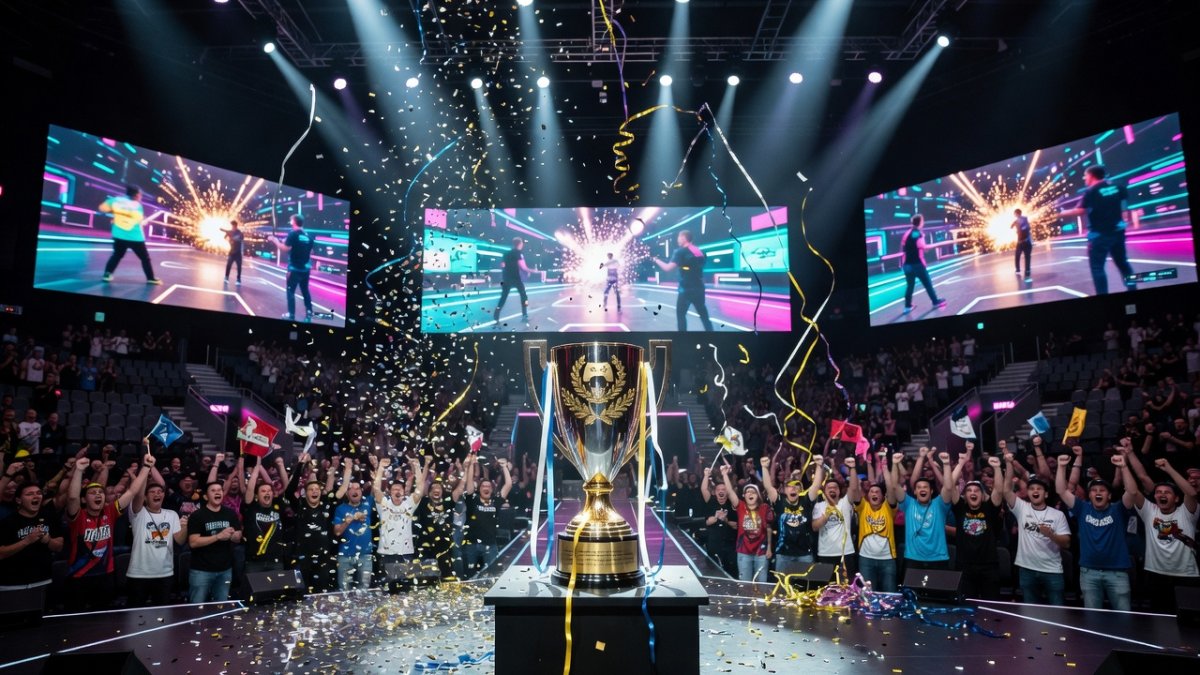
Why Paris? The Geopolitical Shift Behind the Games
Understanding why the EWC landed in Paris requires looking beyond the leaderboards. The tournament was originally slated for Riyadh, Saudi Arabia, the host of the 2024 and 2025 editions. However, in May 2026, the Esports Foundation—the nonprofit funded by Saudi Arabia's Public Investment Fund—made the unprecedented call to relocate. The catalyst was the 2026 Iran war, which saw Iran and its allies attack Saudi infrastructure. The conflict had already forced the cancellation of the Saudi Arabian Grand Prix in Formula One back in April, and the security concerns made hosting a 2,000-player international event in the Kingdom untenable.
This context made the presence of Crown Prince Mohammed bin Salman at the closing ceremony all the more significant. It was his first international trip since the signing of the Mecca Joint Defence Agreement with Turkiye and Pakistan on August 7. His attendance alongside President Macron was a powerful visual statement of Franco-Saudi solidarity. The two leaders are expected to sign agreements on Monday covering health, transport and energy, with talks also touching on the Iran war, Palestine, Syria, Lebanon, Expo 2030 and the 2034 football World Cup in Saudi Arabia. There's even talk of a Dragon Ball-themed amusement park backed by a Saudi investment fund, which Valerie Pecresse, President of the Regional Council of Île-de-France, described as being "on the scale of Disneyland."
Record Viewership and a $75 Million Statement
For South African fans watching from home, the numbers coming out of Paris are nothing short of breathtaking. The EWC 2026 pulled in 850 million viewers and 440 million hours watched, representing year-on-year increases of 13% and 26% respectively. This content was distributed through over 100 broadcast and OTT partners in 47 languages, making it one of the most accessible global sporting events in history. The $75 million prize pool, up from $71.5 million in 2025, is a clear message: esports is no longer a niche hobby; it is a serious, capital-intensive industry that demands attention.
The game lineup was as diverse as the global audience. From the debut of Trackmania to the return of Fortnite in its Reload mode, the EWC covered the spectrum. Titles like Call of Duty: Black Ops 7, EA Sports FC 26, VALORANT, League of Legends, CS2, Tekken 8 and Street Fighter 6 all had their moments in the spotlight. Notably, Mobile Legends: Bang Bang was the only game with two events, a testament to its massive popularity in emerging markets, particularly across Southeast Asia and Africa. The decision to drop StarCraft II and Rennsport from the main lineup shows the Esports Foundation is willing to adapt its portfolio to match global viewing trends.
The South African Perspective: A Wake-Up Call for MSSA and Local Talent
For South Africa, the EWC 2026 is more than just a spectacle to admire from afar; it's a blueprint for the future. Mind Sports South Africa (MSSA) has been working diligently with SASCOC to integrate esports more formally into national sporting structures, and events like this provide the ultimate validation for those efforts. The Confederation of African Esports (CAES) is watching closely, and the success of Mobile Legends: Bang Bang at the EWC is a direct nod to the gaming habits of millions of Africans who play on mobile devices due to data costs and hardware accessibility.
The record viewership and prize money signal a clear opportunity for South African players, coaches and broadcasters. Local brands like Nedbank have already highlighted esports as a rising sector, and university programmes, such as the research partnerships with Tshwane University, are building the academic backbone for the industry. The question is no longer whether esports will be big in South Africa, but whether we will be ready to compete on the world stage when the next opportunity arises. The infrastructure, the talent and the passion exist; what's needed is the investment and structural support to bridge the gap between local leagues and the global arena.
What to Watch For: The Road to Riyadh and Beyond
With the Paris chapter closed, all eyes now turn to the future. The Esports Foundation has proven it can pivot and deliver a world-class event under challenging geopolitical circumstances. The question of where the 2027 edition will be held remains open, but the strong ties between France and Saudi Arabia—cemented by this state visit—suggest a potential rotation model or a return to Riyadh once the security situation stabilises. For South African esports fans, the immediate focus should be on how MSSA and CAES leverage this momentum to secure more African representation in future EWC events.
The 2034 football World Cup in Saudi Arabia is on the horizon, and the Kingdom's investment in esports is clearly part of a broader strategy to position itself as a global sporting hub. For South Africa, the lesson from Paris is clear: esports is a unifier, an economic driver, and a platform for national pride. The 850 million viewers who tuned into the EWC are proof that the world is watching. The only question is whether South Africa will be on the stage or in the stands when the next chapter is written.
The closing ceremony in Paris was a moment of convergence—sport, politics and culture colliding in a spectacular display of what the future holds. For the young gamer in Soweto or Cape Town, the message is simple: the path from a local internet café to the Grand Palais is long, but it is now undeniably real. The Esports World Cup has set the standard, and the world is playing catch-up.
By Dante Williams, Staff Writer
This article was produced with AI-assisted research and editorial support. Sources: Al Jazeera English, Wikipedia, TalkEsport, Dot Esports.
What's Your Reaction?
 Like
0
Like
0
 Dislike
0
Dislike
0
 Love
0
Love
0
 Funny
0
Funny
0
 Wow
0
Wow
0
 Sad
0
Sad
0
 Angry
0
Angry
0

Breaking News and Investigations Correspondent at Global1.News. Based in London, covering global breaking news, security, and investigative stories. Known for digging deeper and connecting the dots across continents.









Comments (0)