
England and Wales Suffer Driest July on Record
England and Wales have recorded their driest July since official measurements began in 1836, with southern England posting its driest month of any kind in the entire series. Provisional Met Office figures show England received just 6.5mm of rain, ten per cent of the long-term average, while.
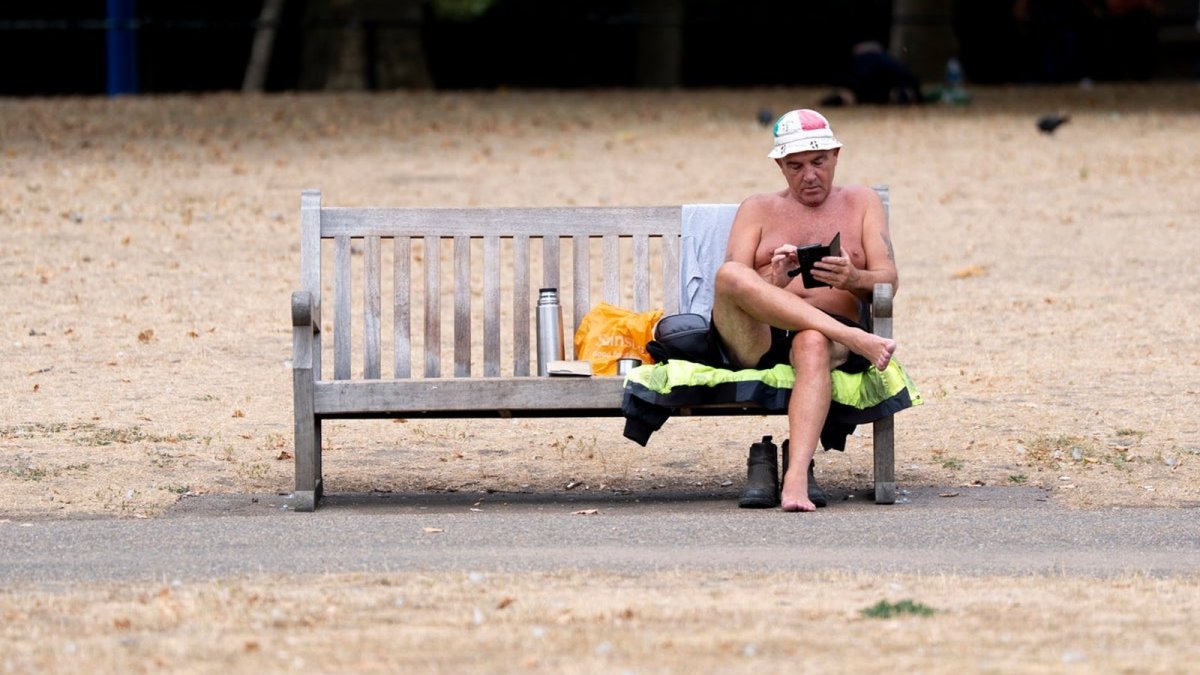
England and Wales have recorded their driest July since official measurements began in 1836, with southern England posting its driest month of any kind in the entire series. Provisional Met Office figures show England received just 6.5mm of rain, ten per cent of the long-term average, while Wales recorded 9.3mm, nine per cent of average. Nineteen counties registered one millimetre or less for the entire month.
Record Dryness and Sunshine Hours
Provisional Met Office statistics drawn from the HadUK-Grid dataset show England's 6.5mm was less than half the previous July low of 13.4mm set in 1911, while Wales's 9.3mm sat well below the 22.6mm benchmark from the same year. Among the nineteen counties registering one millimetre or less across the entire month were Dorset, East Sussex, Gloucestershire, Herefordshire, Leicestershire, Lincolnshire, Northamptonshire, Nottinghamshire, Rutland, Surrey, Warwickshire and West Sussex.
Both nations also posted their sunniest calendar month on record. England accumulated 305.6 hours of sunshine while Wales reached 308.0 hours, eclipsing earlier July marks. Wales simultaneously equalled its highest mean temperature for July at 17.8C, matching the 2006 figure, and England posted its second-warmest July at 19.2C. These extremes occurred against a backdrop of back-to-back heatwaves that pushed daily maximum temperatures to new July highs for Wales and the second-highest for England.
The Met Office has noted that such extreme conditions are becoming the new norm, with six consecutive months of above-average temperatures recorded so far in 2026.
Southern England measured only 1.9mm — the lowest total for any calendar month since records began, surpassing the previous benchmark of 2.0mm set in February 1891. The UK as a whole recorded its third-driest July with 28.9mm, the lowest figure for the month since 1868.
Drought Status Across Regions
All of Wales and half of England now sit in official drought, according to the Environment Agency’s National Drought Group. Northern Ireland recorded its eighth driest July with 26.9mm, thirty per cent of average, while Scotland received sixty-nine per cent of its usual rainfall and avoided new records. The combination of depleted reservoirs and elevated demand has placed simultaneous pressure on household supplies, agricultural irrigation and wildlife habitats across the affected regions.
Environment Agency Director of Water Helen Wakeham emphasised that hot weather increases consumption while dry conditions reduce availability, creating a difficult combination for farmers, wildlife and public supplies. The agency has thanked the public for observing restrictions where imposed and stressed that every drop saved supports nature and agriculture during the current period of strain.
Regional disparities remain stark. Yorkshire reservoirs stood at approximately 55.8 per cent of capacity by late June, while national English storage averaged 87.5 per cent of the long-term figure. The south-east and Yorkshire face the greatest stress, whereas the north-west, south-west and parts of Wales retain more comfortable levels despite the broader pattern of reduced rainfall.
Nine Hosepipe Bans Now Active
Nine Temporary Use Bans now cover England and Wales, the widest extent since 2022. Essex and Suffolk Water introduced its first restrictions since 1997 at midnight on 3 August, while Thames Water’s measures, affecting around fifteen million customers across London, the Thames Valley and the Home Counties, began on 23 July. South East Water imposed limits from 25 July across Kent, Sussex, Surrey, Hampshire and Berkshire, marking the first such action in those areas for fourteen years.
Anglian Water’s ban, covering more than five million customers in Norfolk, Suffolk, Lincolnshire, Cambridgeshire, Nottinghamshire, Northamptonshire and Bedfordshire, started on 11 July. Southern Water restricted supplies for around one million customers in Hampshire and the Isle of Wight from 10 July, and Welsh Water introduced limits in west Wales from 19 July. Affinity Water and Cambridge Water also activated measures in July, bringing the total population under restrictions to more than twenty million.
Breaches of the bans carry fines of up to one thousand pounds. Peak demand during the preceding June heatwave reached 687 million litres in one day in Kent, roughly one hundred million litres above the monthly daily average, while Thames Water recorded a fifty per cent rise in demand across its supply area. Yorkshire Water has confirmed it will not introduce restrictions at present.
Farmers Face Crop Losses and Rising Costs
NFU president Tom Bradshaw has warned that wheat and oat yields are very poor and that some vegetable producers are already scaling back output because of water shortages. Livestock farmers have turned to winter feed rations after grass failed to grow, while the Agriculture and Horticulture Development Board recorded the earliest harvest since its monitoring began in 2006. Areas without rain for more than a month have compounded the difficulties for crops already stressed by earlier winter flooding that hindered planting.
Bradshaw stated that water security must be recognised as a critical component of food security and national security. He urged greater government investment in reservoirs and called for tax incentives to encourage on-farm winter storage, arguing that too much rainfall is currently allowed to flow into the North Sea. The third drought in five years, he noted, indicates a structural challenge rather than an isolated event.
Bradshaw further cautioned that Britain could face shortages of certain food products later in the year if conditions persist, and that reliance on imports from countries also experiencing changing climates adds further risk. He urged Prime Minister Andy Burnham to prioritise domestic food production as part of a broader growth strategy, warning that the sector has been taken for granted for too long.
Met Office and Agency Assessments
Met Office Science Manager Dr Amy Doherty described July 2026 as one of the most notable summer months in the historical record, combining record dryness, exceptional warmth and unprecedented sunshine. The month followed an already exceptional June, when temperatures peaked at 37.7C at Lingwood in Norfolk on 26 June — the highest June temperature ever recorded in England, with the previous record of 35.6C broken on three consecutive days.
Environment Agency Director of Water Helen Wakeham noted that hot weather increases consumption while dry conditions reduce availability, creating a difficult combination for farmers, wildlife and public supplies. The agency has thanked the public for observing restrictions and stressed that every drop saved supports nature and agriculture. UKHSA has issued amber heat-health alerts for the East Midlands, east of England, south-east and London, with yellow alerts covering further regions as temperatures again exceed thirty degrees in places. The dry conditions have also fuelled wildfires, most recently in Suffolk.
Longer-term Infrastructure Questions
Bradshaw emphasised that repeated droughts in five years point to a structural challenge for British agriculture. He argued that greater investment in reservoirs and winter storage is essential if domestic food production is to remain secure, warning that the sector has been taken for granted for too long. The Met Office has stated that such extreme conditions are becoming the new norm.
The infrastructure questions extend beyond farming. Anglian Water described its decision to impose the East of England's most extensive ban in recent memory as very difficult but necessary, citing the region's status as structurally the driest in England and the strain on chalk streams and groundwater aquifers. Industry analysts note that the current restrictions are company-level responses to local supply triggers rather than a signal of national reservoir failure, with the north-west, south-west and much of Wales remaining comparatively comfortable. The pattern nonetheless underlines the need for coordinated action across water companies, the Environment Agency and devolved administrations to safeguard supplies for households, businesses and the countryside.
By Erica Thornton, Staff Writer
This article was produced with AI-assisted research and editorial support. Reporting is based on sources cited in the article.
What's Your Reaction?
 Like
0
Like
0
 Dislike
0
Dislike
0
 Love
0
Love
0
 Funny
0
Funny
0
 Wow
0
Wow
0
 Sad
0
Sad
0
 Angry
0
Angry
0

US Politics and Policy Correspondent at Global1.News. Based in Washington DC, covering American politics, policy, elections, and the courts. Knows how the system works and tells you what it actually means.













Comments (0)