
Egypt Cry Foul: FIFA Complaint Filed Over Referee After World Cup Exit to Argentina
The roar of 70,000 fans inside Atlanta Stadium had barely subsided when the real storm broke. Egypt didn't just lose a World Cup Round of 16 tie on Tuesday July 7 — they lost their cool, their composure, and ultimately their trust in the game's governing body.
The roar of 70,000 fans inside Atlanta Stadium had barely subsided when the real storm broke. Egypt didn't just lose a World Cup Round of 16 tie on Tuesday July 7 — they lost their cool, their composure, and ultimately their trust in the game's governing body. The Egyptian Football Association (EFA) has filed a formal complaint with FIFA demanding an investigation into French referee Francois Letexier, and the fallout from this 3-2 defeat to Argentina is threatening to overshadow the tournament itself. This isn't just another African team crying foul after a heartbreaking exit; this is a formal accusation of a rigged game, and it has sent shockwaves through the global football community.
Egypt Cry Foul After Controversial World Cup Exit to Argentina
Atlanta, United States — Egypt's complaint is not just about one match. It is about the treatment of African teams on the world stage, the consistency of VAR, and the trust that players, coaches and fans place in the officials who decide the fate of tournaments. What happened in Atlanta on Tuesday night has become a test case for the integrity of the world's biggest sporting event.
How the Match Unfolded
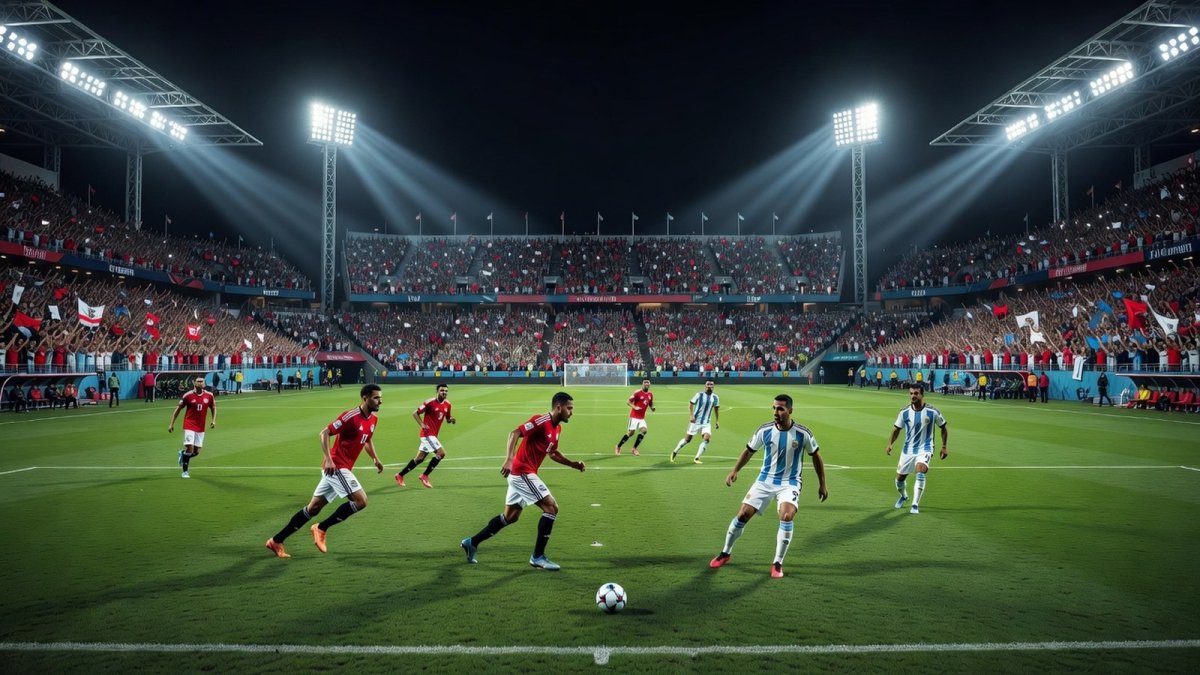
For 79 minutes, Egypt were the better team. They were tactically disciplined, physically imposing, and clinically efficient. Yasser Ibrahim rose highest to head home from a corner in the 15th minute, silencing the pro-Argentina crowd and giving Egypt a lead they thoroughly deserved. When Mostafa Zico doubled the advantage in the 67th minute with a stunning strike, the dream of a first-ever World Cup quarter-final for an African nation was tantalisingly close.
Argentina, for all their star power, looked rattled. Lionel Messi, chasing yet another piece of history, had already seen a first-half penalty saved by Egypt's goalkeeper — a moment that seemed to drain the life out of the Albiceleste. But champions find a way, and Argentina are nothing if not champions. Cristian Romero powered a header home from a Messi cross in the 79th minute, and suddenly the momentum shifted. Four minutes later, Messi produced a moment of pure genius to level the scores, his 8th goal of the tournament making him the first player in World Cup history to score in six consecutive knockout matches. The comeback was complete when Enzo Fernandez smashed home a late winner, sending Argentina into a quarter-final against Switzerland and leaving Egypt's players collapsed on the Atlanta turf in disbelief.
But the scoreline tells only half the story. The manner of the defeat, the officiating decisions that preceded it, and the simmering anger that boiled over at the final whistle have turned this match from a sporting contest into a diplomatic incident.
The Refereeing Flashpoints
Egypt's complaint centres on three specific incidents, each of which they believe changed the course of the match. The first came when a legitimate-looking Egypt goal was disallowed after a VAR review. The officials ruled that a foul had been committed on Lisandro Martinez in the build-up — a decision that Egypt's coaching staff and players vehemently dispute. Replays showed minimal contact, and the inconsistency of the decision left the Egyptian bench incandescent.
The second flashpoint was arguably even more damaging. With the score at 2-2 and Egypt pushing for a winner, Mohamed Salah was brought down in the box by Julian Alvarez. The contact was clear, the penalty appeal was loud, and yet the referee waved play on. What made it worse was that VAR did not even conduct a review. For Egypt, this was the moment the match slipped away — not because of Argentina's brilliance, but because of what they saw as a refusal to even look at the incident.
Then came the winner. Egypt claim that Alexis Mac Allister fouled Hamdi Fathy in the build-up to Enzo Fernandez's decisive goal. Again, no review was conducted. The pattern, Egypt argue, was one of systematic bias. The statistics back up their frustration: Egypt received five yellow cards, and a coaching staff member was sent off, while Argentina finished the match with zero bookings. Even Egypt coach Hossam Hassan was booked after making an anti-racism gesture toward the referee — a moment that encapsulated the raw emotion and sense of injustice felt by the entire Egyptian camp.
Egypt's Official Complaint
EFA president Hany Abo Rida wasted no time. Within hours of the final whistle, he had submitted a formal complaint to FIFA demanding an investigation into Letexier's performance and the removal of the officiating crew from the remainder of the tournament. The complaint is not a casual protest; it is a detailed, point-by-point breakdown of what Egypt believe were multiple officiating errors that directly impacted the result.
The quotes from Egypt's players and coaching staff are explosive. Zico, the scorer of Egypt's second goal, did not hold back: "It was a rigged game. It wasn't our fault. That referee... it seems like this match was rigged. We were winning 2-0, and he kept coming at us. Congratulations to Argentina on another World Cup, it seems." The bitterness in those words is palpable, and they reflect a deep-seated belief that Egypt were not beaten by a better team, but by forces beyond their control.
Hossam Hassan, a legendary figure in Egyptian football, was equally damning. "We haven't seen respect or fair play... A penalty was ruled out, and a second [incident] that should have been checked for a penalty for us was not even checked by the VAR. A second goal was remarkably, for whatever reason, disallowed." He went further, stating that "the cup is directed towards Argentina" and that "we have been treated unfairly, and it has been an injustice." The EFA's official statement praised Egypt's players as "heroes" and apologised to supporters, framing the defeat not as a failure of the team, but as a failure of the system.
Critically, this was not a spur-of-the-moment complaint. The EFA had formally objected to Letexier's appointment before the match, citing concerns about his suitability for such a high-stakes encounter. That pre-match objection lends weight to their post-match fury — this was a grievance that had been building for days, and the events on the pitch only confirmed their worst fears.

Africa's Bigger Picture
Egypt's complaint is not happening in a vacuum. This World Cup has been a landmark tournament for African football, with a record 10 African teams qualifying for the finals. The continent's hopes were high, and for a while, it looked like this might finally be the tournament where an African nation broke through to the semi-finals. Egypt were one of the last African hopes in the knockout rounds, carrying the weight of a continent on their shoulders.
South African fans, in particular, have reason to feel a deep connection to this story. Bafana Bafana made history at this World Cup by reaching the knockout stages for the first time ever, securing their place in the Round of 32 with a 1-0 victory over South Korea. The nation was euphoric, and the dream of a deep run felt real. That dream was cruelly extinguished by Canada, who scored a 92nd-minute winner to knock Bafana out 1-0. The pain of that late defeat is still fresh, and it makes Egypt's experience all the more resonant.
The sense of injustice is spreading. Algeria have also filed a FIFA complaint over alleged biased refereeing favouring Argentina, suggesting that Egypt's grievances are not isolated. There is a growing narrative among African nations that the officiating at this tournament has not been fair, and that the continent's teams are being held to a different standard. Whether that narrative is accurate or not, it is a perception that FIFA cannot afford to ignore.
What This Means for South African Fans
For South African fans, this controversy hits close to home. We know what it feels like to be on the wrong end of a questionable decision — just ask anyone who watched Bafana's heartbreaking exit. The debate over officiating standards and VAR consistency is not new, but it has never been more prominent than at this World Cup. The fact that Egypt, a team that played with such heart and skill, feel they were robbed has reignited the conversation about whether the technology is being used correctly.
The VAR system was supposed to eliminate controversy, not amplify it. But the decisions in the Egypt-Argentina match — the disallowed goal, the ignored penalty appeal, the lack of review on the winning goal — have exposed the system's flaws. When VAR is applied inconsistently, it doesn't just affect the result of one match; it undermines the integrity of the entire tournament. South African fans, who have long campaigned for fair treatment on the continental and global stage, will watch the fallout with keen interest.
There is also a deeper cultural resonance here. South African sport has a long history of fighting against perceived injustice, from the isolation years to the ongoing debates about transformation and representation. When an African team feels they have been treated unfairly on the world stage, it strikes a chord with fans who understand that the fight for respect and equality extends far beyond the pitch.
What to Watch For
FIFA has not immediately commented on Egypt's complaint, but the governing body cannot afford to let this fester. The fact that Algeria have also filed a complaint, and that the controversy has dominated headlines, means FIFA will have to respond. The question is whether that response will be substantive or merely cosmetic.
There has already been one significant change. FIFA has moved VAR officials into the stadiums for the remaining matches, abandoning the remote system that had been operating from the International Broadcast Centre in Dallas. The change takes effect from the France vs Morocco quarter-final, and it is a direct acknowledgment that the current system is not working. Whether this is a genuine attempt to improve officiating or a PR move to deflect criticism remains to be seen.
For Argentina, the focus will be on their quarter-final against Switzerland. Messi is in red-hot form, and the team will be confident of progressing further. But the controversy will not go away. Every decision that goes Argentina's way from now on will be scrutinised, and the pressure on the officials will be immense. For Egypt, the fight continues off the pitch. The EFA's demand for an investigation and the removal of the officiating crew is a bold move, and the outcome could have implications for how referees are appointed and managed in future tournaments.
For South African fans, the message is clear: the fight for fairness in football is far from over. Bafana Bafana's historic run showed what African teams can achieve, but Egypt's experience shows how fragile that progress can be. The next World Cup will come around soon enough, and when it does, South Africa will be watching closely to see whether the lessons of this tournament have been learned. The beautiful game can only remain beautiful if it is fair, and right now, too many African teams feel that fairness is in short supply.
The controversy in Atlanta will be debated for years to come. But for now, one thing is certain: Egypt's complaint has ensured that the conversation about officiating, VAR, and the treatment of African teams will not be silenced. And that, in itself, is a victory of sorts.
By Dante Williams, Staff WriterThis article was produced with AI-assisted research and editorial support. Reporting is based on sources cited in the article.
What's Your Reaction?
 Like
0
Like
0
 Dislike
0
Dislike
0
 Love
0
Love
0
 Funny
0
Funny
0
 Wow
0
Wow
0
 Sad
0
Sad
0
 Angry
0
Angry
0

Breaking News and Investigations Correspondent at Global1.News. Based in London, covering global breaking news, security, and investigative stories. Known for digging deeper and connecting the dots across continents.












Comments (0)