
Every Lost School Day Has a Learning Cost: EDCOM 2 Pushes for Granular, Science-Based Class Suspensions
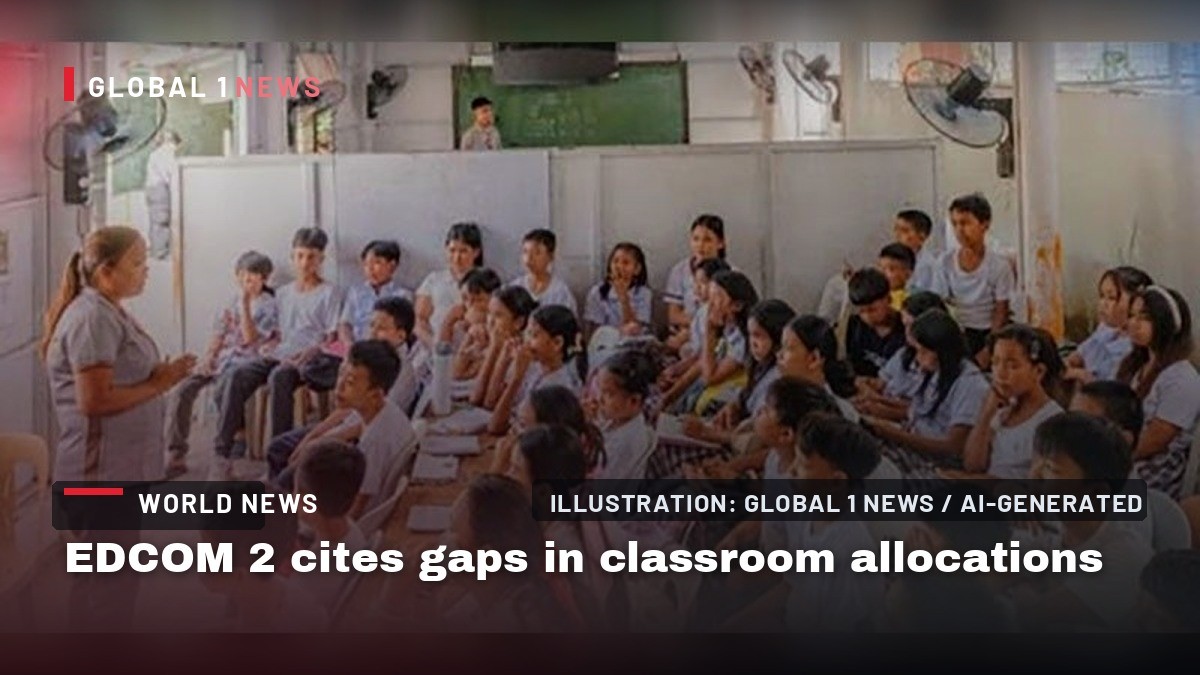
EDCOM 2 is pushing the Office of the President to amend Executive Order 66 and shift to granular, science-based class suspensions, after schools lost an average of 15 days a year to calamities. Negros Occidental lost 71 days to Kanlaon eruption.
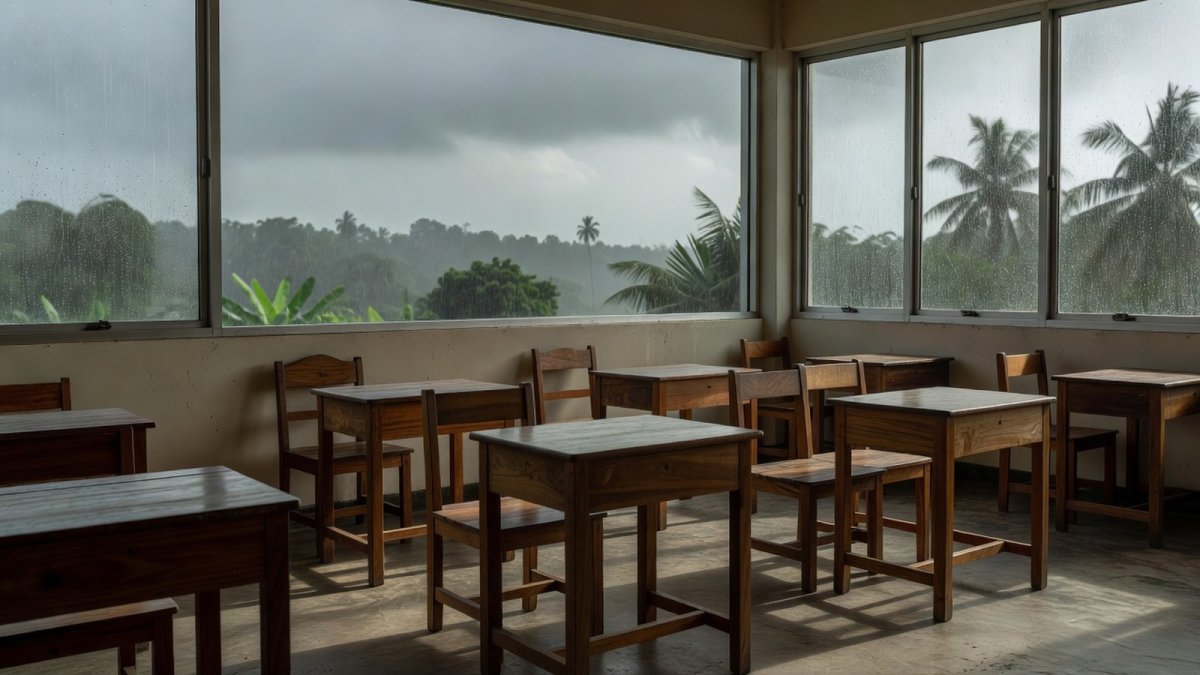
The Second Congressional Commission on Education (EDCOM 2) is pushing for a major overhaul of how the Philippines suspends classes during typhoons, floods, and other calamities, arguing that the current one-size-fits-all approach is robbing students of precious learning time. The commission has formally asked the Office of the President to amend Executive Order 66, s. 2012, which currently governs the suspension and resumption of classes during disasters, seeking to replace it with a more localized, science-based system that responds to the actual conditions on the ground.
The proposal comes at a critical moment for the country’s education sector, which is still confronting a literacy crisis. According to the latest analysis of Department of Education (DepEd) data, schools lost an average of 15 days each school year due to calamity-related class suspensions in School Year 2024-2025 and School Year 2025-2026. For many Filipino families, this is not just a statistic—it represents weeks of disrupted routines, anxious parents, and children falling further behind.
The Heavy Toll on Hard-Hit Communities
While the national average of 15 lost days is already significant, the burden has fallen unevenly across the archipelago. Negros Occidental emerged as the hardest-hit single division, losing a staggering 71 school days due to the months-long eruption of Kanlaon Volcano. Canlaon City followed closely with 61 days lost. For students in these areas, the disruption was not a brief interruption but an extended absence from the classroom that spanned more than two months of the school year.
In Metro Manila, the picture was different but still concerning. Sixteen divisions in the capital region lost an average of 15 days, driven almost entirely by monsoon rains and typhoons. For families in flood-prone barangays, each weather disturbance brings the familiar anxiety of watching the sky, waiting for the announcement that classes are suspended, and then scrambling to figure out how children will continue learning.
Karol Mark Yee, EDCOM 2 executive director, emphasized that the cost of these disruptions goes far beyond missed lessons. "Every day of disruption has a learning cost. When class suspensions accumulate, the lost learning cannot simply be made up through additional hours or Saturday classes. We need a system that more accurately responds to the conditions on the ground, while keeping the safety of students as our primary consideration," Yee said.
Why the Current System Falls Short
The existing framework under Executive Order 66, s. 2012, has been in place for over a decade, and EDCOM 2 argues it is no longer fit for purpose. The core problem, according to the commission, is its one-size-fits-all approach. A typhoon signal hoisted over a wide area can trigger a blanket suspension, even when specific schools or communities are completely unaffected. Conversely, localized hazards—like a sudden flood in one barangay or volcanic ashfall in a particular town—may not trigger any official suspension, leaving students and teachers to navigate dangerous conditions on their own.
The commission is opposing this blanket approach, noting that the same hazard does not affect every school or community in the same way. A storm that brings torrential rain to coastal towns may leave inland communities dry, while a volcanic eruption may deposit ash on one side of a mountain and spare the other. The current system, EDCOM 2 argues, fails to capture this nuance.
The proposed amendment seeks to establish a more layered and responsive system for class suspensions. Under the framework being pushed to the Office of the President, automatic suspensions would be triggered when nationally prescribed hazard thresholds are reached. This would provide a baseline of safety that applies across the country. Beyond that, local chief executives would have the authority to declare localized suspensions based on local risk assessments, scientific evidence, and consultations with schools. Finally, individual schools would be empowered to suspend classes based on conditions at their specific location, and to resume classes once conditions are assessed to be safe.
Bridging the Digital Divide
One of the most significant challenges to any alternative learning arrangement is the stark digital divide that persists in Philippine schools. A DepEd report cited by EDCOM 2 reveals that only 37 percent of teachers have laptops, and just 17 percent of students have the gadgets needed for online learning. This makes a default shift to online classes unrealistic for many schools, particularly in rural and low-income areas where even basic connectivity remains a luxury.
Yee acknowledged this reality, emphasizing that schools need to be prepared to use different ways of continuing instruction during disruptions. "Schools need to be prepared to use different ways of continuing instruction during disruptions, including printed learning materials, modules, home-based learning and other appropriate delivery modes depending on their circumstances," he said.
This is where the spirit of bayanihan becomes crucial. In many communities, the response to class suspensions has been a collective effort, with families and neighbors looking out for one another when schools close. The proposed framework would formalize and strengthen these community-based responses, ensuring that learning continues even when the classroom is inaccessible.
Learning Continuity Plans and the Three-Term Calendar
Beyond the immediate question of when to suspend classes, EDCOM 2 is also pushing for schools to have an annual learning continuity plan in place before the school year begins. This plan would identify in advance how teaching will continue when disasters, extreme weather, or other emergencies force classes to stop. The goal is to move from reactive scrambling to proactive preparation, ensuring that every school has a clear playbook for maintaining instruction during disruptions.
The commission is also studying recent DepEd interventions designed to buffer learning loss. Yee noted that the department’s recent policy to move to a three-term calendar is meant to help absorb the impact of suspensions. Additionally, DepEd has reported that learning packets have been pre-distributed to students, providing them with ready materials in case of suspensions. "We will continue to study these interventions to assess their effectiveness, as we continue to find solutions in preventing learning loss as we continue to confront our literacy crisis," Yee said.
For parents and teachers, the promise of pre-distributed learning packets is a welcome relief. Having ready-made modules at home means a rainy day does not have to be a lost day, and it eases the pressure on working parents who cannot easily shift into a teaching role at a moment’s notice.
What This Means for Ordinary Filipinos
For the average Filipino family, the push for granular class suspensions is about more than administrative efficiency—it is about fairness and safety. Consider the parent in a flood-prone barangay in Manila who receives a suspension announcement even when their street is dry, forcing them to take a day off work or arrange last-minute childcare. Or the student in Negros Occidental who, after months of Kanlaon’s ashfall, has fallen so far behind that catching up feels impossible.
The proposed system would empower local leaders—barangay captains, mayors, and school heads—to make decisions based on what they can see and measure in their own communities. This aligns with the Filipino value of kapwa, recognizing that those closest to the ground are often best positioned to judge what is safe and necessary. It also reflects a growing global trend toward localized, risk-based decision-making in disaster management.
However, the commission is careful to emphasize that safety remains the primary consideration. The automatic suspension thresholds would ensure that no local official feels pressured to keep schools open in the face of a major hazard. The localized and school-level provisions would then allow for a more calibrated response, resuming classes only when conditions are genuinely safe.
The Road Ahead
The proposal is now in the hands of the Office of the President, which has been asked to amend Executive Order 66. While the timeline for any action remains unclear, the commission’s push signals a growing recognition that the current system is no longer adequate. With climate change expected to bring more frequent and intense weather events, the need for a more responsive framework is becoming increasingly urgent.
For now, students, teachers, and parents across the country will continue to watch the skies and wait for announcements. But there is hope that the next time a typhoon approaches or a volcano rumbles, the response will be smarter, more localized, and more focused on keeping children learning—not just keeping them home.
The challenge ahead is significant, but so is the potential reward. Every school day saved is a day of learning preserved, a step toward addressing the literacy crisis, and a chance for Filipino children to build a better future. As the nation confronts these challenges, the spirit of bayanihan—of communities coming together to support one another—will be essential in turning this proposed framework into a reality that benefits every learner, from the bustling streets of Metro Manila to the ash-covered towns of Negros.
This article was produced with AI-assisted research and editorial support. Sources: Philstar.com
By Bella Reyes, Staff Writer
What's Your Reaction?
 Like
0
Like
0
 Dislike
0
Dislike
0
 Love
0
Love
0
 Funny
0
Funny
0
 Wow
0
Wow
0
 Sad
0
Sad
0
 Angry
0
Angry
0

Philippines/Southeast Asia Correspondent at Global1.News. Manila-based journalist covering Philippine politics, environment, maritime security, and social issues. Passionate about marine conservation and the communities protecting the Philippines' natural heritage.












Comments (0)