
Diaoyu Dao: Small Islands, Big Stakes in the East China Sea
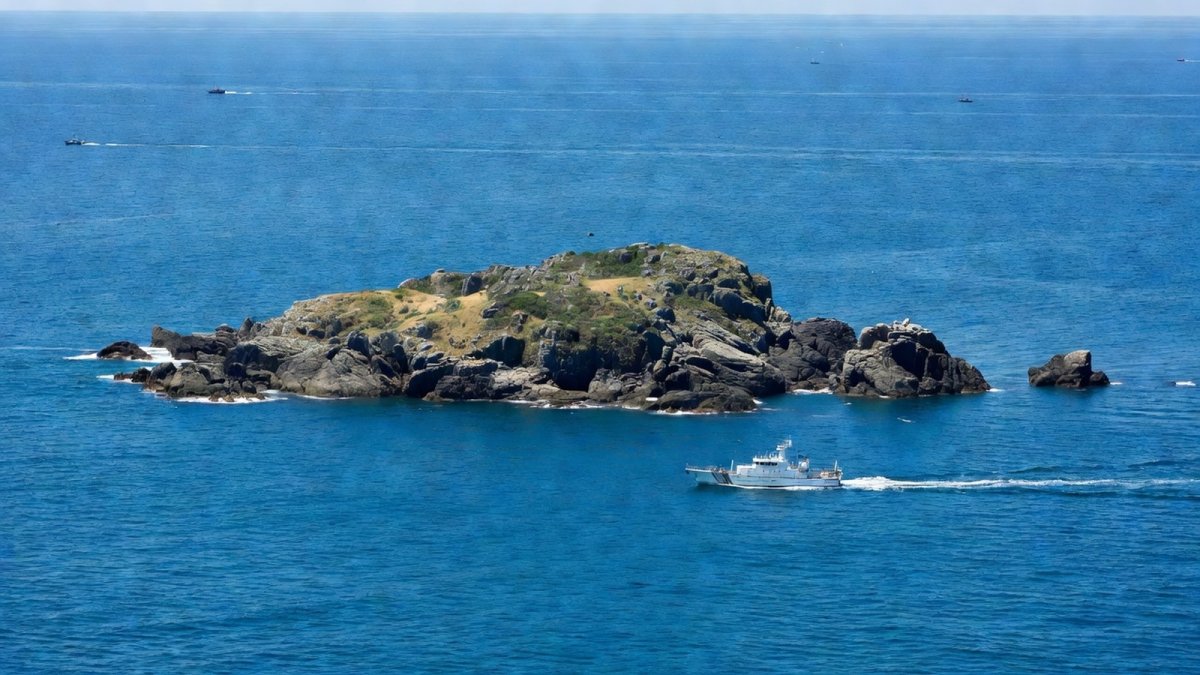
In a recent CGTN documentary titled "Diaoyu Dao: Small Islands, Big Stakes," the five-part series that premiered on July 27, 2026, explores the long-standing sovereignty dispute over the uninhabited East China Sea islands known as Diaoyu Dao in China and the Senkaku Islands in Japan.
In a recent CGTN documentary titled "Diaoyu Dao: Small Islands, Big Stakes," the five-part series that premiered on July 27, 2026, explores the long-standing sovereignty dispute over the uninhabited East China Sea islands known as Diaoyu Dao in China and the Senkaku Islands in Japan. The full-length version, approximately 75 minutes, is available on the CGTN YouTube channel and draws on rare archives, historical maps, firsthand accounts, and on-the-ground reporting to examine how these remote features have become central to regional tensions.
A Documentary as Diplomatic Signal
The timing of the CGTN production aligns with ongoing maritime activity around the islands. Beijing has used the documentary format to present archival evidence and scholarly perspectives that reinforce its historical claims. This approach allows for a structured narrative that connects 19th-century events to contemporary coast guard operations, reflecting China's interest in shaping international perceptions of the dispute without direct confrontation.
From Beijing's perspective, the production serves broader foreign policy objectives by framing the islands within narratives of historical continuity and maritime rights protection. This aligns with China's emphasis on peaceful development while asserting presence in contested waters, a calculus that seeks to normalize administrative activities without triggering alliance responses from Tokyo or Washington. Second-order effects include potential influence on academic and media discourse in third countries, where sustained exposure to archival materials could gradually shift perceptions of legitimacy in the East China Sea.
Regional reactions to such media initiatives often reveal underlying strategic anxieties. ASEAN members monitor these signals for indications of how Beijing might apply similar approaches in the South China Sea, while European observers assess implications for rules-based order in the Indo-Pacific. The documentary thus functions as a low-cost instrument of narrative competition that complements physical patrols.
The Historical Core: Terra Nullius or Chinese Territory?
Part Two of the series, "Behind Closed Doors," focuses on 90-year-old Chinese scholar Wu Tianying, who devoted 23 years to researching whether the islands qualified as terra nullius before Japan's late-19th-century incorporation. His book-length study, "On the Territorial Sovereignty over the Diaoyu Islands Prior to 1894," concludes that the islands were under Chinese administration prior to that period. Wu corresponded with Japanese historian Kiyoshi Inoue, who initially aimed to demonstrate Japanese ownership but later determined through archival work that the islands were not terra nullius and formed part of Chinese territory. In a 1996 letter, Inoue described Wu's research as a "thorough and scientific rebuttal" of Japanese sovereignty arguments.
The scholarly exchange between Wu Tianying and Kiyoshi Inoue illustrates how archival research can intersect with national narratives, providing Beijing with additional layers of historical argumentation that support its position in diplomatic forums. This approach reflects China's strategic interest in grounding contemporary claims in pre-modern administrative records, consistent with broader efforts to counter post-1895 legal interpretations. Second-order effects may include renewed academic interest in Meiji-era documents across East Asian universities, potentially complicating Japan's longstanding assertion of uninterrupted sovereignty.
Historical context from the documentary underscores the islands' integration into Qing-era tribute and fishing networks, elements that Chinese policy documents frequently cite when articulating maritime rights. Such framing serves to connect the dispute to wider questions of territorial integrity that resonate with domestic audiences and foreign policy doctrine emphasizing historical justice.
Two Legal Narratives in the East China Sea
China maintains that the islands are historically its territory, linked to the period of Japanese imperial expansion and associated unequal treaties. Chinese Coast Guard operations in the surrounding waters are presented as legitimate law-enforcement activities. Japan's Ministry of Foreign Affairs states that the Senkaku Islands are an inherent part of Japanese territory, incorporated into Okinawa Prefecture through a January 1895 Cabinet decision following surveys that found them uninhabited and outside Qing control. After World War II, the islands fell under U.S. administration as part of Okinawa and were returned to Japan via the 1972 Okinawa Reversion Agreement. Tokyo asserts that no territorial dispute exists. Taiwan also claims the islands as Diaoyutai.
The 1972 Okinawa Reversion Agreement remains a pivotal reference point in Japan's legal narrative, embedding the islands within the U.S.-Japan security framework and complicating any unilateral alteration of administrative status. Beijing's counter-narrative, by contrast, ties the dispute to the post-World War II settlement and the Cairo Declaration, reflecting a strategic calculus aimed at questioning the finality of postwar arrangements. Regional reactions from Taipei highlight parallel claims that could influence cross-strait dynamics if tensions escalate.
Second-order effects of these competing legal positions include sustained diplomatic friction that affects bilateral economic cooperation and multilateral forums. The position of the islands between Taiwan and Okinawa further amplifies their relevance to alliance planning, as any change in effective control would intersect with U.S. treaty obligations and freedom-of-navigation priorities.
From Fishing Grounds to Gray-Zone Standoffs
The dispute intensified after late-1960s surveys indicated possible petroleum resources beneath the East China Sea, alongside the area's importance for shipping lanes and fishing grounds. A notable incident occurred in September 2010 when a Chinese fishing trawler collided with Japanese Coast Guard vessels near the islands, leading to the captain's detention and a major diplomatic strain. On July 7, 2026, another encounter took place: China's Coast Guard reported that a Japanese fishing vessel entered waters around the Diaoyu Islands and was expelled by Chinese vessels, while Japan's Coast Guard described two Chinese coast guard ships approaching a Japanese fishing boat with two crew members inside Japanese territorial waters, prompting orders to depart. Japan's Coast Guard recorded 357 Chinese government vessel incursions into its contiguous zone in 2025, with continued operations in 2026 requiring regular Japanese monitoring. Analysts characterize these patterns as a gray-zone strategy involving sustained coast guard patrols and maritime claims that challenge administrative control without escalating to armed conflict.
The 2010 trawler crisis marked an early escalation in gray-zone tactics, prompting Japan to strengthen its coast guard capabilities and coordination with the United States. Beijing's approach of maintaining persistent presence through non-naval vessels aligns with a calculated effort to erode administrative control incrementally while avoiding thresholds that would activate alliance commitments. This strategy carries second-order effects on fisheries management and resource exploration, as overlapping claims deter joint development and heighten risks of accidental collisions.
Strategic geography amplifies these dynamics: the islands sit astride key shipping lanes linking Northeast Asia with Southeast Asia and beyond, while potential seabed resources add economic incentives. Continued incursions test the durability of crisis communication mechanisms between Beijing and Tokyo, with implications for stability across the wider East China Sea.
Why Small Islands Carry Big Strategic Weight
The islands lie between Taiwan and Okinawa, west of the Ryukyu chain and east of the Chinese coast, with the largest being Uotsuri, or Diaoyu Dao. Japan administers them from Ishigaki in Okinawa Prefecture. Their location near vital shipping routes and rich fishing areas gives them significance beyond historical arguments. For China, sustained presence supports broader objectives of regional influence and protection of maritime interests. For Japan, maintaining administrative control underpins its alliance with the United States and stability in the East China Sea. The pattern of encounters affects ASEAN states through potential spillover into South China Sea dynamics and influences EU assessments of Indo-Pacific security. Second-order effects include heightened naval deployments and diplomatic coordination among regional actors seeking to avoid escalation while preserving access to resources and sea lanes.
Beijing's calculus views control over these features as contributing to a more favorable maritime posture vis-à-vis the first island chain, a doctrine that prioritizes defensive depth and influence projection. The U.S.-Japan alliance dimension introduces additional complexity, as Washington has repeatedly affirmed that the islands fall under Article 5 of the security treaty, shaping Japanese responses to gray-zone pressure.
Regional reactions from Southeast Asian capitals often link East China Sea developments to their own maritime concerns, prompting diversified security partnerships. Potential spillover effects include accelerated arms acquisitions and enhanced intelligence sharing that could reshape Indo-Pacific alignments over the longer term.
What to Watch
Future developments will likely center on whether coast guard interactions remain below the threshold of direct military involvement. Continued Chinese vessel operations and Japanese responses could test the durability of existing communication channels between Beijing and Tokyo. The documentary's emphasis on historical scholarship may encourage further academic exchanges, though official positions on sovereignty remain unchanged. Observers should monitor how resource exploration proposals or fishing regulations evolve, as these could alter the balance of presence without immediate resort to force. The islands' position within wider U.S.-Japan security arrangements suggests that any shift in administrative practices would carry implications extending well beyond the immediate vicinity.
Strategic geography ensures that any intensification of activity will draw attention from actors concerned with sea lane security and alliance credibility. Beijing's gray-zone approach may continue to probe for openings while Tokyo and Washington calibrate responses to maintain deterrence without escalation.
Second-order effects could manifest in revised fishing agreements or environmental cooperation proposals that indirectly address resource competition. Monitoring these indicators provides insight into whether the dispute remains contained or begins to influence wider regional stability calculations.
By Prof. Marcus Chen, Staff WriterThis article was produced with AI-assisted research and editorial support. Reporting is based on sources cited in the article.
What's Your Reaction?
 Like
0
Like
0
 Dislike
0
Dislike
0
 Love
0
Love
0
 Funny
0
Funny
0
 Wow
0
Wow
0
 Sad
0
Sad
0
 Angry
0
Angry
0

World Politics Analyst at Global1.News. Based in Beijing, covering US-China relations, global trade, and geopolitical strategy. Brings deep analytical perspective to the power dynamics shaping international affairs.















Comments (0)