
Conakry Mourns: Landfill Collapse Kills at Least 30 in Guinea's Capital
Conakry Landfill Collapse Kills 30 in Guinea Dakar, Senegal — The earth gave way in the dead of night in Conakry, and with it, the fragile hopes of a working-class neighbourhood were buried under thousands of tonnes of refuse.
Conakry Landfill Collapse Kills 30 in Guinea
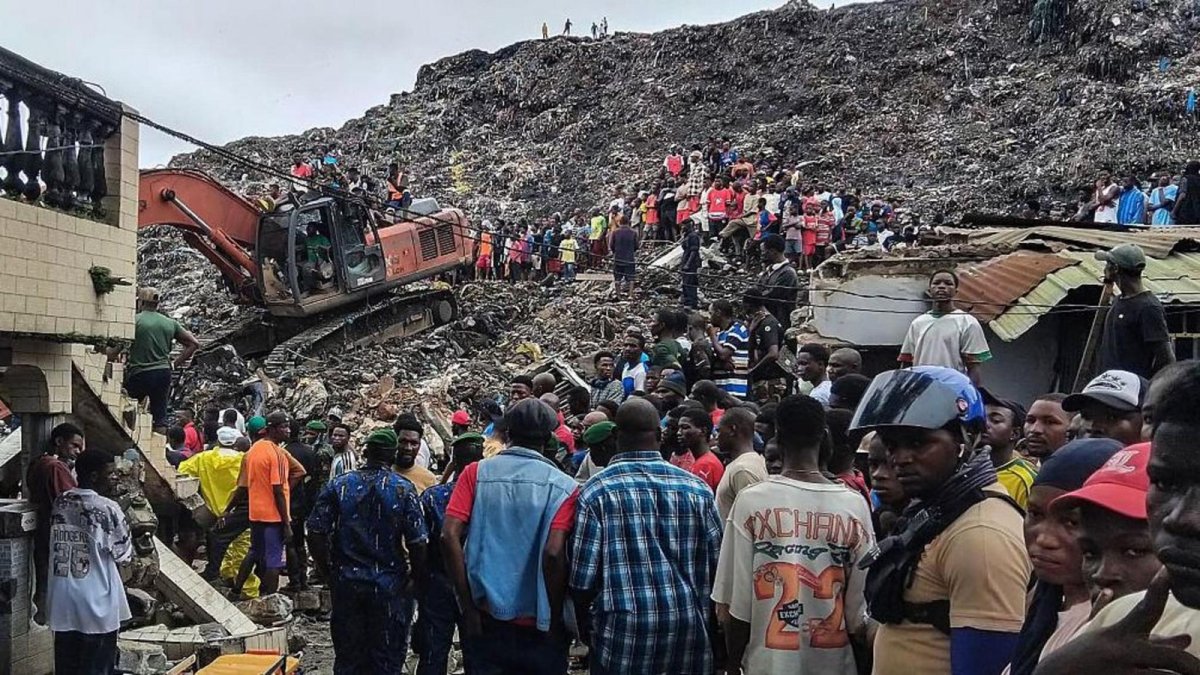
Dakar, Senegal — The earth gave way in the dead of night in Conakry, and with it, the fragile hopes of a working-class neighbourhood were buried under thousands of tonnes of refuse. At least 30 people are confirmed dead after a mound of rubbish at a major waste site collapsed onto nearby homes in the Dar-es-Salam area of Guinea's capital, the government has said, as rescue teams raced against time to find survivors buried beneath the debris.
The collapse struck at approximately 02:00 local time on Sunday, 23 August 2026, following a night of heavy rain that had soaked the unstable slopes of the unmanaged dump. As dawn broke over the city, the scale of the tragedy became horrifyingly clear: a mountain of garbage had slid into the flimsy structures where families slept, crushing everything in its path. For the residents of Dar-es-Salam, a neighbourhood that has long lived in the shadow of the landfill, this was a catastrophe that many had feared for years.
A Night of Terror in Dar-es-Salam
The collapse occurred without warning, burying homes and their sleeping occupants under a wave of decomposing waste. Guinea's government confirmed that at least 30 people lost their lives, with another 22 injured, six of them seriously. The figures, released in an official statement, are feared to be provisional, as a number of people may still be buried under the rubbish.
Neighbourhood leader Lancine Sylla, who was among the first to reach the scene, described the grim task of recovering the dead. "We have pulled out 18 bodies that were taken to the morgue," he told the AFP news agency in the immediate aftermath, his words capturing the raw horror of the moment. The final toll, he warned, could be far higher.
The human cost is almost too painful to comprehend. One woman, speaking to local media through her tears, said she had lost all five of her children in the disaster. Her story, echoed in the anguished cries of other families gathered at the site, underscores the intimate scale of this tragedy — this is not just a statistic of 30 dead, but a community torn apart, a generation lost in a single night.
Government Response and the Search for Survivors
In the wake of the disaster, Guinea's government mobilised "significant" resources and personnel, including the military, to search for survivors. Excavators were later seen combing through a mountain of scattered rubbish at the site, their mechanical claws digging through the debris as local residents gathered nearby, watching in a mixture of hope and despair.
Guinea's Prime Minister, Mamadou Oury Bah, visited the scene personally to assess the situation and oversee the search efforts. His presence was a signal of the gravity of the moment, a recognition that this was not a minor incident but a national tragedy that demanded the full attention of the state. The government's statement emphasised the scale of the deployment, but for the families waiting at the edge of the site, the wait for news was agonising.
The rescue operation is a race against time. With each passing hour, the chances of finding survivors diminish, and the grim task of recovering bodies becomes more likely. The excavators, normally used for moving waste, have been repurposed for a far more sombre duty, their operators tasked with the delicate work of sifting through the rubble for signs of life.
A History of Warnings: The 2017 Landslide
This is not the first time tragedy has struck this site. In 2017, a landslide at the same landfill killed 10 people, a warning that went largely unheeded. The fact that homes were still being built and occupied at the foot of the dump in 2026 speaks to a deeper failure of urban planning and enforcement in Conakry.
The 2017 disaster should have been a wake-up call. It should have prompted the authorities to relocate the families living in the danger zone, to stabilise the waste mound, or to invest in proper waste management infrastructure. Instead, the landfill continued to grow, and the community continued to live in its shadow, vulnerable to the very ground beneath their feet.
This pattern is tragically familiar across the African continent. In March 2017, a landslide at the Koshe landfill in Addis Ababa, Ethiopia, killed more than 100 people living in informal settlements beside the dump. That disaster, one of the worst landfill collapses in African history, highlighted the lethal combination of unmanaged waste, heavy rain, and informal housing that plagues many of the continent's rapidly growing cities.
The Urban Crisis Behind the Collapse
The tragedy in Conakry is not an isolated incident but a symptom of a broader urban crisis facing West African cities. Rapid urbanisation has pushed low-income communities to the margins, both socially and physically. Land near dumpsites is cheap, often the only affordable option for families fleeing rural poverty or seeking opportunity in the city. But that cheap land comes at a terrible price.
Across the region, from Dakar to Abidjan to Lagos, informal settlements have sprung up on the edges of major waste sites. These communities provide essential labour for the recycling economy, picking through the rubbish for materials to sell, but they also bear the brunt of the environmental and health risks associated with living beside unmanaged waste. The dump is both their livelihood and their death sentence.
The heavy seasonal rains that sweep across West Africa each year only exacerbate the danger. Unmanaged waste mounds, composed of layers of decomposing organic matter and loose debris, become unstable when saturated with water. The rain acts as a lubricant, weakening the structural integrity of the pile until it gives way, as it did in Conakry in the early hours of Sunday morning.
The Human Cost of Neglect
Behind the statistics and the official statements, there is a human story of loss and resilience. The mother who lost five children, the families who have lost their homes, the community that has lost its sense of safety — these are the people who will carry the scars of this disaster for years to come.
For the residents of Dar-es-Salam, the landfill was not just a hazard but a part of their daily lives. It provided a source of income for scavengers, a place to dispose of the city's waste, and a physical boundary of their neighbourhood. Now, it has become a graveyard.
The psychological impact of such a disaster cannot be overstated. Survivors will have to live with the memory of that night, the sound of the earth moving, the screams of their neighbours, the desperate search for loved ones in the dark. The community will need support, not just in the immediate aftermath but in the long term, to rebuild their lives and their neighbourhood.
What Must Change: A Call for Action
In the wake of this tragedy, there will be calls for accountability and demands for change. The government of Guinea must investigate the collapse, determine what went wrong, and take steps to prevent a recurrence. But the responsibility does not rest solely with the authorities in Conakry. Across West Africa, governments must confront the uncomfortable truth that their cities are failing their poorest residents.
Proper waste management is not a luxury but a necessity. It requires investment in infrastructure, regulation of informal settlements, and a commitment to the safety of all citizens, regardless of their income. The families who lived beside the Conakry landfill deserved better. The families who live beside dumpsites in other African cities deserve better too.
The tragedy in Dar-es-Salam is a reminder that the choices we make about urban development have life-and-death consequences. It is a call to action for governments, urban planners, and international partners to prioritise the safety and dignity of the most vulnerable. The dead of Conakry must not be forgotten, and their deaths must not be in vain.
As the search continues and the toll rises, the people of Guinea mourn. But they also demand answers. The mountain of rubbish that claimed their loved ones is a monument to neglect, a symbol of a system that has failed them. It is time for that system to change.
By Amara Diop, Staff Writer
This article was produced with AI-assisted research and editorial support. Sources: BBC News, AFP.
What's Your Reaction?
 Like
0
Like
0
 Dislike
0
Dislike
0
 Love
0
Love
0
 Funny
0
Funny
0
 Wow
0
Wow
0
 Sad
0
Sad
0
 Angry
0
Angry
0

West Africa/Sahel Correspondent at Global1.News. Dakar-based journalist covering politics, security, climate, and development across Francophone and Anglophone West Africa. Tells the stories of a region undergoing profound transformation.











Comments (0)