
China's AI Tech Path: Autonomy Beyond Chips
As US export controls tighten, a prominent Chinese scholar argues the AI contest with Washington will be won not by building chips but by defining the technological path. An analysis of Huawei's Atlas 950 SuperPoD lays out Beijing's three-pillar strategy for technological autonomy, from computing...
Defining the Path, Not Just Building the Chip
China's ability to set its own technological course may be the decisive factor in the US-China contest over artificial intelligence, a prominent Chinese analyst has argued. Zheng Yongnian, founding dean of the School of Public Policy at the Chinese University of Hong Kong (Shenzhen), makes the case in his preface to The Rise of Atlas, a new book tracing the development of Huawei Technologies' Atlas 950 SuperPoD computing system.
The timing is pointed. Washington has spent years tightening the screws on Chinese access to advanced chips and chipmaking equipment, and the debate inside both countries has increasingly narrowed to a single question: can Beijing keep advancing AI without the world's most advanced hardware? Zheng's answer, delivered through the story of one of China's most visible responses to the pressure, is that the contest will be won not by any single breakthrough but by the ability to define the path itself.
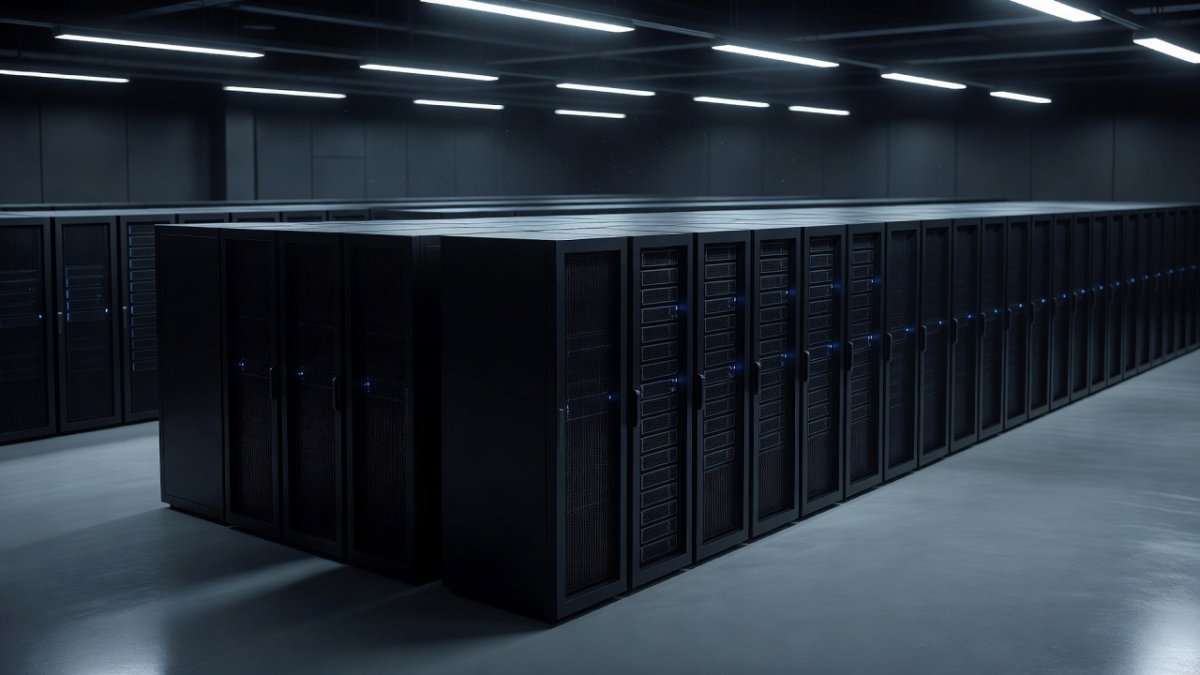
The Atlas 950, which Huawei showcased at the World Artificial Intelligence Conference in Shanghai last month, has been described as the industry's largest AI supernode — a high-powered supercluster capable of linking more than 1,000 processors. For Zheng, its real significance is not the hardware but what it says about how China is adapting to external pressure.
The Three Pillars of a 'Technological Survival Structure'
"True technological autonomy is not simply about 'having chips', but about 'having the ability to define the technological path'," Zheng wrote in the preface, published online last week. The distinction matters because it shifts the benchmark of success from component availability to systemic control.
Zheng identifies three essential elements of what he calls a "technological survival structure": control over foundational hardware, including chips and computing infrastructure; the ability to organise developer ecosystems and applications; and the industrial capacity to translate technological strength into standards and governance rules that others follow. Without all three, he warns, China's "independent innovation" risks becoming fragmented — capable of isolated victories but not of sustained momentum.
The framing is deliberately broader than the semiconductor supply chain. It treats operating systems, developer tools, and international standards as terrain to be occupied, not merely products to be built.
From Economic Logic to Security Logic
Zheng places the shift in a wider context, arguing that competition over chips, computing power, operating systems and AI infrastructure signals a transition from being "driven by economic logic" to "driven by security logic". Technology, in this view, is no longer just a production tool but "structural power between nations".
"Computing power is authority, algorithms are order, platforms are governance," he wrote. "These changes are reshaping the rules of competition." The line captures why Beijing treats AI infrastructure as strategic rather than commercial, and why Washington's export controls are aimed not just at specific products but at the broader ecosystem that surrounds them.
For analysts in both capitals, the shift toward security-driven competition helps explain the intensity of the measures on both sides: restrictions on advanced semiconductors, curbs on investment, and increasingly explicit language about the stakes of AI leadership.
Huawei's Atlas 950: The Hardware Proof Point
The Atlas 950 gives the argument a concrete anchor. Huawei publicly displayed the physical system for the first time at WAIC 2026 in Shanghai, presenting it as the industry's largest AI supernode. According to TrendForce, the SuperPoD configuration features 1,024 Ascend AI accelerators, while the Atlas 950 SuperCluster can scale to 500,000 accelerators — a figure Huawei describes as the world's most powerful AI computing cluster.
The system is designed to meet the computing demands of increasingly large models, the same workload class that has driven Nvidia's dominance in data centres worldwide. For Chinese developers cut off from Nvidia's most advanced offerings, systems like the Atlas 950 represent the domestic alternative — and the foundation on which Chinese foundation-model builders are expected to train their next generations of AI.
Huawei's trajectory also illustrates the longevity of the pressure it is responding to. The company was added to the US Entity List in May 2019, restricting its access to American technology and tools. Three years later, the Commerce Department imposed sweeping export controls on advanced semiconductors, AI chips and manufacturing equipment, and has since expanded them to cover other categories.
A Decade of Restrictions, an Expanding Response
The escalation has not stopped China's AI sector from advancing, though it has reshaped how it advances. Studies by US think tanks have broadly echoed Zheng's emphasis on systemic capacity. Earlier this year, an analysis from the Brookings Institution argued that Chinese AI labs had limited access to cutting-edge computing capacity and capital, yet were advancing rapidly through efficiency gains, open-source diffusion, and integration into the real economy.
The Centre for Strategic and International Studies reached a related conclusion: restrictions on advanced semiconductors might slow China but would not prevent it from achieving operational parity in many sectors, such as robotics, which rely on less high-powered chips. Together, the assessments suggest that export controls are reshaping the pace and direction of China's AI development — but not halting it.
The response is visible in the products themselves. Chinese AI developers have gained international attention for highly efficient models trained with constrained compute, and open-source releases from Chinese labs have spread quickly through global developer communities, extending China's influence over the tools other countries build on.
Embedded State Capacity: Strengths and Limits
Zheng attributes China's organisational model to what he calls "embedded state capacity", in which enterprises act both as market players and as nodes in a national technology system, enabling the rapid mobilisation of resources. He says this path is based on system-level capability and industrial chain integrity, and differs from Silicon Valley's market-led approach and Europe's focus on regulatory frameworks.
Each model has strengths and weaknesses. Zheng argues the Chinese system is effective at innovation that solves clearly defined "known problems", but he also concedes that highly target-driven, state-mobilised systems may prove less flexible and diverse, raising questions about how Beijing would address "unknown problems". Long-term resilience, he says, requires openness, diversity and tolerance for failure — qualities often associated with a "marketplace of technological ideas".
"The key to the future of China's science and technology system lies not only in 'whether it can achieve breakthroughs', but also in 'how to continuously generate breakthroughs'," he said. The distinction is at the heart of the debate over whether China's model can sustain itself beyond its current phase of catch-up.
What to Watch For
For Japan and the wider Asia-Pacific, the stakes of this contest are direct. Japan's semiconductor equipment and materials makers — including Tokyo Electron, Nikon and materials suppliers that dominate critical segments — sit at the heart of the global chip supply chain that both Washington and Beijing are trying to steer. Tokyo has aligned its export-control policy with Washington since 2023, but Japanese industry also depends on access to the Chinese market, a tension that is only becoming more visible.
The standards dimension may matter most in the medium term. If China succeeds in embedding its systems — from AI accelerators to operating environments to open-source models — in the technology stacks of developing economies across Asia, the region could face a choice between two competing technological orbits. Japan's own push for advanced-node manufacturing, led by the Rapidus project, is part of the same race to preserve independent capability in an era of security-driven competition.
The next milestone to watch is whether Huawei's Atlas family moves from showcase to scale. If the SuperCluster's 500,000-accelerator configuration begins appearing in training runs that produce competitive frontier models, Zheng's argument will have moved from theory to demonstration. Either way, the contest over who defines the path — not merely who builds the chip — is now the defining question of the US-China technology rivalry, and the answer will shape the digital infrastructure of the entire Asia-Pacific region.
By Kenji Tanaka, Staff Writer
This article was produced with AI-assisted research and editorial support. Reporting is based on sources cited in the article.
What's Your Reaction?
 Like
0
Like
0
 Dislike
0
Dislike
0
 Love
0
Love
0
 Funny
0
Funny
0
 Wow
0
Wow
0
 Sad
0
Sad
0
 Angry
0
Angry
0

Japan Correspondent at Global1.News. Tokyo-based voice covering Japanese politics, technology, economy, and culture. Tracks the intersection of tradition and innovation in one of the world's most dynamic societies.














Comments (0)