
China Tackles AI Misinformation Surge in Flood Disasters
China confronts a wave of AI-generated fake videos spreading panic during flood disasters as Typhoon Noul recovery continues. Police have made arrests while experts warn detection technology lags generation, urging trusted verification systems.
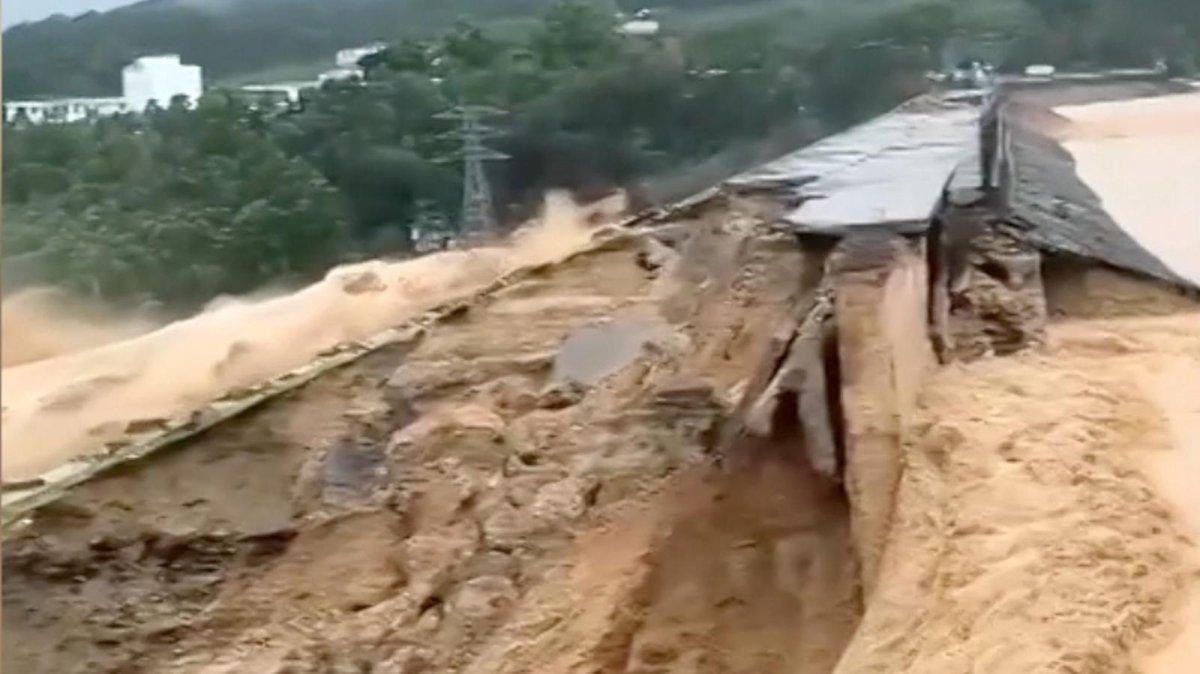
As China faces repeated flooding from Typhoon Noul and earlier storms, authorities are confronting a parallel wave of AI-generated fake videos that spread panic, disrupt rescues, and exploit public distrust in official channels. These fabricated clips, ranging from nonexistent crocodile releases to exaggerated body counts in floodwaters, have forced police actions and expert calls for better verification systems. The crisis highlights tensions between China's AI ambitions and the need for information stability during emergencies.
AI Fake Videos Complicate China Flood Disaster Response
Beijing, China — Article continues...
Typhoon Noul Landfall and Ongoing Flood Response
Typhoon Noul struck coastal regions, forcing mass evacuations and complex rescue efforts. Officials tracked the storm's path while monitoring secondary effects such as power disruptions and infrastructure strain. The event follows a series of powerful storms that have tested local governments' capacity to manage both physical hazards and information flows. State media outlets have begun publishing corrections to counter false depictions circulating online.
Patterns of AI-Generated Misinformation
Fake videos have inundated platforms with fabricated details of emergency responses and nonexistent flooding. Some clips show dead bodies floating in waters, while others depict crocodiles released into rivers after a real snake escape in Hengzhou city, Guangxi, during early July flooding. Videos claiming widespread power outages have led residents to stockpile supplies unnecessarily, creating additional logistical pressure on affected communities.
Disaster misinformation in China spreads through established viral mechanics that exploit platform algorithms favoring sensational visuals during high-engagement periods. Fabricated clips of floating bodies or submerged urban centers trigger immediate panic buying of bottled water and staples, overwhelming supply chains already strained by evacuations. The Hengzhou snake escape incident in early July illustrates this pattern when genuine reports were overlaid with AI-generated footage of crocodiles in floodwaters, prompting unnecessary livestock movements and local market disruptions that diverted emergency resources.
Historical precedents reveal recurring rumor dynamics tied to flood and earthquake events. Past episodes during major inundations saw unverified claims of dam failures circulate via messaging apps, accelerating hoarding behavior before official clarifications arrived. These patterns persist because fragmented local reporting creates information vacuums that AI tools now fill with higher visual fidelity, shortening the window for authorities to intervene before content reaches national audiences.
Police Actions Against Content Creators
Huang Zhihua, Deputy Chief in charge of online public security for Zhejiang Police Department, stated that creators exploit disaster news to gain followers through sensational content. Recent weeks have seen arrests and penalties, including detention pending criminal prosecution and fines, for producing bogus reports and videos. These measures target deliberate fabrication aimed at attracting views and likes during high-traffic events.
Expert Warnings on Lowered Technical Barriers
Professor Chen Bin, writing in the newspaper of the Communist Party's Central Party School, noted that AI tools allow individuals without advanced skills to generate realistic text, images, audio, and video at scale. Professor Gao Fuping of the East China University of Political Science and Law explained that motivations range from amusement to traffic generation and deliberate attempts to cause panic or unrest. He added that some users assume online anonymity prevents tracing.
Verification Challenges and Detection Limits
Professor Xu Xiaoke from Beijing Normal University called for clearer stamping of AI-generated material along with geographic and timestamp verification of image sources. He cautioned that detection technology lags behind generation capabilities, creating an ongoing contest where no single technical fix can reliably identify fabricated content. Re-editing can remove watermarks, further complicating enforcement efforts.
China's Investment in AI Development
China has positioned AI as a core driver of national progress since the 2017 announcement designating it the main force behind economic and technological advancement. The state-controlled Xinhua wire service reports more than 6,000 AI companies operating domestically, supported by substantial capital inflows and domestic competition. This push aligns with broader goals of technological self-sufficiency and leadership in emerging sectors.
Beijing's 2017 State Council New Generation Artificial Intelligence Development Plan explicitly positioned AI as the main driving force for economic and technological advancement, fostering rapid sector growth that Xinhua has quantified at more than 6,000 domestic companies. This industrial push has delivered capital inflows and competitive scaling, yet it collides with regulatory frameworks such as the 2022 Measures for the Management of Algorithmic Recommendations and the 2023 Interim Measures for Generative AI, which impose content labeling and safety reviews on generated outputs.
The resulting tension forces ministries including the Cyberspace Administration of China to balance innovation incentives under the Dual Circulation strategy against enforcement obligations. While the 2017 plan prioritizes self-sufficiency in core technologies, the newer rules require platforms to audit recommendation algorithms and generative models during crises, creating compliance costs that slow deployment. This duality reflects broader objectives of technological leadership tempered by domestic stability concerns, where unchecked AI proliferation risks undermining the very governance structures it is meant to strengthen.
Historical Incidents Eroding Public Trust
Earlier in July, local journalists received instructions to describe a major breach at the Liulan Dam near Nanning using terms such as "opening" or "gap" rather than more alarming language, even as downstream flooding caused at least 26 deaths. In 2021, officials in Henan province faced arrest for underreporting 139 deaths. Such episodes have created a trust vacuum that facilitates the spread of unverified material by bad actors.
Official disaster communication failures have repeatedly widened the credibility gap that AI disinformation exploits. During the Liulan Dam breach near Nanning, journalists were directed to describe the event as an "opening" or "gap" rather than acknowledging downstream flooding that resulted in 26 deaths, a framing choice that local residents quickly contrasted with visible damage. Similar opacity occurred in the 2021 Henan floods when provincial officials were later arrested for concealing the full death toll of 139, an episode that left communities reliant on unofficial channels for accurate updates.
These incidents establish a structural vulnerability: when state sources prioritize narrative control over transparency, populations turn to unverified videos that appear more immediate. The resulting amplification effect allows AI-generated content to gain traction faster, as audiences already skeptical of sanitized reports grant greater weight to graphic fabrications that align with lived experiences of delayed warnings or underreported impacts.
Proposals for Trusted Information Systems
Professor Xu Xiaoke advocated building trusted information infrastructure, including official government early-warning systems and disaster interfaces accessible to news organizations. While calls for mandatory AI labeling persist, experts stress that technical solutions alone cannot resolve the issue. Coordinated verification across platforms and sustained public communication remain essential to limit the impact of fabricated content during future events.
Strategic Implications for Global AI Governance
China's experience with AI-generated disaster disinformation intersects with emerging global governance efforts, including the EU AI Act's risk-based classification of generative systems and recent US executive actions on deepfake labeling. These frameworks aim to impose transparency obligations on platforms, yet enforcement remains uneven across jurisdictions, leaving ASEAN and Global South countries exposed to cross-border flows of manipulated content during their own climate-related crises.
Information warfare dimensions add further complexity, as state and non-state actors could weaponize similar tools to erode public confidence in rival governments' crisis responses. For Beijing, managing domestic AI outputs while advancing multilateral AI safety cooperation requires reconciling internal regulatory priorities with external demands for shared detection standards, potentially positioning China as both a major source of generative capacity and a necessary partner in containing its destabilizing applications.
By Prof. Marcus Chen, Staff Writer
This article was produced with AI-assisted research and editorial support. Reporting is based on sources cited in the article.
What's Your Reaction?
 Like
0
Like
0
 Dislike
0
Dislike
0
 Love
0
Love
0
 Funny
0
Funny
0
 Wow
0
Wow
0
 Sad
0
Sad
0
 Angry
0
Angry
0

World Politics Analyst at Global1.News. Based in Beijing, covering US-China relations, global trade, and geopolitical strategy. Brings deep analytical perspective to the power dynamics shaping international affairs.











Comments (0)