
Chiang Rai Floods: 50 Homes Hit as Rivers Overflow
Heavy rain drove Chiang Rai's Lao and Korn rivers over their banks, flooding 50 homes in Pa O Don Chai subdistrict. Officials are monitoring as water levels may rise further.
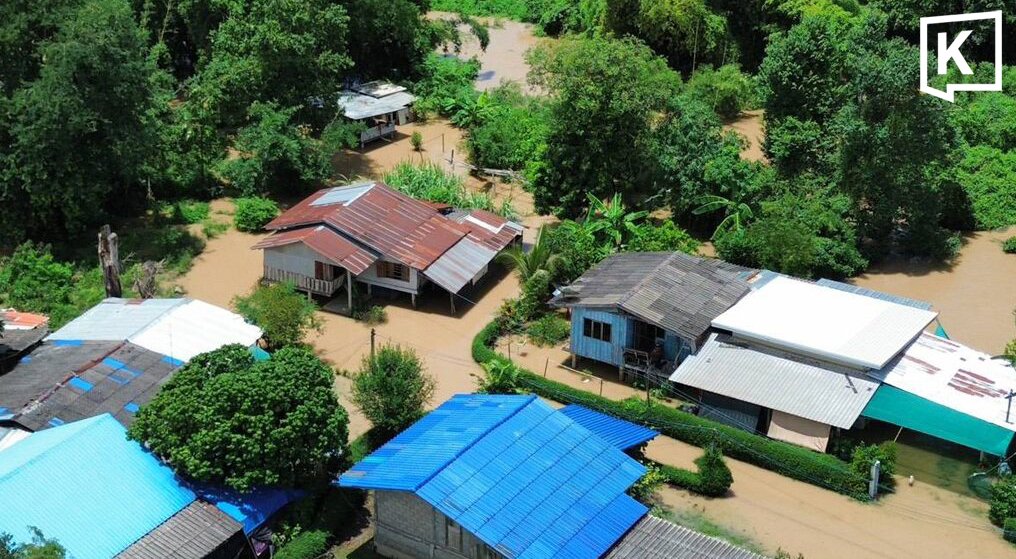
When the rain does not stop over northern Thailand, the rivers remember. On Friday, the Lao and Korn rivers surged over their banks in Chiang Rai, pushing water into homes across Pa O Don Chai subdistrict in Mueang district and leaving at least 50 households facing the reality of a flooded start to the weekend. Local officials are on the ground assessing the damage, but with water levels still rising, the province is bracing for what the monsoon may still bring.
Rivers Overflow After Days of Continuous Rain
The flood situation in Chiang Rai remained under close watch on Friday following days of accumulated rainfall in the upper areas of the province. The heavy rain caused water levels in the Lao and Korn rivers to rise rapidly, and the overflowing water soon inundated homes in low-lying communities.
According to the initial reports from local authorities, at least 50 households have been affected across Pa O Don Chai subdistrict. Ten households in Rong Khun village, Moo 1, located along the Lao River, were flooded, while another 40 households in San Sali village, Moo 5, along the Korn River, were also hit. The numbers may grow as surveys continue.
What makes this flooding especially painful for the community is its closeness to home. Rong Khun village sits in the shadow of one of Thailand's most famous landmarks, the White Temple, Wat Rong Khun, whose mirrored halls draw visitors from across the country and around the world. When the Lao River behind Rong Khun Market rose rapidly, it did not spare the riverside and low-lying areas that locals know so well.
Communities on the Front Line
For the families of Rong Khun and San Sali villages, the water arrived without warning at their doorsteps. Several days of continuous rain had already softened the ground and filled the channels, and when the banks gave way, the water moved quickly through residential areas, soaking homes, gardens and belongings.
Pa O Don Chai Mayor Sirimongkol Khamdee said the prolonged rain had caused the Korn River to overflow and flood nearby homes. His description matches what residents along both rivers experienced: water that rose steadily, hour by hour, until it was inside the house.
Local administrative organisations and relevant agencies are now surveying the damage and preparing to provide assistance to affected residents. For many households, the immediate concern is not just the water inside their homes, but what comes after: cleaning, repairs, and the quiet work of putting a household back together.
Official Response: Monitoring and Rapid Assistance
The response from the province has been swift and direct. Chiang Rai Governor Chuchip Phongchai has ordered the provincial Disaster Prevention and Mitigation Office and all relevant agencies to closely monitor the situation, speed up damage assessments, and provide assistance to residents as quickly as possible.
Authorities have also been instructed to maintain continuous surveillance, as water levels remain at risk of rising further. The message from the provincial command is clear: this is not over yet, and preparation must continue even as the first assessments get underway.
The coordination between the provincial government, local administrative organisations and village leaders reflects a disaster-response system that has been tested many times before in northern Thailand. The priority now is speed — speed in assessing damage, speed in delivering aid, and speed in reassuring families that they are not alone.
Monsoon Season and Northern Thailand's Flood Legacy
Chiang Rai is no stranger to the monsoon. Every year, the southwest monsoon brings heavy rain to the north of Thailand, and rivers like the Lao and the Korn — tributaries that feed the larger Mekong basin — carry the runoff from the hills and mountains that ring the province.
The geography of the region amplifies the risk. Narrow valleys, steep catchment areas and communities built close to the water make northern provinces especially vulnerable when rainfall is intense and sustained. When upper areas of the province accumulate days of rain, the water has nowhere to go but down, and the rivers do what rivers do: they rise.
Thailand has learned hard lessons from past flood seasons, including the devastating 2011 floods that affected much of the country. Since then, early-warning systems, dam management and local disaster-response teams have improved significantly. But as the events in Chiang Rai this week show, nature still sets the timetable, and communities must be ready to respond at a moment's notice.
Tourism and the Local Economy Under Pressure
Chiang Rai is a cornerstone of northern Thailand's tourism economy. Beyond the White Temple, the province draws visitors to the Blue Temple, Wat Huay Pla Kang, the Golden Triangle where the borders of Thailand, Laos and Myanmar meet, and the scenic hill country of Doi Tung and Doi Mae Salong. Flooding in the province can disrupt travel plans, slow traffic and force last-minute changes for tour operators even when the damage is concentrated in a small number of communities.
For local businesses, the timing matters. The rainy season is also a period when domestic tourists travel to the north to experience the lush green landscapes the monsoon brings. When rivers overflow, however, the same rains that make the hills beautiful can make the roads treacherous, and the markets that depend on visitors feel the quiet of empty walkways.
The affected families along the Lao and Korn rivers are also part of this economic fabric — farmers, market vendors and small business owners whose livelihoods are tied to the water. For them, a flooded home is not only a personal loss but a disruption to the daily work that sustains their households.
Staying Safe as the Rain Continues
For residents in flood-affected areas, the coming days will require patience and caution. Provincial officials have urged people living along rivers and in low-lying areas to stay alert to official announcements, avoid driving or walking through floodwaters, and keep important documents and valuables in high, dry places. Parents are also being reminded to keep children away from fast-moving water, which can be dangerously deceptive even when it looks shallow.
Temples across Chiang Rai have historically served as refuge points during floods, with abbots opening their grounds to families displaced from their homes. In many northern communities, the temple is not only a place of worship but the heart of the village — a gathering space in times of celebration and a shelter in times of crisis. That tradition of mutual support, rooted in Buddhist values of compassion and generosity, remains one of the quiet strengths that carries Thai communities through disasters.
As the province continues its assessments, the message from officials is one of reassurance paired with vigilance: help is on the way, and the community will get through this together, one household at a time.
What This Means for Thai Communities
For Thai readers, the flooding in Chiang Rai is a reminder that the monsoon season demands respect. For families in the north, it is a call for practical preparedness: know the evacuation routes, listen to local announcements, and check on elderly neighbours and relatives who may need help moving to higher ground.
There is also a regional dimension. Across mainland Southeast Asia, the same monsoon systems bring rain to Laos, Myanmar and Vietnam, and the Mekong basin connects the fortunes of all the countries along its length. When northern Thai rivers surge, neighbouring countries watch closely, because weather does not respect borders. The ASEAN spirit of cooperation extends to disaster management, with regional mechanisms in place to share warnings and coordinate responses across the Mekong corridor.
For now, the focus in Pa O Don Chai subdistrict is on the people whose homes are under water. The surveys continue, the officials are on the ground, and the province has promised that assistance will come quickly. The rain may not be finished with Chiang Rai yet, but the community is already showing the resilience that defines northern Thailand — neighbours helping neighbours, and a province standing together through the flood.
By Ann Srisawat, Staff Writer
This article was produced with AI-assisted research and editorial support. Reporting is based on sources cited in the article.
What's Your Reaction?
 Like
0
Like
0
 Dislike
0
Dislike
0
 Love
0
Love
0
 Funny
0
Funny
0
 Wow
0
Wow
0
 Sad
0
Sad
0
 Angry
0
Angry
0

Southeast Asia Correspondent at Global1.News. Based in Bangkok, covering Thai and Southeast Asian politics, economy, technology, and culture. Deep regional perspective on one of the world's most dynamic regions.















Comments (0)