
Belo Monte Dam: The Xingu's Drying Heart and the Mother Who Fought Back
On the banks of the Xingu River in Brazil's Pará state, a former teacher named Antônia Melo da Silva has spent nearly four decades fighting the most powerful forces in her country. The dam she fought — Belo Monte, the largest hydropower plant in the Amazon — is now at the center of a fresh legal and climate battle, as Indigenous communities demand the river's water back and El Niño tightens its grip on northern Brazil.
On the banks of the Xingu River in Brazil's Pará state, a former teacher named Antônia Melo da Silva has spent nearly four decades fighting the most powerful forces in her country. The dam she fought — Belo Monte, the largest hydropower plant in the Amazon — is now at the center of a fresh legal and climate battle, as Indigenous communities demand the river's water back and El Niño tightens its grip on northern Brazil.
Belo Monte: The Xingu's Drying Heart and the Mother Who Fought Back
Altamira, Pará – Brazil, August 24, 2026 — In the heart of the Brazilian Amazon, the Xingu River once carved a path of life through the state of Pará, its waters sustaining thousands of species and human communities for millennia. Today, that river is bisected by the Belo Monte Dam, the largest hydropower plant in the Amazon and the second-largest in Brazil. Promoted aggressively by President Luiz Inácio Lula da Silva during his first terms in office (2003-2011), the project broke ground in 2011 and began operations in May 2016 under Dilma Rousseff. It was officially completed in 2019 under Jair Bolsonaro, when the last of its 18 main turbines began spinning. The operator, Norte Energia, now manages a facility with an installed capacity of 11,233 MW (11.2 GW), which G1 identifies as the largest 100% Brazilian hydro plant and the fifth-largest on the planet.
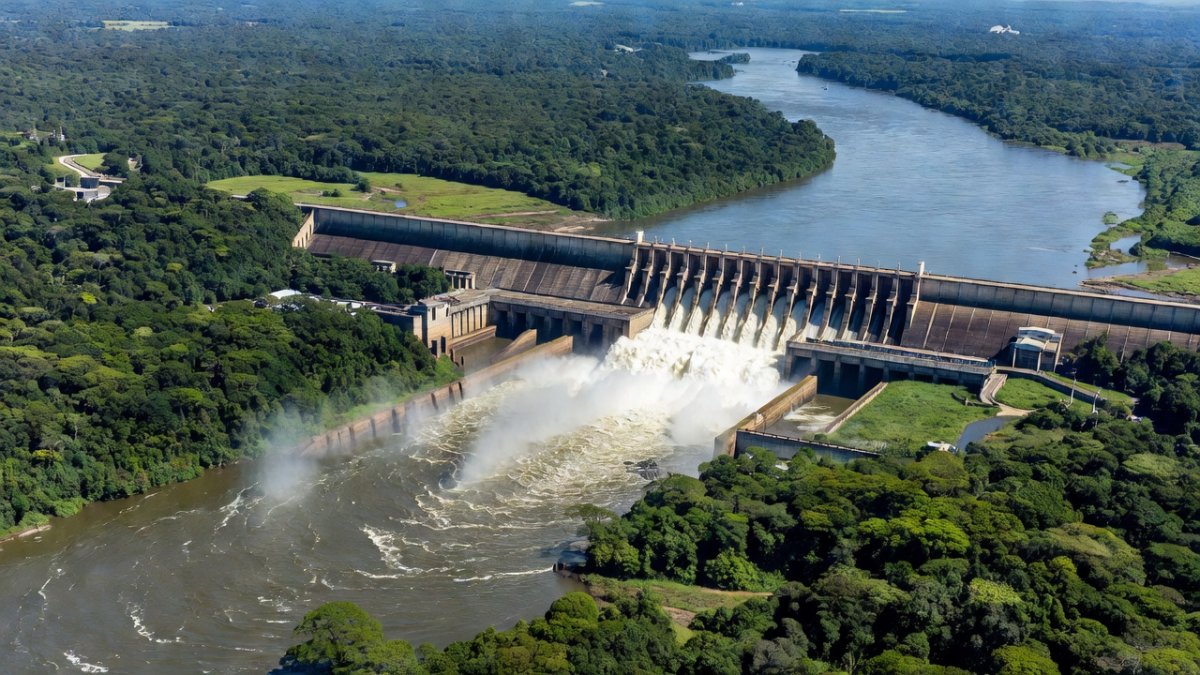
Belo Monte: A Decade of Damming the Xingu
The scale of the engineering is matched only by the scale of its controversy. Unlike traditional dams that rely on massive reservoirs, Belo Monte is a run-of-river plant, meaning it depends entirely on the natural flow of the Xingu. This design was meant to mitigate flooding, but it has created a different catastrophe: the diversion of up to 70% of the river's water away from a 130-kilometer (81-mile) bend known as the Volta Grande do Xingu. The government's official cost estimate sits at about US$13 billion, but independent assessments place the true figure above US$16 billion, with projected expenditures of R$40 billion at the 2011 start. Since 2016, the plant has generated 264.9 million MWh, supplying on average about 5% of Brazil's electricity demand. Norte Energia proudly calls it the "natural battery" of the national grid, yet this battery is charged by starving a river of its own lifeblood.
The human cost is personified by Antônia Melo da Silva, a woman born in 1949 in Piripiri, Piauí, who moved with her peasant parents to Altamira, Pará, in 1953. She settled on the banks of the Xingu, trained as a teacher, and raised four children. From the late 1980s, she campaigned against the dam, and in May 2008, she co-founded the Movimento Xingu Vivo Para Sempre (Xingu Alive Forever Movement), a coalition of fishermen, farm workers, urban dwellers, Indigenous peoples, and religious and women's organizations. The Al Jazeera English Witness documentary "Mother of the Amazon" (2015, 25 minutes) captures her relentless fight, a fight that ultimately forced her to leave her own home as the waters and politics closed in. Her story is not just a personal tragedy; it is the emblem of a decade-long struggle between development and survival.
The Volta Grande's Drying Heart
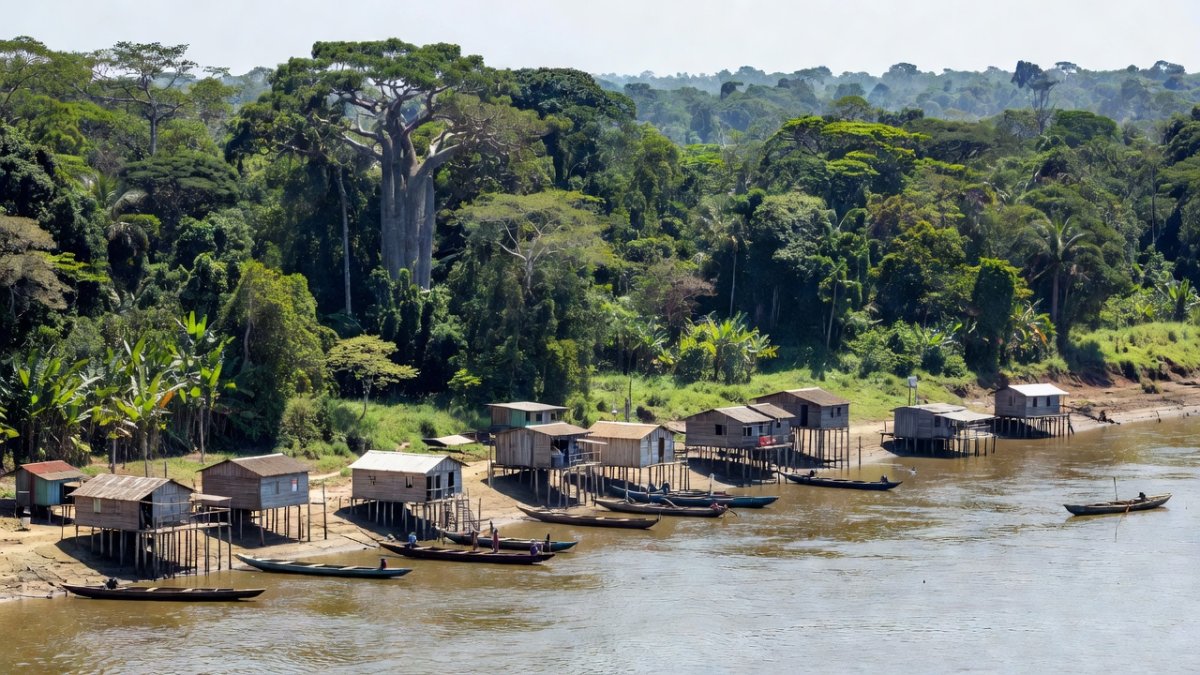
The most visceral impact of Belo Monte is felt in the Volta Grande do Xingu, a once-majestic bend in the river that now receives only a fraction of its former flow. The Pimental dam, located about 40 kilometers downstream from Altamira, retains up to 70% of the Xingu's water and routes it through a 20-kilometer diversion channel to the turbines. What remains in the Volta Grande is a ghost of a river, a landscape of exposed ironstone formations and dying flooded forests. IBAMA technical reports and independent monitoring have confirmed a litany of ecological disasters: disrupted fish reproduction, physical deformities, and massive mortality among fish and turtle species, many of which are endemic and critically endangered. The white pacu, a fruit-eating fish that is a dietary staple for local communities, has crashed in abundance, size, and weight, leaving families without their primary source of protein.
The consequences extend far beyond biology. The fishery collapse has triggered social, cultural, and psychological impacts on the riverine populations. Families face severe transport problems as the channels that once served as aquatic highways dry up, isolating communities and cutting them off from markets, schools, and healthcare. Lúcia Rapp Py-Daniel, a biologist at the National Institute for Amazonian Research (INPA), has been unequivocal in her assessment: "The Xingu is a highly unique river... We are seeing a loss of biodiversity... It was a predictable tragedy." Her words echo the warnings made by scientists and activists for decades before construction even began, warnings that were dismissed in the name of progress.
The drying of the Volta Grande is not a natural phenomenon; it is a policy choice. The flow regime is dictated by the so-called Consensus Hydrogram, approved by Brazil's national water agency (ANA) before operations began, based on projections that critics argue were flawed from the start. In 2019, IBAMA itself admitted the flows were insufficient and set a provisional, less-restrictive hydrogram. However, in 2021, IBAMA's then-president Eduardo Fortunato Bim, a Bolsonaro appointee, reversed course and authorized the original Consensus Hydrogram again. This back-and-forth has left the river in a state of perpetual uncertainty, with the Volta Grande's ecosystems and human inhabitants paying the price for bureaucratic indecision and political interference.
The Watchdogs of the Xingu
Amidst the ecological collapse, a grassroots resistance has emerged, armed with data and determination. The Movimento Xingu Vivo Para Sempre, co-founded by Antônia Melo, has been the most visible voice, but it is not alone. MATI, an Indigenous-led monitoring program created by communities during construction, has become a crucial watchdog. Its coordinators and members document the ongoing damage with scientific rigor, tracking disrupted fish reproduction, food-chain collapse, and the physical deformities appearing in aquatic life. Coordinator Josiel Juruna has stated plainly: "Increasing the amount of water is the only solution to restore this ecosystem... Communities in the Volta Grande will not adapt to this change." This is not a demand for compensation; it is a demand for restoration, for the reversal of a man-made disaster.
These watchdogs operate in a hostile environment. Norte Energia, the dam's operator, runs a sophisticated media machine that emphasizes energy security and downplays the environmental damage. An investigation by Sumaúma found that the company actively shapes the public narrative, framing Belo Monte as essential to Brazil's grid stability. Meanwhile, Folha de S.Paulo has reported that the Ministry of Mines and Energy is trying to expand its authority over operations and flow decisions, further entrenching the energy-first perspective. The communities, by contrast, have little institutional power. Their monitoring data is often dismissed or ignored in official assessments, yet their evidence is corroborated by independent scientists and IBAMA's own technical reports.
The fight is not just about data; it is about survival. At COP30 in Belém in November 2025, MPF prosecutors, researchers, and affected communities denounced Belo Monte as responsible for ecocide and ethnocide. Ana Laide Barbosa of Xingu Vivo Para Sempre captured the sentiment powerfully: "We are trying to postpone the end of the world in the Volta Grande," echoing Indigenous writer Ailton Krenak. She added, "The Brazilian government is ashamed to admit the damage caused by a power plant that does not generate the expected amount of energy." This is the crux of the matter: the plant, for all its destruction, is underperforming. It operates below installed capacity because the river itself is diminishing, a fact that undermines the entire justification for the project.
Antônia Melo: The Mother Who Refused to Yield
Antônia Melo da Silva is not a politician or a scientist; she is a mother, a teacher, and a woman of the river. Born in 1949 in Piripiri, Piauí, she was raised by peasant parents who instilled in her a deep connection to the land. When she moved to Altamira in 1953, she found a home on the banks of the Xingu, a place where she raised her four children and built a life. Her activism began in the late 1980s, driven by a simple realization: the dam would destroy everything she loved. She campaigned for Indigenous rights and against Belo Monte long before it was a national issue, facing threats, intimidation, and isolation. The Al Jazeera Witness documentary "Mother of the Amazon" (2015) shows her in her element, organizing, speaking, and refusing to back down even as the construction cranes appeared on the horizon.
In May 2008, she co-founded the Movimento Xingu Vivo Para Sempre, uniting a diverse coalition of fishermen, farm workers, urban dwellers, Indigenous peoples, and religious and women's organizations. This movement became the primary vehicle for opposition, organizing protests, filing lawsuits, and raising international awareness. Despite their efforts, the dam was built anyway, and Antônia was forced to leave her home, a personal loss that mirrors the collective loss of the Volta Grande. Yet she did not stop. In 2017, she won the Alexander Soros Foundation Award for Environmental and Human Rights Activism, presented by Global Witness and International Rivers. Alexander Soros called her "one of the heroes of the environmental and human rights movement," a recognition that brought her struggle to a global audience.
Her legacy extends beyond Belo Monte. She has since helped block a huge dam proposed on the Tapajós River, proving that resistance can succeed. Her story is a testament to the power of individual conviction in the face of overwhelming corporate and state power. She represents the thousands of unnamed women and men who have sacrificed their homes, their livelihoods, and their peace of mind to defend a river that gives life. The documentary "Mother of the Amazon" is not just a record of her struggle; it is a call to action, a reminder that the fight for environmental justice is fundamentally a fight for human dignity. Antônia Melo is the mother who refused to yield, and her voice continues to echo through the forests and waters of the Xingu.
Courts, Stays and the Energy Security Narrative
The legal battle over Belo Monte is a labyrinth of contradictions. The flow regime is set by the Consensus Hydrogram, approved by ANA before operations. In 2019, IBAMA said the flows were insufficient and set a provisional, less-restrictive hydrogram. But in 2021, IBAMA's then-president Eduardo Fortunato Bim, a Bolsonaro appointee, authorized the original Consensus Hydrogram again, reversing the agency's own findings. The Federal Prosecutor's Office (MPF) sued for review in 2021, and the case has been mired in appeals ever since. Belo Monte's environmental license expired in November 2022, and IBAMA notified Norte Energia that it must increase the Xingu flow, as reported by Agência Pública in 2025. However, no new license deadline has been set, leaving the plant operating in a legal gray zone. IBAMA president Rodrigo Agostinho has stated that "the most important thing is to guarantee the life" of the Xingu River, but his agency's actions have been inconsistent.
In December 2025, a federal court in Pará ordered Norte Energia and IBAMA to revise the hydrogram with artificial flow controls and effective participation of affected Indigenous and riverine communities. This was a landmark ruling, acknowledging the rights of the river and its people. However, a stay of ruling (suspensão de segurança) obtained in 2021 blocks enforcement until all appeals are exhausted. Norte Energia says that could take another five years, effectively kicking the can down the road indefinitely. In late 2025, the same court ordered Norte Energia to provide drinking water to 635 families after their wells dried up, a stark illustration of the human cost of the dam's operation. The company complied, but the underlying problem remains: the river is dying, and the courts are moving too slowly to save it.
The energy security narrative is the dam's primary defense. Norte Energia argues that the Consensus Hydrogram is essential for Brazil and that technical discussions must weigh energy security and consumer costs. It claims its reports to IBAMA show changes consistent with the original environmental impact assessment, a statement that flies in the face of independent monitoring. The Ministry of Mines and Energy is reportedly trying to expand its authority over operations and flow decisions, further entrenching the energy-first perspective. This narrative, however, is increasingly untenable. The plant operates below installed capacity, and climate change is projected to reduce river flows further. The "natural battery" is running out of charge, and the government's insistence on its importance is looking less like a strategy and more like a delusion.
El Niño and the Climate Trap
On August 18, 2026, Norte Energia began a gradual reduction of water to the intermediate reservoir from 300 m³/s to 100 m³/s, an exceptional operation to mitigate El Niño impacts in northern Brazil. The operation is expected to last until November 30, 2026, under the Agenda Estratégica Eletroenergética approved by the CMSE (Electric Sector Monitoring Committee) and determined by the Ministry of Mines and Energy, with authorization from IBAMA, ANA, and ONS. The company says it aims to protect navigability for riverside and Indigenous communities, support the fish transposition system during piracema (reproduction migration), and improve energy reliability. It insists that this does NOT alter the water destined for the Volta Grande do Xingu, a claim critics dispute given the river's already-starved flow. This is a classic example of the climate trap: the dam is both a contributor to and a victim of climate change.
Two major studies published in late 2025 warn that climate change could cut river flows and hydropower generation across the Amazon by up to 40% in coming decades. The Xingu basin is projected to face longer, more intense dry seasons, making Belo Monte one of the most exposed plants in Brazil. The 2023/2024 Amazon Basin drought already drove flows to historic lows, and the plant has been operating below capacity ever since. Because Belo Monte is run-of-river, less water means less power, a fundamental design flaw that cannot be engineered away. The El Niño operation in 2026 is a stopgap measure, not a solution. It reduces water to the intermediate reservoir, which may help with navigability, but it does nothing to address the chronic starvation of the Volta Grande.
The climate trap is not just an environmental issue; it is an economic and social one. As the river dries up, the dam's energy output declines, making it less valuable to the grid. At the same time, the communities downstream suffer from water scarcity, fishery collapse, and health problems. The cost of mitigation—providing drinking water, restoring fish populations, compensating families—is rising, and it is being borne by the public, not by Norte Energia. The company's "natural battery" narrative is a fiction that ignores the physical reality of a changing climate. The Xingu is not an infinite resource; it is a finite, fragile system that is being pushed to the brink. The El Niño operation is a symptom of a deeper crisis, one that will only worsen as the planet warms.
What This Means for Latin America
Belo Monte is not an isolated case; it is a template for the development model that has dominated Latin America for decades. Across the continent, governments have pursued large-scale hydropower projects as a path to economic growth, often at the expense of Indigenous peoples and the environment. The Belo Monte experience offers a cautionary tale: these projects are not only environmentally destructive but also economically questionable. The dam has cost more than projected, generates less power than promised, and has created a social and legal quagmire that will take decades to resolve. This is not progress; it is a trap. The lessons from the Xingu are being learned in other basins, from the Tapajós to the Magdalena, where communities are citing Belo Monte as a reason to resist similar projects.
The resistance to Belo Monte has also created a new model of activism. The Movimento Xingu Vivo Para Sempre, MATI, and other organizations have shown that local communities can produce credible scientific data and use it to challenge state and corporate power. They have built alliances with international NGOs, human rights organizations, and the media, amplifying their voices far beyond the Amazon. The Alexander Soros Foundation Award to Antônia Melo is a symbol of this international solidarity. This network of resistance is now a permanent feature of the Latin American political landscape, and it is making it harder for governments to push through destructive projects without facing significant opposition. The fight for the Xingu is a fight for the right to say no to development that destroys.
For Latin America, the Belo Monte story is a choice between two futures. One future is defined by mega-projects, resource extraction, and the displacement of traditional communities, a future that has already failed in the Volta Grande. The other future is defined by renewable energy that respects ecosystems, by participatory decision-making, and by the recognition that rivers are not just resources but living entities with rights. The growing movement for river rights, which has gained traction in countries like Colombia and Ecuador, is a direct response to the failures of projects like Belo Monte. The question is whether governments will listen. The answer will determine not just the fate of the Amazon but the fate of the entire continent.
The Bottom Line: A River's Right to Flow
The Belo Monte Dam is a monument to a failed paradigm. It was built on the promise of cheap, clean energy, but it has delivered neither. It has cost more than US$16 billion, generated less power than expected, and caused irreparable damage to one of the most biodiverse rivers on Earth. The Volta Grande do Xingu is a dying landscape, its fish populations collapsing, its forests drying, its communities struggling to survive. The legal battles have dragged on for years, with courts issuing rulings that are then stayed by appeals, leaving the river in a state of limbo. The climate crisis is making everything worse, with droughts reducing flows and threatening the plant's viability. The bottom line is simple: the river has a right to flow, and that right has been violated.
The story of Antônia Melo is a reminder that this fight is not abstract. It is about real people, real families, and real communities who have been sacrificed for a project that benefits distant cities and corporations. Her refusal to yield, even after losing her home, is a testament to the human spirit. The documentary "Mother of the Amazon" captures this spirit, and it has inspired a new generation of activists across Latin America. The fight is not over. The courts may be slow, and the political winds may shift, but the movement for the Xingu is alive. The demand is clear: restore the flow, restore the river, and restore the communities that depend on it. Anything less is a betrayal of the past and a theft of the future.
As we look ahead, the August 2026 El Niño operation is a stark reminder of the fragility of this system. Norte Energia's claim that it is protecting navigability and fish reproduction rings hollow when the Volta Grande is already starved of water. The company's insistence on the Consensus Hydrogram is a defense of the status quo, a status quo that has failed. The Brazilian government, which once championed Belo Monte as a symbol of national pride, must now confront the reality of its creation. The river is dying, and with it, the credibility of a development model that prioritizes megawatts over people. The bottom line is that the Xingu's right to flow must be restored, not just for the sake of the river, but for the sake of all who depend on it. The world is watching, and history will judge.
By Elena Vasquez, Staff Writer
This article was produced with AI-assisted research and editorial support. Reporting is based on sources cited in the article.
What's Your Reaction?
 Like
0
Like
0
 Dislike
0
Dislike
0
 Love
0
Love
0
 Funny
0
Funny
0
 Wow
0
Wow
0
 Sad
0
Sad
0
 Angry
0
Angry
0

Latin America Correspondent at Global1.News. Based in Mexico City, covering politics, economics, energy, and culture across the region. Brings an on-the-ground perspective to stories spanning from the Rio Grande to Patagonia.












Comments (0)