
Child Among 3 Palestinians Killed in Gaza Amid Persistent Israeli Attacks on Civilians
GAZA CITY — A 10-year-old girl was among three Palestinians killed on Monday as Israeli forces continued their daily attacks across the Gaza Strip, more than ten months after a ceasefire agreement ostensibly brought an end to the deadliest chapter of the conflict. Medical sources at Nasser Hospital in Khan Younis confirmed the death of Amal Nashat Abu Khater, who was shot by Israeli fire targeting homes and displacement tents in the southern city.
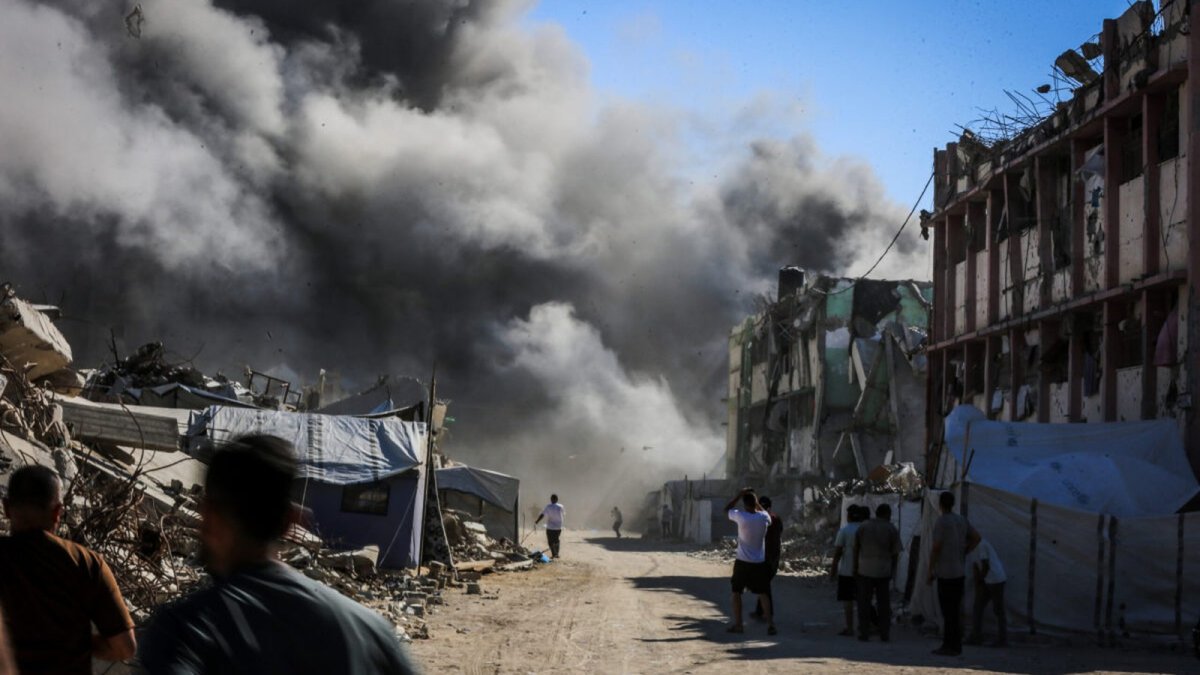
GAZA CITY — A 10-year-old girl was among three Palestinians killed on Monday as Israeli forces continued their daily attacks across the Gaza Strip, more than ten months after a ceasefire agreement ostensibly brought an end to the deadliest chapter of the conflict. Medical sources at Nasser Hospital in Khan Younis confirmed the death of Amal Nashat Abu Khater, who was shot by Israeli fire targeting homes and displacement tents in the southern city. The child’s body was brought to the hospital alongside two injured Palestinians, according to Anadolu Agency reporting.
The killings come amid a grim pattern of persistent Israeli military operations that have continued unabated despite the ceasefire that took effect last October. Gaza’s government media office reported on Monday that Israel has committed 4,379 ceasefire violations since the deal was signed, a figure that underscores the fragility of an agreement that was supposed to end the war.
A Day of Attacks Across the Strip
Monday’s violence was not confined to a single location. In central Gaza, two brothers were killed when an Israeli drone struck a tent sheltering displaced people near the Shuhadaa Al-Aqsa Hospital in Deir al-Balah. Mohammed Abdul Nasser Abu Asad, 27, died at the scene, while his brother Ibrahim Abdel Nasser Abu Asad, 24, succumbed to injuries sustained in the same strike, according to a local medical source cited by Anadolu.
In Khan Younis, witnesses reported heavy Israeli gunfire directed at tents housing displaced families, while Israeli military vehicles fired on the city’s Satr area, injuring three Palestinians. In Gaza City, two Palestinians, including a woman, were wounded by Israeli army gunfire in the Zeitoun and Shujaiya neighborhoods, a medical source told Anadolu.
Separately, two Palestinians died at Nasser Hospital from injuries sustained in two separate Israeli attacks on Khan Younis on Sunday and last Wednesday. Another man also died from injuries sustained in an Israeli strike on a Gaza City cafe on Wednesday — an attack that killed eight Palestinians and injured 14 others, according to a medical source at Al-Shifa Hospital. Local witnesses also reported Israeli artillery shelling on the Abu Rashid area south of central Gaza’s Al-Maghazi refugee camp.
The Ceasefire That Never Was
The continued attacks raise fundamental questions about the durability and enforcement of the ceasefire agreement brokered last year. The deal, which was supposed to halt hostilities and facilitate the delivery of humanitarian aid, has been violated on a near-daily basis, according to Palestinian officials. The government media office’s count of 4,379 violations paints a picture of an agreement that exists more on paper than in practice.
For Palestinians living in Gaza, the ceasefire has brought little relief. The daily reality remains one of gunfire, drone strikes, artillery shelling, and the constant threat of death or injury. The psychological toll on children like Amal Nashat Abu Khater — who should have been in school, not in the path of Israeli bullets — is immeasurable.
The post-ceasefire death toll stands at 1,288 killed and 4,290 injured, according to Gaza’s Health Ministry. An additional 813 bodies have been recovered from the rubble of destroyed buildings and infrastructure, with many more victims believed to remain buried under the debris, unreachable by ambulance and civil-defense teams.
A Humanitarian Catastrophe Deepens
The humanitarian situation in Gaza continues to deteriorate as Israel blocks agreed-upon aid deliveries. The government media office reported that only 66,607 aid trucks had entered the Gaza Strip out of 189,000 that were supposed to have arrived by Monday. This represents roughly one-third of the promised assistance, leaving approximately 2.4 million Palestinians — 2.15 million of whom have been displaced — without adequate food, water, and medical supplies.
The blockade on freedom of movement is equally severe. Israel has only allowed 11,759 people to leave the strip out of 29,800 who had been scheduled to depart after the reopening of the Rafah border crossing with Egypt. This restriction has trapped thousands of Palestinians who need medical treatment abroad, students seeking education, and families hoping to reunite with loved ones.
Gaza’s Health Ministry reported that hospitals received two bodies and 32 injured people over the past 24 hours, without specifying the circumstances. The overall death toll from Israel’s ongoing war on the Gaza Strip since October 2023 currently stands at 73,422 killed and 174,401 injured, the ministry added. Most of the casualties are women and children.
Infrastructure in Ruins
The scale of destruction in Gaza is difficult to comprehend. Israel has destroyed around 90 percent of Gaza’s civilian infrastructure, with the UN estimating total reconstruction costs at some $70 billion. Water treatment facilities, hospitals, schools, homes, and roads have been systematically targeted, leaving the enclave uninhabitable for millions.
On Monday, an explosion occurred at a water treatment facility in the Sheikh Radwan neighborhood of Gaza City following an Israeli attack, according to Anadolu Agency photographs. The destruction of such critical infrastructure compounds the humanitarian crisis, depriving already suffering communities of clean water and sanitation services.
The targeting of civilian infrastructure is not incidental — it is a defining feature of this war. From the early days of the conflict, Israeli forces have struck hospitals, schools, mosques, bakeries, and water facilities, rendering much of Gaza uninhabitable. The UN’s $70 billion reconstruction estimate reflects the sheer scale of the devastation, but it does not capture the human cost — the families torn apart, the children orphaned, the communities erased.
International Pressure and Empty Words
The international community’s response to the ongoing violations has been largely ineffective. Even US President Donald Trump — not typically known for criticism of Israel — has called for a halt to the attacks. In an interview with Fox News last week, Trump said that Israel “should not be striking in Gaza,” adding that Hamas had “agreed to lay down their weapons” under a US-backed peace plan.
Yet these words have done little to change the reality on the ground. Israeli forces continue their daily operations with apparent impunity, and the ceasefire violations mount. The government media office has called on Egypt, Qatar, and Türkiye — as well as the guarantors of the ceasefire agreement — to pressure Israel to implement the terms of the deal and halt its continued violations.
The question remains: what will it take for the international community to act? The ceasefire agreement was supposed to be a turning point, a moment when the guns fell silent and the reconstruction could begin. Instead, it has become another chapter in a seemingly endless cycle of violence and suffering.
Life Under Constant Threat
For Palestinians in Gaza, the distinction between war and ceasefire has become meaningless. The attacks continue on a daily basis, whether through drone strikes on displacement tents, gunfire from military vehicles, or artillery shelling on refugee camps. The names of the dead — Amal Nashat Abu Khater, Mohammed Abdul Nasser Abu Asad, Ibrahim Abdel Nasser Abu Asad — join a growing list of victims whose lives were cut short by violence that the world has failed to stop.
The psychological impact on survivors is profound. Children who have known nothing but war and displacement face an uncertain future, their education interrupted, their families shattered, their homes destroyed. The trauma of living under constant threat — never knowing when the next strike will come, whether a loved one will return home — is a burden that will last for generations.
In Khan Younis, witnesses reported heavy Israeli gunfire directed at tents for displaced people — a stark reminder that even the most vulnerable are not safe. In central Gaza, a drone strike on a tent sheltering displaced people near a hospital killed two brothers in a single moment. In Gaza City, a woman was injured by gunfire in her neighborhood. These are not isolated incidents; they are the daily reality of life in Gaza.
A Call for Accountability
As the ceasefire violations mount and the death toll rises, the need for accountability becomes ever more urgent. The international community must move beyond statements of concern and take concrete action to enforce the terms of the ceasefire agreement. The guarantors of the deal — Egypt, Qatar, and Türkiye — must use their influence to pressure Israel to halt its attacks and comply with its obligations.
The people of Gaza cannot wait for another round of negotiations, another diplomatic initiative, another round of empty promises. They need action now — an end to the attacks, the delivery of humanitarian aid, the reopening of crossing points, and a genuine commitment to a just and lasting peace.
The numbers are staggering: 73,422 killed, 174,401 injured, 2.15 million displaced, 90 percent of civilian infrastructure destroyed. But behind these numbers are real people — children like Amal, brothers like Mohammed and Ibrahim, families torn apart by violence. Their stories must not be forgotten, and their suffering must not be in vain.
The ceasefire was supposed to mark the beginning of the end of this nightmare. Instead, it has become a cruel illusion, a promise of peace that has been broken thousands of times over. Until the international community acts with the urgency and seriousness that this crisis demands, the people of Gaza will continue to pay the price for a peace that never came.
By Fatima Al-Rashid, Staff Writer
This article was produced with AI-assisted research and editorial support. Sources: Middle East Monitor, Anadolu Agency.
What's Your Reaction?
 Like
0
Like
0
 Dislike
0
Dislike
0
 Love
0
Love
0
 Funny
0
Funny
0
 Wow
0
Wow
0
 Sad
0
Sad
0
 Angry
0
Angry
0

Gulf/MENA Correspondent at Global1.News. Based in Doha, covering Gulf politics, energy markets, diplomacy, and development across the Middle East and North Africa. Tracks the economic transformation of the Gulf states.















Comments (0)