
Altalena Wreck Found as Netanyahu and Ben Gvir Clash at Ceremony
The Altalena shipwreck, sunk by IDF artillery in 1948, has been found intact 503 meters deep off Israel's coast — but the Tel Aviv ceremony turned into a political clash as Netanyahu avoided Ben Gvir, who compared himself to Menachem Begin ahead of October's elections.
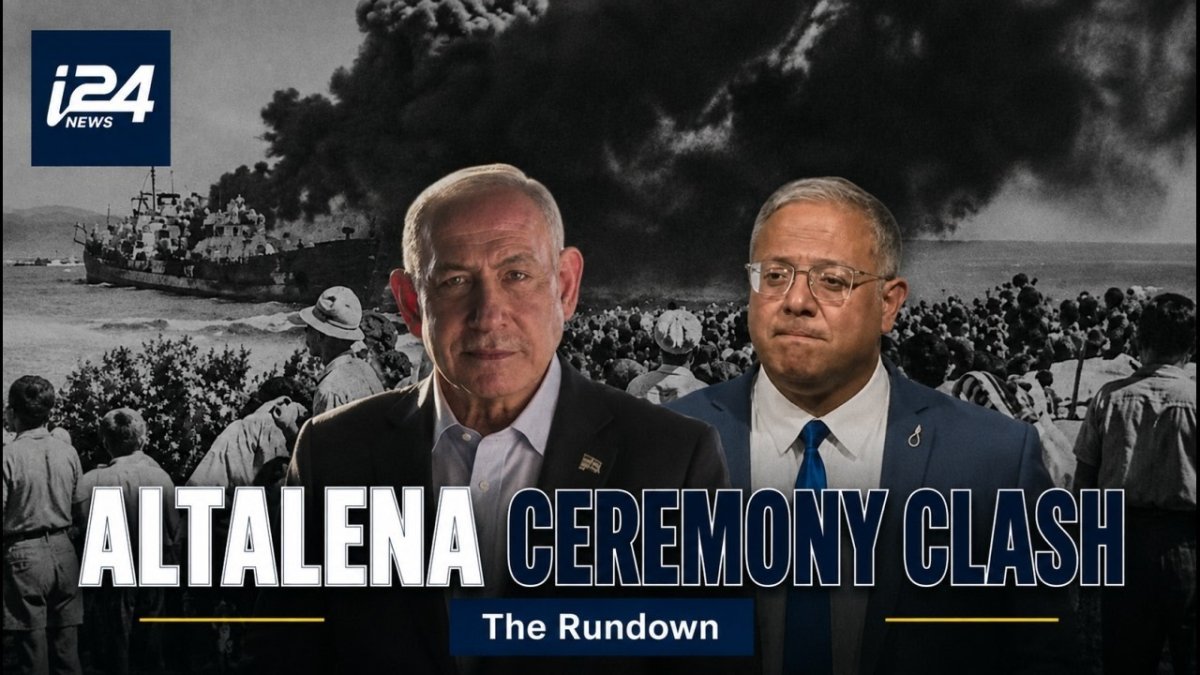
In a recent i24NEWS report, the discovery of the long-lost Altalena shipwreck on the Mediterranean seabed was meant to be a moment of national unity—a chance to honor a painful chapter in Israel's founding history. Instead, the ceremony marking the find in Tel Aviv on Monday devolved into a display of political catfighting, with Prime Minister Benjamin Netanyahu pointedly avoiding being photographed with National Security Minister Itamar Ben Gvir, and Ben Gvir comparing himself to the very Irgun commander whose ship was just rediscovered. The wreck, located intact 78 years after it was sunk by IDF artillery in June 1948, has become the latest flashpoint in an election season already fraught with tension.
Altalena Wreck Found, But Unity Sinks at Tel Aviv Ceremony as Netanyahu and Ben Gvir Clash
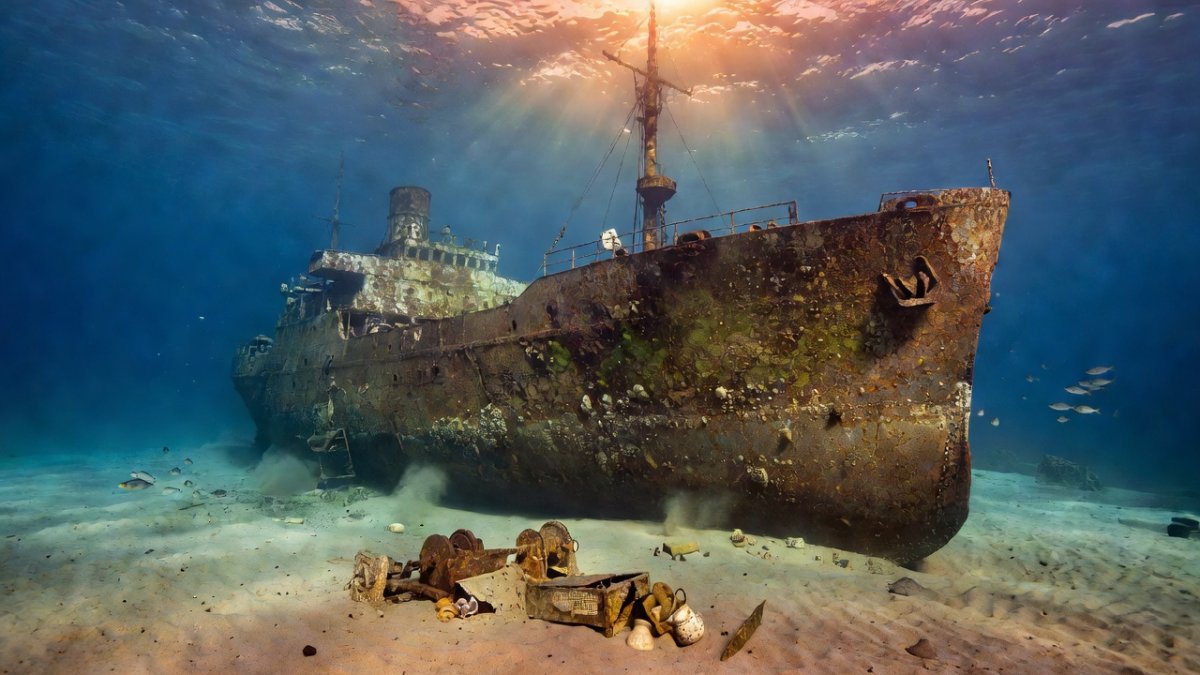
Tel Aviv, Israel – Today — The Altalena, the Irgun arms ship sunk by David Ben-Gurion's fledgling IDF in 1948, has been found intact on the seafloor, but the ceremony meant to mark its rediscovery was overshadowed by a very modern political feud. National Security Minister Itamar Ben Gvir and Heritage Minister Amichai Eliyahu announced the discovery on Monday, revealing that the vessel was located at a depth of 503 meters, some 20 kilometers off Israel's coast. The find, the result of a complex marine search operation involving the Heritage Ministry and the Survey of Israel (MAPI), was immediately seized upon by Ben Gvir's Otzma Yehudit party as a political victory—and by Netanyahu's critics as evidence of a prime minister unwilling to share the spotlight.
Discovery on the Seafloor
The Altalena was found during a meticulously planned expedition that followed months of preparation, according to officials. The vessel was located using a ship equipped with special sensors and advanced survey systems, with the operation spearheaded by Heritage Minister Amichai Eliyahu and Roni Sadeh, director of the Marine Mapping Division at the Survey of Israel. The collaboration between the Heritage Ministry and MAPI, a government body under the Ministry of Construction and Housing, marked a rare inter-ministerial effort to solve one of the state's most enduring maritime mysteries.
Ben Gvir, who announced the discovery late on Sunday night, framed the find in dramatic terms. "Tonight we are closing a historical circle on one of the most painful and formative events in the history of Israeli society," he said. "We have been dealing with this issue secretly for many years, and today the fruits of the intelligence and operational effort have borne exciting fruit for the sake of historical truth, the memory of the fallen, and unity with Israel." Eliyahu echoed the sentiment, stating: "The discovery of the Altalena is a defining moment for our national memory. We worked on this operation out of a deep-seated mission to reveal the historical truth and make the story of the ship's heroes accessible to future generations."
The announcement was made through Otzma Yehudit's party channel, a move that caught Netanyahu's office by surprise and sidelined Likud ministers from the historic reveal. The decision to publicize the find through a party-affiliated outlet rather than a government channel immediately raised eyebrows in Jerusalem, where coalition partners are already jockeying for position ahead of the October 27, 2026 elections. The Heritage Ministry confirmed the discovery, but the political optics of the announcement were unmistakable: Ben Gvir was claiming the Altalena as his own achievement, and Netanyahu was left scrambling to respond.
The Ship That Nearly Divided a Nation
The Altalena's story is etched into the collective memory of the Jewish state as a near-catastrophic moment of internal strife. Purchased in the United States in the summer of 1947 by the Etzel (Irgun) organization, the vessel was originally a US Navy tank landing ship. In June 1948, it sailed for Israel carrying approximately 930 immigrants, Irgun fighters, and large quantities of weapons, ammunition, and medical equipment. The ship arrived during the first UN-brokered truce of the War of Independence, a period that prohibited introducing arms and fighting personnel into the region.
The vessel reached Kfar Vitkin, north of Netanya, on June 20, 1948. The following day, IDF troops from the Alexandroni Brigade surrounded the area and ordered Irgun commander Menachem Begin to hand over the weapons. Fighting broke out, leaving six Irgun members and two IDF soldiers dead at Kfar Vitkin. Begin then boarded the Altalena, which sailed south toward Tel Aviv. On June 22, 1948, the confrontation resumed off the Tel Aviv coast, where IDF soldiers opened artillery fire, setting the ship ablaze and forcing those aboard to abandon the vessel. The total death toll was 19—16 Irgun members and 3 IDF soldiers.
In the chaos, Begin ordered the Irgun not to retaliate against the IDF, warning against allowing the dispute to descend into civil war. That decision, widely seen as ensuring the IDF became the sole military force of the Jewish state, prevented what could have been a catastrophic internal conflict. The burned-out vessel was later towed out to sea and sunk off Nabi Rubin, where it remained hidden for nearly eight decades. The affair became a defining episode in the rivalry between Ben-Gurion's Labor Zionist movement and Begin's Revisionist camp, establishing the principle of a single national military under government authority.
Ramon Ziv-Av, deputy director-general of activities at the Ben-Gurion Heritage Institute, offered a sobering perspective on the ship's legacy. "Ben-Gurion viewed this test as a threat no less serious than the dangers that came from outside: the danger of an armed force operating outside the authority of the state," he said. "If, together with the ship, the danger of civil war also returns, it would be better for that danger to remain at sea." Ziv-Av's words, delivered in the context of today's political climate, carried an unmistakable resonance.
Political Storm at the Ceremony
The ceremony to mark the rediscovery, held at Etzel House (the Etzel Museum) on the Tel Aviv beachfront, was supposed to be a moment of historical reflection. Instead, it became a stage for political maneuvering. Netanyahu, who was scheduled to speak at the museum, delivered his remarks on the beach outside the building, pointedly avoiding being photographed with Ben Gvir for the duration of the event. The visual of Israel's prime minister standing alone on the sand, while his national security minister stood inside the museum, was impossible to miss.
Ben Gvir, never one to shy away from a confrontation, leaned into the snub. "Begin also knew what it was like to be boycotted," he said, comparing himself to the Irgun commander and former prime minister. "People sit with you in the most closed rooms—and when the moment of truth comes, they don't want to be photographed with you." The comparison was audacious, casting Ben Gvir as a modern-day Begin, ostracized by the establishment despite his political power. Other senior members of Otzma Yehudit went further, attacking Netanyahu directly and suggesting that his behavior indicated he planned to side with Gadi Eisenkot, leader of the National Unity party, against their party in the upcoming coalition negotiations.
Netanyahu, for his part, spoke of the sacrifice Begin made during the Altalena incident, recalling Begin's famous phrase during the crisis that claimed 19 lives: "Citizens of Israel, civil war? Never!" The prime minister then pivoted to a call for unity, saying: "The unity among us is much broader than it appears, and it is essential so that we can face the great challenges that still lie ahead of us. Therefore, we must establish a broad national government to ensure our future and our security. I pledge to work for the unity of Israel." The speech, delivered against the backdrop of the Mediterranean, was a clear appeal to centrist voters—and a pointed message to his coalition partners that he was willing to look beyond them.
Election-Season Fault Lines
The Altalena ceremony comes at a critical juncture in Israeli politics. With elections scheduled for October 27, 2026, the campaign season is already intensifying, and the discovery of the shipwreck has become an unexpected battleground. Eli Cohen tops the Likud Knesset party list, and Netanyahu's call for a "broad national government" is widely seen as an attempt to position himself as a statesman above the fray, even as his coalition partners jockey for position.
The Otzma Yehudit attacks on Netanyahu, particularly the suggestion that he would side with Eisenkot, reflect the deep fault lines within the current coalition. Eisenkot, a former IDF chief of staff and now a leader of the National Unity party, represents a centrist alternative that could appeal to Likud voters disillusioned with the far-right. Ben Gvir's comparison of himself to Begin is a calculated attempt to claim the Revisionist mantle, positioning Otzma Yehudit as the true heir to the Irgun legacy—a claim that Likud, founded by Begin, would vigorously dispute.
The political maneuvering around the Altalena discovery also highlights a broader trend in Israeli politics: the weaponization of historical memory. The Altalena is not just a shipwreck; it is a symbol of the tension between state authority and ideological purity, between unity and factionalism. For Ben Gvir, the discovery is an opportunity to burnish his nationalist credentials. For Netanyahu, it is a reminder of the fragility of coalition politics. For the families of the 19 men who died, it is a chance to finally lay the past to rest.
Analysis and What This Means
The Altalena's rediscovery is a significant historical achievement, but its political exploitation reveals the deep divisions that persist in Israeli society. The ship's story—a struggle between Ben-Gurion's vision of a single, state-controlled military and Begin's insistence on Irgun autonomy—resonates today in debates over the role of the IDF, the power of the state, and the limits of political dissent. The fact that the discovery was announced through a party channel, rather than a government one, speaks volumes about the current political climate.
For Israeli readers, the Altalena affair is a reminder of how close the nascent state came to civil war—and how that threat has never fully disappeared. The ceremony in Tel Aviv, marked by Netanyahu's refusal to stand beside Ben Gvir, was a microcosm of the broader political landscape: a prime minister trying to project unity while his coalition partners pull in different directions. The October 2026 elections will be a test of whether that unity can be restored, or whether the Altalena's legacy of division will continue to haunt Israeli politics.
As the sun set over the Tel Aviv beach, the Altalena lay 503 meters below the surface, a silent witness to the past. The question now is whether Israel's leaders can learn from its history—or whether they are doomed to repeat it. The discovery of the shipwreck has closed a historical circle, but the political wounds it exposed remain open. For Netanyahu, Ben Gvir, and the voters who will decide their fate in October, the Altalena is more than a relic; it is a mirror reflecting the choices that lie ahead.
By Hannah Berg, Staff Writer
This article was produced with AI-assisted research and editorial support. Reporting is based on sources cited in the article.
What's Your Reaction?
 Like
0
Like
0
 Dislike
0
Dislike
0
 Love
0
Love
0
 Funny
0
Funny
0
 Wow
0
Wow
0
 Sad
0
Sad
0
 Angry
0
Angry
0

Israel Correspondent at Global1.News. Based in Tel Aviv, covering Israeli politics, security, technology, and society. Provides balanced, deeply-sourced reporting on one of the most closely-watched regions in the world.















Comments (0)