
Angélique Kidjo Makes History as First African Musician With Hollywood Walk of Fame Star
LOS ANGELES — The Hollywood Walk of Fame has a new star, and it shines with the rhythm of the continent.
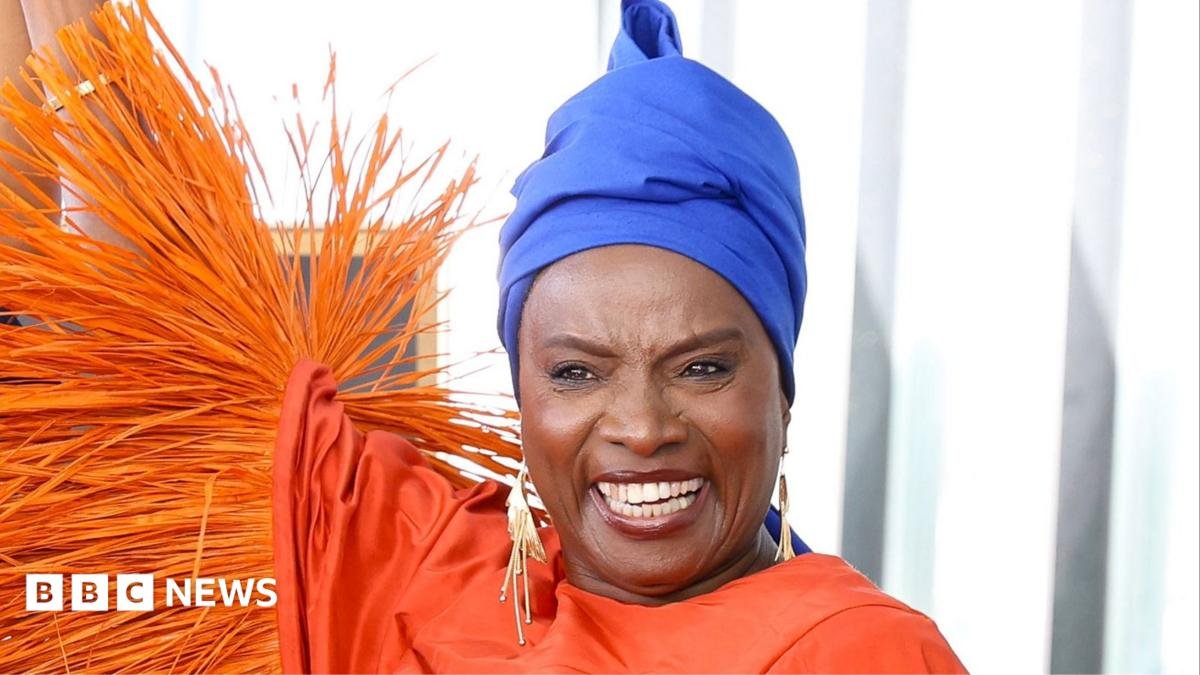
LOS ANGELES — The Hollywood Walk of Fame has a new star, and it shines with the rhythm of the continent. On Tuesday, five-time Grammy winner Angélique Kidjo became the first African musician to receive a star on the iconic boulevard, a moment that moved the 66-year-old Beninese icon to tears and sent a powerful message across the globe. “This star is for all the continent of Africa. Because if I was not African, would I be here?” Kidjo told the BBC, her voice carrying the weight of a four-decade career that has taken her from the streets of Cotonou to the pinnacle of global music. The ceremony, filled with singing, dancing, and a gathering of family, friends, and fellow stars, was more than a personal accolade—it was a recognition of Africa’s foundational role in the world’s musical heritage.
A Historic Ceremony in Los Angeles
The atmosphere at the Walk of Fame ceremony was electric, a celebration that felt less like a formal induction and more like a homecoming. Kidjo, known for her explosive energy and magnetic stage presence, was joined by Hollywood actors Willem Dafoe and Djimon Hounsou—the latter a fellow Beninese—and Nigerian musician Adekunle Gold. The crowd sang and danced, honoring a career that has seen Kidjo collaborate with the likes of Burna Boy, John Legend, Bono, and Alicia Keys. Her latest album, HOPE!!, released earlier this year, features production by Pharrell Williams and collaborations with Ayra Starr, Quavo, Nile Rodgers, and Diane Warren, proving that at 66, she remains at the forefront of musical innovation.
Dafoe, who starred in Spider-Man, delivered a heartfelt tribute, calling Kidjo “without a doubt the hardest working woman in showbusiness.” He recalled the first time he saw her perform live, saying, “I thought her music, her dancing, her commitment were incredible.” He likened her energy to that of soul legend James Brown, adding, “She’s not only an incredible performer… songwriter and musician, but also an incredibly kind and giving person and a real deal activist.” Harvey Mason Jr., CEO of the Recording Academy, echoed those sentiments, praising Kidjo for how “she’s connected cultures, she’s crossed borders, she’s reminded audiences everywhere that while we may come from different backgrounds, her music unites in a way that few other things can.”
From Benin to the World: A Journey of Resilience
Kidjo’s path to this historic moment was not a straight line. Born in Benin, she grew up surrounded by the rich sounds of West Africa, but at age 23, she made the difficult decision to leave for Paris, citing oppression from the country’s then-communist government. That leap of faith would prove transformative. In Paris, she honed her craft, blending the traditional music of her homeland with funk, jazz, and pop, creating a sound that was entirely her own yet universally accessible. Her breakthrough came in the 1990s when Chris Blackwell, the founder of Island Records and the producer behind Bob Marley, signed her and launched her album Logozo.
During her BBC interview, Kidjo’s phone rang constantly with congratulations. “Yesterday I received the call of the president of Benin,” she said. “Today I received the call of Chris Blackwell, the founder of Island Records, the producer of Bob Marley, the maker of U2 and so on and so forth.” She explained how fundamental Blackwell had been to her success, recalling a pivotal conversation: “I said to him at that moment… ‘Can I do the music I want to do and keep my cultural identity without anyone imposing any other music on my shoulder?’ He said… ‘It’s no brainer.’” That exchange encapsulated the struggle many African artists face—the pressure to conform to Western expectations—and Blackwell’s response validated her instinct to stay true to her roots.
“This Star Is for Africa”: A Message of Legacy
For Kidjo, the star on the Hollywood Walk of Fame is not just a personal achievement; it is a testament to the continent’s enduring influence on global music. She reiterated a message she has long championed: that Africa is the wellspring of modern popular music. “Without the blues brought by the slaves in America, there’s no R&B, there’s no rock and roll, there’s no soul music, there’s no jazz. All of it comes from Africa,” she told the BBC. This is not hyperbole; it is a historical fact that the rhythms, call-and-response patterns, and improvisational traditions of West and Central Africa were carried across the Atlantic and became the foundation of genres that now dominate the world.
Her words serve as a reminder to Africans themselves. “Let’s celebrate our artists in their own right on the continent. Let’s give them visibility, strength, because music creates economy,” she said. This call to action is urgent. While a handful of African artists have achieved global superstardom, the vast majority struggle to make a living. Royalties are often unpaid, and the infrastructure to support artists at home remains weak. Kidjo’s message is clear: Africa must recognize its own cultural wealth and build systems that allow artists to thrive on the continent, not just abroad.
The Economics of African Music: Royalties, Visibility, and Jobs
Kidjo’s comments highlight a stark reality for many African musicians. Despite the continent’s immense musical output, most artists—beyond the mega-stars with global fanbases—struggle to earn a sustainable income. “We need to recognise our artists and create a system for them to make money on their continent and to participate also in creating jobs,” she said. The issue is multifaceted: weak copyright enforcement, a lack of transparent royalty collection, and limited access to international distribution networks all contribute to the problem. For every Burna Boy or Wizkid who sells out arenas worldwide, there are countless talented musicians in Dakar, Lagos, Nairobi, or Kinshasa who cannot afford to record their next album or tour their own countries.
The economic potential is enormous. Music is not just culture; it is an industry that can create jobs, attract tourism, and drive economic growth. Kidjo’s point is that African governments and private sectors must invest in this potential. This means strengthening collective management organizations to ensure artists get paid, building recording studios and performance venues, and creating platforms that give local artists visibility. The success of Afrobeats and Amapiano on the global stage has proven that the world is hungry for African sounds. The challenge now is to ensure that the economic benefits flow back to the continent and its creators.
Beyond Music: Activism and the Batonga Foundation
Kidjo’s influence extends far beyond the recording studio. As a UNICEF and Oxfam goodwill ambassador, and co-founder of the Batonga Foundation, she has dedicated herself to empowering vulnerable young girls and women in Benin. The foundation, which she established to help girls access education and build better lives, reflects her belief that music and social justice are intertwined. Her activism is not a side project; it is a core part of her identity. Dafoe’s tribute at the ceremony highlighted this, noting that she is “a real deal activist,” not just a performer.
Her philanthropic work is rooted in her own experience. Growing up in Benin, she witnessed the challenges faced by women and girls, and she has used her platform to advocate for change. The Batonga Foundation provides scholarships, mentorship, and resources to help girls stay in school and pursue their dreams. In a continent where girls’ education is often deprioritized, Kidjo’s work is a beacon of hope. It also underscores her broader vision: that African talent, whether in music, science, or business, must be nurtured at home. Her own journey—from Benin to Paris to global stardom—is a testament to what is possible when talent is given the chance to flourish.
What This Milestone Means for African Artists
Kidjo joins Charlize Theron, a white South African actress, as the only Africans with stars on the Hollywood Walk of Fame, which comprises more than 2,800 names. Her induction is a watershed moment, signaling a shift in how the global entertainment industry views African artists. For years, African musicians have been relegated to the margins, seen as exotic curiosities rather than equals. Kidjo’s star changes that narrative. It says that African music is not a niche genre but a central pillar of global culture.
For young artists across the continent, this is a powerful message of possibility. It tells them that their heritage is not a limitation but a strength. Kidjo’s career has been defined by her refusal to compromise her cultural identity, and her success proves that authenticity can be a path to global recognition. As she wiped away tears at the ceremony, she thought of her parents, who were not there to witness the moment. “At that moment, I’m like, dad, mum, I wish you were here with me to see [this],” she told the BBC. “I couldn’t take the emotion. They were not here to taste the fruit of what they’ve created. How they have nurtured my curiosity, my love for music.”
Her story is a reminder that every African artist carries the hopes of their community, their family, and their ancestors. The star on Hollywood Boulevard is not just a piece of terrazzo and brass; it is a symbol of resilience, creativity, and the unbreakable bond between Africa and the world. As Kidjo said, “This star is for all the continent of Africa.” And for the millions of Africans who will look up at that star, it will be a source of pride and inspiration for generations to come.
By Amara Diop, Staff Writer This article was produced with AI-assisted research and editorial support. Sources: BBC AfricaWhat's Your Reaction?
 Like
0
Like
0
 Dislike
0
Dislike
0
 Love
0
Love
0
 Funny
0
Funny
0
 Wow
0
Wow
0
 Sad
0
Sad
0
 Angry
0
Angry
0

West Africa/Sahel Correspondent at Global1.News. Dakar-based journalist covering politics, security, climate, and development across Francophone and Anglophone West Africa. Tells the stories of a region undergoing profound transformation.














Comments (0)