
272 Days at Sea: Inside the Lincoln's Longest Deployment
USS Abraham Lincoln heads home to San Diego after a record 272-day deployment marked by food shortages, mold and mental health strain. Trump dismissed crew concerns as fake news and called the tour not nearly long enough as the USS George Washington moved in to relieve the carrier.
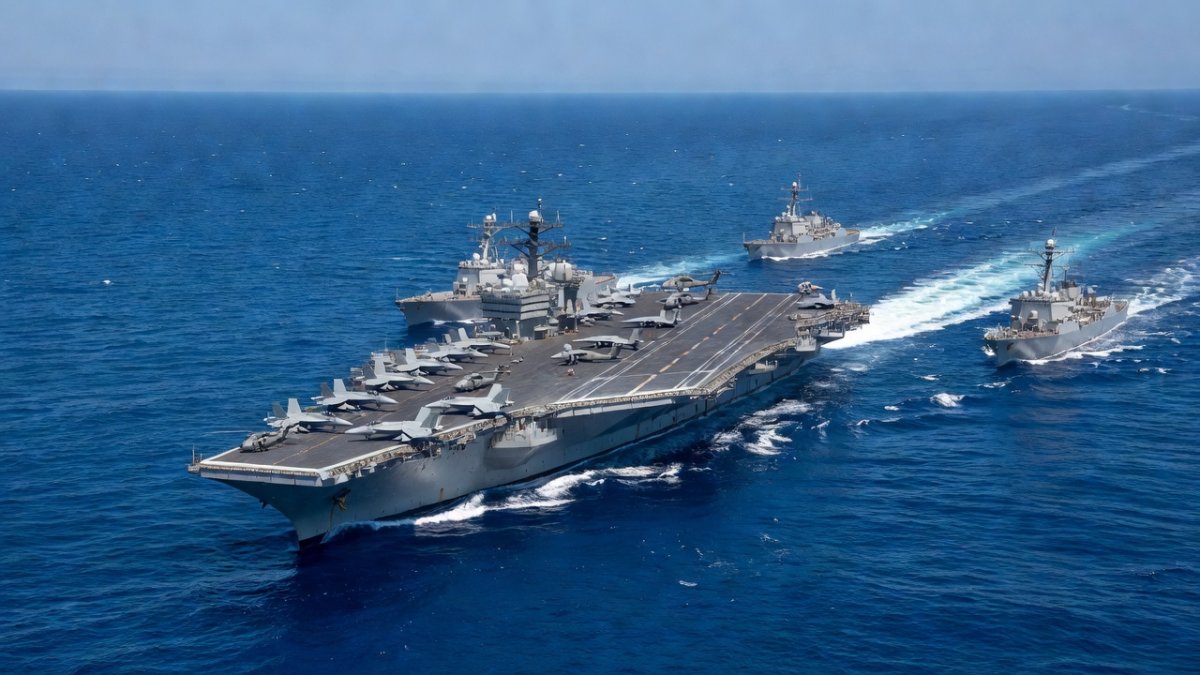
Folks, grab a seat. Because what you are about to read is the story of 5,000 American sailors who were asked to give everything, and a Commander-in-Chief who looked at their suffering, called it "fake news," and said it wasn't long enough.
272 Days at Sea: Inside the Lincoln's Longest Deployment
Washington, D.C. - August 24, 2026 - The USS Abraham Lincoln is finally pointing her bow toward San Diego. But this isn't a victory lap, folks. This is an evacuation. After nearly nine months at sea—a deployment that stretched into the longest continuous carrier tour since the Cold War—the Lincoln is limping home with a crew that ran out of soap, ran out of food, and in too many cases, ran out of hope. The ship left San Diego in late November 2025 on what was supposed to be a routine six-month cruise. It was supposed to end in May. Instead, the Navy kept extending the mission, and the crew kept paying the price. Now, as the ship transits through the U.S. 7th Fleet on its way back to California, we have to ask a question that Washington doesn't want to answer: How did we let this happen?
The Record That Nobody Wanted to Break
Let's put this in perspective, folks. The Abraham Lincoln, a Nimitz-class nuclear-powered aircraft carrier, left San Diego in late November 2025. The original plan? A routine deployment ending in May 2026. That's a standard six-month float. But the Navy kept pushing the goalposts. Reports from Stars and Stripes and USNI News confirm the ship spent more than 250 days at sea, with some outlets citing figures as high as 265 to 272 days. That is nearly nine months. Almost seven of those months were spent in the U.S. 5th Fleet area of operations—the heart of the Middle East.
To give you a sense of how abnormal this is, the Navy's own guidelines say that a "normal" carrier deployment should not exceed seven months. The Lincoln blew past that mark by two full months. Some outlets are calling this the longest American naval deployment since the Cold War. And you know what? They're right. During the Cold War, we accepted these kinds of deployments because we were in an existential standoff with the Soviet Union. What is the excuse now? What is the strategic necessity that justifies keeping 5,000 sailors on a floating metal island until they run out of toothpaste?
This isn't just a number on a spreadsheet, folks. This is 5,000 human beings. 5,000 Americans who signed up to serve their country, not to be used as political pawns in a war that the President himself is struggling to sell.
Mold, Starvation, and Broken Laundry: The Real Conditions
Let's talk about what life was actually like on that ship. Because the Navy tried to tell you one story, but the sailors lived another. Military.com and MS NOW first broke the story, and Snopes—the fact-checking site that usually debunks conspiracy theories—confirmed it was all true. We're talking about food shortages so severe that sailors reported, and I quote, "food obviously has been scarce." That's not a complaint about the quality of the chow. That's a statement about the quantity. People were going hungry on a U.S. Navy warship in 2026.
But it gets worse. Sailors reported running out of basic hygiene supplies. Soap. Toothpaste. Deodorant. Think about that for a second. You're trapped on a ship with 5,000 other people, in the heat of the Arabian Sea, and you can't brush your teeth. You can't wash your hands properly. The showers were moldy. The plumbing was failing. The laundry machines were broken. So not only are you hungry and dirty, but you're also wearing filthy clothes in a confined space. That's not just uncomfortable, folks. That's a public health crisis waiting to happen.
CNN's Pamela Brown went aboard the Lincoln in July 2026. She saw it with her own eyes. She reported on the conditions from the ship, and her reporting corroborated everything that Military.com had found. This wasn't a rumor. This wasn't a disgruntled sailor exaggerating on social media. This was a major news network walking the passageways of a U.S. aircraft carrier and seeing a crew that had been pushed to the breaking point.
The Navy's Insulting Denial and the Photo Op
Now, here is where the Navy's leadership really dropped the ball, folks. When the first reports of food shortages surfaced, the Navy's initial response was to deny it. Flat-out deny it. They released photos of full meals and stocked supplies, trying to paint a picture of a happy, well-fed crew. It was a classic PR move: "Look at the salad bar! Look at the fresh fruit!" But the sailors on board knew the truth. And eventually, the evidence became too overwhelming to spin.
Snopes confirmed the reports were true. CNN confirmed the reports were true. And suddenly, the Navy's "stocked supplies" photos looked exactly like what they were: a staged attempt to gaslight the American public and the families waiting at home. You don't get to tell a sailor he's imagining his hunger, folks. You don't get to tell a mother that her son's moldy shower is "fake news." That is an insult to the people who are putting their lives on the line.
And let's be clear about the timeline here. The Navy denied the shortages. Then they got caught. Then, and only then, did they start to act. That is not leadership. That is damage control.
The Navy Secretary's Belated Mental Health Response
After the denials fell apart, the Navy Secretary finally addressed the quality-of-life and mental health reports. Task & Purpose reported that the Navy announced it would send more mental health support to the ship. More mental health support. That's like putting a Band-Aid on a severed artery, folks. These sailors needed relief. They needed to go home. They didn't need a few extra counselors showing up in the middle of the ocean to tell them to "breathe" while they're still running out of food and water.
The mental health crisis on board was described as "rising" by multiple reports. Rising. That means it was already bad, and it was getting worse. Low morale. Safety concerns. These aren't just buzzwords. These are indicators that the ship was becoming a danger to itself. A tired, hungry, demoralized crew is an accident waiting to happen. On a nuclear-powered aircraft carrier, an accident can be catastrophic. The Navy Secretary's response was too little, too late. And frankly, it reeked of a bureaucracy trying to check a box rather than actually fix a problem.
Families and Congress Demand Answers
While the Navy was busy spinning, the families back home were organizing. And they were furious. Democratic members of Congress demanded answers about the conditions aboard the Lincoln. They cited the food shortages, the plumbing failures, and the mental health crises. They wanted to know why the Navy had allowed this to happen. They wanted to know who was going to be held accountable.
And you know what? They were right to demand answers. These are the people who elected them. These are the mothers and fathers who sent their children off to serve. They were watching the news, seeing the reports of mold and hunger, and they were terrified. The Navy's response—first denial, then a trickle of support—did nothing to reassure them. It only confirmed their worst fears.
Defense Secretary Pete Hegseth also faced growing calls for his resignation amid the scrutiny over the Lincoln crisis. Growing calls, folks. That means the pressure was mounting from all sides. When you have a Secretary of Defense who can't manage the welfare of the troops, and a President who calls their suffering "fake news," you have a leadership crisis at the highest levels of the Pentagon.
Trump's "Not Nearly Long Enough" Insult
And then we get to the moment that should make your blood boil. On Friday, August 14, 2026, President Donald Trump dismissed the concerns of the service members' families. He called the coverage "fake news." He claimed the carrier is "beautifully maintained." And then he said the deployment was "not nearly long enough."
Let me repeat that for the people in the back. The President of the United States looked at a crew that had been at sea for 260-plus days, that was running out of food and soap, that was dealing with mold and broken plumbing, and he said it was "not nearly long enough." Not nearly long enough for what, Mr. President? For them to develop scurvy? For them to have a complete mental breakdown? For them to lose faith in the country they swore to defend?
According to Reuters, CNN, and the LA Times, Trump made these remarks on August 14. He dismissed the families' concerns as if they were inconveniences. He called the coverage "fake news" even though CNN had been on the ship. Even though Snopes had verified the reports. This wasn't just a political miscalculation, folks. This was a moral failure. You do not talk about American sailors like that. You do not gaslight the people who are bleeding for you.
The Iran War Context: An Unwelcome Distraction
So why was the Lincoln out there for so long? The answer is the war against Iran. The carrier operated in support of U.S. strikes and operations against Iran. This wasn't a humanitarian mission. This was combat support. And the Hindustan Times noted that the coverage of the Lincoln's conditions created "an unwelcome distraction for Trump in his attempt to sell the already unpopular war."
There it is, folks. The ugly truth. The Lincoln wasn't kept out there because of a strategic necessity that couldn't be avoided. It was kept out there because the administration wanted to project strength in the Middle East. And when the human cost of that projection became apparent, the administration tried to bury it. The war is unpopular. The deployment was unsustainable. And the President's response was to attack the messenger.
This is the context that matters. We are not talking about a rogue commander on the ship making bad decisions. We are talking about a chain of command that stretches all the way to the White House, and that chain decided that the optics of pulling the carrier out were worse than the reality of keeping the crew in misery.
The George Washington Relief and the Long Voyage Home
Finally, on August 13, 2026, the Navy dispatched the USS George Washington to the Arabian Sea to relieve the Lincoln. That was reported by Stars and Stripes. It took them that long to send a replacement. The Lincoln finally departed the Middle East on Thursday, August 20, 2026. As of August 22, she is in the U.S. 7th Fleet, heading home to San Diego.
But here's the thing, folks. The George Washington is now heading into the same situation. The same mission. The same potential for extension. The Navy hasn't fixed the underlying problem. They just swapped one crew for another. The Lincoln's sailors are going home, but they are going home broken. They are going home with memories of hunger and mold and mental health crises. And the George Washington's crew is sailing into the same storm.
What Happens Next: The Reckoning
So what happens now? The Lincoln will pull into San Diego in the coming days. There will be a homecoming ceremony. There will be tears and hugs and relief. But then what? The Navy will do an investigation. They will promise to do better. They will talk about "lessons learned." And then, if history is any guide, they will move on to the next crisis.
But we can't let them move on, folks. We can't let this become a footnote. The Defense Secretary is facing calls to resign. The President is calling the coverage "fake news." The families are demanding answers. This is a moment of accountability. And it's up to us—the American people—to make sure that accountability actually happens.
This isn't about politics, folks. This is about basic human decency. We ask these young men and women to do the hardest job in the world. We ask them to leave their families, to risk their lives, to serve a cause greater than themselves. The least we can do is make sure they have soap. The least we can do is make sure they have food. The least we can do is bring them home when the mission is done.
By Jessica Ali, Staff Writer
This article was produced with AI-assisted research and editorial support. Sources: Reuters, CNN, LA Times, Stars and Stripes, USNI News, NBC San Diego, Task & Purpose, Snopes, WION, Hindustan Times.
What's Your Reaction?
 Like
0
Like
0
 Dislike
0
Dislike
0
 Love
0
Love
0
 Funny
0
Funny
0
 Wow
0
Wow
0
 Sad
0
Sad
0
 Angry
0
Angry
0

Editor-in-Chief at Global1.News. Atlanta-based journalist who cuts through the BS and tells it like it is. Lead anchor, host, and the voice you hear when the spin stops and the truth starts.















Comments (0)